
 By Nana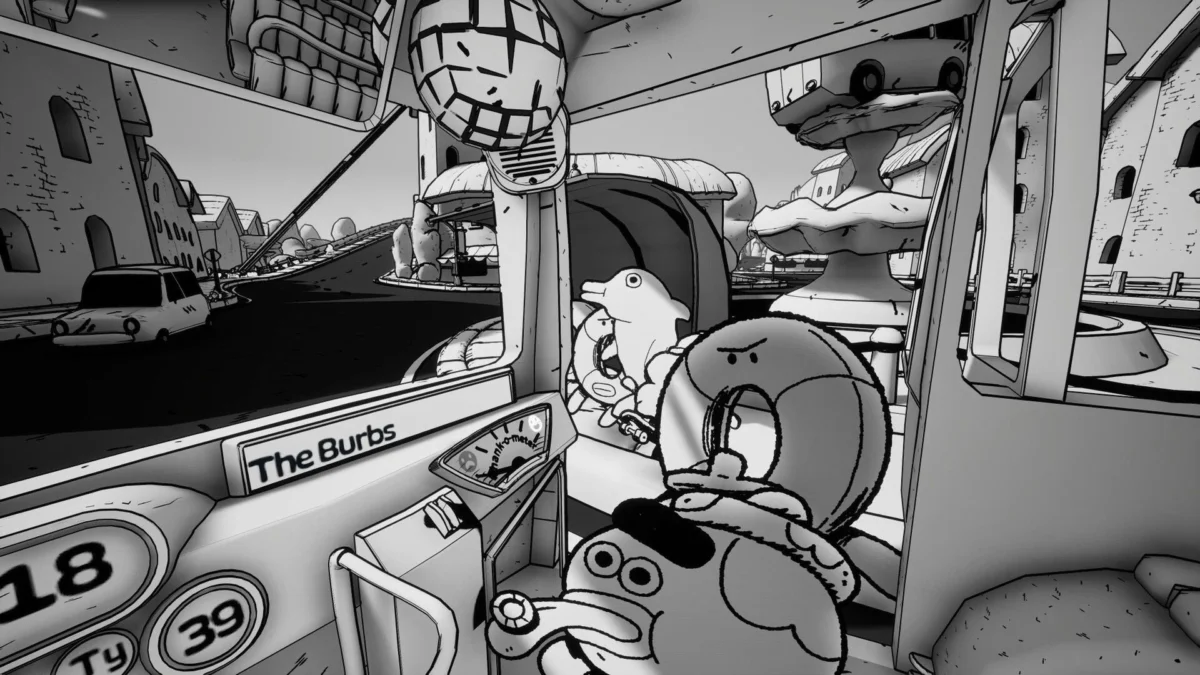
In a move that marks a significant turning point for one of the industry’s most beloved creative houses, Double Fine Productions is pivoting back to its roots. Following its departure from the Xbox Game Studios umbrella earlier this summer, the legendary developer behind Psychonauts and Brutal Legend has announced its first post-independence project: a chaotic, monochromatic driving simulation titled Thank You Bus Driver.
Set for release on October 14, the game represents more than just a new title; it is the inaugural release under the newly minted "Double Fine Action Labs" label. This initiative is designed to foster the development of smaller, more experimental "weird" projects that can be brought to market with greater agility, signaling a return to the studio’s nimble, creative-first origins.
The Core Concept: Chaos Behind the Wheel
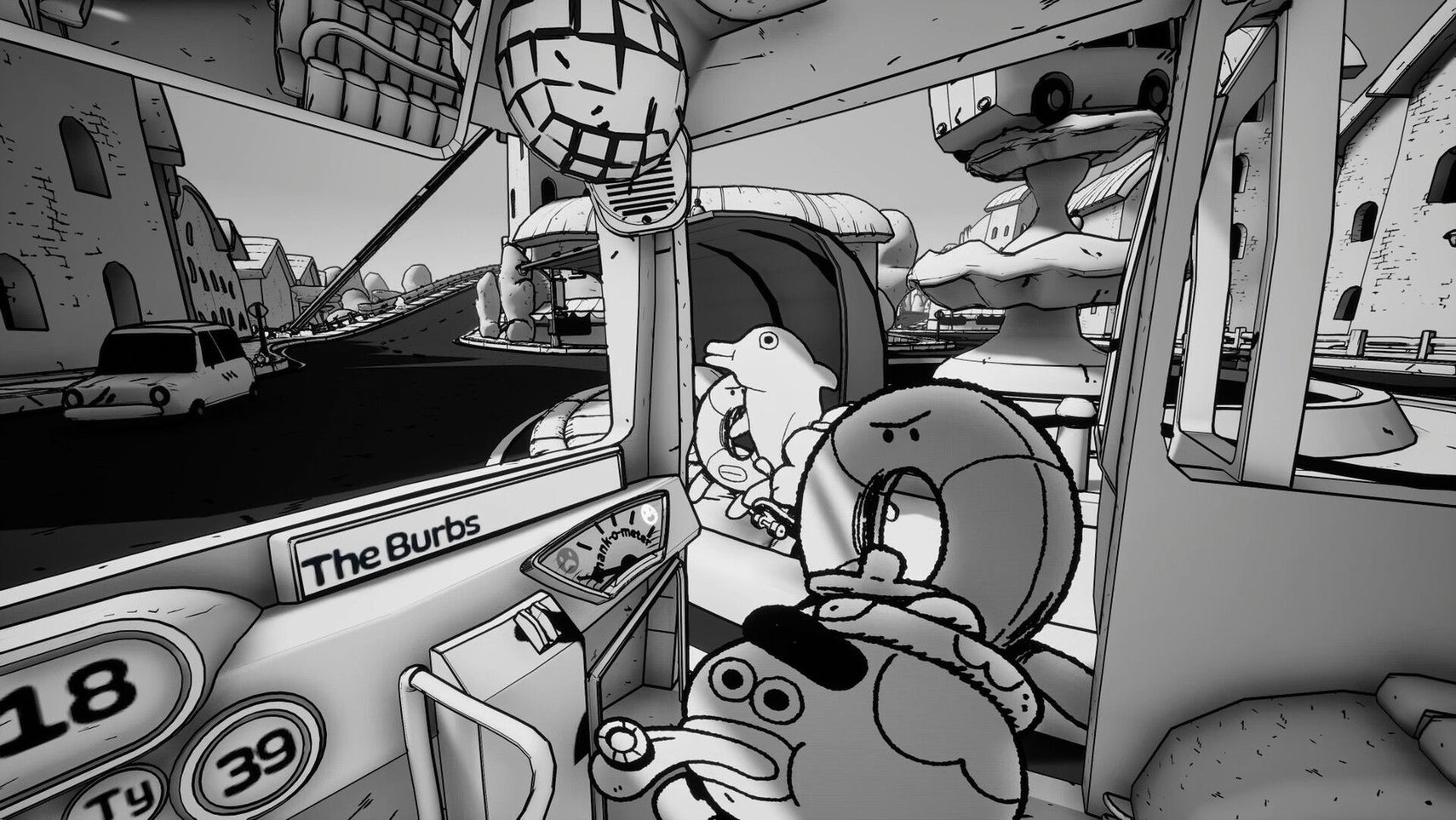
At its surface, Thank You Bus Driver is a bus-driving simulator, but in true Double Fine fashion, it subverts expectations with a surreal, comedic twist. Players are tasked with navigating a town, picking up passengers, and adhering to strict schedules. However, the gameplay loop evolves into something far more bizarre.
Drawing inspiration from the tension of titles like Papers, Please, the game requires players to enforce arbitrary town rules. The signature "Double Fine" eccentricity manifests in the game’s primary mechanic: when a passenger breaks a rule, the player—equipped with freakishly long, extendable arms—must turn around and slap the offending passenger across the face.
The aesthetic is strictly black-and-white, a stylistic choice that emphasizes the frantic, high-contrast nature of the gameplay. The studio aims to balance the stress of professional transit management with the absurd slapstick humor that has become a hallmark of founder Tim Schafer’s design philosophy. The game will be available on PC via Steam, GOG, and Itch.io.
Chronology: From Xbox Acquisition to Independence
To understand the weight of this release, one must look at the recent, turbulent history of the studio.
- 2019: Microsoft officially acquires Double Fine Productions, integrating the studio into the growing Xbox Game Studios family. The move was widely praised, as it provided the studio with the financial stability to complete Psychonauts 2.
- Early 2024: Amidst a broader industry-wide contraction, Microsoft announces a massive corporate restructuring. The initiative involves the divestment of several first-party studios and a reduction in force affecting approximately 3,200 employees across its gaming divisions.
- Summer 2024: Double Fine, alongside four other studios, is spun off from Xbox. In the wake of this separation, the studio is forced to lay off roughly 25% of its workforce, a devastating blow to a team known for its tight-knit culture.
- October 2024: Thank You Bus Driver is announced and scheduled for release just weeks later, signaling the studio’s rapid pivot to the "Action Labs" model.
Supporting Data: The Shrinking Landscape of Independent Development
The context surrounding Thank You Bus Driver is emblematic of a broader crisis within the gaming industry. According to industry tracking data, 2024 has been one of the most difficult years for job security in the history of interactive entertainment.
While major publishers have seen record revenues, the middle-market and independent sectors have faced "fragmentation," as analysts call it. The industry has seen over 10,000 job losses in the first half of the year alone. Double Fine’s struggle is not an outlier but a symptom of a systemic shift where, despite high consumer demand, the financial sustainability of mid-sized creative studios has become precarious.
By launching the "Action Labs" initiative, Double Fine is attempting to mitigate these risks by diversifying its output. Rather than betting the studio’s entire future on a single, multi-year "AAA" production, they are moving toward a hybrid model: smaller, faster projects that maintain the studio’s identity while reducing the reliance on massive, long-term capital investments that can be vulnerable to corporate restructuring.
Official Responses and Philosophical Shifts
Tim Schafer, the creative visionary and founder of Double Fine, has remained remarkably candid throughout this transition. Addressing the departure from Xbox, Schafer has consistently maintained that there is no "ill will" between the two parties.
On the Game Pass Model
Schafer has been a vocal proponent of subscription services like Xbox Game Pass, even as the studio regained its independence. "I love it as an idea," Schafer stated in a recent interview. "I liked it for Double Fine games. If you’re sitting in a store and holding a disc, and it costs $70, and it’s about a walking lighthouse, there’s a barrier there. But if you’ve just got to download a game you’ve already paid for, it might lead people to trying weird games like Double Fine makes."
On Industry Fragility
When pressed on the current instability of the industry, Schafer expressed a sense of frustration that resonates with many in the creative arts. "People are playing games, people are making money, so I don’t know why there is a big loss of jobs," he noted. "I assume someone is being greedy somewhere."

This sentiment reflects a growing divide between the creative labor force and the corporate management structures that oversee them. For Schafer, the goal is to protect the "weird" and the "little"—the games that lack the mass-market appeal required for $70 retail success but possess the creative spirit that defines the medium.
Implications: A New Era for Double Fine
The launch of Thank You Bus Driver serves as a litmus test for the studio’s future. If successful, the Action Labs model could provide a blueprint for other independent studios facing the pressure of corporate consolidation.
1. Cultural Preservation
By creating a dedicated space for shorter, more experimental titles, Double Fine is effectively shielding its creative culture from the volatility of high-budget production cycles. This allows for rapid iteration and the preservation of the studio’s unique "voice" without the looming threat of cancellation inherent in long-term development.
2. Community Engagement
The return of the Amnesia Fortnight concept—a studio tradition where developers spend time prototyping small, experimental games—is a key pillar of this new strategy. By utilizing Kickstarter and direct-to-consumer storefronts, the studio is re-establishing a direct line of communication with its fans, bypassing the bureaucratic layers of major platform holders.
3. The Future of the "Indie-AAA" Hybrid
Double Fine sits in a unique position. They have the pedigree and technical expertise of a major studio but the size and agility of an indie team. Their trajectory over the next 18 months will likely be studied by other mid-sized developers looking to escape the "boom and bust" cycle of the current corporate climate.
In conclusion, Thank You Bus Driver is far more than a quirky simulation game. It is a statement of intent. As Double Fine navigates the complexities of its post-Xbox reality, it is leaning into the very qualities that made it a household name in the first place: audacity, humor, and a refusal to conform to the industry’s standard, increasingly rigid, definitions of what a "successful" game should look like. Whether the market is ready to support this smaller, leaner version of the studio remains to be seen, but for the developers at Double Fine, the road ahead is one they are finally driving on their own terms.
 Nila Kartika Wati
  Dwi Wanna
  Evan Lee Salim