
 By Nana Muazin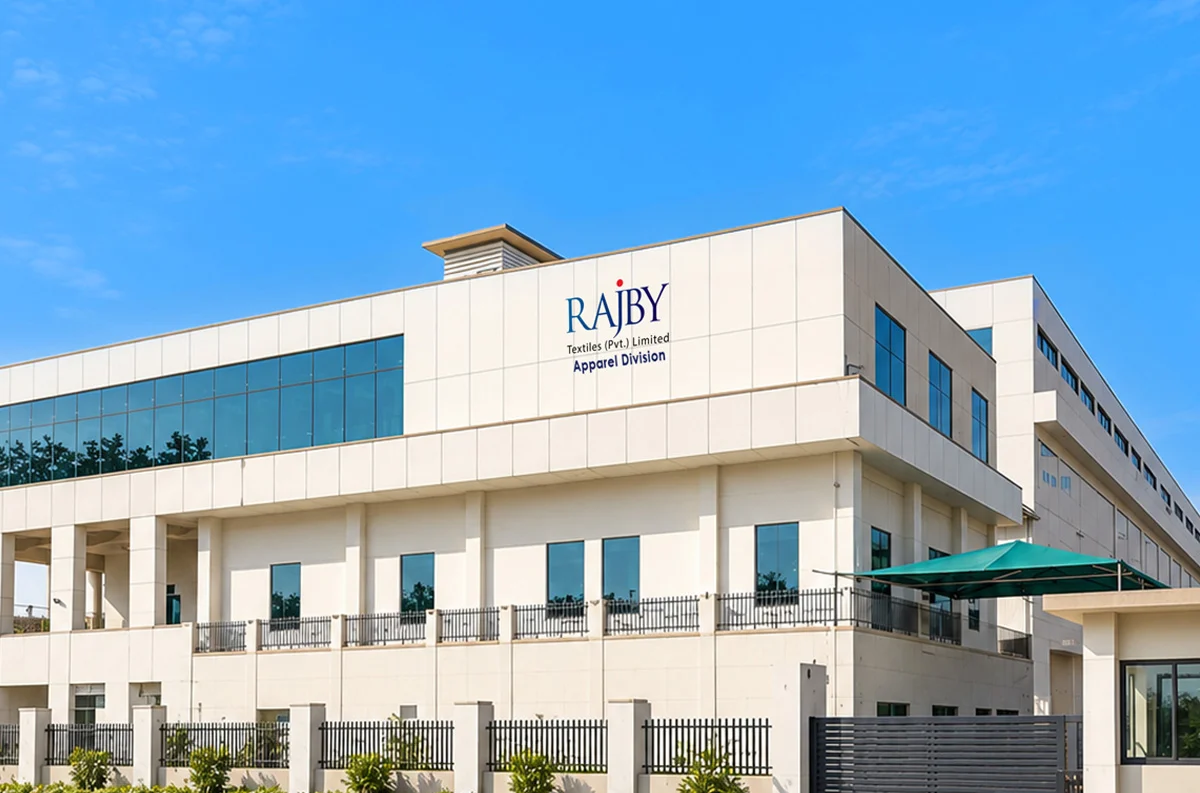
In a significant move that underscores the evolving landscape of global apparel manufacturing, Rajby Textiles Pvt. Ltd. officially inaugurated its cutting-edge garment manufacturing facility in Karachi, Pakistan, this Wednesday. The expansion marks a pivotal milestone for the company, signaling a strategic transition from a fabric-focused powerhouse to a comprehensive, end-to-end denim solutions provider for some of the world’s most recognizable fashion brands.
By bridging the gap between raw textile production and finished garment assembly, Rajby Textiles is positioning itself to address the modern fashion industry’s growing demand for speed, supply chain transparency, and rigorous environmental stewardship.
The Core Expansion: Bridging Fabric to Fashion
The newly commissioned garment unit is designed to function as an extension of Rajby’s long-standing fabric division, which currently boasts an impressive output of 3.2 million meters of denim per month. This vertical integration allows Rajby to maintain complete control over the production cycle—from the initial weaving of fabric to the final decorative touches on a pair of jeans.
Production Capacity and Scaling
The facility launches with an initial production capacity of 500,000 pieces per month. However, the company has already laid the groundwork for an aggressive expansion phase. Plans are currently in motion to scale this output to 1 million pieces per month, effectively doubling the unit’s throughput. This capacity is supported by an optimized logistical workflow, where the company’s existing fabric division acts as the primary supplier, minimizing lead times and reducing the carbon footprint associated with inter-facility transportation.
Technical Infrastructure: Precision Through Automation
In an era where fashion brands demand high-speed turnaround times without compromising on quality, Rajby has invested heavily in state-of-the-art automation. The facility is a masterclass in modern manufacturing technology, designed to deliver unparalleled consistency.
Advanced Machinery and Workflow Efficiency
The factory floor is equipped with an array of automated systems, including:
- Auto-Spreaders: Ensuring fabric is laid out with precision, reducing waste and ensuring pattern alignment.
- Pocket Setters and Automatic Hemmers: Reducing human error and ensuring that every garment meets the exact specifications of global retail partners.
- Loop Attachers: Streamlining the assembly process to ensure maximum velocity in the production line.
By integrating these technologies, Rajby aims to mitigate the common pitfalls of manual assembly, such as inconsistencies in stitching or sizing, thereby providing global brand partners with a highly reliable, scalable, and professional manufacturing output.
Sustainability at the Forefront: Eco-Finishing Technologies
Perhaps the most compelling aspect of the new facility is its dedication to "responsible manufacturing." Rajby has integrated industry-leading eco-finishing systems that reflect a deep understanding of the ecological challenges facing the denim industry.
The Role of Jeanologia and Beyond
Central to these efforts is the adoption of Jeanologia ozone technology and laser finishing. These processes represent a shift away from traditional, water-intensive, and chemical-heavy garment finishing. By utilizing laser technology to achieve authentic "distressed" or "worn" looks, Rajby drastically reduces the need for water, pumice stones, and potassium permanganate, all of which have historically contributed to the environmental degradation of textile manufacturing hubs.
Additionally, the facility utilizes high-efficiency industrial washers, ensuring that every drop of water used is managed with conservation in mind.
Official Perspective: The Vision of Daniyal Saleem
During the inauguration, Daniyal Saleem, CEO of Rajby Textiles, articulated the vision behind this massive investment. Reflecting on the company’s 50-year legacy, he noted that the expansion is not merely about capacity, but about a fundamental change in the company’s value proposition.
"For over 50 years, Rajby Textiles has built its reputation on manufacturing excellence, quality, and continuous innovation," Saleem stated. "With this new garment facility, we are bringing that same commitment to the finished product. By combining modern automation with sustainable technologies, we are offering our global brand partners an integrated, responsible, and agile supply chain."
Saleem’s remarks highlight a critical trend in the denim market: the "one-stop-shop" model. As brands look to consolidate their supplier bases to reduce risk and increase efficiency, Rajby’s move to provide a fully integrated solution—from yarn to jeans—makes them a highly attractive partner for international retailers.
A Chronology of Growth and Commitment
To understand the magnitude of this new development, one must look at the company’s trajectory over the past five decades.
- 1970s–1990s: Rajby establishes its roots in the Pakistani textile market, focusing on high-quality fabric production and developing a reputation for technical expertise.
- 2000s: The company begins aggressively pursuing international certifications, setting the stage for global partnerships with brands like C&A.
- 2010s: Investments in energy-saving technologies begin, including the integration of biomass boilers and waste heat recovery systems.
- 2020–2023: Recognition for sustainability grows, highlighted by the C2C (Cradle to Cradle) Platinum certification of their "Beluga" denim line.
- 2024: The opening of the state-of-the-art garment manufacturing unit, solidifying the move toward full vertical integration.
Environmental Targets: A Roadmap to 2030
Rajby Textiles has set ambitious, measurable targets for its new apparel division, grounded in the belief that industrial output must be decoupled from environmental degradation.
Water Stewardship
Water conservation is the cornerstone of the company’s environmental strategy. The facility is upgrading its effluent treatment plant (ETP) with MBBR (Moving Bed Biofilm Reactor) biological and tertiary treatment processes. The goal is to reach the ZDHC (Zero Discharge of Hazardous Chemicals) Progressive level.
- Target: 30 percent wastewater recycling by 2027.
- Impact: This volume of recycled water is equivalent to the daily usage of 17,280 people.
- Long-term Goal: 100 percent wastewater recycling by 2030.
Renewable Energy and Carbon Footprint
Recognizing the role of energy consumption in climate change, the company is installing an 800-KWh solar plant at the garment unit. This is projected to reduce local emissions by 25 percent. The apparel division has set a target to cut overall greenhouse gas emissions by 50 percent by 2030. These efforts build upon the existing energy milestones at the fabric unit, which currently utilizes biomass boilers and waste heat recovery systems to generate 95 percent of its steam from renewable sources.
Zero Waste to Landfill
The company has pledged to adopt a "reduce, reuse, and recycle" methodology across all operations. The objective is to achieve zero manufacturing waste to landfill by 2030, a challenge that will require rigorous supply chain management and the upcycling of textile scraps generated during the cutting and sewing processes.
Implications for the Global Denim Market
The opening of this facility has broader implications for the denim sector, particularly for suppliers in emerging markets like Pakistan.
1. Competitive Advantage in Vertical Integration
As global brands face pressure to shorten supply chains, suppliers who can offer "end-to-end" solutions are becoming the gold standard. Rajby’s ability to move from fabric production to finished garment in a single, controlled ecosystem reduces the risk of quality variance and supply chain disruption.
2. The Sustainability Mandate
Environmental compliance is no longer a "nice-to-have" but a mandatory requirement for suppliers working with major Western retailers. By proactively adopting ZDHC standards and investing in solar and water recycling, Rajby is ensuring its long-term viability in a market that is increasingly scrutinized by regulators and consumers alike.
3. Setting the Bar for Pakistan’s Textile Industry
Rajby’s investment signals confidence in Pakistan as a hub for sophisticated manufacturing. By showcasing that high-tech, sustainable factories can thrive in the region, the company is helping to rebrand Pakistan’s textile exports, moving the perception away from low-cost, high-volume production toward high-value, sustainable innovation.
Conclusion: Looking Ahead
The inauguration of Rajby Textiles’ new garment unit is more than just a business expansion; it is a declaration of intent. By marrying the traditional strengths of the Pakistani textile industry—deep expertise and large-scale capacity—with the latest advancements in automation and green technology, Rajby is positioning itself as a leader in the next generation of apparel manufacturing.
As the industry continues to navigate the complexities of climate change and shifting global trade dynamics, partners who can guarantee speed, consistency, and ethical integrity will undoubtedly rise to the top. With this new facility, Rajby Textiles has not only strengthened its production capabilities but has also reaffirmed its role as a steward of responsible innovation in the global denim supply chain. The path to 2030 is clearly defined, and with these latest investments, Rajby is well-equipped to meet the challenges of the future head-on.
 Nana
Nana  Ali Ikhwan
  Sagoh
Sagoh 