
 By Layla Zulfa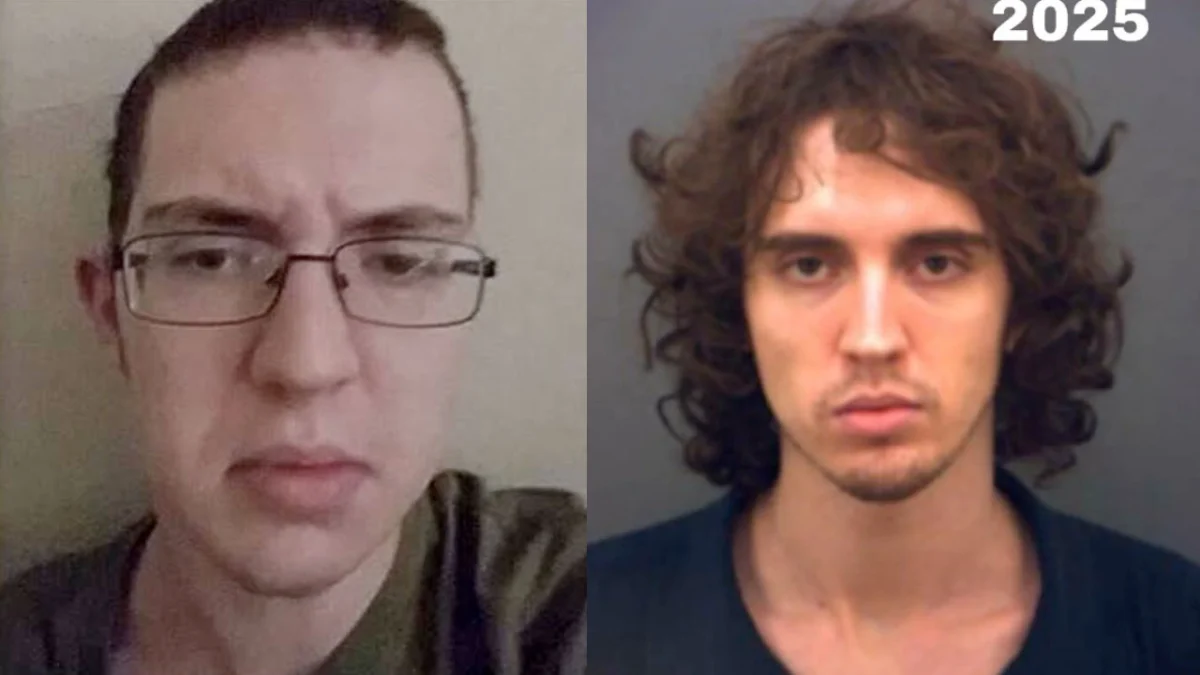
Main Facts
In late April 2025, a newly surfaced photograph of Patrick Crusius—the perpetrator of the devastating August 2019 El Paso Walmart mass shooting—sparked an unexpected and unsettling viral phenomenon across social media platforms including X (formerly Twitter) and Reddit. Crusius, who is currently serving multiple consecutive life sentences in federal prison for one of the deadliest hate crimes and mass murders in modern American history, is paradoxically recognized by millions of internet users not primarily by his heinous real-world actions, but through a crude, highly influential caricature born on 4chan: the "Chudjak."
The viral image, allegedly obtained via a Freedom of Information Act (FOIA) request and initially posted to Reddit’s /r/masskillers before being removed, depicts Crusius without his signature glasses, sporting longer curly hair and light facial scruff. The image was quickly weaponized by internet meme pages, resulting in a wave of dark humor, surreal commentary, and ironic astonishment. Some users joked about the mass murderer undergoing a bizarre "glow-up," drawing comparisons ranging from indie-rock musicians to heartthrob figures.
This bizarre intersection of violent crime, judicial documentation, and internet meme culture highlights a disturbing reality of the modern digital landscape: the total abstraction of real-world tragedies into decentralized, memetic lore. For millions of online participants, the human cost of the El Paso massacre is thoroughly detached from the face behind the "Billions Must Die" meme, demonstrating how the darkest corners of internet subcultures consume and gamify real-world trauma.
Chronology of the Viral Event
To understand how a prison photograph of a domestic terrorist transformed into a trending topic for meme culture, it is necessary to trace the timeline of events that unfolded in late April 2025.
August 2019: The Genesis
Patrick Crusius carries out a racially motivated mass shooting at a Walmart in El Paso, Texas, killing 23 people and injuring 22 others. Prior to the attack, he publishes a white supremacist manifesto online. Shortly after his arrest, mugshots and photographs of Crusius circulate widely in the news media. Anonymous users on 4chan’s politically charged /pol/ board seize upon his likeness, creating a derivative of the ubiquitous "Wojak" internet character. This drawing, characterized by heavy nasolabial folds, a distinct frown, and glasses, is dubbed the "Chudjak" and becomes heavily associated with doomerism and extremist online rhetoric.
Late 2019 – 2023: The Memetic Expansion
Over the course of several years, the Chudjak evolves far beyond its initial resemblance to Crusius, becoming a standardized shorthand for ironic political despair, internet radicalization, and the cynical "The West has fallen. Billions must die" catchphrase. Meanwhile, Crusius quietly moves through the legal system, pleading guilty to federal hate crime and weapons charges in July 2023, avoiding the federal death penalty while remaining subject to state-level prosecution.
April 21, 2025: Court Appearance
Crusius appears in a Texas courtroom for state-level proceedings regarding capital murder charges, where documentation captures him wearing glasses and a more prominent beard.
April 25, 2025: The Reddit Leak
A user on Reddit’s /r/masskillers community, identified as /u/uncanealguinzaglio, publishes what they claim to be a federal booking photograph of Crusius acquired through FOIA channels. The poster clarifies that the image dates back to approximately July 2023, taken during his transition into federal custody via local holding facilities in El Paso. Although Reddit administrators swiftly remove the post for violating Terms of Service regarding the glorification or promotion of violence, the image is successfully downloaded and mirrored across alternative forums.
April 27, 2025: Viral Explosion on X
X user @TruueDiscipline posts the 2023 photograph alongside the caption, "This is what chudjak looks like now… feel old yet?" The framing treats the mass shooter as if he were an internet celebrity or public figure aging in real-time. Within forty-eight hours, the post accumulates over 1.2 million views and nearly 17,000 likes.
April 28–29, 2025: The Meme Wave and Clarification
As the image continues to circulate, X users generate a flurry of derivative memes. Accounts like @Halsted_19 and @hayasaka_aryan share ironic commentary, joking about a "glow-up" or comparing Crusius’s prison appearance to an "indie rock singer." Concurrently, fact-checking users step in to contextualize the viral frenzy, pointing out that the widely shared image is from 2023 and highlighting his more recent, scruffier appearance from the April 2025 Texas court hearings.
Supporting Data and Digital Metrics
The rapid spread of the Crusius prison photograph underscores the sheer velocity of modern meme economies and the peculiar algorithms governing platforms like X and Reddit.

- Reach and Engagement: The primary viral post by
@TruueDisciplinecrossed the 1.2-million-view threshold in less than 48 hours, a velocity comparable to major entertainment or breaking news stories. - Platform Fluidity: The lifecycle of the leak spanned multiple distinct platforms—originating via a bureaucratic FOIA request, passing through an archival/true-crime community on Reddit, getting censored by moderation filters, migrating to X’s shitposting ecosystem, and finally bleeding back into mainstream meme compilation pages.
- Meme Longevity: The "Billions Must Die" and Chudjak formats represent some of the most durable templates of the early 2020s alt-right and post-irony web sphere. Analytics from meme-tracking databases show steady search and generation volumes for variants of the character since 2019, turning an explicitly violent extremist caricature into an abstract, multi-purpose cartoon mascot stripped of its original, gruesome context.
Official Responses and Legal Context
While internet subcultures treat prison photographs as raw material for dark humor, the judicial reality surrounding Patrick Crusius remains severe, grounded in one of the most comprehensive hate crime prosecutions in U.S. history.
The Federal and State Cases
Crusius’s legal trajectory has involved a complex interplay between federal and state jurisdictions. In February 2023, the U.S. Department of Justice announced it would not seek the death penalty under federal charges, leading to Crusius formally pleading guilty in July 2023 to 90 federal hate crime counts resulting in death and injury, alongside firearm offenses. He received 90 consecutive life sentences.
However, the state of Texas pursued its own capital murder charges, ensuring that Crusius remained exposed to the death penalty at the state level. His ongoing court appearances—such as the April 2025 hearings—represent the protracted closure of a horrific chapter for the El Paso community.
Platform Moderation and Policy Enforcement
The rapid deletion of the Reddit thread on /r/masskillers illustrates the tightening enforcement policies governing digital spaces regarding mass shooters. Major platforms maintain strict guidelines prohibiting the unvetted dissemination of content that glorifies, humanizes, or provides a platform for violent extremists and mass killers.
Despite these automated and manual filters, the decentralized nature of internet culture—where images are harvested, watermarked, and re-uploaded within seconds—makes complete containment impossible. The phenomenon demonstrates the limits of platform moderation when viral meme incentives collide with the digital footprints of convicted terrorists.
Sociological and Cultural Implications
The transformation of a mass murderer into an ironic cartoon character—and the subsequent shock when internet users confront his physical reality in a prison mugshot—reveals profound truths about contemporary digital psychology.
The Desensitization of Online Subcultures
The "Chudjak" meme is a prime example of post-irony: a state of communication where sincerity is entirely stripped away, leaving layers of layered cynicism, absurdity, and dark humor. When internet users joked about Crusius experiencing a "glow-up" or transitioning into an "indie rock star," they were not necessarily expressing genuine admiration for a white supremacist terrorist. Rather, they were engaging in a deeply detached form of black comedy that treats the physical world as a flat, unmoving television screen.
By reducing a murderer to a 2D drawing and then expressing ironic surprise when the 2D drawing matches a breathing human in a jumpsuit, online communities insulate themselves from the gravity of real-world violence. The tragedy is flattened into "lore."
The Celebrity Status of Perpetrators
criminologists and media theorists have long warned about the "contagion effect" and the unintended celebrity status granted to mass shooters by 24-hour news cycles. In the Web3 and social media era, this dynamic has mutated. Perpetrators are no longer just names on television; they are assigned memetic avatars that circulate globally across gaming Discord servers, TikTok edits, and image boards.
This memetic immortality creates a perverse incentive structure within alienated, radicalized fringe spaces. While Crusius himself will spend the rest of his natural life behind bars with zero access to the internet, his face lives on as a permanent fixture of digital folklore—an eerie reminder of how easily the internet can detach a tragedy from its victims and transform human suffering into an endless loop of ironic punchlines.
 Laily UPN
  Sagoh
Sagoh  Jia Lissa