
 By Suro Senen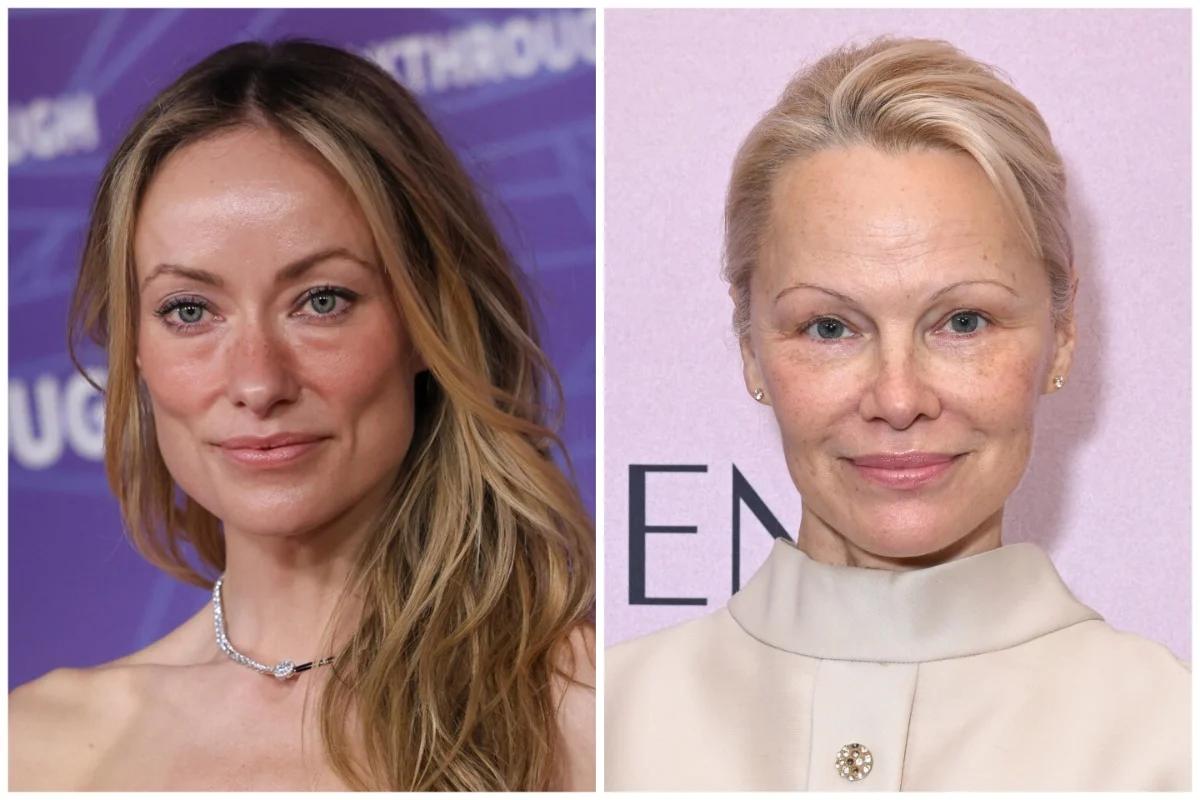
In the high-stakes, hyper-scrutinized environment of modern Hollywood, few directors have faced as public a baptism by fire as Olivia Wilde did during the 2022 rollout of her sophomore feature, Don’t Worry Darling. While the film eventually found its footing as a commercial success, the path to its release was marred by a relentless cycle of tabloid speculation, online vitriol, and perceived industry drama.
In a recent appearance on the Call Her Daddy podcast, Wilde revealed that during the peak of this chaotic period, she found an unlikely mentor in Pamela Anderson. Anderson, an icon who has spent decades navigating the volatile intersection of celebrity and public perception, provided Wilde with a piece of advice that ultimately redefined her approach to the controversy: "The most rebellious thing you can do is stay soft. Don’t let it harden you."
The Anatomy of a PR Firestorm
The discourse surrounding Don’t Worry Darling was not typical for a psychological thriller. Rather than focusing solely on the film’s narrative or cinematography, the media conversation was dominated by rumors regarding the director’s personal life, alleged tensions between cast members, and the logistical challenges of production.
For Wilde, the experience was profoundly isolating. Speaking to Call Her Daddy, she recalled the instinctual desire to correct the record—to step out from behind the camera and address the swirling rumors directly. "I wanted to be like, ‘Can I just talk to people? Can I just go and say, ‘That’s not true! That’s not true!’" she explained.
However, she was consistently advised against such actions. The realization that engaging with the vitriol would only feed the cycle of misinformation was, in her words, "really hard." She felt a deep sense of responsibility toward the hundreds of cast and crew members who had worked under the difficult, restrictive conditions of the COVID-19 pandemic to bring the film to life. Balancing the need to protect her professional integrity while witnessing her personal life dissected in the public square created an impossible dilemma.
Chronology: From Production to Premiere
To understand the weight of Wilde’s struggle, one must examine the timeline of the film’s release and the subsequent emergence of the narrative that Anderson helped her navigate.
- 2020-2021 (Production): Don’t Worry Darling began filming under stringent COVID-19 safety protocols. During this time, Wilde was lauded for her leadership in navigating a complex production schedule.
- Late 2021 – Early 2022: As the film moved into post-production, rumors regarding Wilde’s personal life began to leak into the mainstream press. This coincided with the initial promotion of the film, which was met with increasing scrutiny.
- September 2022 (Venice Film Festival): The film’s premiere served as a lightning rod for media speculation. Every gesture, seating arrangement, and interaction between cast members was analyzed by social media users, creating a narrative of "disarray" that overshadowed the film’s artistic merits.
- January 2023: Netflix released Pamela, A Love Story, an intimate documentary that allowed Anderson to reclaim her own narrative after decades of being defined by the media’s portrayal of her.
- Post-Documentary Release: Inspired by Anderson’s vulnerability and resilience, Wilde reached out to her. This connection, born from mutual respect, provided Wilde with the perspective needed to process the aftermath of her own cinematic ordeal.
Supporting Data: The Cost of Disproportionate Scrutiny
Wilde’s description of the "pummeling" she received as "insanely disproportionate" reflects a growing concern in the entertainment industry regarding the intensity of online discourse. While critics and audiences have the right to evaluate art, the conflation of a director’s private life with the success or failure of a project has become a recurring theme in the digital age.
Data regarding "celebrity culture" and "social media harassment" suggests that female directors are disproportionately targeted by coordinated disinformation campaigns. A 2022 analysis of film industry sentiment noted that public discourse surrounding Don’t Worry Darling shifted from professional critique to "character assassination," a phenomenon that often forces directors to choose between silence and a potentially damaging public defense.
Wilde’s decision to remain silent, while painful, was a strategic choice to prioritize the collective work of her crew over her individual ego. As she noted, "It’s not about me. It’s about this movie that everyone worked so hard to make."
Official Responses and the Mentor-Mentee Dynamic
The relationship between Wilde and Anderson highlights a critical shift in how female celebrities are supporting one another in the modern era. Anderson, who spent years being painted as a caricature by the tabloid press, has recently been recognized for her ability to maintain a sense of grace and softness despite the immense trauma she endured.
When Wilde contacted her after watching Pamela, A Love Story, it was an act of solidarity. Anderson’s response—advising Wilde to "stay soft"—was a rejection of the cynicism that the entertainment industry often demands of its stars. In the face of a public that seemed eager to see her "harden" or lash out, Anderson encouraged Wilde to protect her spirit, viewing her composure as the ultimate act of rebellion against a system designed to break her.
Implications for Future Filmmakers
The implications of this narrative extend beyond the personal experiences of two Hollywood figures. It speaks to the broader issue of how we consume and criticize art. When a film’s production narrative eclipses the work itself, it diminishes the contributions of the hundreds of artisans, technicians, and actors involved.
Wilde’s experience serves as a cautionary tale for the industry. The pressure on directors to be both creative visionaries and polished PR professionals is mounting. However, the lesson she took from Anderson suggests that the most effective way to navigate these challenges is not through public brawling, but through the maintenance of personal integrity and emotional resilience.
By refusing to let the negativity "harden" her, Wilde has reclaimed her narrative, much as Anderson did through her documentary. The ability to remain "soft" in an industry that prizes thick-skinned aggression is perhaps the most significant takeaway from this episode. As the discourse around film production becomes increasingly toxic, the "Anderson-Wilde" model of support—rooted in shared experience, mutual respect, and the prioritization of the work over the scandal—may well become the gold standard for navigating the turbulent waters of modern celebrity.
Ultimately, Don’t Worry Darling will be remembered for its visual style and its place in a volatile cultural moment. But for those watching, the true story may be the quiet resilience of a director who, when surrounded by fire, chose to keep her guard down, refusing to lose herself in the process.
 Asep Darmawan
  Azzam Bilal Chamdy