
 By Jia Lissa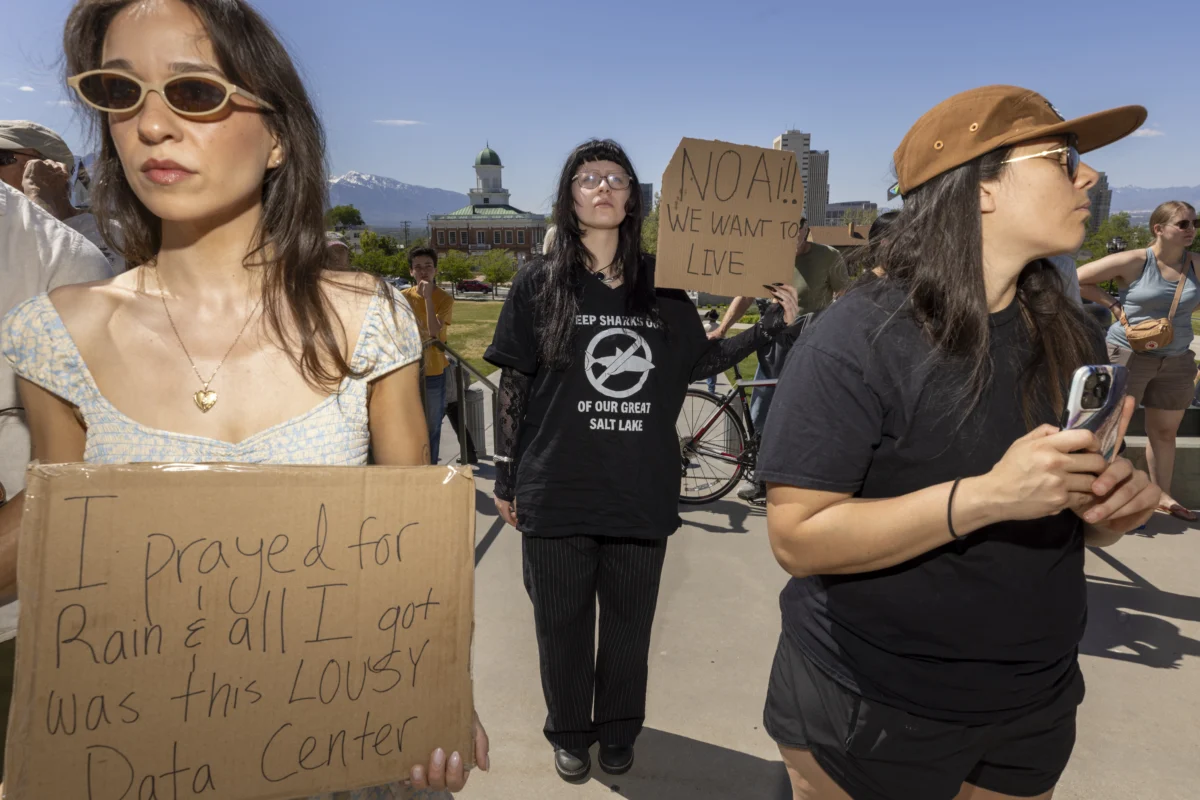
The digital infrastructure powering the global economy is at a critical juncture. As artificial intelligence (AI) accelerates from a burgeoning tech trend to a fundamental operational pillar, the demand for the physical architecture that supports it—the data center—has reached an unprecedented velocity. However, a landmark global study commissioned by NTT Data and executed by the consultancy firm ThoughtLab reveals a sobering reality: the industry’s greatest obstacle is not technological, but social.
The study projects that the data center industry could witness annual growth rates of up to 30 percent through 2030, driven almost exclusively by the massive compute requirements of AI. Yet, this rapid expansion is hitting a wall of local resistance. From the suburbs of Northern Virginia to the bustling industrial zones of Europe and Asia, communities are pushing back against the encroaching "server farms," citing concerns over noise pollution, traffic congestion, and the staggering consumption of energy and water. This clash of priorities has already resulted in over $60 billion in project cancellations and delays over the past two years, signaling a potential crisis for the tech sector’s long-term scalability.
The Growth Trajectory: Three Scenarios for the Future
The ThoughtLab report, commissioned by NTT Data—an IT services giant that maintains infrastructure for 75 percent of the Fortune Global 100—maps out the evolution of the data center landscape through 2030. Researchers established three distinct growth scenarios, all of which point to a significant expansion of the global digital footprint, though at varying levels of intensity.
The Growth Models
- The "Slow" Scenario (16 percent annual growth): This conservative estimate assumes that while AI adoption continues, regulatory hurdles, equipment supply chain bottlenecks, and persistent public opposition act as significant drags on development.
- The "Steady" Scenario (23 percent annual growth): Considered the most likely outcome, this assumes that despite headwinds, the economic necessity of AI-ready infrastructure will compel governments and providers to find middle-ground solutions.
- The "Accelerated" Scenario (30 percent annual growth): This represents the "bull case," where massive capital investment and technological breakthroughs in energy efficiency allow for rapid, widespread deployment of data centers, overcoming current logistical and political barriers.
While the study concludes that steady or accelerated growth is the most probable path, it warns that these figures are contingent upon the industry’s ability to navigate the "social license to operate."
Chronology of a Growing Backlash
The escalation of public opposition has been swift, catching many industry leaders off guard. The chronology of recent years illustrates a shift from minor local concerns to organized, widespread movements that are effectively derailing multi-billion-dollar investments.
- 2023: The Beginning of the Trend. The U.S. began to see a rise in organized opposition, with two major project cancellations tied directly to public pressure.
- 2024: A Broadening Front. Opposition intensified, resulting in six major project cancellations in the U.S. and significant delays across Europe, particularly in regions with strict permitting and environmental oversight.
- 2025: The Tipping Point. The resistance reached a new intensity. In the U.S. alone, 25 projects were canceled in 2025, with 21 of those occurring in the latter half of the year. This surge suggests that local communities have become increasingly sophisticated in their organizing efforts, using local zoning and environmental advocacy as a means to halt development.
In Europe, the situation has mirrored the U.S. trajectory. Large-scale projects totaling several gigawatts of capacity have faced significant permitting challenges, with local governments often siding with residents concerned about the impact on local power grids and water resources. While the backlash has yet to reach the same fever pitch in markets like Japan, Singapore, and parts of India, the report notes that "local opposition and land-use conflicts are emerging" in these regions as well.
Supporting Data: Why Communities Are Saying "No"
The "Not In My Backyard" (NIMBY) movement against data centers is grounded in tangible, localized impacts. Unlike traditional warehouses or office parks, modern AI data centers are massive, 24/7 operations that impose unique burdens on their surroundings.
The Four Pillars of Discontent
- Energy Consumption: AI models require constant, high-density power. Residents worry that this will strain local electrical grids, leading to potential outages or increased utility costs for the local population.
- Water Usage: Many data centers rely on evaporative cooling systems, which consume millions of gallons of water annually. In regions facing climate-related water scarcity, this is a major flashpoint.
- Noise Pollution: The cooling fans and backup generators required to keep thousands of servers operational create a constant, low-frequency hum that residents claim degrades their quality of life.
- Traffic and Visual Impact: The massive size of these facilities and the constant flow of service vehicles required for maintenance have fundamentally altered the character of residential and rural neighborhoods.
These factors have created a "trust deficit." As the study notes, this backlash is "lengthening and complicating planning processes, eroding the regulatory goodwill the industry depends on."
Official Responses and Strategic Implications
The industry is beginning to recognize that its current strategy of quiet, behind-the-scenes lobbying is insufficient. To survive, the sector is looking toward a pivot in its public relations and corporate social responsibility (CSR) messaging.
The Pivot: Reimagining the Data Center as a Community Asset
The ThoughtLab study explicitly recommends that data center providers move toward "better messaging." Rather than positioning themselves as secretive, resource-heavy facilities, providers are being urged to demonstrate how their presence benefits the local economy.
Proposed strategies include:
- Tax Revenue Integration: Explicitly tying property tax revenues from data centers to local public works projects, such as funding for schools, public parks, or transit infrastructure.
- Sustainability Partnerships: Investing in renewable energy microgrids that can benefit the local community, not just the data center.
- Transparent Resource Management: Committing to "water-neutral" operations and using recycled heat from servers to warm local municipal buildings or greenhouses.
The Industry Context: AI’s Vital Role in Modern Business
It is impossible to discuss the data center crisis without acknowledging the ubiquity of the technology they serve. AI has become the engine of the global digital economy, transforming industries from finance to retail and fashion.
In the retail and fashion sectors, for instance, AI has moved beyond simple customer chatbots. It is now used for "predictive procurement"—a complex process where massive datasets are analyzed to manage inventory, track minimum order quantities, and navigate volatile supply chains. In an era of global disruption, the speed and accuracy provided by these AI models can mean the difference between a profitable quarter and a massive loss. Furthermore, AI is increasingly critical for tracking ESG (Environmental, Social, and Governance) compliance, helping brands monitor their carbon footprint and supplier certifications in real-time.
However, the "AI Paradox" remains: the very tools companies use to become more sustainable and efficient in their operations are currently tethered to an infrastructure model that is being viewed as environmentally and socially disruptive at the local level.
Conclusion: The Path Forward
The NTT Data study serves as a clear warning to the tech industry. While technological innovation in chipsets and cooling systems will continue to improve the efficiency of data centers, these advancements will not satisfy a public that feels excluded from the decision-making process.
The $60 billion in cancelled projects represents a massive opportunity cost for the global economy. To reclaim their ability to grow, data center developers must transition from being perceived as "industrial invaders" to "community partners." If they fail to bridge this divide, the "accelerated" growth scenario will remain a theoretical possibility, while the "slow" scenario becomes a structural reality, potentially capping the potential of the AI revolution before it truly reaches its full, transformative capacity.
The future of AI will not be decided in the halls of Silicon Valley, but in the zoning board meetings and town halls of the communities that host the infrastructure of the future. The industry’s challenge is to prove that its growth is not only compatible with local interests but essential to their prosperity.
 Neng Nana
  Ali Ikhwan
  Lina Hope