Introduction: A New Dawn for Interplanetary Travel
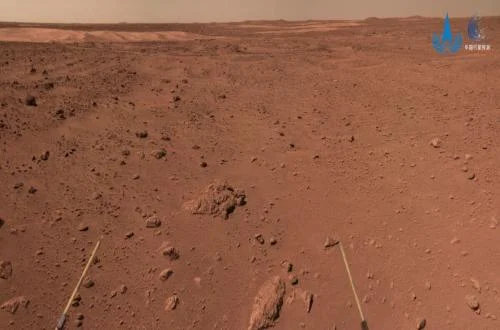
For decades, the dream of setting human footprints on Martian soil has remained the "holy grail" of space exploration—a goal perpetually hovering just two decades away. However, the paradigm may finally be shifting. Earlier this month, NASA announced its support for a revolutionary propulsion technology: the Pulsed Plasma Rocket (PPR). This breakthrough, currently under development by Howe Industries, promises to slash travel time to Mars to a mere two months.
Compared to the conventional seven-to-nine-month transit time required by current chemical propulsion systems, the PPR represents a quantum leap. By drastically reducing the duration of the mission, NASA aims to mitigate the most significant risks to human explorers: prolonged exposure to cosmic radiation, muscle atrophy in microgravity, and the psychological toll of deep-space isolation. As NASA noted in a recent statement, this technology possesses the potential to fundamentally revolutionize how humanity navigates the solar system.
The Pulsed Plasma Rocket: How It Works
The concept of the Pulsed Plasma Rocket is rooted in high-energy physics. Unlike traditional chemical rockets that rely on the combustion of liquid propellants, the PPR utilizes a pulsed plasma propulsion system. By using magnetic fields to accelerate plasma—ionized gas—to extreme velocities, the rocket generates high specific impulse and thrust.
Howe Industries, the primary developer, envisions a system that provides the efficiency needed for heavy-lift interplanetary missions while maintaining enough thrust to handle the massive payloads required for life-support systems and crew quarters. By significantly reducing the time spent in transit, the mission’s overall cost and complexity are lowered, moving Mars from the realm of speculative science fiction toward a viable operational target.
A History of Ambition: The Long Road to Mars
While the PPR is a technological milestone, it is merely the latest chapter in a narrative that began long before the first human stepped on the Moon. The quest to reach Mars has been marked by bold scientific visions, geopolitical shifts, and internal government prioritization that has often favored near-Earth objectives over deep-space exploration.
1. The 1950s: The Theoretical Foundations
The discourse surrounding Mars exploration gained serious momentum in the post-WWII era. Wernher von Braun, the architect of the V-2 rocket and a central figure in the early American space program, was one of the first to provide a rigorous, albeit visionary, roadmap for a human mission to Mars. His 1952 book, The Mars Project, laid out a logistical plan involving a fleet of ten massive spacecraft. While von Braun’s ideas were technically sound in principle, the reality of the 1950s—lacking the necessary computing power and life-support infrastructure—rendered his plans a foundational blueprint rather than an actionable mission.
2. The 1960s: The Nuclear Dream and the "Orion" Disappointment
Perhaps the most daring proposal of the 20th century was Project Orion, conceived by physicists Theodore Taylor and Freeman Dyson. Their concept was startlingly audacious: a spacecraft propelled by a series of controlled nuclear detonations.
The physics were sound, but the geopolitical climate was not. The 1963 Limited Test Ban Treaty, which prohibited nuclear testing in the atmosphere and space, effectively crippled the project. Furthermore, NASA’s leadership harbored deep anxieties regarding the safety and optics of launching a vehicle powered by hundreds of nuclear bombs. By 1964, funding evaporated, and the dream of nuclear-pulsed flight was shelved, marking the first of many instances where policy and safety concerns trumped scientific progress.
3. 1965: The First Glimpse of the Red Planet
By the mid-60s, NASA realized that theoretical planning was useless without empirical data. In 1964, the Jet Propulsion Laboratory launched Mariner 4. When the probe performed its flyby in 1965, it transmitted the first close-up images of Mars.
The results were sobering. The grainy, low-resolution photographs depicted a cratered, desolate, and frozen world, seemingly devoid of the canals or life that early astronomers had imagined. While this discovery tempered the romanticism of Martian exploration, it galvanized the scientific community to develop more sophisticated robotic probes to understand the planet’s harsh reality.
4. The 1970s: The Apollo Hangover and the Shuttle Shift
Following the monumental success of the Apollo 11 moon landing in 1969, the American space program stood at a crossroads. The Space Task Group, established by President Richard Nixon, proposed an ambitious roadmap that included a manned mission to Mars by 1982.
However, political reality intervened. Facing a tightening budget and the need to justify the agency’s existence in the post-Apollo era, Nixon opted for the development of the Space Shuttle program. The Shuttle was designed for low-Earth orbit operations, prioritizing reusability and military/commercial utility over the "giant leap" to another planet. For the next four decades, human spaceflight remained tethered to the Earth’s orbit, and Mars was relegated to the domain of robotic explorers.
Supporting Data: Why Mars is So Difficult
The delay in sending humans to Mars is not merely a failure of political will; it is a testament to the immense engineering challenges that have plagued the industry for 70 years:
- Radiation Hazards: A round-trip to Mars involves exposure to solar particle events and galactic cosmic rays that far exceed the safe limits for human tissue.
- The "Mass Penalty": Current chemical rockets are inefficient. To carry enough fuel for a return trip, the rocket becomes so heavy that it requires even more fuel to lift off—an exponential cycle of mass that makes traditional missions prohibitively expensive.
- The Landing Challenge: Mars has an atmosphere thick enough to cause significant heating and drag, but too thin to provide effective aerodynamic braking for heavy payloads. Successfully landing a heavy, crew-rated spacecraft requires advanced supersonic retro-propulsion, a technology that is still being refined.
- Logistics of Life Support: Sustaining human life for a minimum of 500 days (including time on the surface) requires closed-loop life support systems that can recycle water and oxygen with near 100% efficiency.
Official Responses and Strategic Implications
NASA’s decision to fund the Pulsed Plasma Rocket suggests a pivot back toward high-energy propulsion. By investing in the "Phase 1" development of the PPR, NASA is signaling that it is no longer satisfied with slow-transit missions.
"The objective is to change the mission profile entirely," stated a spokesperson for the project. By reducing the transit time to two months, the agency argues that the mission becomes fundamentally safer. A shorter trip reduces the duration that a crew is exposed to deep space, thereby reducing the mass of radiation shielding required. This creates a "virtuous cycle" where the ship becomes lighter, faster, and cheaper to launch.
Implications for Future Exploration
The implications of a successful PPR deployment are profound:
- Permanent Presence: If transit times are reduced, the logistics of resupply become more feasible, potentially paving the way for a permanent base on Mars.
- Private Sector Synergy: As companies like SpaceX push for reusable, heavy-lift capabilities with the Starship, the integration of advanced propulsion like the PPR could create a combined "highway to Mars."
- Geopolitical Leadership: The US-China space race has intensified. Developing the technology to reach Mars rapidly would represent a significant demonstration of American technological superiority, reminiscent of the Space Race of the 1960s.
Conclusion: The Path Forward
The path to Mars has been paved with the wreckage of cancelled programs and deferred dreams. From the nuclear-bomb-propelled dreams of the 1960s to the Shuttle-era focus on low-Earth orbit, the mission has always been at the mercy of the era’s political and economic constraints.
However, the Pulsed Plasma Rocket serves as a reminder that the human desire to explore remains irrepressible. We are no longer limited by the chemistry of the mid-20th century. With advancements in plasma physics, magnetohydrodynamics, and automated logistics, the distance to Mars is no longer measured in years, but in the speed of our innovation. As NASA and its partners continue to refine this technology, the prospect of the first human footprints on the red dust of Mars seems, for the first time in a generation, to be a question of "when" rather than "if."