
 By Suro Senen
In the digital-first economy of 2025, the friction between a customer’s intent to purchase and the actual transaction is the primary barrier to profitability. For small business owners, selecting a payment system is no longer just about "taking money"—it is about orchestrating a seamless, secure, and data-rich experience that converts casual browsers into loyal brand advocates.
With an overwhelming array of options ranging from global giants to niche boutique processors, the choice can be paralyzing. Whether you are a brick-and-mortar boutique or a high-growth SaaS startup, your choice of payment infrastructure will dictate your cash flow efficiency, your security posture, and your customer retention rates.
What Defines a Modern Payment System?
To navigate the landscape effectively, we must first define the scope. A payment system is the technological backbone that facilitates the movement of capital between a buyer and a seller. It encompasses payment gateways (the "digital front desk"), payment processors (the "back-office validators"), and merchant accounts.
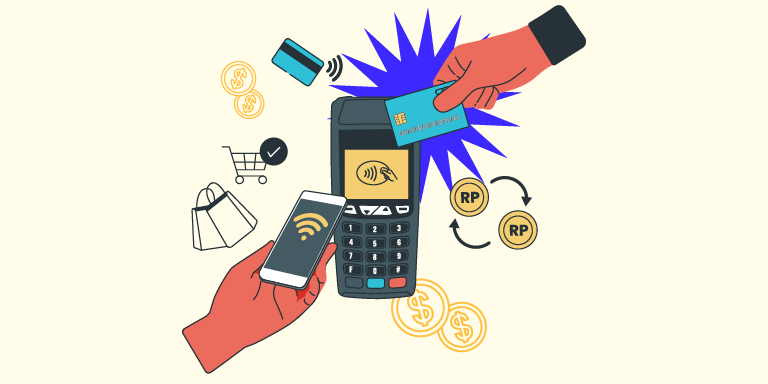
Crucially, it is important to distinguish what these systems are not. They are not accounting software, nor are they inventory management tools—though many modern platforms are increasingly blurring these lines through integrations.
Core Evaluation Criteria for 2025
Before selecting a provider, our research suggests focusing on these five pillars:
- Payout Velocity: In an era of high inflation and tight margins, the time between a transaction and the funds hitting your bank account is critical.
- Checkout Friction: Every additional click or page redirect increases the likelihood of cart abandonment.
- Geographic Accessibility: Does the system handle cross-border transactions, or are you limited to domestic markets?
- Pricing Transparency: The industry is notorious for "hidden" fees. We prioritize systems with clear, volume-based, or flat-rate structures.
- Security & Compliance: PCI-DSS compliance is the non-negotiable minimum.
The Top 6 Payment Systems for 2025
1. Stripe: The Developer’s Choice
Stripe remains the industry gold standard for businesses prioritizing customizability and user experience. By keeping customers on-site throughout the checkout process, it significantly lowers bounce rates.

- The Verdict: Perfect for digital-first brands and platforms.
- The Trade-off: Its power is its complexity. Without an in-house developer or a technical consultant, you may find the more advanced features difficult to leverage.
- Strategic Implication: By choosing Stripe, you are prioritizing the "conversion funnel" over simplicity. It is an investment in long-term scalability.
2. PayPal: The Trusted Global Standard
PayPal’s greatest asset is trust. Customers who are hesitant to enter credit card details into a new, unknown website are often perfectly comfortable clicking the "PayPal" button.
- The Verdict: Essential for businesses with a significant international customer base.
- The Trade-off: Customers are often redirected to the PayPal interface, which can interrupt the aesthetic flow of your branding.
- Strategic Implication: PayPal acts as a "trust signal." Even if it is not your primary processor, offering it as a checkout option can increase trust and reduce skepticism among new customers.
3. Authorize.net: The Robust Veteran
A legacy player that has successfully modernized, Authorize.net is favored for its security-first approach and flexible API.
- The Verdict: Ideal for mid-sized businesses that require enterprise-level fraud protection.
- The Trade-off: The setup process is more rigorous than modern "plug-and-play" solutions.
- Strategic Implication: If your business model involves high-risk transactions or requires highly specific fraud-detection filters, Authorize.net provides the control that automated platforms often lack.
4. Amazon Pay: The Frictionless Experience
Amazon Pay leverages the stored payment information of millions of Amazon users. If a customer has an Amazon account, they can pay on your site without typing in their credit card or shipping address.
- The Verdict: A powerful conversion driver for mobile-heavy eCommerce.
- The Trade-off: You are effectively tethering your checkout experience to the Amazon ecosystem, which may not align with every brand’s desire for independence.
- Strategic Implication: This is the ultimate tool for reducing "mobile cart abandonment." The ease of "one-click" purchasing is unmatched.
5. Square: The Brick-and-Mortar King
While Square has made massive strides in online processing, its roots in hardware—the card reader on the counter—remain its strongest feature.
- The Verdict: The undisputed champion for physical retail stores and pop-up markets.
- The Trade-off: While the online tools are good, they lack the extreme deep-stack customization of Stripe.
- Strategic Implication: If your business is an "omnichannel" operation (physical store + online store), Square offers the best unified dashboard to track all revenue in one place.
6. SecurePay: The Emerging Alternative
SecurePay offers a balanced, easy-to-deploy solution for those who want to avoid the "Big Tech" giants. It is particularly popular among startups that need to get up and running within hours.
- The Verdict: Great for small businesses that prioritize speed of setup and personal support.
- The Trade-off: Brand recognition. New customers may be less familiar with the name, which could lead to minor friction during checkout.
- Strategic Implication: Use SecurePay when you need an "out-of-the-box" solution that avoids the complexities of massive merchant accounts.
Chronology: The Evolution of Payments
To understand where we are in 2025, we must look at the trajectory of the last decade:
- 2015–2018: The "Payment Gateway" era. Focus was on basic connectivity between websites and banks.
- 2019–2022: The "Frictionless" era. The rise of Apple Pay, Google Pay, and one-click checkouts dominated the market.
- 2023–2025: The "Integrated Ecosystem" era. Payment systems are now expected to provide analytics, fraud protection, and inventory syncing as part of the base package.
Supporting Data: Why Small Businesses Fail at Payments
Industry data indicates that nearly 30% of small business cart abandonment occurs solely because the checkout process was "too complicated." Furthermore, businesses that offer at least three distinct payment methods (e.g., Credit Card, PayPal, Digital Wallet) see a 15% increase in conversion rates compared to those offering only one.
Official Responses and Security Standards
All providers mentioned in this guide maintain rigorous PCI-DSS (Payment Card Industry Data Security Standard) compliance. As the regulatory environment shifts, these companies have invested billions into tokenization—a process where sensitive credit card data is replaced with a unique identification symbol, ensuring that even if a system is breached, the actual financial data remains encrypted and useless to hackers.
Implications for Your Business Growth
Choosing a payment system is not a static decision. A business doing $10,000 in monthly revenue has different needs than a business doing $100,000.
- Cost vs. Convenience: Are you willing to pay a slightly higher percentage per transaction for a system that drastically increases your checkout conversion? In most cases, the answer should be yes.
- Operational Overhead: How much time does your team spend reconciling payments? If you are manually entering data from your payment gateway into your accounting software, you are losing money. Choose a system with native integrations (like those provided by Stripe or Square).
- Customer Trust: In 2025, data privacy is a top-tier consumer concern. Using a known, secure payment processor acts as a silent endorsement of your business’s legitimacy.
Frequently Asked Questions (FAQ)
Q: Is it better to use one provider or multiple?
A: For most small businesses, using one provider simplifies accounting. However, offering multiple payment methods (like credit cards + PayPal) through a single provider is the best of both worlds.
Q: Do I need to be tech-savvy to set these up?
A: Services like Square and PayPal are designed for non-technical founders. Stripe and Authorize.net may require a developer for a "custom" integration, but they also offer "pre-built" checkout pages that are quite simple to implement.
Q: Will these systems charge me monthly fees?
A: Most operate on a "pay-as-you-go" model (a percentage of each transaction). Some offer "Pro" plans with monthly subscriptions for advanced features like lower rates or specialized hardware. Always read the fine print regarding "chargeback fees," as these can be significant if you have a high dispute rate.
Final Expert Advice
Before committing, take advantage of the free trials or "sandbox" accounts offered by these providers. Run a test transaction. Experience the checkout process as your customer would. If you feel even a moment of frustration, your customer will feel it too—and they will be far less forgiving.
Disclaimer: Pricing and terms for these providers are subject to change quarterly. Always verify the latest fee structures on the provider’s official documentation before finalizing your merchant agreement.
 Asep Darmawan
  Evan Lee Salim