
 By Pevita Pearce
In the modern digital ecosystem, a creator’s endorsement is the new gold standard for consumer trust. When a creator demonstrates a product—showcasing how a compact suitcase maneuvers through an airport or how a specific moisturizer feels on the skin—they are effectively performing a high-conversion sales pitch. Yet, a startling disconnect is emerging in the e-commerce landscape: while creators are masters of "human" language, product catalogs are often rigid, clinical, and disconnected.
This "Language Gap" is no longer just a branding issue; it is a critical technical failure. As shoppers increasingly bypass traditional search engines in favor of AI-powered assistants like ChatGPT, Gemini, and Perplexity, brands that fail to align their product data with how people actually talk about their items are losing out on a significant share of the market.
The Disconnect: Human Insight vs. Database Rigidity
Consider the case of the "compact carry-on." A creator films a viral video, praising the suitcase for its specific utility: it fits in every overhead bin, and—crucially—it features a dedicated front pocket for a laptop.
The comments section floods with inquiries. However, the viewers who don’t click the creator’s link often turn to an AI shopping assistant, asking for "the suitcase with a laptop pocket that fits overhead bins." Because the brand’s internal catalog labels the item as a "22-inch polycarbonate spinner" and describes the color as "stone" (rather than the user-friendly "beige"), the AI cannot find a match. The brand has done the hard work of creating demand, but their data architecture failed to bridge the gap between that demand and the transaction.
The Anatomy of the Failure
Creators sell through context. They don’t just list dimensions; they explain how a product solves a real-world friction point. They provide the "why" and the "how," while traditional product catalogs often stick to the "what."
- The Creator’s Language: "This pan is easy to clean after eggs; this lamp doesn’t glare on video calls; these headphones don’t press against my glasses."
- The Catalog’s Language: "Category: Kitchenware; Model: XYZ-100; Finish: Matte Grey."
When these two worlds do not intersect, the shopping assistant—which relies on semantic matching—finds no overlap. If the product page never mentions "non-stick after eggs" or "glass-friendly ear cups," the algorithm treats the query and the product as strangers.
Chronology: From Organic Discovery to Algorithmic Retrieval
The journey of a modern shopper has evolved from a linear funnel into a complex, multi-touchpoint web. Understanding this evolution is key to diagnosing why sales might lag after a successful campaign.
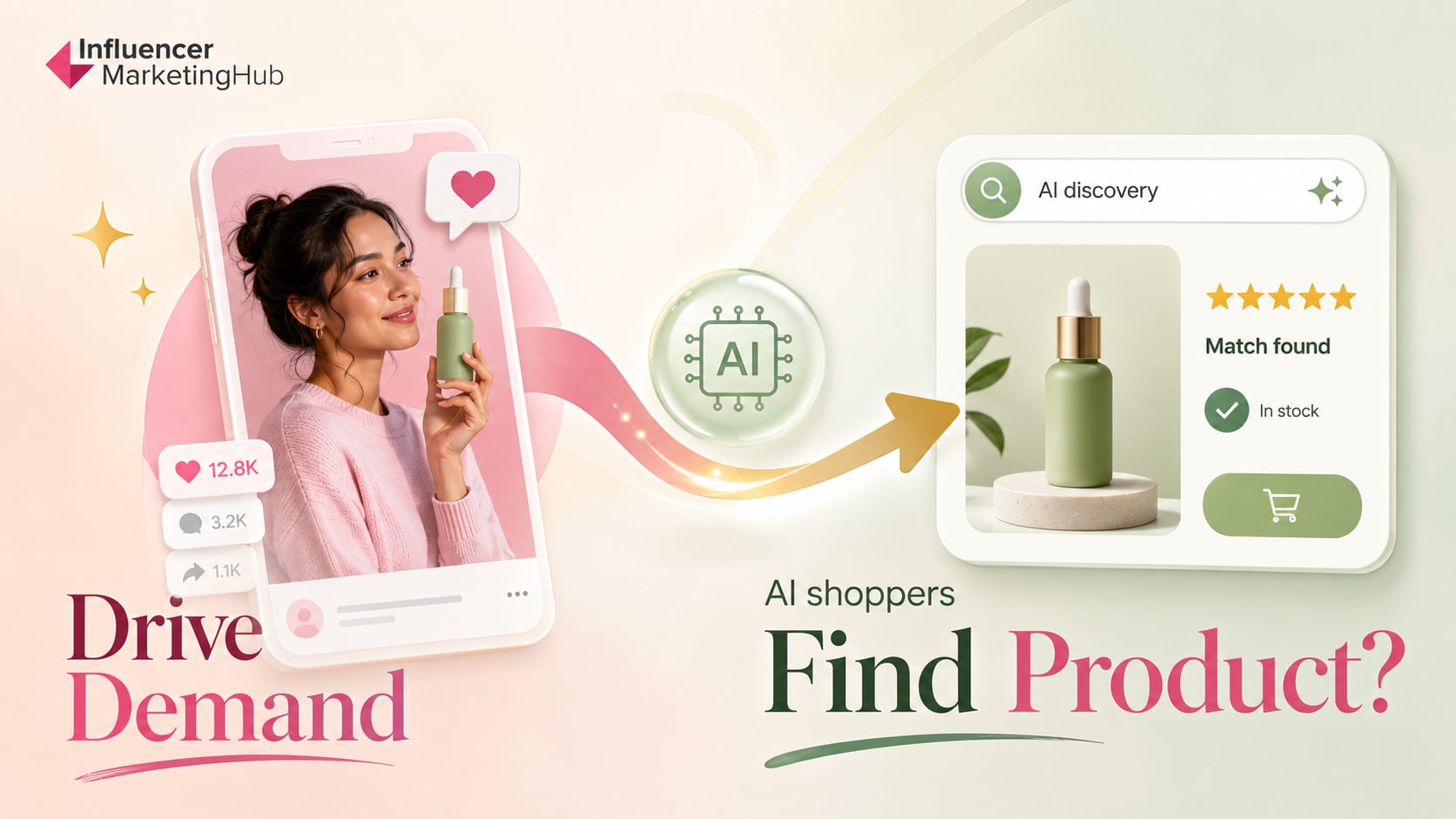
- The Trigger (Discovery): A shopper encounters a creator’s content on social media. They become aware of the product’s specific benefits.
- The Information Gap (Validation): The shopper, needing more info or social proof, turns to an AI interface or a search engine to verify if the product truly fits their needs.
- The Data Mismatch (Retrieval): The AI scans the brand’s structured data. Because the brand hasn’t updated its metadata to reflect the language used by the creator (and subsequently, the customers), the AI reports that the product is "unavailable" or "unmatched."
- The Drop-Off: The shopper, frustrated by the lack of results, moves to a competitor whose product data is more descriptive or better aligned with natural language queries.
This sequence can occur over hours or days. A user might watch a Reel on Monday, perform an AI search on Wednesday, and attempt to purchase on Friday. If the merchant’s data feed is not "fresh" or lacks the attributes discussed in the viral video, the link between discovery and conversion is severed.
Supporting Data: Why Specificity Wins
The shift toward conversational commerce is not a trend; it is a fundamental change in search behavior. Modern consumers rarely ask, "Show me women’s footwear category 184." Instead, they ask for "white sneakers that aren’t too sporty with a dress, come in wide sizes, and can arrive by Saturday."
The Role of Structured Data
Google and OpenAI have both signaled that the future of search is structured and semantic.
- Google’s Product Structured Data: By implementing schema markup, brands make their products eligible for rich results. However, this is only effective if the attributes within that schema—availability, shipping speed, specific features—are accurate.
- OpenAI Merchant Integrations: Merchants can feed their product data directly into ChatGPT. But if the "description" field in that feed is generic, the AI is effectively hamstrung.
Data from the 2026 Influencer Marketing Hub Benchmark Report—which surveyed over 600 marketing professionals—confirms that the industry is pivoting toward operational excellence. The focus is shifting from simply "getting eyes on the post" to "ensuring the back-end infrastructure can handle the resulting traffic."
Official Responses and Industry Best Practices
Industry leaders suggest that the solution is not to turn product pages into walls of marketing copy, but to become more disciplined about data. The goal is to provide the AI system with "fewer reasons to guess."
The "Campaign-to-Catalog" Workflow
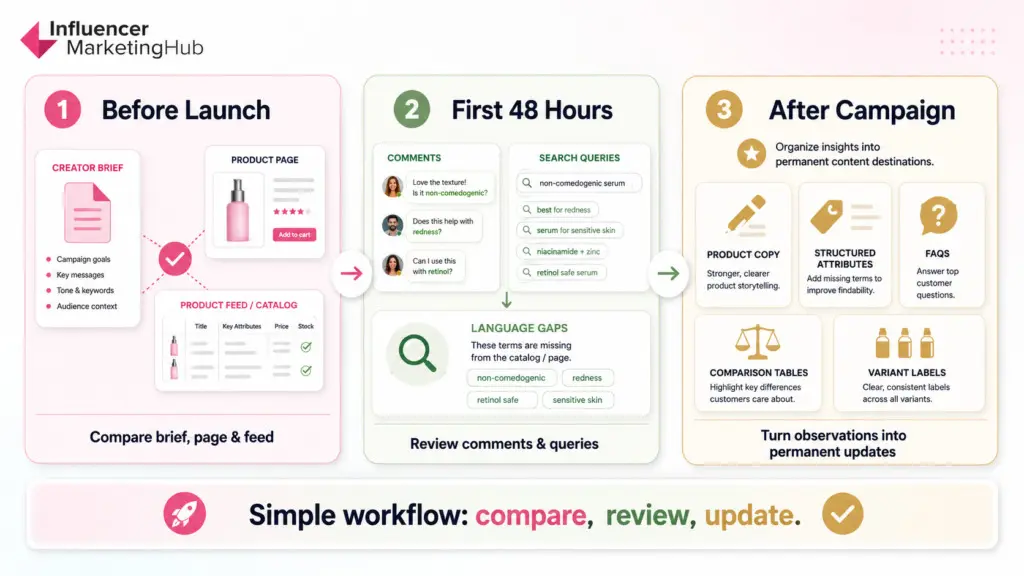
Most companies currently operate in silos: the influencer marketing team manages the campaign, while the e-commerce team manages the catalog. These teams rarely share notes. To close the gap, brands should implement a formal "Data Handoff" process:
- Pre-Launch Audit: Before a campaign goes live, product teams should compare the creator’s talking points against the existing product description and attributes.
- The 48-Hour Feedback Loop: During the first two days of a campaign, teams must monitor comments and search queries. If 50 people ask, "Does this fit under the seat?" and that information isn’t on the product page, it should be added immediately.
- Post-Campaign Integration: Once the campaign concludes, the most effective "buying phrases" used by the creator and the community should be integrated into the product’s permanent metadata, FAQ section, or comparison tables.
Implications for the Future of Retail
The implications of this shift are profound. We are entering an era where the product description is a living asset.
The Cost of Inaction
If a brand fails to update its data, it isn’t just missing out on a few sales; it is signaling to search algorithms that its products are irrelevant to the current discourse. If a product remains "static" while the conversation around it evolves, its visibility in AI-assisted shopping will naturally decline.
The Metric of Success
Measurement must evolve. Rather than just tracking clicks and affiliate codes, brands should track:
- Correction Rates: How often does a team have to manually update product information because a campaign exposed a knowledge gap?
- Conversational Referrals: Are users arriving on the site through AI/chatbot referral paths?
- Support Ticket Clustering: If customer service is flooded with questions about features that were discussed in a video but not listed on the site, that is a failure of the product catalog, not a success of the marketing team.
Conclusion: Bridging the Gap
The creator economy is arguably the most powerful engine for product discovery in the 21st century. Creators hear the questions buyers ask before, during, and after the sale. They are the frontline researchers for what consumers truly care about.
However, the value of that insight is lost if it doesn’t survive the transition from a social media post to a database entry. To thrive in an era of AI-assisted shopping, brands must stop viewing their catalogs as static lists and start treating them as responsive, evolving assets.
The final takeaway for e-commerce leaders: Pick one product from your most recent creator campaign today. Compare the language used in the video, the comments, the product page, and your internal feed. If they don’t match, you have identified your biggest revenue leak. The brands that win will be the ones that master the translation from human sentiment to machine-readable data. Success now depends on your ability to ensure that when a customer asks an AI for your product, the machine knows exactly what they are looking for.
 Iffa Jayyana
  Siti Muinah
  Asro
Asro 