
 By Sagoh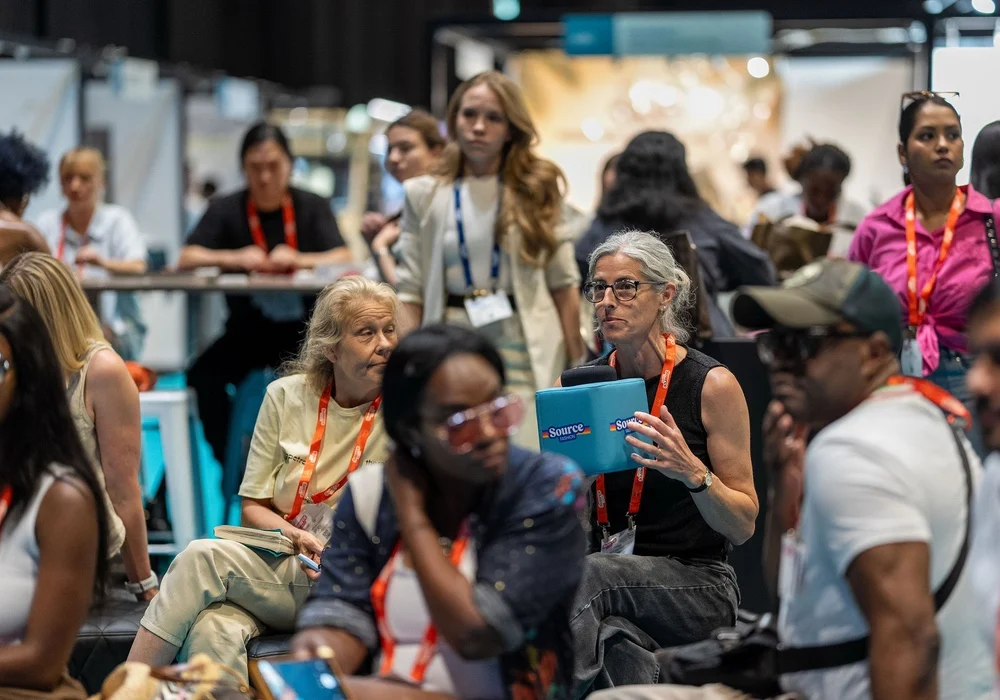
The global fashion industry is currently navigating a "polycrisis"—a convergence of geopolitical instability, climate-driven logistics nightmares, and shifting consumer psychology—that is exposing the fragility of the traditional retail playbook. For decades, the industry has operated on a rigid, linear model: produce high volumes of product in distant, low-cost hubs and ship them to global markets. Experts warn that this "business as usual" approach is no longer a viable strategy in an era where uncertainty is the only constant.
Main Facts: The End of the Low-Cost Mirage
At the recent Source Fashion trade show in London, Marguerite Le Rolland, senior global insight manager of fashion at Euromonitor International, issued a stark warning: the era of prioritizing the lowest unit price at any cost is over. The industry is currently contending with a projected global economic growth rate of just 2.9 percent for 2026, a decline from the pre-conflict forecast of 3.1 percent.
The primary culprits are rising tensions in the Middle East—specifically the Strait of Hormuz—which have sent energy prices soaring and created severe logistical bottlenecks. These conditions have inflated the cost of everything from synthetic fiber production to the transport of finished goods. Brands that once relied on "China-plus-one" diversification strategies are finding that untangling from the deeply integrated, highly specialized manufacturing ecosystem of China is significantly more complex than anticipated.
Chronology of a Shifting Landscape
- Pre-2020: The industry reached the zenith of the "offshoring era," where cost-minimization led to massive, centralized production in Asia. Markdown rates were manageable, and inventory was predictable.
- 2020–2023: The COVID-19 pandemic exposed the fatal flaws in lean, globalized supply chains. Brands began holding expensive "buffer" inventories to avoid stockouts, which paradoxically led to an industry-wide surplus.
- 2024–2025: Geopolitical volatility—from trade wars to shipping blockades—transformed logistical risk from a "black swan" event into a standard business operational cost.
- 2026 and Beyond: The current period marks a pivot toward "supply lattices." Brands are moving away from purely offshore models toward hybrid ecosystems that blend nearshoring and onshoring to achieve speed-to-market and mitigate the risks of global disruptions.
Supporting Data: The Markdown Trap
The financial reality of the current fashion model is grim. Bill McRaith, former chief supply chain officer at PVH Corp. (the parent company of Calvin Klein and Tommy Hilfiger), notes that the industry’s obsession with low-cost manufacturing has backfired.
Data presented at the summit highlights the following discrepancies:
- Discount Dependency: The share of discounted products has ballooned from 6 percent to an alarming 60 percent.
- Markdown Severity: Typical markdown rates have surged from the 10–20 percent range to as high as 60 percent.
- Profitability Paradox: Despite chasing lower unit costs, Earnings Before Interest and Taxes (EBIT) have plummeted. For every five cents saved on a unit cost through aggressive offshoring, brands are losing roughly $1 in potential margin due to stockouts, excess inventory liquidation, or missed seasonal opportunities.
- The Carbon Cost: While sea freight accounts for only 1 percent of a garment’s carbon footprint, the industry’s reliance on air freight—often used to fix supply chain delays—generates 50 times the carbon of sea transport, with high-altitude emissions making it 70 times more damaging to the environment.
Official Responses and Expert Insights
Industry leaders are now advocating for a "supply lattice"—a sophisticated, interconnected manufacturing matrix. Rather than choosing between offshore, nearshore, or onshore, McRaith proposes a layered approach:
- Offshore (e.g., Southeast Asia, Central America): Used for stable, core collections where cost-efficiency remains paramount.
- Nearshore (e.g., Portugal, Turkey, Morocco, Egypt): Used for flexibility and regional responsiveness.
- Onshore (e.g., U.K., U.S.): Used for "fringe SKUs" and rapid replenishment to test market demand, preventing the need for massive, risky inventory bets.
"Price is irrelevant if you can sell it at full cost," McRaith emphasized. By producing smaller quantities closer to home, brands can react to actual consumer demand, effectively bypassing the need to dump excess stock at a loss.
Regarding the move away from China, Le Rolland pointed to the case of Mango, which maintains a balanced strategy: producing core items in Asia for cost-effectiveness, while utilizing local, faster supply chains for trend-driven, high-velocity items. Conversely, she noted the cautionary tale of Steve Madden, which attempted to move significant production to Latin America to mitigate tariff risks, only to return some volume to China due to the inability of the new hubs to match the required quality and technical precision.
A New Consumer Mindset: Intentionality and Resale
The supply chain is only half the battle; the consumer side is undergoing an equally radical transformation. Euromonitor surveys indicate that 55 percent of consumers, including high-income brackets, intend to prioritize savings over the next year. When they do spend, their focus has shifted from fashion toward wellness, travel, and experiences.
This "intentional consumption" has led to:
- The Rise of Resale: Platforms like Vinted have become dominant retail forces, with Vinted currently standing as the third-largest fashion retailer in the U.K.
- Brand Narrative Control: High-end labels are reclaiming their brands by entering the secondhand market. Ralph Lauren’s reconditioning program and H&M’s "pre-loved" concept stores demonstrate a shift from selling volume to selling curated, long-term brand equity.
- The Currency of Style: Younger generations are increasingly viewing luxury items not just as fashion, but as assets with long-term value, driving the demand for high-quality items that hold currency in the resale market.
Implications for the Future of Fashion
To survive the polycrisis, brands must transition from a product-centric model to a service-centric one. This includes:
1. Resilience through Scenario Planning
Brands must treat "uncertainty as the new norm." This requires integrated teams where merchandising, supply chain, and finance departments share data in real-time. Moving away from rigid, fragile launch dates toward transseasonal collections can prevent inventory obsolescence.
2. Material Reliability
The volatility of oil prices has made virgin synthetics—the backbone of fast fashion—unpredictable and expensive. Le Rolland suggests that the "pricey" alternative materials (such as fruit- or bamboo-based fibers) are becoming increasingly competitive. As the cost of oil rises, these sustainable, reliable materials may eventually prove to be the more cost-effective choice.
3. AI-Driven Discovery
As "agentic AI" and sophisticated chatbots become the entry point for the consumer journey, brand visibility will depend on how well companies can serve specific data queries. Searches are evolving from generic terms like "Polo shirt" to highly specific requests like "Where is the nearest stockist of vintage Ralph Lauren in London?" Brands that fail to integrate their inventory systems with AI-driven discovery will effectively become invisible.
4. The End of the "Lowest Price" Fallacy
The final implication is a cultural shift within corporate boardrooms. The industry must stop viewing logistics and manufacturing as a race to the bottom. In a world of climate disasters and shifting geopolitics, the most "expensive" supply chain is the one that is the most fragile. Resilience, flexibility, and the ability to capture full-price sales are the new markers of a successful fashion enterprise.
As Le Rolland aptly summarized, the industry is currently dealing with a vast number of moving pieces. For the brands that survive, the future will not be defined by who can produce the cheapest garment, but by who can build the most adaptive, sustainable, and consumer-aligned ecosystem.
 Neng Nana
  Ali Ikhwan
  Lina Hope