
 By Siti Muinah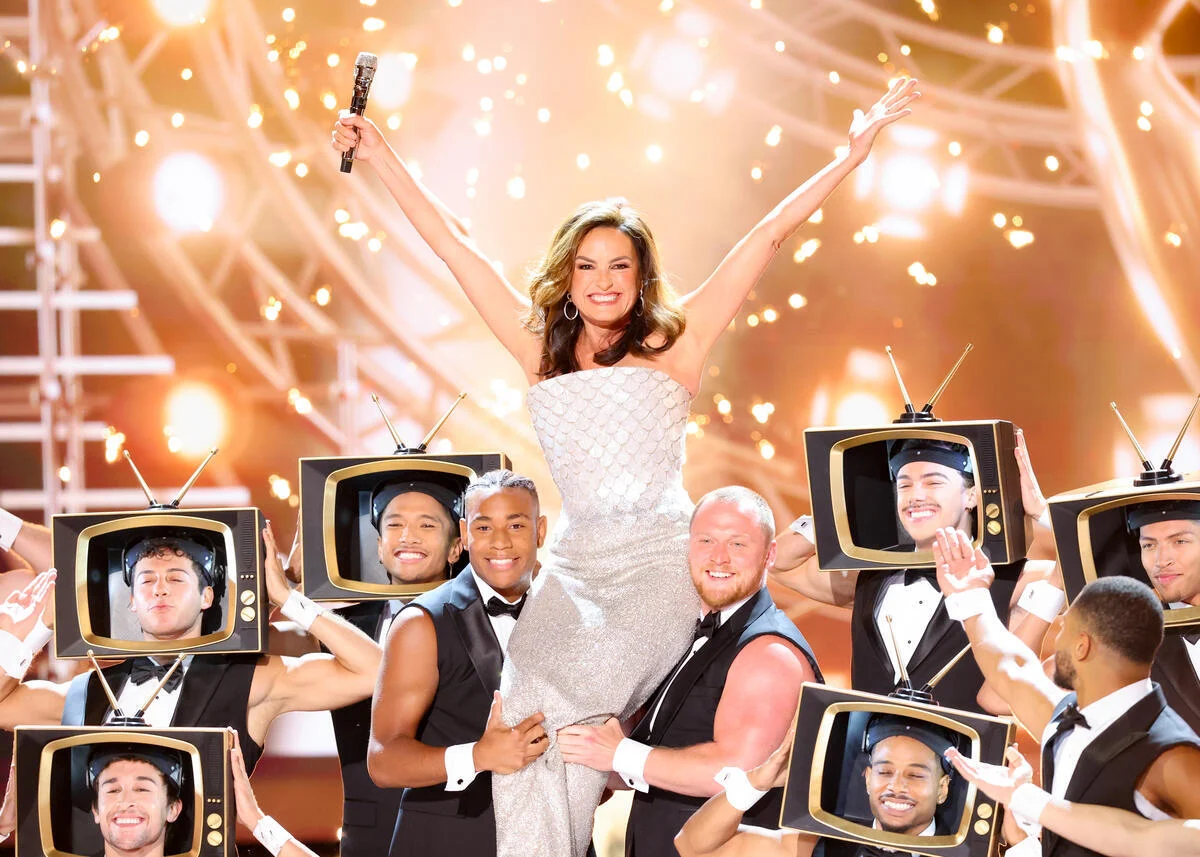
The 78th Emmy Awards, broadcast on NBC, concluded this Monday with a viewership figure of 6.7 million, according to Nielsen data. While the industry closely watches these numbers as a bellwether for the relevance of traditional prestige television, the reality of the 2026 telecast is far more nuanced than a simple year-over-year comparison might suggest. Hosted by Law & Order: Special Victims Unit icon Mariska Hargitay, the ceremony managed to assert its dominance as the most-watched non-sports, non-news Monday telecast of 2026, even while grappling with the perennial challenge of modern fragmented media consumption.
As the industry stands on the precipice of a massive structural shift—with the Television Academy currently in advanced talks to move the ceremony to Amazon Prime Video—this year’s broadcast served as both a celebration of television’s golden era and a stark reminder of the challenges inherent in linear television’s struggle for relevance in the streaming age.
The Numbers: Contextualizing the Performance
On the surface, a 9% decline from the 2025 ceremony—which pulled in 7.4 million viewers on CBS—might appear to be a setback. However, industry analysts caution against reading the raw data in a vacuum. The 2025 ceremony enjoyed the distinct advantage of a Sunday night time slot, a placement that historically correlates with higher engagement for three-hour telecasts.
When adjusting for the challenges of a Monday night broadcast, the picture becomes more favorable for NBC. Compared to the 2024 ceremony, which aired on Fox and drew a lackluster 4.4 million viewers, NBC’s 2026 telecast represents a significant 41% increase. It is important to note that the 2024 broadcast suffered from a historical anomaly: it was the first time in Emmy history that the awards were forced to compete directly with an NFL playoff game, which decimated its live viewership.
A more accurate, "apples-to-apples" comparison can be found by looking at NBC’s own Monday night broadcast in 2022. In that year, the telecast drew 5.9 million viewers. Against this benchmark, the 2026 ceremony marks a 10% improvement, signaling that while live linear television is under pressure, the Emmy brand remains a resilient force when paired with the right production and promotional muscle.
Chronology: A Monday Night Battle for Attention
The evening was defined by a delicate dance between the ceremony’s glitz and the raw, unyielding pull of professional football. Despite the Emmys’ status as a cultural pillar, the night was defined by the looming presence of a high-stakes NFL matchup between the Kansas City Chiefs and the Denver Broncos.
Mariska Hargitay, tasked with navigating this competitive landscape, brought a sense of seasoned professionalism and meta-humor to the stage. Recognizing the elephant in the room, the broadcast leaned into the cultural intersection of celebrity and sport. In a viral pre-recorded sketch, Hargitay was joined by global superstar Taylor Swift. The segment poked fun at the reality of the evening, with Hargitay musing that Swift would be unable to grace the ceremony with her presence because she was occupied supporting her husband, Chiefs tight end Travis Kelce, at the game.
This choice of content highlighted the Academy’s strategy: rather than fighting the cultural dominance of the NFL, the broadcast attempted to synthesize it, drawing in a broader audience that might otherwise have been entirely lost to the football game. By effectively acknowledging the competition, the producers managed to keep the telecast at the center of social media conversations throughout the night.
Supporting Data: The Digital Pivot
While the Nielsen "live" ratings remain the industry standard for traditional broadcasting, they no longer represent the totality of a show’s reach. NBCUniversal reported that the 78th Emmy Awards generated a staggering 133 million social views across Facebook, Instagram, X, and YouTube.
This figure represents a 90% increase from 2025, suggesting that the "second screen" experience—where viewers consume clips, memes, and highlights on mobile devices—is where the real growth lies. For the Television Academy, this data is vital. It proves that the Emmy brand has successfully pivoted from a "must-watch-live" event to a "must-consume-socially" event. The disparity between linear viewership and social engagement indicates that the Emmys are successfully reaching a younger demographic that consumes television content primarily through curated, viral snapshots rather than the full, three-hour linear experience.
Official Responses and Strategic Implications
The Television Academy has remained relatively quiet regarding the specific performance metrics, but the underlying sentiment is one of cautious optimism. The network, NBC, has leaned into the "Monday Night" success, emphasizing the show’s victory in the 18-49 demographic. This specific demographic is the "holy grail" for advertisers, and maintaining a stronghold here is arguably more important for the Emmys’ long-term commercial viability than the raw total viewership count.
However, the most significant news surrounding the 78th Emmys is not what happened on stage, but what is happening in the boardroom. For 31 years, the Emmys have maintained a rotating partnership between the "Big Four" networks: NBC, CBS, Fox, and ABC. This rotating cycle has been a hallmark of the industry, ensuring that no single network could dominate the prestige of the awards, while guaranteeing that the ceremony received the full promotional weight of a major broadcaster.
The current negotiations with Amazon Prime Video represent a fundamental break from this tradition. Moving the Emmys to a streaming platform like Prime Video would be a tacit admission that the "broadcast era" of the awards show has officially reached its conclusion.
The Implications of a Streaming Future
If the deal with Amazon proceeds, the implications for the television industry will be profound. A move to a streaming platform would allow for:
- Global Reach: Unlike traditional broadcast networks, which are constrained by geography and cable/antenna infrastructure, Amazon Prime Video could stream the ceremony to a global audience, potentially revitalizing the brand on an international scale.
- Flexible Formats: Streaming platforms are not bound by the strict constraints of the "three-hour" broadcast clock. This could allow the Academy to experiment with the format, perhaps creating a more streamlined, less bloated ceremony that caters to modern attention spans.
- Integrated Commerce: Amazon’s unique position as a retail giant could transform the Emmys into a shoppable event. From red carpet fashion to the products featured in commercials, the potential for seamless integration between entertainment and retail is a frontier that broadcast networks simply cannot navigate.
However, the move also comes with risks. Critics argue that moving behind a subscription paywall could further alienate the older, core demographic of the Emmys—those who are most comfortable with traditional television. Furthermore, losing the "prestige" of being a major network broadcast event could, in the eyes of some purists, diminish the show’s cultural gravitas.
Conclusion: A Turning Point
The 78th Emmy Awards, while showing a slight decline in raw numbers, proved that the ceremony is far from obsolete. By navigating a difficult Monday night slot against NFL competition and securing massive engagement on social media, the event demonstrated that it still possesses the cultural cachet to command an audience.
As the industry looks toward 2027 and the potential transition to a streaming-first model, the 2026 telecast will likely be viewed as the end of an era. The success of the Emmys is no longer measured solely by who is watching at 8:00 PM on a Monday, but by the volume of the digital conversation that follows. As the Television Academy prepares for a new chapter with Amazon, the lessons learned from this year’s broadcast—the necessity of social integration, the reality of competitive sports, and the importance of adapting to a fragmented audience—will serve as the foundation for the future of television’s biggest night.
Whether this transition marks a new golden age for the awards or a final departure from its roots as a mainstream broadcast event remains to be seen. What is certain, however, is that the industry is watching, and the decisions made in the coming months will set the standard for how we celebrate the art of television for decades to come.
 Jia Lissa
  Nana
Nana  Laily UPN