
 By Asep Darmawan
Somewhere deep within your current email database, there is a customer who genuinely loves your product. They have made multiple purchases, taken the time to leave a glowing review, and would happily recommend your brand to a friend over coffee. Moreover, their social and professional circles likely mirror your ideal buyer persona.
Yet, despite this built-in reservoir of goodwill, most business owners never ask them to make the introduction.
For the vast majority of founders and marketing executives, a referral program exists in much the same way a gym membership does: it technically exists, but nobody has used it since January. There is a faded link buried somewhere in the website footer, and that constitutes the entirety of the strategy.
This oversight comes at a staggering cost. When a trusted friend says, "You’re going to love this product," the heavy lifting of sales is done instantaneously. No paid ad platform can buy that level of trust, and no algorithmic targeting can replicate it.
So why do most referral programs flatline? The root cause is deceptively simple: they are constructed as a static website page rather than an active, dynamic marketing system.
1. Main Facts: The Mathematics and Psychology of Word-of-Mouth
To understand why referral marketing consistently outperforms traditional acquisition channels, one must examine the fundamental shift in modern consumer behavior. Consumers are increasingly blind to traditional banner ads, skeptical of influencer endorsements, and fatigued by targeted social media algorithms.
By contrast, peer recommendations carry an unmatched psychological weight. When an individual evaluates a new restaurant, a software tool, or a pair of shoes based on a friend’s advice, they bypass the traditional vetting and comparison stages. Years of pre-existing trust are transferred to your brand via a single text message.
Key Performance Advantages:
- Higher Conversion Rates: Referred customers convert at significantly higher rates compared to traffic acquired via paid search or social ads.
- Superior Customer Lifetime Value (LTV): Because they enter the ecosystem with built-in trust, referred clients tend to stick around longer and spend more over time.
- Organic Targeting: Your existing customers act as superior targeting agents because they inherently understand the needs, preferences, and budgets of the people in their network.
Despite these advantages, brands continue to treat word-of-mouth as a passive phenomenon rather than an engineered infrastructure. Building a true referral engine requires a strategic blueprint encompassing precise timing, double-sided incentives, and frictionless user experiences.
2. Chronology: The Evolution of Customer Acquisition Strategies
Historically, early-stage businesses relied entirely on organic word-of-mouth, hoping that a great product would naturally spark conversations. As the digital landscape matured in the 2000s and 2010s, founders pivoted toward paid acquisition models—pouring capital into search engine optimization (SEO) and social media advertising to scale rapidly.
- Phase 1: The Organic Era (Pre-2010s): Growth was heavily dependent on organic buzz, local networking, and unorganized customer recommendations.
- Phase 2: The Paid Ads Gold Rush (2010–2020): Brands relied heavily on customer acquisition cost (CAC) math, pumping funds into digital ad auctions. As privacy regulations tightened and ad costs soared, this model became increasingly unsustainable for emerging brands.
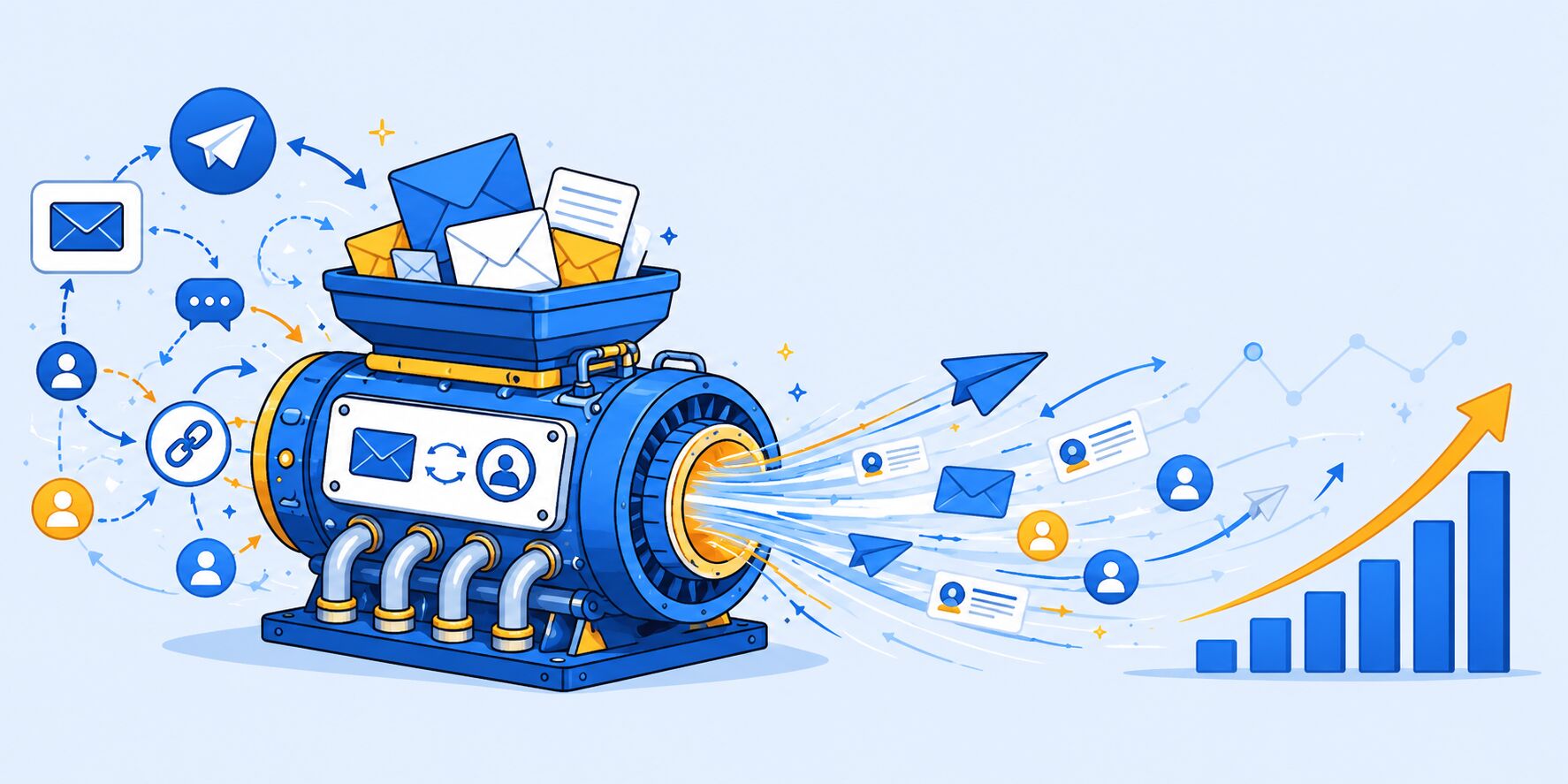
- Phase 3: The Automated Retention & Referral Era (Present): Modern e-commerce and SaaS operators are shifting focus back to owned media—specifically email and SMS databases. By combining sophisticated customer relationship management (CRM) platforms with automated loyalty and referral workflows, brands are turning existing buyers into an active sales force.
3. Supporting Data & Strategic Insights: Anatomy of a High-Performing Referral Engine
Transitioning from a passive footer link to a thriving referral engine requires a meticulous approach across four core pillars: timing, incentives, friction reduction, and audience segmentation.
Timing: Asking at the Moment of Delight
The most common mistake in referral marketing is not poor copywriting or an unappealing reward—it is terrible timing. Dropping a generic referral pitch into a routine Tuesday promotional newsletter is organizational "wallpaper"; it blends into the background and is instantly ignored.
The same exact message delivered immediately after a moment of peak customer satisfaction yields radically different results. Key behavioral triggers include:
- Completing a second or third repeat purchase.
- Leaving a 5-star product review or positive feedback score.
- Replying directly to an email expressing love for the product or service.
- Resolving a support ticket with a positive outcome.
Manual monitoring of thousands of customer interactions is impossible, which is why automation is essential. Setting up automated workflows—such as triggering a referral request a few days after a successful product delivery or embedding a share link inside a review thank-you email—ensures the ask arrives precisely when goodwill peaks.
Incentives: Double-Sided or Do Not Bother
One-sided referral rewards rarely succeed. If only the referrer receives a bonus or cash payout, the interaction can feel transactional, forcing customers to monetize their friendships. Conversely, if only the referred friend receives a discount, the existing customer has no tangible motivation to act.
Double-sided rewards solve this dilemma. Programs structured around a "Give $10, Get $10" model reframe the referral as a mutual favor:
- The Referrer feels good about helping a friend save money while earning a reward for their loyalty.
- The Friend faces a lower barrier to entry for their first purchase.
The incentive itself does not need to be extravagant. Free shipping, modest dollar amounts, or early access to new product releases work exceptionally well. The primary barrier to success is rarely a small reward; rather, it is operational friction.
Eliminating Friction in the Sharing Flow
Every referral program leaks revenue at two critical junctures: the moment a customer has to think about what to write, and the moment they have to figure out how to share it.
To maximize conversion rates, brands must simplify the process:
- Unique Tracking Links: Every customer should receive an automated, unique URL that handles attribution seamlessly.
- Pre-Written Copy: Provide a short, human-sounding template that users can send as-is or lightly customize.
- Omnichannel Sharing: Incorporate one-tap share buttons tailored to where modern consumers communicate—SMS, WhatsApp, and email.
As a rule of thumb, if referring a friend takes more than fifteen seconds, the process is too complex. Superfans will push through clunky interfaces, but the quietly satisfied majority—who represent the vast bulk of your list—will abandon the flow entirely. Furthermore, compounding growth requires gentle consistency. Mentioning the program steadily within post-purchase sequences, newsletters, and receipts ensures that when a friend asks, "Where did you get that?", the customer immediately remembers their unique link.
Segmentation: Asking the Right People
Broadcasting a referral blast to an entire email list—including dormant subscribers who have not opened an email in eight months—yields dismal returns. It trains your audience to skim past future messages.
Instead, build micro-segments based on engagement and purchase history:
- Repeat buyers and loyal subscribers.
- Verified product reviewers.
- Active community members or those who have replied warmly to past emails.
Advanced CRM and email automation tools (such as Omnisend) excel at isolating these high-value segments. By integrating with loyalty platforms like Smile or Yotpo, these tools manage points, tiers, and referral tracking automatically behind the scenes, ensuring that the right message reaches the right person at precisely the right time.
4. Official Responses and Industry Perspectives
Marketing experts and software executives emphasize that owned media channels are the most secure path forward in an era of unpredictable ad costs and privacy restrictions.
Sharon Atefi, a prominent partnerships and brand growth professional, notes: "Word of mouth is already happening around your brand, right now, whether you’ve built a program or not. People naturally mention things they like. The fundamental question for founders is whether they have made it easy for those mentions to travel, and whether anyone gets thanked when they do."
Industry data reinforces this view, demonstrating that brands shifting capital away from top-of-funnel ad spend and re-allocating it toward retention-based referral loops see a marked improvement in overall marketing efficiency ratios (MER). By letting loyal customers do the heavy lifting, brands establish a resilient, organic growth loop that protects profit margins against rising customer acquisition costs.
5. Implications for Founders and Marketers
For modern entrepreneurs, the implications of upgrading an email list into a referral engine are profound:
- Reduced Dependency on Ad Networks: Lower reliance on unpredictable ad auctions protects businesses from sudden spikes in cost-per-click (CPC) and regulatory shifts in data privacy.
- Maximized ROI on Existing Assets: Rather than constantly burning capital to acquire cold traffic, brands extract maximum value from the audience they have already paid to bring through the door.
- Enhanced Brand Community: Transforming passive buyers into active brand advocates fosters a deeper emotional connection between the consumer and the company.
Ultimately, a well-structured referral engine is not a complex marketing gimmick; it is simply the digital infrastructure for generosity that already exists within your customer base. By automating the ask at moments of delight, offering double-sided incentives, removing sharing friction, and targeting the right segments, founders can unlock a predictable, compounding engine for sustainable growth.
 Azzam Bilal Chamdy
  Jia Lissa
  Nila Kartika Wati