
 By Neng Nana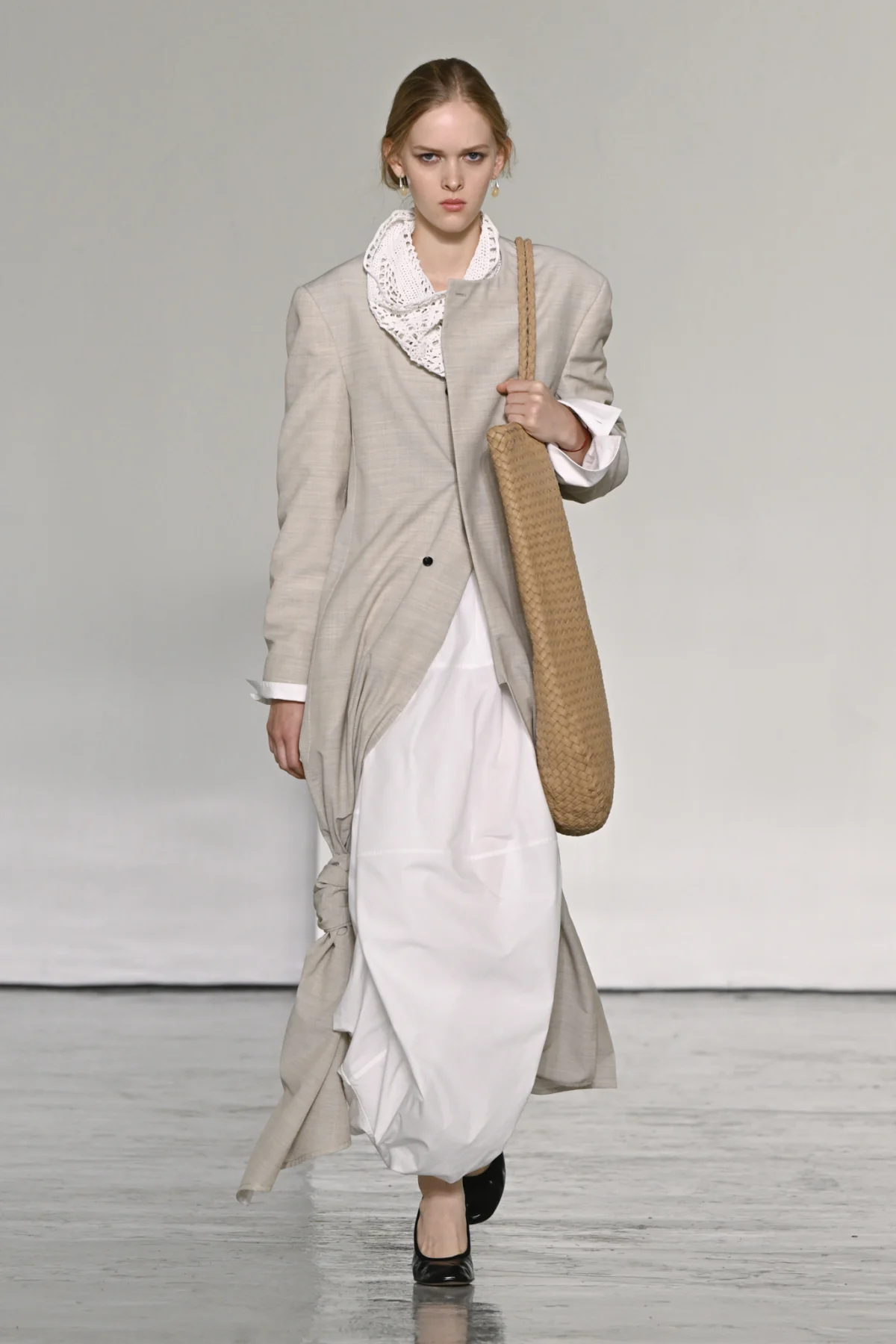
Main Facts: A Shift in Creative Trajectory
At the heart of Milan Fashion Week, Bottega Veneta’s latest presentation stood as a pivotal moment for the house. Creative Director Louise Trotter, currently navigating the high-stakes environment of luxury heritage, unveiled a Spring collection that marked a departure from the brand’s recent reputation for heavy, monumental garments.
The runway, staged within a sprawling, clinical white space that evoked the sterile, high-concept aesthetic of Stanley Kubrick’s 2001: A Space Odyssey, served as a minimalist canvas for a collection defined by "lightness." The set design—a series of neatly aligned, crushed cardboard boxes topped with hyper-realistic leather parrot tulips—offered a thematic preview of the show: a juxtaposition of raw, industrial materials and delicate, artisanal craft.
While the fashion industry often fixates on the "next big trend," this show was anchored in the house’s core identity. Trotter’s vision for the season focused on shedding the weight of previous collections, favoring crisp fabrics, airy crochet, and a tactile, organic approach to luxury that feels both grounded and ethereal.
Chronology of the Evening
The atmosphere leading up to the show was electrified by a star-studded front row. The arrival of Australian actor Jacob Elordi, sporting his signature goatee and a dark olive Harrington jacket, prompted a rare display of frenzy among even the most seasoned fashion editors. His presence—accessorized with a vibrant red intrecciato fold-over pouch—signaled the brand’s continued relevance in the pop-culture zeitgeist.
As the house lights dimmed and the show began, the pacing was deliberate. The collection unfolded in waves:
- The Opening: The initial looks established the "undone" aesthetic, with models showcasing elongated tailoring and shirts that leaned into a more relaxed, approachable silhouette.
- The Middle Act: The runway transitioned into a celebration of Venetian textile heritage, featuring intricate lace and crochet work that served as a masterclass in hand-stitching.
- The Grand Finale: The show concluded with a series of fringe-heavy pieces, including bubble skirts and oversized straw bags, that demonstrated the house’s mastery of movement and texture.
- The Post-Show Scrum: Following the final walk, a chaotic but energized press gathering formed as reporters vied for a statement from Trotter, who remained composed amidst the flurry of flashbulbs and questions.
Supporting Data: The Anatomy of a Collection
To understand the significance of this shift, one must look at the technical specifications of the designs. Trotter has faced criticism in previous seasons for the sheer heft of her garments, which some felt lacked the "wearability" required for modern wardrobes.
The Technical Evolution
In this collection, the "heft" was replaced by a sophisticated lightness. The use of gauzy pink silk trousers and crisp, short-sleeved white shirts demonstrated a shift in fabric procurement. By incorporating knitting and stitching techniques native to the Venice region, the brand managed to maintain its reputation for "craft" without sacrificing the silhouette.
Key design elements included:
- Fringe as Architecture: Far from a simple decorative flourish, fringe was treated as a structural component. It draped from hip scarves and was manipulated into the whorls of bubble skirts, creating a dynamic visual effect as models walked.
- Tailoring with a Twist: The tailoring was notably trimmer and more elongated. By pairing structured blazers with gauzy silk or simple chinos, Trotter achieved a balance between "polished" and "organic."
- The "Undone" Detail: A notable departure from the brand’s previous rigidness was the intentional styling of shirts to reveal glimpses of undergarments, reinforcing the designer’s goal of making the collection feel lived-in and human.
Official Responses: Craft as the Ultimate Logo
In an era where fashion houses are often defined by flashy monograms and logos, Louise Trotter’s stance is refreshingly foundational. Speaking to a scrum of reporters backstage, she clarified the philosophy driving her tenure at Bottega Veneta.
"We’re a house of craft," Trotter stated, emphasizing that the label’s value proposition lies in the labor of its artisans rather than the visibility of its branding. "Craft really is our logo. But there was a lot of work this season on trying to find techniques that brought lightness and wearability, while still possessing all of the incredible handwork that this house is capable of doing."
When asked about the contrast between the polished runway looks and the more relaxed silhouettes, she described the collection as a "language between things being quite polished and a language with things being a little more organic." It was a clear acknowledgment that the modern consumer demands luxury that does not feel like a costume—garments that can be lived in, moved in, and styled with a sense of personal agency.
Implications: The Future of Bottega Veneta
The implications of this collection for the broader luxury market are significant. For years, the industry trended toward "maximalist branding"—a race to see whose logo could be the largest. Bottega Veneta’s pivot suggests a return to the "Quiet Luxury" ethos, but with a specific, artisanal twist that differentiates it from competitors.
The "Goatee" Effect and Menswear
The menswear segment of the show was particularly successful in its evolution. By shedding the overly formal constraints of previous seasons, the collection embraced a bohemian sensibility. The garments were lighter, trimmer, and felt more connected to the contemporary man’s lifestyle. This shift, perhaps subconsciously mirrored by the "goatee-and-Harrington" look of the front-row guests, suggests that Bottega Veneta is successfully courting a demographic that values style over status.
Sustainability and the "Homespun" Aesthetic
The inclusion of leather-crafted parrot tulips and the emphasis on regional Venetian stitching highlight a move toward sustainability and provenance. By focusing on local, small-scale production techniques, the brand is positioning itself as a steward of heritage craft. This is not merely an aesthetic choice; it is a business strategy designed to appeal to a generation of consumers who prioritize the story of how a product is made over the simple fact of its purchase.
Conclusion
As the dust settled on the stark, white runway, the verdict was clear: Bottega Veneta is entering a new phase. Louise Trotter has successfully maneuvered the brand away from the critiques of heaviness and into a space of refined, airy precision. Whether it is the mesmerizing movement of a fringe skirt or the subtle, organic grace of a silk trouser, the collection proves that true luxury does not need to shout.
By finding the "language between" the polished and the undone, Bottega Veneta has managed to remain relevant to both the die-hard fashion editors and the celebrity culture that surrounds it. The house of craft has spoken, and for the upcoming season, the message is one of effortless, tactile sophistication. As the industry looks toward the next cycle, the bar has been set: lightness is the new weight, and craft remains the only currency that truly matters.
 Nana
Nana  Sagoh
Sagoh 