
 By Sagoh
By The Editorial Desk
Published by Foundr
You have done the heavy lifting.
You spent an hour crafting a subject line that earned the elusive open. You wrote a body copy that reads less like corporate jargon and more like a conversation with a trusted friend. You built the complex automation flow, carefully scheduled the broadcast, and hit the send button with the quiet, unshakeable confidence of an entrepreneur who knows their product inside and out.
And then, your masterpiece vanishes into the digital abyss: the spam folder.
It did not land there because your offer was weak, your copywriting lacked persuasion, or your product failed to resonate. It vanished because something deep in the background—invisible to most founders, marketers, and creators—determined your message was not worth delivering.
This is the brutal, unvarnished reality of email deliverability. You can possess the most sophisticated email marketing strategy in the world, complete with advanced consumer psychology frameworks and airtight sales funnels, but if your messages fail to reach the inbox, none of it matters. Not the copy. Not the design. Not the high-converting automations. Zero.
1. Main Facts: The Anatomy of Email Deliverability
To understand why email campaigns fail before they are even read, one must first dismantle a common misconception: delivery is not deliverability.
When a campaign is marked as “delivered” by your email service provider (ESP), it simply means it did not bounce. It successfully reached the recipient’s mail server (such as Google, Yahoo, or Microsoft). Where it went after that initial handshake—whether it landed proudly in the primary inbox, got relegated to the promotional tab, or was quietly intercepted and dumped into the spam folder—is an entirely separate mechanism. This final destination determines whether your campaign drives revenue or dies in obscurity.
The Stakes for Modern Businesses
For ecommerce founders, digital creators, and modern business owners, deliverability is a core operational metric, not a minor technical footnote.
Consider the math: If a brand maintains an active list of 50,000 subscribers and experiences a modest 20% inbox placement failure due to poor reputation or technical oversight, 10,000 people never see the message. That is effectively losing 20% of your audience overnight.
Worse yet, the damage is completely invisible. Unlike a sudden website crash or a broken checkout link, a deliverability slip does not throw a 404 error. It manifests insidiously: open rates slowly drift downward, click-through rates flatline, and revenue quietly dips, leaving founders scrambling to diagnose a problem they didn’t know they had.
2. Chronology: How Email Security Evolved Into an Influx Gatekeeper
To appreciate why modern spam filters are so aggressive, it helps to look backward at how email infrastructure has evolved over the past two decades.
- The Early 2000s (The Wild West): In the nascent days of commercial email, spam filters operated on primitive heuristic rules. If an incoming message contained specific trigger words like “FREE,” “GUARANTEE,” or excessive exclamation points, it was flagged. Marketers quickly learned to bypass these filters by using creative misspellings (e.g., "F-R-E-E") or embedding text within images.
- The 2010s (The Rise of Behavioral Analytics): As inbox providers like Gmail and Yahoo scaled their user bases, keyword filtering became obsolete. Billions of messages required a smarter approach. Providers shifted from scanning what was inside the email to observing how users interacted with it. Engagement—opens, clicks, replies, and spam complaints—became the primary currency of trust.
- The Present Day (Zero-Trust Infrastructure): Today, major inbox providers operate on a zero-trust model. Driven by machine learning algorithms and stringent anti-spoofing protocols, modern spam filters analyze hundreds of data points in milliseconds. They look at your domain’s sending history, cryptographic authentication signatures, user engagement trends, HTML cleanliness, and network-wide spam trap hits. If any single variable looks anomalous, your message is intercepted before a human user even blinks.
3. Supporting Data: The Four Pillars of Inbox Placement
According to industry data compiled across major email infrastructure platforms, inbox placement rates globally hover around 85%, meaning roughly 15% of all legitimate, permission-based marketing emails never reach their intended destination.
To safeguard your domain and maximize revenue, you must master the four core pillars that govern email placement: Sender Reputation, Technical Authentication, List Hygiene, and Engagement Signals.
+-----------------------------------------------------------------+
|                  THE FOUR PILLARS OF DELIVERABILITY             |
+-----------------------------------------------------------------+
|  1. Sender Reputation  -> Your digital credit score             |
|  2. Authentication     -> Your cryptographic identity (SPF/DKIM)|
|  3. List Hygiene       -> Pruning dead weight and bounce risks  |
|  4. Engagement Signals -> User behavior (opens, clicks, replies)|
+-----------------------------------------------------------------+
Pillar I: Your Sender Reputation Is Your Digital Credit Score
Think of your sender reputation as a credit score for your entire email program. Every time you dispatch a campaign, mailbox providers run a background check.
- Are people opening your emails?
- Are they ignoring them entirely?
- Are recipients smashing the "Report Spam" button?
- Are your messages bouncing back as undeliverable?
Over time, these behavioral metrics accumulate into a composite reputation score attached directly to your sending domain and IP address. A stellar reputation means mailbox providers trust you implicitly, routing your emails straight to the primary tab. A degraded reputation means your messages are filtered, deprioritized, or blocked entirely—frequently without warning or explanation.
The two fastest ways to destroy a pristine sender reputation are high bounce rates (signaling a dirty, unmaintained list) and spam complaints (signaling that your audience feels harassed or never opted in).
Pillar II: Authentication Is Not Optional (SPF, DKIM, DMARC)
If sender reputation is your credit score, authentication is your government-issued ID. Without it, mailbox providers have no cryptographic proof that you are who you claim to be.
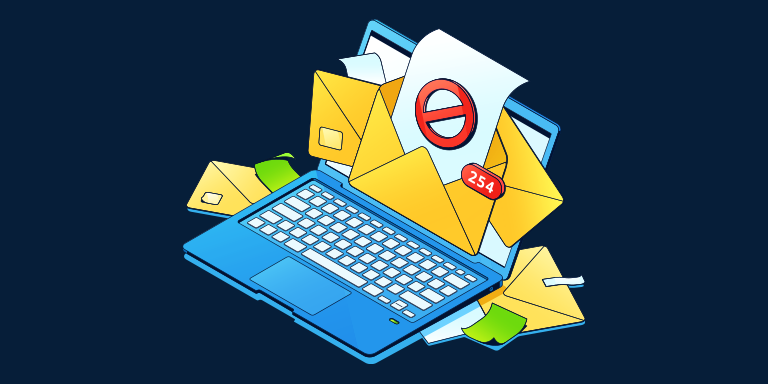
Three technical standards form the bedrock of modern email security:
- SPF (Sender Policy Framework): This acts as a guest list for your domain. It publishes a public record listing all the authorized IP addresses and third-party tools (like Omnisend or Klaviyo) permitted to send emails on your behalf.
- DKIM (DomainKeys Identified Mail): This adds a cryptographic digital signature to the header of every outgoing email. It proves to the receiving server that the email originated from your domain and was not altered or intercepted in transit.
- DMARC (Domain-based Message Authentication, Reporting, and Conformance): This ties SPF and DKIM together. It instructs receiving servers on what to do if an email fails authentication checks—whether to monitor it, quarantine it, or reject it outright.
Failing to properly configure these three records is akin to leaving your front door wide open in a bad neighborhood. A missing or misconfigured DKIM record remains one of the single most common reasons legitimate, well-meaning brands find their campaigns relegated to the spam folder. Fixing it typically takes less than 15 minutes, yet thousands of businesses skip it.
Pillar III: List Hygiene and The Power of Pruning
Nobody talks about list hygiene at networking events or dinner parties. It lacks the sex appeal of viral growth hacks or multi-tiered sales funnels. Yet, it is arguably the single most powerful housekeeping habit you can adopt.
Over time, every email list accumulates digital dead weight:
- Abandoned corporate email addresses that no longer exist.
- Contacts who signed up years ago during a flash sale and have never opened another message since.
- Typo-ridden entries captured at checkout (e.g.,
[email protected]).
Every single one of these dead-weight contacts sits in your database dragging down your engagement metrics and inflating your bounce rates.
The Remedy: Conduct regular list purges. Run a targeted re-engagement campaign for subscribers who have not opened or clicked a message in 90 to 180 days. Give them a clear, low-friction opportunity to raise their hand and reaffirm their interest. Those who remain completely silent must be suppressed or removed.
While it feels counterintuitive to intentionally shrink your subscriber count, a smaller, highly engaged list consistently outperforms a bloated, dormant one in both inbox placement and revenue generation.
Pillar IV: Engagement Signals as Deliverability Votes
Mailbox providers do not merely evaluate your technical credentials; they actively monitor how human beings react to your transmissions.
When a subscriber opens your email, clicks an embedded link, replies directly to your message, or manually drags your broadcast out of the spam folder into the primary inbox, they are casting a positive ballot. These micro-behaviors signal to automated filters that your content is valued and anticipated.
Conversely, low open rates, immediate deletions, and spam reports cast negative ballots. This is precisely where copywriting strategy and technical deliverability intersect. Crafting compelling emails your audience actually wants to read is not just a conversion tactic—it is a vital deliverability safeguard.
4. Official Responses and Industry Insights
Email infrastructure leaders and marketing platforms have increasingly emphasized proactive health monitoring over reactive troubleshooting.
Greg Zakowicz, Senior Ecommerce Marketing Expert at Omnisend, notes that deliverability can no longer be treated as a set-it-and-forget-it administrative task:
"The founders and marketers who consistently land in the inbox are not the ones who configured their DNS records once in 2021 and never looked at them again. They are the ones who treat list quality, sending cadence, and subscriber engagement as ongoing operational priorities. Deliverability is invisible until it breaks—and by the time you notice your open rates crashing, the reputation damage is already done."
Industry watchdogs also point out that mailbox providers are tightening standards further. Gmail and Yahoo’s collective sender requirements have made authentication mandatory for bulk senders, turning what was once best practice into a strict compliance mandate. Brands failing to meet these thresholds face immediate delivery blocks.
5. Practical Implications and Actionable Takeaways
If you want to protect your revenue, safeguard your sender reputation, and ensure your emails consistently reach your customers, you must implement a structured deliverability workflow.
Content Habits That Trigger Spam Filters
Beyond technical setup and list management, your content formatting matters. Modern spam filters analyze HTML structures, image-to-text ratios, and tracking links. Avoid these common pitfalls:
- Overuse of Images with Zero Text: Emails that consist of a single massive image flyer are frequently flagged because spam filters cannot read the text embedded inside them. Always maintain a healthy balance of crawlable HTML text.
- Broken or Shady Link Shorteners: Using obscure or blacklisted public link shorteners in your email body can immediately trigger automated security blocks. Stick to branded, custom tracking domains.
- Misleading Subject Lines: Using deceptive prefixes like "Re:" or "Fwd:" on cold promotional campaigns to fake an ongoing conversation is an aggressive trigger for spam complaints.
Building Long-Term Inbox Habits
- Audit Your DNS Records Today: Verify that your SPF, DKIM, and DMARC records are fully active and correctly configured through your domain registrar and ESP.
- Double-Opt-In for Quality: Consider implementing double opt-in for lead magnets and newsletter signups. While it may slow raw list growth by a marginal percentage, it guarantees that every subscriber genuinely wants to hear from you.
- Optimize Your Welcome Series: The first three emails a new subscriber receives set the engagement tone for the entire customer lifecycle. Deliver immense value immediately to lock in high open and click rates from day one.
- Leverage Specialized Infrastructure: Platforms like Omnisend are purpose-built to handle these complexities behind the scenes, offering real-time deliverability monitoring, built-in authentication support, and automated list-cleaning tools that protect your domain without requiring an engineering degree.
Special Offer: For readers looking to overhaul their email infrastructure, Foundr has partnered with Omnisend to offer 50% off your first three months. Use code FOUNDR50 upon signup to build an email program designed to reach the inbox every single time.
 Basiran
  Neng Nana