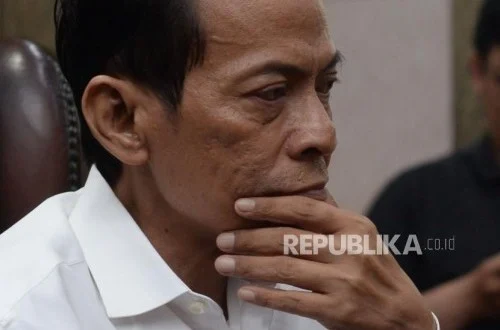
Introduction: The Fall of a Cultural Giant
The Indonesian literary and intellectual landscape suffered a profound loss on the evening of Thursday, April 22, 2021. Radhar Panca Dahana, a towering figure in contemporary Indonesian letters, a prolific essayist, and an indefatigable cultural critic, passed away at the age of 56. His death, which occurred at 20:00 WIB at the Emergency Room (UGD) of Cipto Mangunkusumo Hospital (RSCM) in Jakarta, left a void in the country’s intellectual discourse that remains palpable. Known for his incisive critiques of power, his deep-seated humanism, and his unwavering commitment to the arts, Radhar was a man who lived at the intersection of philosophy, theater, and politics.
The Final Hours: A Sudden Departure
The news of Radhar’s passing was confirmed by his elder brother, Radhar Tribaskoro, who took to social media to break the heartbreaking announcement. In a poignant message posted to his personal Facebook account, Tribaskoro wrote, "Innalillahi wainnailaihi rajiun. Telah berpulang malam ini pukul 20.00 WIB, adik saya tercinta Radhar Panca Dahana."
The circumstances of his passing were marked by a sense of suddenness that shocked the artistic community. Having been rushed to the emergency department of RSCM, he succumbed to his condition shortly thereafter. Tribaskoro’s message served as a rallying cry for the literary community, urging them to offer prayers and, in the tradition of Indonesian etiquette, to forgive the late writer for any transgressions committed during his lifetime. "Please forgive all his mistakes and sins. Pray that he receives the best place by His side," Tribaskoro added, a sentiment that resonated across the country as tributes began to pour in from all corners of the archipelago.
A Chronology of a Life Dedicated to the Intellect
To understand the weight of the loss, one must look at the trajectory of Radhar Panca Dahana’s life. Born in Jakarta on March 26, 1965, Radhar was a child of the post-independence era, growing up during a time of intense political and social transformation. His intellectual foundation was built during his studies at the Faculty of Social and Political Sciences at the University of Indonesia (FISIP UI), and he later pursued further education in France, specifically at the École des Hautes Études en Sciences Sociales (EHESS).
Early Influences and Intellectual Development
Radhar’s time in Paris was instrumental in shaping his worldview. It was there that he immersed himself in structuralism, post-structuralism, and the critical theories that would eventually define his own writing style. He was never content to remain a mere observer; he was a participant in the theater of ideas. Upon his return to Indonesia, he became a voice for the marginalized, frequently critiquing the systemic failures of governance and the erosion of cultural identity in an increasingly globalized world.
The Peak of His Career: Theater and Essays
Throughout the 1990s and 2000s, Radhar became synonymous with the "Teater Universitas Indonesia" and was a central figure in the literary scene of Jakarta. He was not just a critic; he was a creator. His essays, often published in major national newspapers, were characterized by a dense, lyrical, and sometimes confrontational style. He demanded that his readers engage with the complexities of the Indonesian condition. Whether writing about the corruption of political elites or the subtle shifts in modern Indonesian aesthetics, Radhar’s prose was always a mirror held up to the face of the nation.
Tributes from the Cultural Vanguard
The outpouring of grief from Indonesia’s elite cultural circles was immediate and heartfelt. Social media, particularly Twitter, became a digital wake where colleagues and admirers shared their final respects.
Adib Hidayat, a prominent figure in the Indonesian music industry and a respected journalist, tweeted: "Radhar Panca Dahana passed away today, Thursday (22/4/2021) at 20:00 at the RSCM UGD. Farewell, Mas." This brief but powerful tribute encapsulated the respect Radhar commanded across various creative industries.
JJ Rizal, a renowned cultural historian and writer, provided a more personal perspective on the loss. He wrote, "I just heard the sad news that Bang Radhar Panca Dahana has passed away. Farewell to heaven, Bang. Much respect and gratitude for your thoughts." This sentiment reflected the common perception of Radhar as a mentor—a "Bang" (older brother) to many younger writers and intellectuals who looked to his work for guidance on how to navigate the fraught landscape of Indonesian culture.
Implications for the Future of Indonesian Intellectualism
The passing of Radhar Panca Dahana marks the end of an era for a certain generation of Indonesian intellectuals. He belonged to a group of thinkers who viewed the role of the "intellectual" as a public responsibility. In an age where digital content consumption often favors brevity and sensationalism, Radhar’s commitment to the long-form essay and the theatrical performance served as an anchor.
The Loss of a Critical Voice
In contemporary Indonesia, the space for critical, independent intellectual discourse is under constant pressure from commercialization and political polarization. Radhar was one of the few who consistently navigated these waters without compromising his independence. His absence creates a vacuum in the critique of public policy and national culture. Who will now stand as the fierce, articulate, and uncompromising voice that Radhar represented?
The Legacy of His Writings
Radhar’s bibliography, including works like Inilah Esai and various collections of his plays, serves as a blueprint for future generations. His influence extends beyond his books; it resides in the thousands of students he lectured and the countless writers he inspired through his workshops and mentorship. The challenge for the next generation of Indonesian thinkers is to carry forward his spirit of radical inquiry—to continue asking the difficult questions that Radhar posed throughout his life.
A Nation in Reflection
As Indonesia mourns, the legacy of Radhar Panca Dahana is being reassessed not just as a writer, but as a cultural icon. He was a man who challenged the status quo, even when it was unpopular. He believed in the power of art to heal a fractured society and the duty of the intellectual to be the conscience of the nation.
His death serves as a stark reminder of the transience of life and the endurance of ideas. While his voice may have been silenced in the physical realm, the intellectual foundation he built continues to inform the conversations of today. The "tabe" (respect) offered by his peers and the public at large is a testament to the fact that his contributions were not in vain.
Conclusion: The Eternal Echo
Radhar Panca Dahana was more than a man; he was a phenomenon. From his humble beginnings to his status as a national cultural fixture, he remained dedicated to the pursuit of truth. His life was a testament to the belief that words have the power to change, to challenge, and to comfort.
As the nation reflects on his life, it is clear that while Radhar is gone, the echoes of his thought will continue to vibrate through the halls of Indonesian universities, the stages of its theaters, and the pages of its literature for decades to come. He has returned to the place from which all creators draw their inspiration, leaving behind a legacy that will be studied, debated, and cherished.
"Selamat jalan, Bang Radhar." The path you carved is long, and though the traveler has reached the end of his journey, the road remains open for those who dare to follow in your footsteps.