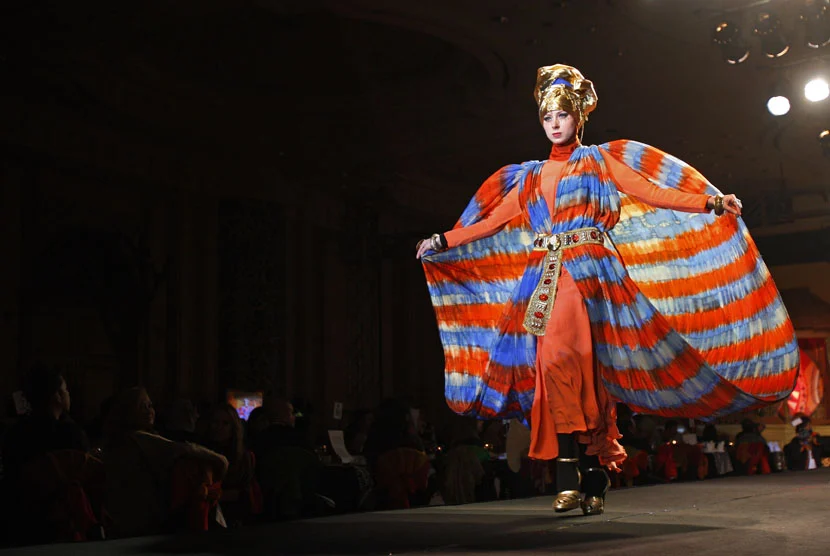
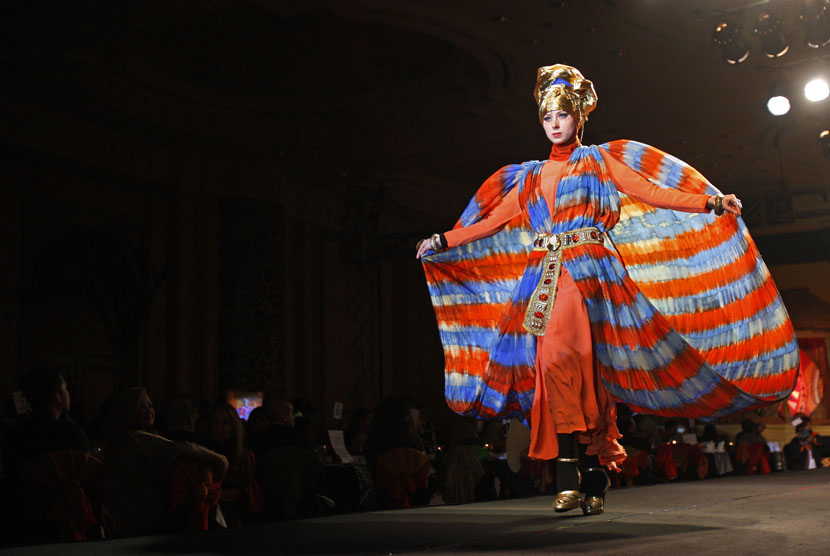
KUALA LUMPUR – The landscape of global modest fashion witnessed a significant milestone on Monday, November 5, 2012, as renowned Indonesian designer Dian Pelangi graced the stage of the Islamic Fashion Festival (IFF) in Kuala Lumpur, Malaysia. Her participation not only highlighted the burgeoning influence of Indonesian aesthetics in the regional fashion industry but also underscored the evolving dialogue between traditional Islamic values and contemporary sartorial innovation.
The Essence of the Islamic Fashion Festival
The Islamic Fashion Festival (IFF) has long served as a prestigious platform for designers from across the Southeast Asian corridor. Established with the mission to showcase the versatility and elegance of modest wear, the annual event gathers creative minds primarily from Indonesia, Malaysia, and Singapore.
In the 2012 edition, the festival aimed to challenge the stereotypical perception of Islamic clothing as purely utilitarian or monotonous. By curating a runway that featured avant-garde designs, the organizers sought to prove that "modesty" and "high fashion" are not mutually exclusive. The festival has historically acted as a cultural bridge, fostering economic and artistic collaboration between neighboring nations that share deep-rooted historical and religious ties.

Dian Pelangi: A Visionary in the Making
Dian Pelangi, even in the early stages of her career, stood out as a beacon of youth-led innovation in the modest fashion sector. Her signature style—characterized by the vibrant use of Indonesian batik and tie-dye (pelangi) techniques—was on full display in Kuala Lumpur.
Her collection presented during the festival was a masterclass in color theory and fabric manipulation. By blending traditional Indonesian textiles with modern, structured silhouettes, Pelangi demonstrated how cultural heritage could be preserved while remaining relevant to the fast-paced, trend-driven global market. Her designs resonated with a younger generation of Muslim women who sought to express their identity without compromising their faith or their personal style.
Chronology of the 2012 Showcase
The proceedings of the Monday event were meticulously planned to highlight the diversity of the Islamic fashion ecosystem.
- Morning Sessions: The festival opened with workshops and panel discussions involving industry experts, focusing on the economic potential of the "halal" fashion market. Designers discussed the shift from local market focus to international export potential.
- Afternoon Rehearsals: Behind the scenes, the atmosphere was electric. Dian Pelangi’s team worked in tandem with Malaysian stylists to ensure the seamless integration of traditional headwear with her contemporary ensemble pieces.
- Evening Runway Presentation: The highlight of the evening was the main runway show. As the lights dimmed, the audience—comprising international journalists, fashion buyers, and socialites—witnessed a fusion of colors that defied the traditional "black and neutral" expectations of modest wear. Pelangi’s collection utilized silk, chiffon, and artisanal batik, marking a pivotal moment where traditional crafts met high-street aesthetics.
- Post-Show Discourse: Following the walk, a press engagement session allowed designers to discuss the philosophy behind their collections. Pelangi emphasized that her work was an attempt to portray Islam as a faith that celebrates beauty, art, and creativity.
Supporting Data: The Rise of Modest Fashion
The significance of Pelangi’s participation at the 2012 IFF cannot be viewed in a vacuum. During this period, the global modest fashion industry was beginning to experience a seismic shift.
According to various industry reports from the early 2010s, the "Muslim Consumer Market" was rapidly emerging as a trillion-dollar industry. With a burgeoning young population in Southeast Asia and the Middle East, the demand for "Modest Chic" had skyrocketed.
- Market Growth: Studies conducted around 2012 indicated that the annual expenditure on clothing by Muslim consumers was reaching record highs, estimated at over $200 billion globally.
- The Indonesian Hub: Indonesia, home to the world’s largest Muslim population, positioned itself as a central hub for modest fashion design. Designers like Dian Pelangi were the architects of this movement, shifting the center of gravity away from Western-centric fashion houses and toward local designers who understood the nuance of the market.
- Digital Influence: The early 2010s saw the rise of social media as a primary driver for fashion trends. Pelangi’s ability to leverage her burgeoning online presence to reach an international audience provided a blueprint for other modest fashion entrepreneurs.
Official Responses and Industry Reception
The critical reception of the 2012 festival was overwhelmingly positive, with industry insiders praising the level of craftsmanship displayed by the participating designers.

"Dian Pelangi has successfully bridged the gap between the heritage of Indonesian textiles and the modern aspirations of global Muslim women," noted a fashion commentator present at the event. "Her collection at the IFF is not just clothing; it is a statement about the confidence of the modern Muslim woman."
Organizers of the IFF highlighted that the festival’s success was rooted in its ability to foster "cultural diplomacy." By bringing together designers from across Southeast Asia, the festival served as a soft-power mechanism, promoting a positive image of Islamic culture through the lens of artistic expression.
Implications for the Future of Modest Fashion
The presence of Dian Pelangi at the 2012 Islamic Fashion Festival held significant long-term implications for the industry:
1. Globalization of Local Aesthetics
Pelangi’s success demonstrated that there was a global appetite for regional textiles. Her use of batik in an international setting helped elevate these traditional arts to the status of "luxury fabrics," creating new export avenues for Indonesian artisans.
2. Redefining the "Muslimah" Identity
The 2012 show challenged the monolithic view of what a Muslim woman should wear. By introducing bold patterns and vibrant colors, the runway presentation helped dismantle the idea that religious modesty was synonymous with visual invisibility. This empowered women to view fashion as a tool for self-expression rather than a constraint.
3. Economic Empowerment
The professionalization of the modest fashion industry—seen in the logistics and media presence at the IFF—showcased that the sector was a serious economic player. The success of designers like Pelangi encouraged investment, retail expansion, and the development of specialized fashion education programs tailored to modest wear.

4. Setting the Stage for Future Decades
Looking back from the current era, the 2012 festival was a precursor to the massive "Modest Fashion Weeks" that are now held in cities like Dubai, London, and Istanbul. Dian Pelangi’s early foray into the regional circuit in Kuala Lumpur laid the groundwork for her eventual international acclaim, proving that fashion could indeed be a powerful conduit for both cultural heritage and contemporary progress.
Conclusion
The Islamic Fashion Festival in Kuala Lumpur on November 5, 2012, remains a landmark event in the history of contemporary modest fashion. By showcasing the talent of designers like Dian Pelangi, the festival helped validate a creative industry that had been long overlooked by mainstream fashion critics.
As the industry continues to evolve, the lessons learned from that evening remain clear: when tradition is honored through innovation, and when culture is shared across borders, fashion becomes more than just apparel. It becomes a transformative force capable of shaping perceptions, driving economies, and celebrating the diversity of the human experience. Dian Pelangi’s collection in 2012 was not merely a display of garments; it was a manifesto for a new era—an era where faith and fashion coexist in a vibrant, kaleidoscopic harmony.