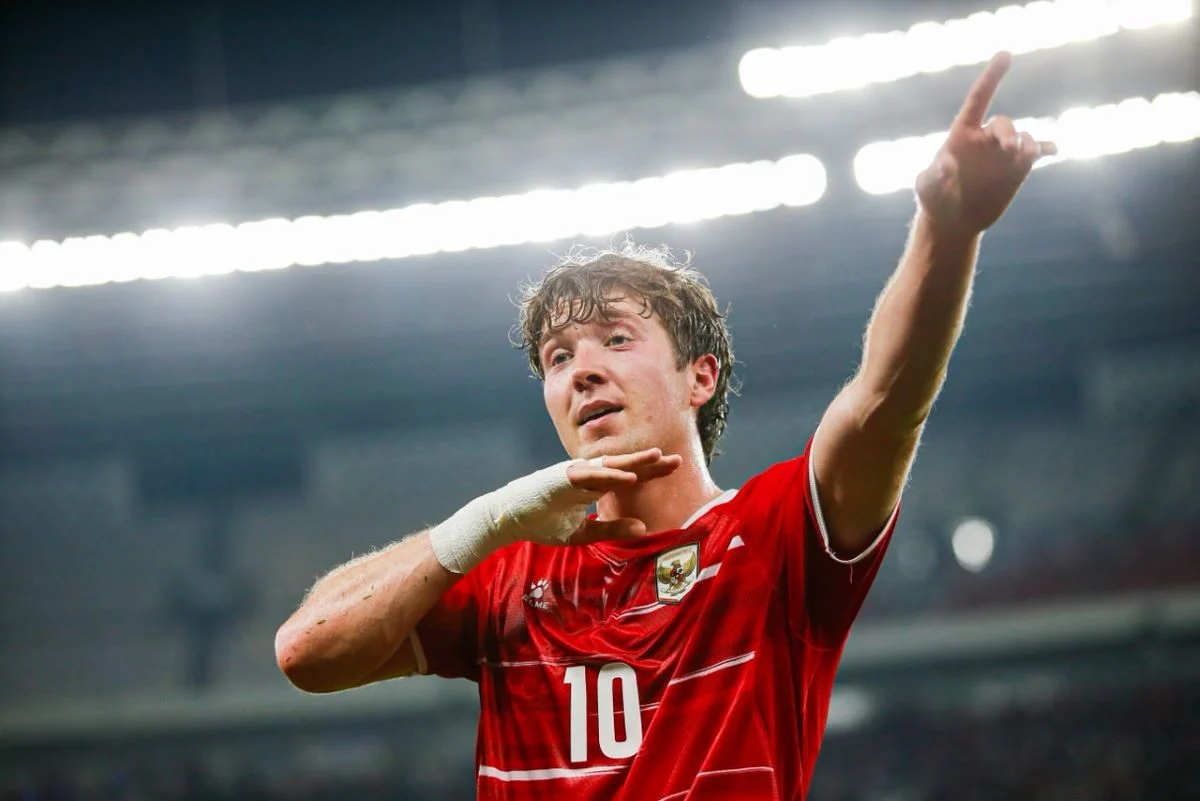
JAKARTA – The atmosphere at the Gelora Bung Karno Main Stadium (SUGBK) reached a fever pitch on Tuesday evening as the Indonesian National Team faced Mozambique in a highly anticipated FIFA Matchday fixture. In a display of tactical discipline and clinical finishing, striker Ole Romeny provided the spark early in the game, netting a crucial goal in the 11th minute to give the Garuda squad a 1-0 lead.
Under the watchful eye of head coach John Herdman, Indonesia showcased a revitalized offensive structure that kept the Mozambican defense under constant pressure from the opening whistle. For the thousands of fans packed into the iconic Jakarta venue, Romeny’s strike was the culmination of weeks of preparation and a testament to the growing strength of the national squad.
The Chronology: A Clinical Opening Statement
The match began with a frantic pace, as Indonesia sought to impose its will on the visiting side. John Herdman’s 3-4-3 formation allowed the Garuda to dominate the midfield, with the wing-backs providing necessary width to stretch the Mozambican defensive line.
Early Dominance
From the kickoff, it was clear that Indonesia intended to control the tempo. The midfield trio of Ivar Jenner, Joey Pelupessy, and Calvin Verdonk acted as a cohesive unit, recycling possession and feeding balls into the final third. The early pressure resulted in several half-chances, with Ragnar Oratmangoen and Marselino Ferdinan constantly probing the flanks.
The 11th-Minute Breakthrough
The breakthrough arrived just eleven minutes into the contest. A lapse in concentration by the Mozambican central defenders created a pocket of space behind the line. Sensing the opportunity, Ole Romeny made a perfectly timed run. Receiving a pinpoint pass, the Oxford United striker found himself in a one-on-one situation with the Mozambican goalkeeper.
Displaying the composure that has become his trademark in European football, Romeny took a steadying touch before slotting the ball into the bottom corner. The stadium erupted, with the roar of the home crowd signaling a shift in momentum that would define the remainder of the first half.
Tactical Breakdown: Herdman’s 3-4-3 Masterclass
John Herdman, who has been credited with transforming the tactical discipline of the Indonesian squad, opted for a bold 3-4-3 setup. This formation, while demanding, provided the perfect balance between defensive stability and attacking fluidity.
Defensive Solidity
The back three of Kevin Diks, Elkan Baggott, and Rizky Ridho proved nearly impenetrable in the opening period. Diks, in particular, was instrumental in transitioning the ball from defense to attack, while Baggott utilized his aerial prowess to neutralize any long balls sent forward by the Mozambican midfield. Maarten Paes, guarding the Indonesian goal, remained largely untroubled but was vital in organizing the defensive line and preventing counter-attacks.
Midfield Dynamics
The inclusion of Joey Pelupessy provided a calming influence in the center of the park. His ability to anchor the midfield allowed Ivar Jenner and Calvin Verdonk to push higher up the pitch, creating an overload in the final third. This tactical shift was the primary reason for the early defensive breakdown of the visitors.
Supporting Data: The Matchday Roster
The strength of the Indonesian team was further evidenced by the depth on the bench. Herdman’s roster for this fixture reflects a blend of seasoned veterans and promising young talents, signaling a long-term vision for the national program.
Indonesia Starting XI (3-4-3):
- Goalkeeper: Maarten Paes
- Defenders: Kevin Diks, Elkan Baggott, Rizky Ridho
- Midfielders: Dony Tri Pamungkas, Ivar Jenner, Joey Pelupessy, Calvin Verdonk
- Forwards: Marselino Ferdinan, Ole Romeny, Ragnar Oratmangoen
Substitutes:
Emil Audero, Nadeo Argawinata, Justin Hubner, Mathew Baker, Muhammad Ferarri, Nathan Tjoe-A-On, Sandy Walsh, Yakob Sayuri, Rayhan Hannan, Beckham Putra, Mauro Zijlstra, and Saddil Ramdani.
This depth is significant. With a bench featuring international-caliber players like Justin Hubner and Sandy Walsh, the team possesses the flexibility to adjust tactically depending on how the game unfolds in the second half.
Implications for the FIFA Rankings
The significance of this FIFA Matchday cannot be overstated. With Indonesia continuing its climb up the world rankings, every victory against a challenging opponent like Mozambique is vital. A win here would not only provide a massive boost to the team’s morale but also secure crucial ranking points that could influence future seeding in major international tournaments.
The performance of individual players like Ole Romeny also has broader implications for Indonesian football. As more players compete in European leagues, the overall technical quality of the national team has surged. Romeny’s ability to find the back of the net in high-pressure situations is exactly the kind of "European-standard" efficiency that Herdman has been striving to instill in the squad.
Official Perspectives and Future Outlook
While the match remains ongoing, the initial feedback from the coaching staff and local pundits has been overwhelmingly positive. The synergy between the foreign-based players and the domestic stars appears to have reached a new peak.
"We came here with a plan," a member of the coaching staff noted during the halftime break. "The goal was to capitalize on the early nerves of the opposition and maintain defensive discipline. Romeny did exactly what we asked of him. Now, the focus shifts to maintaining this lead and managing the intensity for the full 90 minutes."
For Mozambique, the second half represents a critical juncture. They must find a way to break through the Indonesian low-block if they hope to salvage a result. However, given the defensive organization displayed by Baggott and his colleagues, the task remains daunting.
The Fan Experience: A Nation United
The atmosphere inside the Gelora Bung Karno is a testament to the power of football in Indonesia. Thousands of supporters, adorned in red and white, have created an environment that is intimidating for any visiting team. The "Garuda" spirit is palpable, and for many fans, this match is more than just a friendly; it is a declaration of Indonesia’s arrival as a force to be reckoned with on the international stage.
The roar of the crowd after Romeny’s goal reverberated through the city, serving as a reminder of the emotional investment the public has in the team’s success. Regardless of the final score, the first 45 minutes of this match have solidified the belief that the Indonesian National Team is on an upward trajectory.
Looking Ahead: The Road to the Future
As the match continues, the narrative is clearly focused on the evolution of the Garuda squad. Under John Herdman, the team has moved away from reactive football toward a proactive, ball-dominant style. This change in philosophy, combined with the influx of high-quality talent, suggests that Indonesia is well-positioned to compete at higher levels in the coming years.
The performance against Mozambique will be dissected for weeks to come. It serves as a blueprint for how the team should approach international fixtures: clinical in the final third, disciplined in defense, and tactically adaptable.
For Ole Romeny, the goal is a career milestone that cements his place as the primary attacking threat for the national team. For the fans, it is a moment of pure joy. And for the nation of Indonesia, it is a glimpse into a future where the Garuda fly higher than ever before.
Reporting by Rivan Nasri Rachman.
Disclaimer: Bola Okezone is committed to providing accurate, up-to-the-minute sports journalism. As the match progresses, continue to follow our live updates for the final score, post-match interviews, and expert analysis.