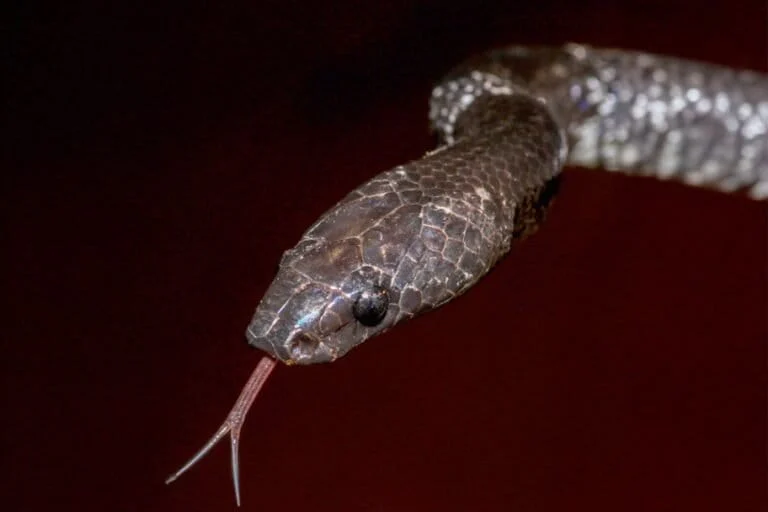
In the dense, humid darkness of Bahodopi, Morowali, Sulawesi Tengah, the silence of the night is often broken by the rhythmic flow of mountain streams. It was in this secluded environment that Muh. Imam Ramdani, an intrepid field researcher, encountered a creature that would challenge the existing boundaries of herpetological knowledge. Roughly ten meters from the water’s edge, a slender, yellowish-brown serpent slithered across the rocky terrain. To the untrained eye, it might have been a common forest dweller, but to Imam, it was a biological phantom.
"To my knowledge, visual documentation of this snake on the internet is virtually non-existent," Imam remarked. "It is only recorded in field guides, and even those were published as far back as 2005."
The specimen was Lycodon stormi, commonly known as the Sulawesi Wolf Snake. Long considered an elusive endemic of Sulawesi, its presence had previously been confined to fragmented reports from North Sulawesi and the Lore Lindu National Park. This recent discovery in Morowali significantly expands the known distribution of the species, casting a new light on the biodiversity of a region increasingly synonymous with industrial upheaval.
The Chronology of an Unexpected Encounter
The discovery was not a singular stroke of luck but the result of persistent field observation. The initial encounter occurred in the dead of night, where the snake’s subtle, cryptic coloration allowed it to blend seamlessly into the riparian environment.
"I knew immediately this was not a common snake," Imam recounted. The following night, the team’s persistence paid off with a second sighting: another individual, this time observed crossing a river spanning three to five meters in width.
The two specimens presented a fascinating contrast. One individual exhibited a uniform, earthy brown hue, while the other displayed a more striking, high-contrast pattern. While such color variation is a known trait within the Lycodon genus, it remains a persistent source of taxonomic confusion. For researchers, these morphological discrepancies serve as a reminder that the "Sulawesi Wolf Snake" may be a more complex grouping than a single, homogeneous species.
Behavioral Ecology and Defense Mechanisms
During his observation, Imam documented a shift in the snake’s defensive repertoire. When initially handled, the Lycodon stormi displayed the expected aggressive response—a series of attempted bites—followed by rapid retreat. However, upon subsequent disturbances, the snake pivoted to a more sophisticated defensive posture.
It curled its body into a tight coil, tucking its head beneath its coils to protect its most vulnerable area. "This behavior is a clear evolutionary adaptation designed to mitigate the risks posed by predators," Imam explained. Despite this display of defensive aggression, the species is non-venomous and poses no threat to humans. Its diet, typical of the genus, consists of small lizards, frogs, insects, and smaller snakes, placing it as an essential, albeit small-scale, predator in the forest ecosystem.
The Scientific Quandary: A Legacy of Neglect
Despite being first described over a century ago, Lycodon stormi remains a scientific enigma. Amir Hamidy, a Research Professor in Biosystematics and Evolution at the National Research and Innovation Agency (BRIN), notes that the dearth of data is symptomatic of a larger issue in herpetological research.
"Because they are nocturnal and elusive, few people study this group," says Hamidy. The taxonomic status of the species is currently in a state of flux. While the name Lycodon stormi is technically valid, its phylogenetic position—whether it represents a distinct, ancient lineage or is a synonym for another, more common species—remains unresolved.
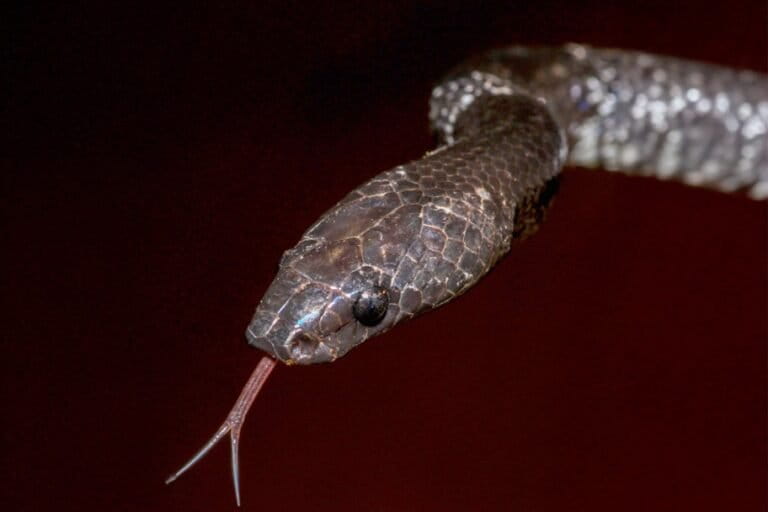
The lack of comprehensive molecular sequencing is a critical gap. Without modern genomic analysis to compare populations across Sulawesi’s diverse geography, the scientific community is effectively working with a map that is over a hundred years old. "It is possible that further study will confirm it as a distinct species, or it may eventually be synonymized with another," Hamidy adds. The urgency of this research is compounded by the fact that the species is effectively "invisible" in the digital age, with almost no verified photographic documentation available to the public or global researchers.
Habitat Under Siege: The Shadow of Industry
While the scientific community debates the taxonomy of the snake, the ground beneath its scales is changing rapidly. The area where Imam discovered the specimens is a secondary forest zone, currently caught in the crossfire of human expansion. Specifically, the habitat sits at the periphery of nickel mining operations—a booming industry in Morowali.
Imam’s field observations revealed disturbing evidence of environmental degradation. He noted significant sedimentation in the riverbeds caused by large-scale soil excavation in the upstream regions. This runoff directly impacts the riparian corridors where Lycodon stormi resides. Sedimentation alters the water quality and the micro-habitats of the amphibians and small vertebrates upon which the snake relies for sustenance.
The irony is sharp: a species that has survived for millennia in the shadows of the Sulawesi rainforest now faces an existential threat from industrial activities that are reshaping the landscape at an unprecedented speed. If the current rate of industrial encroachment continues, the very habitat that supports this mysterious reptile could be permanently altered before researchers even have the chance to confirm its true status.
Implications for Conservation and Biodiversity
The story of Lycodon stormi is a microcosm of the broader challenges facing Indonesian biodiversity. It highlights the critical need for:
- Increased Taxonomic Funding: There is a dire need for genetic sequencing and morphological studies to classify the unique fauna of Sulawesi before they vanish.
- Riparian Buffer Protection: As mining and infrastructure development expand, the protection of riverine corridors must become a priority. These zones act as vital refugia for nocturnal species that are sensitive to habitat fragmentation.
- Community-Led Monitoring: Imam’s discovery highlights the importance of field-based researchers who are willing to spend nights in the "backcountry." Encouraging local involvement in biodiversity monitoring could provide a wealth of data that currently goes undocumented.
Conclusion: A Race Against Time
Lycodon stormi is more than just a snake; it is a symbol of the "hidden" wealth of Sulawesi’s wilderness. With its status as a poorly documented endemic, its unresolved taxonomic standing, and its habitat under immediate threat from industrial mining, the species sits at a precarious crossroads.
The researchers who focus on this group are few, and the time to protect their habitat is narrowing. If the scientific community and conservation agencies continue to overlook such elusive species until they are pushed to the brink of extinction, we risk losing a piece of the biological puzzle that we have barely begun to solve.
The ghost of the Sulawesi forest is finally being seen, but whether it remains a part of the island’s living heritage or becomes a relic of a lost ecosystem depends entirely on the actions taken in the next decade. We are currently in a race against time, where the urgency of preservation must match the scale of the industrial growth that threatens to erase the silent, slithering inhabitants of the Morowali streams.
The case of Lycodon stormi serves as a poignant reminder that in the vast, complex tapestry of nature, even the smallest, most overlooked threads are essential to the integrity of the whole. It is time for a concerted effort to document, protect, and understand the endemic treasures of Sulawesi before the opportunity is lost to the march of progress.