
 By Lina Irawan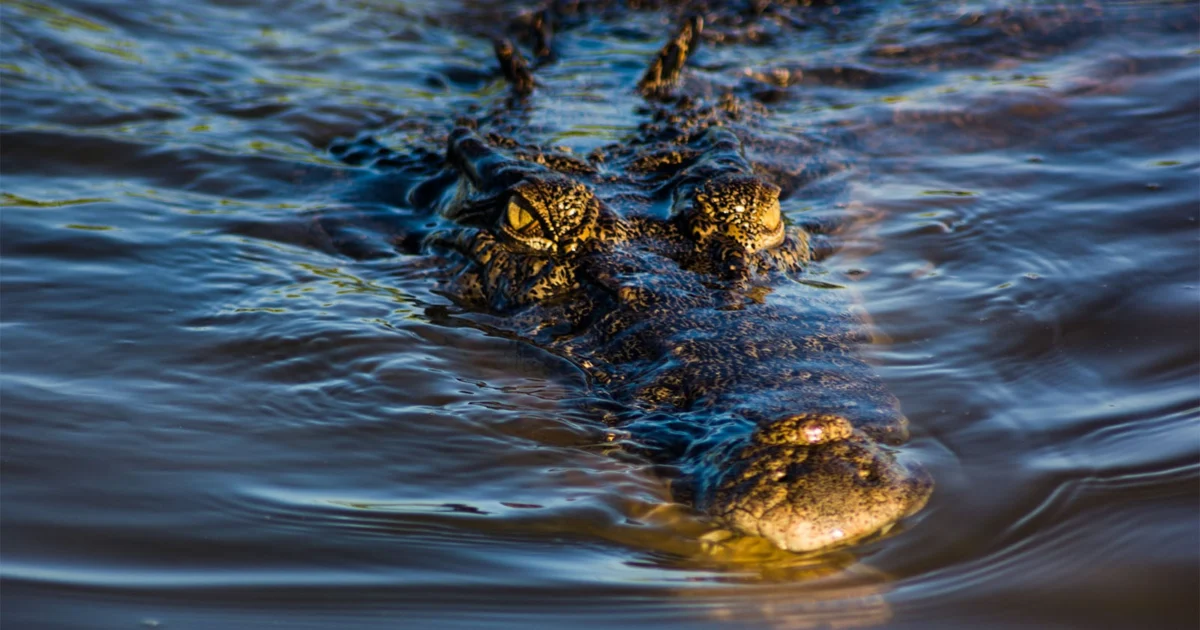
SINGAPORE — The rapid evolution of generative artificial intelligence has introduced a myriad of creative tools, but it has simultaneously armed bad actors with unprecedented capabilities to manufacture deception. In a stark reminder that digital fabrications can yield severe physical-world ramifications, a 30-year-old Myanmar national living in Singapore has been formally arrested and charged following a viral hoax involving a hyper-realistic, AI-generated image of an estuarine crocodile swimming in one of the city-state’s major public reservoirs.
The incident underscores a growing global anxiety regarding the misuse of synthetic media. What began as a digitally rendered creature on a screen quickly cascaded into a multi-agency security response, disrupted recreational athletics, and now threatens to cost the accused nearly a decade of his freedom.
As courts prepare for a November hearing where the defendant is reportedly expected to plead guilty, legal and security experts are pointing to the case as a watershed moment for how municipalities will police synthetic disinformation moving forward.
Main Facts of the Case
The accused, identified as Ye Lin, faces two primary charges under Singaporean law: communicating a false message and obstructing the course of justice.
According to police reports, Lin utilized an unspecified AI image-generation application last month to create a convincing depiction of a saltwater crocodile—scientifically known as Crocodylus porosus—half-submerged in the murky, rippling water of the Pandan Reservoir. Pandan Reservoir is Singapore’s largest water storage facility and serves as a vital public utility, alongside acting as a highly frequented hub for recreational water sports, jogging, and community gatherings.
Lin initially shared the fabricated image with a colleague, but the digital creation quickly broke containment, spreading across local networks and triggering widespread public alarm.
The consequences were immediate and tangible. Singapore’s national water agency, PUB, was forced to halt all operational and maintenance work at the reservoir for two days while emergency teams launched an exhaustive hunt for the apex predator. Local rowing and canoeing associations had to abruptly cancel scheduled training sessions, disrupting athlete schedules and public access.
When authorities finally confirmed the animal was a phantom born of algorithms, investigators traced the upload back to Lin. Recognizing the severity of the investigation, Lin attempted to cover his tracks by deleting both the offending image and the AI application from his device. This attempted cover-up backfired, turning what could have been a localized misdemeanor into a major obstruction of justice charge—a felony equivalent that carries a significantly harsher prison sentence.
Chronology of Events
To understand how rapidly a digital creation can paralyze physical infrastructure, law enforcement timelines outline a tense, multi-day ordeal:
- Mid-to-Late September: Ye Lin uses a mobile or desktop AI application to generate a synthetic image depicting an estuarine crocodile within the perimeter of Pandan Reservoir. He sends the file to a colleague.
- The Spread: The image begins circulating, catching the attention of concerned citizens and community groups who fear for the safety of visitors, joggers, and water sports enthusiasts.
- The Emergency Response: Public reports prompt Singapore’s national water agency and local authorities to intervene. Work permits and recreational permits at the reservoir are frozen.
- The Investigation: Trained wildlife handlers, reservoir wardens, and local authorities scour the perimeter, banks, and waters of Pandan Reservoir. No physical evidence, tracks, or biological signatures of a crocodile are discovered.
- The Cover-Up: Realizing that the panic is drawing official law enforcement scrutiny, Lin deletes the AI-generated image and the corresponding software application from his personal device to evade accountability.
- The Crackdown: Digital forensics teams unmask the origin of the file. The Singapore Police Force steps in, arresting Lin and filing formal criminal charges for communicating a false message and obstructing justice.
- Upcoming Court Appearance (November): Lin is scheduled to stand before a Singaporean court. According to legal analysts and reports from The Straits Times, he intends to enter a guilty plea without legal representation.
Legal Repercussions and Supporting Data
Singapore is globally renowned for its strict regulatory environment and low tolerance for public disruption, public safety threats, and the intentional spread of misinformation. The legal framework surrounding false communications is designed to protect both public peace and the efficient allocation of state resources.
Under current local statutes, the offense of distributing a false message carries severe penalties:
- Imprisonment: Up to three years.
- Financial Penalties: Fines scaling up to nearly $8,000 USD.
However, Lin’s decision to erase the evidence compounded his legal jeopardy. By deleting the application and the file in an effort to thwart investigators, he crossed the threshold into obstructing the course of justice. This secondary charge is treated with extreme gravity within the Singaporean legal system:

- Imprisonment: Up to seven years.
When combined, Lin faces a maximum potential sentence that could see him incarcerated for nearly a decade. Legal observers note that his anticipated guilty plea may lead to a slightly mitigated sentence, yet the judicial system is widely expected to hand down a custodial sentence to serve as a deterrent to others tempted to exploit generative AI for practical jokes or malicious mischief.
Official Responses and Government Warnings
The Singapore Police Force (SPF) released a sternly worded public advisory following the arrest, emphasizing that the government views the weaponization of synthetic media as a direct threat to public infrastructure and civil order.
"Preliminary investigations revealed that the man had created an AI-generated image depicting a crocodile at Pandan Reservoir and sent it to his colleague. The man subsequently deleted the image and the related application in an attempt to conceal his actions," the SPF stated in an official media release.
The statement continued with a broader warning to the populace: "The Police will not hesitate to take action against anyone who communicates falsehoods. Apart from causing fear and inconvenience caused to members of the public, such falsehoods also result in public resources being unnecessarily deployed to deal with these incidents."
Authorities took the opportunity to address the broader societal shift toward hyper-realistic digital manipulation, urging citizens to exercise extreme caution:
"The Police urge the public to act responsibly and refrain from circulating false information or edited images that could cause unnecessary public alarm. The public should also not submit fabricated or manipulated information, including AI-generated or digitally altered images, to the Police or other Government agencies while presenting such information as authentic."
Global Implications: The Threat of Synthetic Disinformation
While a fabricated reptile in a Singaporean reservoir may sound like a bizarre localized anomaly, security researchers and tech analysts argue that the incident is symptomatic of a much larger, global crisis.
Generative artificial intelligence has democratized the creation of hyper-realistic media. Tools that once required Hollywood-grade visual effects budgets can now be executed on a smartphone within seconds. This technological democratization has created a dangerous vacuum where seeing is no longer believing.
The ramifications of unchecked AI generation extend far beyond local park panics:
- Economic Volatility: In May 2023, a fake AI-generated image of an explosion near the Pentagon circulated widely on social media, briefly wiping out billions of dollars in value from the U.S. stock market before it was debunked.
- Reputational Destruction: Synthetic media has increasingly been weaponized to generate non-consensual imagery, deepfake blackmail, and targeted character assassination against private citizens and public figures alike.
- Democratic Erosion: During election cycles globally, deepfakes of political candidates making inflammatory statements threaten to manipulate voter behavior and erode trust in legitimate journalism and governmental institutions.
- Strain on Public Services: Emergency services, wildlife management, and law enforcement agencies around the world are increasingly forced to divert critical resources away from genuine crises to investigate hoax reports born from digital manipulation.
A Turning Point for Accountability
The case of Ye Lin demonstrates that governments are no longer treating AI-generated hoaxes as harmless internet pranks. As the barrier to entry for creating convincing falsehoods drops to zero, the legal barriers to circulating them are rising exponentially.
For Singapore—a nation that prides itself on safety, order, and efficient urban planning—the intrusion of synthetic chaos into a public utility like Pandan Reservoir crossed an intolerable red line. As Lin prepares to face sentencing in November, the global tech and legal communities will be watching closely, recognizing that his prison cell may well become the blueprint for how the modern world combats the dark side of artificial intelligence.
 Asep Darmawan
  Layla Zulfa
  Ali Ikhwan