
 By Nana Wu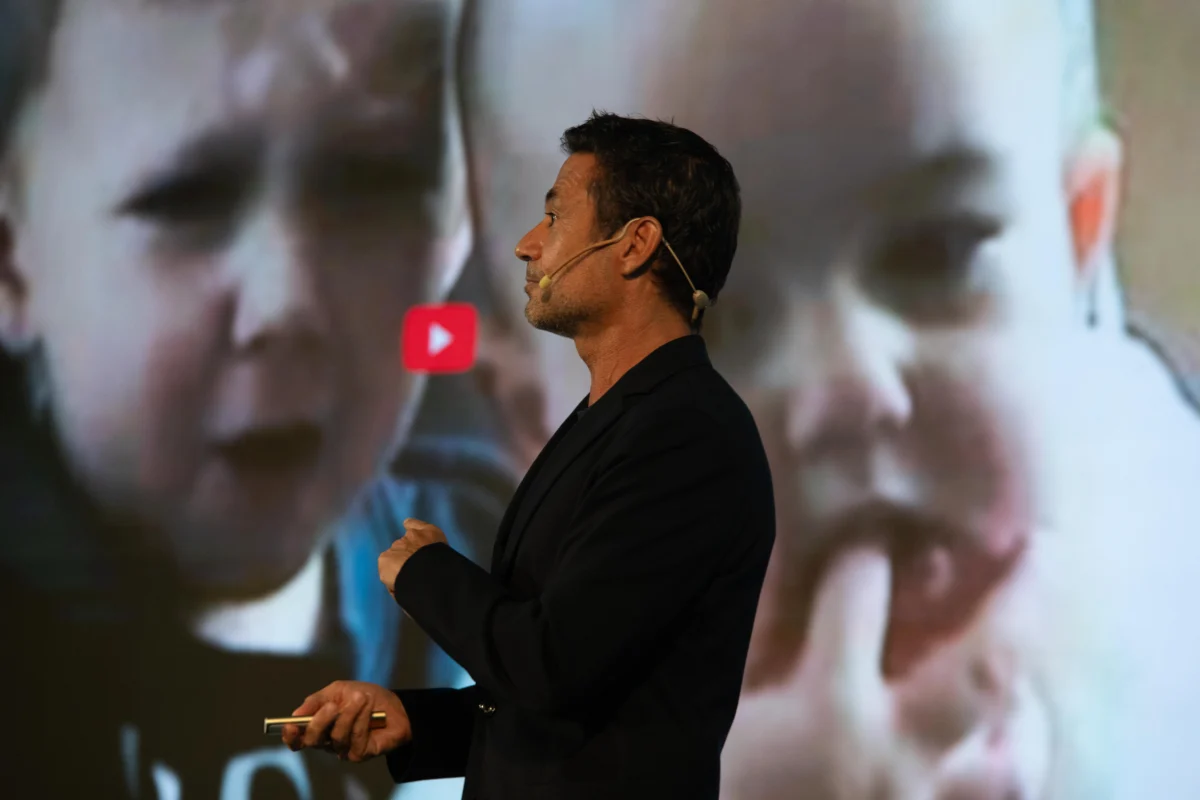
At the Iberseries & Platino Industria conference, the air was thick with a sense of historic transition. Standing before a packed auditorium, Pedro Pina, Vice President of YouTube for Europe, the Middle East, and Africa (EMEA), delivered a keynote that was as much a retrospective on the digital age as it was a manifesto for the future of entertainment. For two decades, YouTube has evolved from a repository for amateur clips into the world’s most influential cultural engine. Pina’s presentation served as a clarion call to the traditional broadcasting industry: the era of viewing YouTube as a disruptor to be feared is over; the era of viewing it as an essential partner has begun.
A Chronology of Cultural Shifts
To understand the platform’s current dominance, one must look at the milestones that defined its trajectory. Pina guided the audience through a visual timeline that mapped the evolution of internet culture. It began with the humble, pixelated charm of "Charlie Bit My Finger," a viral sensation that proved the internet’s appetite for relatable, spontaneous human moments.
The evolution accelerated with the emergence of global phenomena like Susan Boyle. Her audition for Britain’s Got Talent—a video that transcended traditional broadcast boundaries—became a case study in modern fandom. Despite repeated efforts to take the clip down due to copyright and licensing constraints, the fans’ insatiable demand for the content kept it alive.
"The most interesting thing is that the broadcasters all of a sudden found out that, hang on, there’s something about fandom that is important," Pina noted. "Fans love content and they kept going back to Britain’s Got Talent because they were in love with videos like that. This was the first time the overall broadcaster industry understood that it should be working with YouTube because it helped build a fanbase."
Following this, the platform transitioned into a launchpad for musical superstardom, with artists like Justin Bieber and Ed Sheeran leveraging YouTube to bypass traditional label gatekeepers. This was followed by the integration of live sports and, more recently, the birth of entirely new genres of long-form audiovisual hits, such as the breakout success of the Backrooms and Obsession projects—features that originated on the platform and found massive, organic audiences, challenging the traditional theatrical release model.
The Greenhouse of Creativity
The implications of this shift are best quantified by the changing demographics of the creative workforce. During a panel discussion following the keynote, Pina dropped a staggering statistic: in the United Kingdom, approximately 85% of people currently forging creative careers in the media industry began their journey on YouTube.
This suggests that YouTube is no longer a peripheral hobbyist site; it is a "greenhouse of the future of creativity." Whether these creators go on to produce content for Netflix, traditional television, or stay within the YouTube ecosystem, the platform has become the foundational training ground for the modern media professional. It is where the next generation of directors, writers, and editors learns the language of engagement, algorithmic optimization, and audience retention.
Bridging the Industry Gap: The Monetization Mandate
Despite its ubiquity, Pina candidly admitted that YouTube has historically failed to articulate its value proposition to the legacy industry. "The objective of being here at this event is really to explain how our model works," he stated. "The majority of people in the industry, fortunately, don’t understand it as much, and that is 100% our fault."
Pina identified a lingering fear among traditional media executives—a fear rooted in a lack of transparency regarding content protection, audience reach, and, most crucially, monetization. For years, the industry viewed YouTube through a lens of suspicion, concerned that the platform’s open architecture cannibalized their own viewership.
"A lot of people were afraid of YouTube, mostly because they did not understand how the platform works," Pina explained. "Once you start breaking down that information, providing examples, and showing the way, you see more and more people starting to work with us."

Industry Case Studies: Adapting to the New Reality
The panel featured executives who have moved past the initial skepticism and are now reaping the rewards of a symbiotic relationship with Google’s video giant.
The 3Cat Perspective
Roger Rofín Sanglas, representing the Catalan streamer 3Cat, noted that the broadcaster began a radical transformation three years ago. The goal was to pivot away from a purely linear model to a hybrid one where YouTube acts as both a destination and a funnel.
"We launched this platform precisely to respond to these changes in how our audiences are consuming content, and we believe it’s all compatible," Sanglas explained. "YouTube is our destination, but at the same time, it’s our gateway to our own platform." He highlighted that 3Cat is now the third most popular platform in Catalonia, trailing only Netflix and Prime Video, with a massive portion of their success attributed to children’s content, which thrives on the YouTube ecosystem.
Minerva Pictures and the Scale of Distribution
Gianluca Curti, Chairman and CEO of Minerva Pictures in Italy, offered a sobering look at the evolution of film distribution. Recalling the industry’s initial dismissiveness, he shared: "At first, people told us, ‘You’re kind of pirates,’ but within a few weeks we understood that YouTube was, for real, the place to be."
Minerva has since scaled to an operation managing over 180 channels in 25 languages, housing a library of 7,000 films. Beyond licensing, they have embraced original production, aiming to release 150 independent films annually—a cadence of roughly one per week. Curti’s stance on innovation was clear: "We’re delivering content made with real people and real studios, but we’re also exploring AI. These two worlds have to learn to live together, because you cannot stop the wind of the future or innovation with your hand."
RTP: Serving the Public in a Digital Age
For Portugal’s public broadcaster, RTP, the integration of YouTube is a more recent development. Hugo Figueiredo emphasized the challenge of balancing the "public service mission" with the realities of modern media consumption.
"Young audiences are on YouTube, and we cannot ignore that and try to push them back to linear," Figueiredo remarked. The broadcaster has begun streaming live football matches, including the Champions League and Nations League. Contrary to the fears of traditionalists, these streams have not cannibalized broadcast viewership; instead, they have successfully captured a demographic that might otherwise have ignored the content entirely.
Future Implications: The Convergence of Media
The consensus emerging from the Iberseries & Platino Industria conference is that the "us versus them" mentality is rapidly dissolving. The future of media is not a zero-sum game between linear television and digital platforms. Instead, it is an ecosystem of convergence.
As Pedro Pina emphasized, YouTube is no longer just a place to watch viral cat videos. It is a critical component of a modern media strategy that involves brand building, data-driven audience acquisition, and sophisticated monetization. For legacy broadcasters, the choice is no longer about whether to be on YouTube, but how effectively they can integrate the platform into their broader content strategy.
As AI continues to lower the barriers to entry and the lines between professional, studio-produced content and creator-led content blur, the role of YouTube as a primary gatekeeper and distributor will only grow. The industry is entering a new phase—one where the "wind of the future" mentioned by Curti is no longer a threat to be resisted, but a force to be harnessed. For those willing to learn the rules of this new, digital-first landscape, the opportunities for growth, audience engagement, and long-term sustainability have never been greater.
 Lina Irawan
  Laily UPN
  Basiran