
 By Lina Irawan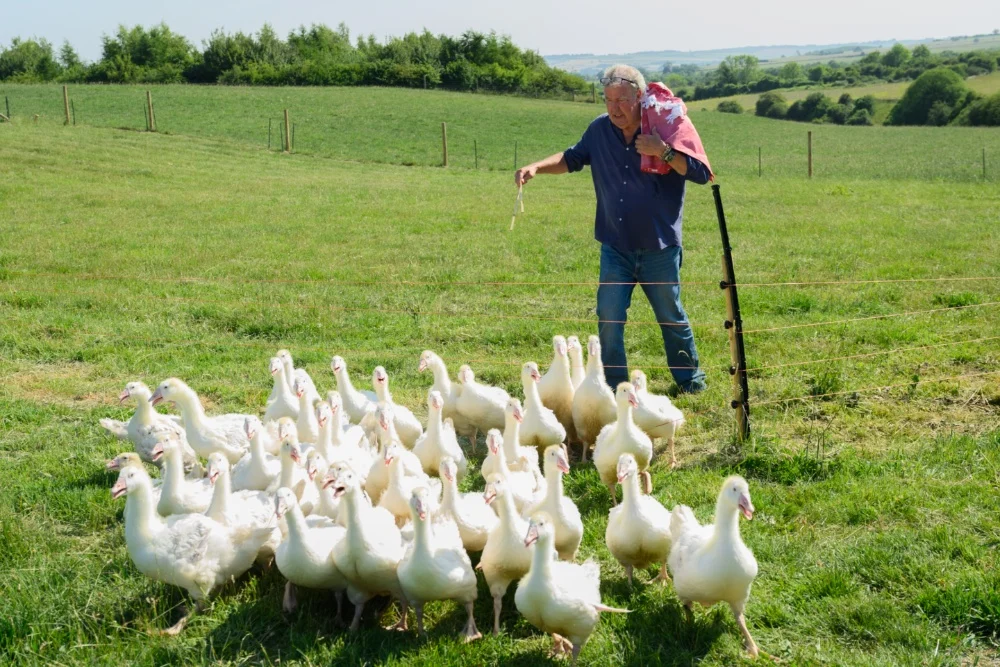
In the rapidly shifting landscape of modern media, where the ubiquity of social media content threatens to render traditional broadcasting obsolete, Jeremy Clarkson—the veteran broadcaster and agricultural entrepreneur—is already plotting his next move. As production wraps on the sixth season of his global smash hit, Clarkson’s Farm, the man who helped define the automotive television genre is looking toward a horizon that requires more than just tractors and sheep to capture the public imagination.
Speaking at the Royal Television Society (RTS) conference in London, Clarkson articulated a vision for the future of television that necessitates a fundamental departure from the status quo. His thesis is simple yet radical: in an age of democratized content creation, television must abandon the safety of the mundane and pivot toward the "unbelievably ambitious."
The Evolution of a Media Titan: From Motoring to Agriculture
To understand the weight of Clarkson’s recent comments, one must look at the trajectory of his career. For decades, Clarkson was the face of Top Gear, a show that transformed from a niche motoring program into a global cultural phenomenon. His transition to Prime Video with The Grand Tour and subsequently the rural, often chaotic environment of Diddly Squat Farm, marked a shift in how audiences consume personality-driven content.
Clarkson’s Farm, which premiered in 2021, became an unlikely titan of streaming. It bypassed the high-octane adrenaline of his previous work, opting instead for a blend of genuine agricultural hardship, administrative comedy, and the endearing, often exasperating, incompetence of a man learning to work the land. The series has become a cornerstone of Prime Video’s international strategy, proving that "slow TV" could possess the same gravitational pull as a blockbuster action series.
However, with the sixth season wrapped, Clarkson is acutely aware of the "onslaught from underneath." As he told the audience at the RTS conference, the barrier to entry for content creators has all but vanished.
The Threat of the "Onslaught from Underneath"
Clarkson’s primary concern lies in the democratization of content—specifically, the rise of social media influencers and amateur creators who can replicate the format of traditional television on a fraction of the budget.
"We’re currently thinking about what do we do after Clarkson’s Farm," he noted. "It’s going to have to be something bigger to stand out, to protect us from this onslaught from underneath. It has to be unbelievably ambitious."
His argument is rooted in the erosion of traditional genre boundaries. In the past, television studios held a monopoly on gardening, cookery, and travel programs. Today, a teenager with a smartphone and a backyard garden can reach an audience that rivals the reach of a network horticulturist. Clarkson specifically mentioned Monty Don, the beloved face of British gardening television, as an example of a figure whose traditional format is under siege by the sheer volume of social media alternatives.
"There’s nothing to worry about above because the cinemas have it," Clarkson explained, distinguishing between big-budget film and the vulnerable mid-tier of television programming. "But the shows, if you actually look, gardening shows, how they’re going to survive… because anyone can do a gardening thing on social media. Or cookery, same thing."
Defining "Event Television" in a Fragmented Market
Clarkson posits that the only way for traditional television to survive is to lean into the concept of "Event Television"—programming that demands to be watched in real-time, or which carries a scale that cannot be replicated by an individual with a ring light and a TikTok account.
He pointed to the BBC’s hit reality competition, The Traitors, as a primary example of how the industry can fight back. "It’s a very good example of an eye-catching show in today’s media landscape," he said. "They get proper celebrities on that, and it’s a great show."
For Clarkson, the solution is twofold:
- Scale: Productions must become massive, high-concept, and "incredible." He joked that unless one is "cooking on the moon," a standard cookery show is no longer enough to move the needle.
- Structural Flexibility: Television must lose its obsession with rigid scheduling and traditional formats, moving toward a model that prioritizes engagement over slot-filling.
Chronology of the Shift: The Prime Video Era
The transition of Jeremy Clarkson from BBC staple to Amazon Prime Video giant has been one of the most significant case studies in the streaming revolution.
- 2015: Clarkson departs the BBC following a high-profile controversy.
- 2016: The Grand Tour launches on Prime Video, signaling a massive shift in talent migration toward streaming platforms.
- 2021: Clarkson’s Farm premieres. It is widely praised for its authenticity and emotional resonance, shifting Clarkson’s image from a polished studio presenter to a vulnerable, struggling farmer.
- 2023-2024: The series maintains its status as one of the most-watched shows on Prime Video, cementing the streamer’s dominance in the "personality-led" documentary space.
- 2024 (Present): Clarkson announces the completion of Season 6 and begins public speculation regarding his next venture, citing the need for structural change in the industry.
Regulatory Tensions and the Role of Ofcom
During his appearance at the RTS conference, Clarkson’s characteristic candor extended beyond content strategy and into the realm of media regulation. Sharing the stage with his daughter, content creator Emily Clarkson, the elder Clarkson took a sharp swipe at Ofcom, the U.K.’s communications regulator.
He described the body as "toothless," a sentiment that reflects his long-standing, often adversarial relationship with broadcasting authorities. For a man who has spent his career pushing the boundaries of what is acceptable on television, the current regulatory climate—often characterized by rapid investigations into viewer complaints—is seen as a hindrance to the "ambition" he believes is necessary for the medium’s survival.
This criticism highlights a growing tension between traditional regulatory frameworks designed for linear television and the decentralized, global nature of modern streaming services, where content often bypasses domestic regulators entirely.
Implications: What Comes Next?
If Jeremy Clarkson is correct, the next iteration of the "Clarkson experience" will likely look nothing like his previous work. The implications for the television industry are significant:
- The Death of the Mid-Range: If Clarkson’s assessment holds true, the middle ground of television—standard, high-quality, but "safe" documentaries and lifestyle shows—is destined for irrelevance. Networks will be forced to choose between ultra-low-cost, high-volume digital content or ultra-high-budget, event-scale television.
- Talent as a Platform: Clarkson’s success proves that the audience follows the individual, not the network. As he continues to innovate, other established broadcasters may follow his lead, moving toward more experimental, high-stakes projects that justify a subscription fee.
- The Global Streaming Imperative: For streamers like Prime Video, the pressure to produce "ambitious" content is a constant. With competitors like Netflix and Disney+ investing billions in spectacle, the "Clarkson model" of blending high-end production with authentic, personality-driven stakes will likely become the gold standard for global entertainment.
Conclusion
Jeremy Clarkson stands at a crossroads. Having successfully conquered the worlds of automotive journalism and, unexpectedly, rural agriculture, he now finds himself grappling with the existential threat posed by the very digital landscape he helped foster. His call for "bigger" and "more ambitious" television is not merely a request for higher production budgets; it is a plea for the industry to rediscover the power of the singular, unmissable experience.
Whether his next project involves space travel, massive engineering feats, or something entirely new, the industry will be watching. In a world where anyone can create content, Clarkson remains convinced that the only way to hold the audience’s attention is to do what nobody else can—to produce television that is simply too large to ignore.
 Nana Wu
  Laily UPN
  Basiran