
 By Laily UPN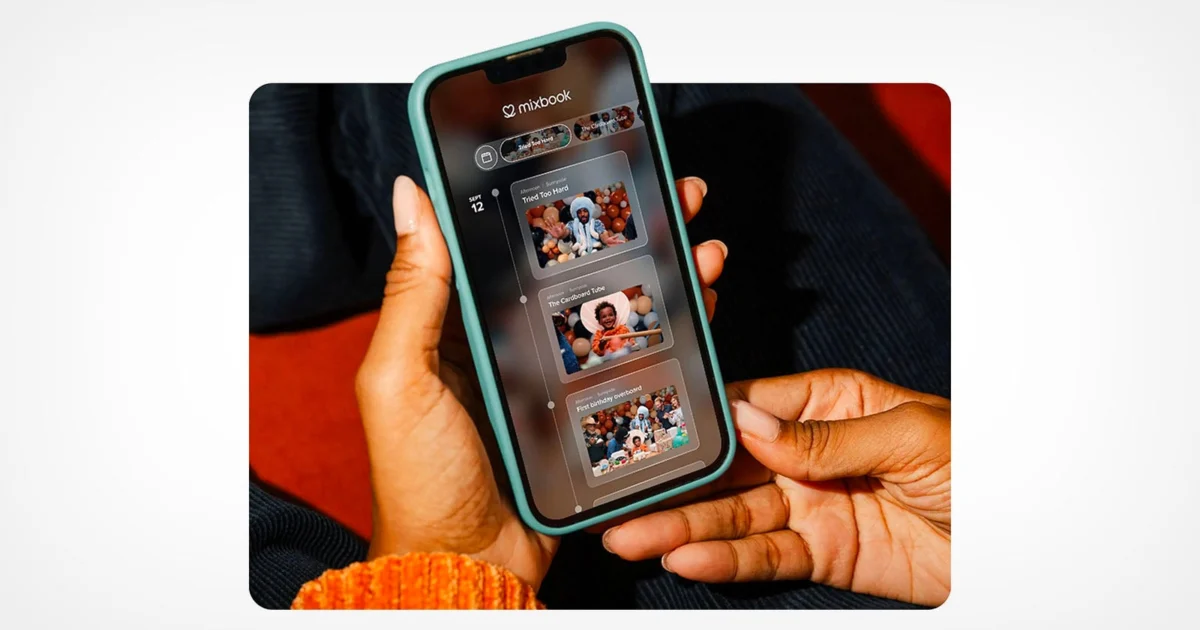
In the smartphone era, the act of taking a photograph has become almost frictionless. With high-powered lenses, near-infinite cloud storage, and rapid-fire burst modes, modern consumers capture more images in a single month than previous generations shot in a lifetime. Yet, this unprecedented era of digital documentation carries a heavy unintended consequence: the "digital graveyard."
Tens—and in many cases, hundreds—of thousands of photos sit trapped in sprawling smartphone camera rolls and decentralized cloud drives, buried under layers of duplicates, blurry outtakes, and screenshots. While crafting a physical photo book remains a beloved method for preserving memories, the sheer, exhausting administrative labor of selecting, sorting, and editing down an overwhelming library often stops projects before they even begin.
Recognizing this widespread digital paralysis, photo-printing and memory-preservation company Mixbook has launched a completely redesigned iOS app. Engineered to transform sprawling photo libraries into cohesive, narrative-driven timelines, the new application aims to bridge the gap between casual digital snapping and meaningful, tangible memory-keeping.
Main Facts: What is the New Mixbook iOS App?
The newly minted Mixbook iOS application is designed to act as an intelligent curator for overwhelmed smartphone users. Rather than forcing users to manually scroll through years of digital clutter, the app deploys advanced automated tools to resurface neglected photos, eliminate duplicate clutter, and structure visual assets into chronological, story-based feeds.
Key features of the application include:
- Intelligent Curation: The app automatically filters out low-quality images, duplicates, and visual clutter, leaving behind the core highlights of a user’s digital history.
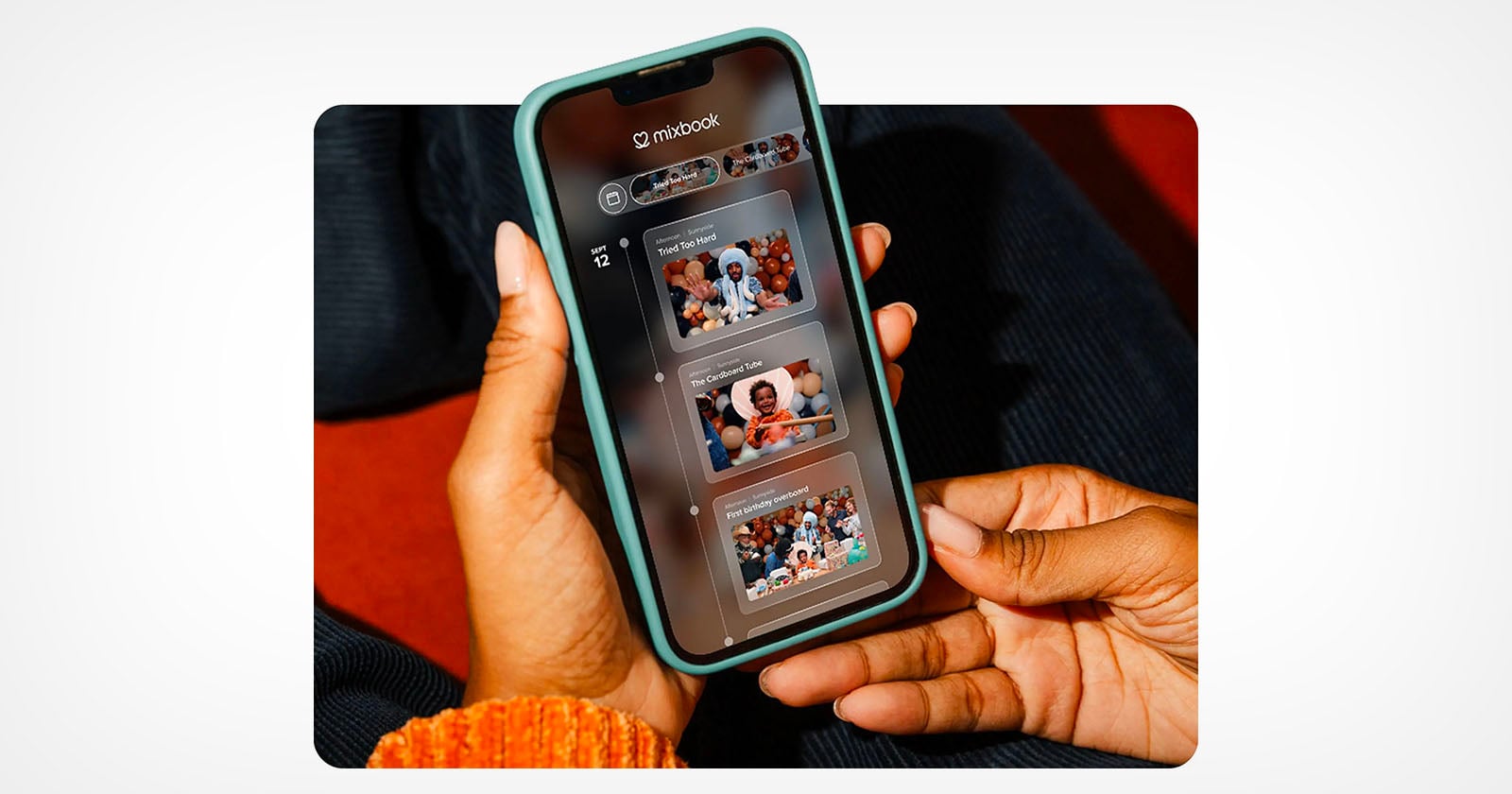
- Narrative Timelines: Photos and videos are automatically categorized into distinct, chronological sections. Whether it’s a family vacation to California taken a decade ago or a localized timeline dedicated to a specific individual over the years, the app builds context-aware archives.
- AI-Powered "Stories": Built-in artificial intelligence generates interactive photo albums complete with automated text and thematic timelines. These stories organize moments by specific milestones, such as a milestone birthday, holiday gatherings, or extended trips.
- Privacy-First On-Device Analysis: Mixbook notes that the initial photo analysis occurs locally on the user’s device, ensuring that individuals retain absolute control over which images are processed and shared with the application.
- Seamless Print Integration: True to Mixbook’s core business model, the app acts as a frictionless pipeline from digital curation to physical production, drastically cutting down the time required to design and order custom photo books.
Chronology: The Evolution of Personal Photography and Mixbook’s Strategy
To understand the necessity of Mixbook’s latest venture, it is helpful to look at how personal photography has evolved over the last two decades, and how the company has positioned itself to meet those shifting consumer habits.
2006–2016: The Rise of Digital Libraries and Custom Printing
When Mixbook was founded two decades ago, digital cameras were rapidly replacing film, and early smartphones were beginning to enter the mainstream. Consumers were transitioning from physical photo albums to digital folders stored on desktop computers and early cloud services. During this era, Mixbook carved out a successful niche by offering customizable, web-based tools that allowed users to design professional-quality physical photo books. However, creating these books still required users to manually curate their images on a computer desktop before uploading them to the platform.
2016–2025: The Smartphone Explosion and the Overload Crisis
As smartphone cameras evolved into sophisticated computational photography powerhouses, the volume of captured images skyrocketed. People stopped printing photos altogether, relying instead on infinite scrollable feeds provided by tech giants like Apple, Google, and social media platforms. While these tech ecosystems offered basic search functions and automated "Memories" reels, they treated photo libraries as transient digital feeds rather than intentional collections meant for physical preservation or deep reflection. The friction between capturing endless moments on a phone and sitting down to design a physical keepsake grew wider.
Late 2026: The Launch of the Redesigned App and the Memory Project
Mixbook’s release of the redesigned iOS app marks a pivotal turning point for the company. Running parallel to the app launch is the introduction of the Memory Project, an initiative developed in partnership with cognitive psychologist Dr. Christie Chung. By integrating behavioral science with software engineering, Mixbook is pivoting from a traditional e-commerce print vendor into a comprehensive memory-management ecosystem designed to help users actively engage with their personal histories.
Supporting Data, Technology, and Pricing Models
The technical foundation of the new Mixbook app relies on a blend of on-device machine learning and patent-pending memory technology. This proprietary system analyzes metadata, visual content, and contextual cues provided by the user to intelligently group images into emotionally resonant themes.
The Science of Memory
Through its collaboration with Dr. Christie Chung—a Provost at Palo Alto University and Mixbook’s official Memory Science Advisor—the company has sought to understand how humans mentally organize experiences. Digital photo apps have traditionally relied purely on dates and facial recognition. Mixbook’s patent-pending memory technology attempts to mimic human episodic memory, recognizing that we remember events through narrative context, spatial locations, and emotional milestones rather than raw chronological spreadsheets.
Access Tiers and Pricing Structure
To balance widespread accessibility with premium features, Mixbook has adopted a hybrid freemium business model for the new iOS app:
- Free Tier: The app is entirely free to download and use. Users can access basic timelines, sort through their libraries, and create photo books starting at $14.99.
- Mixbook+ Subscription: For power users seeking deeper curation, a $10-per-month subscription unlocks expanded access to the AI-driven "Stories" tool, watermark-free sharing, and unrestricted high-resolution downloads.
- The Print Credit Offset: To incentivize physical book creation, the $10 monthly Mixbook+ subscription includes a $10 monthly credit that can be directly applied toward print orders, effectively neutralizing the subscription cost for active users.
Official Responses and Industry Perspective
The philosophy driving Mixbook’s redesign centers on the idea that digital storage platforms have largely failed to deliver emotional value to consumers.
"Our camera rolls hold the people and memories we care about most, but the stories behind those photos can easily get lost," explains Andrew Laffoon, CEO and co-founder of Mixbook. "For 20 years, Mixbook has helped people preserve those stories through photo books. But the real value of a memory is how it helps us understand our lives, reconnect with people we love, and hold onto the moments that shape us."
Laffoon frames the new release not merely as an app update, but as an existential evolution for the company. "This represents the next chapter for Mixbook: giving people a home to bring the stories of their lives back together across digital and print."
By blending automated digital curation with physical product delivery, Mixbook is attempting to redefine what a photo utility app can be—bridging the gap between the ephemeral nature of smartphone galleries and the permanence of coffee-table books.
Implications: What This Means for Photographers, Consumers, and the Print Industry
The launch of Mixbook’s redesigned app carries significant implications across several sectors, touching everyday consumers, dedicated photographers, and the broader digital storage industry.
1. Lowering the Barrier to Physical Preservation
For the average consumer, the hardest part of making a photo book has always been the administrative overhead. By automating the filtering of duplicates and the generation of thematic timelines, Mixbook removes the friction that keeps millions of photos trapped in digital limbo. This could spark a resurgence in consumer printing, turning dormant smartphone archives into physical family heirlooms.
2. A Shift in How We Interact with Digital Memories
Tech giants like Apple, Google, and Meta have long utilized algorithmic curation to show users "On This Day" flashbacks. However, these platforms keep users locked within closed, proprietary digital ecosystems. Mixbook’s approach acts as an agnostic or bridge-building platform that actively prepares those memories for physical output and deep, intentional reflection, challenging big-tech models of passive consumption.
3. The Balancing Act Between AI Automation and Artistic Control
While casual snappers will likely welcome automated AI story-generation, purists and professional photographers may approach the tool with cautious optimism. Traditional photographers often pride themselves on absolute artistic control, curating portfolios and designing layouts by hand. Mixbook’s platform is clearly targeted at the mass consumer market rather than fine-art photographers, but it raises ongoing industry questions about how much creative agency users are willing to surrender to algorithms in exchange for convenience.
4. Privacy Concerns in the Age of AI Curation
As with any application that scans personal photo libraries, data privacy remains a critical consideration. Mixbook has attempted to preemptively address these concerns by emphasizing that its initial photo analysis occurs locally on-device, keeping users in control of what is uploaded or shared. In an era where consumers are increasingly wary of personal data harvesting by tech platforms, a privacy-conscious, local-processing architecture is essential for building consumer trust.
Looking Ahead
As the new Mixbook iOS app rolls out to the public, its success will depend on how effectively its AI-driven narratives resonate with everyday users. If the app can successfully transform overwhelming camera rolls into living, breathing timelines—and smoothly transition those digital stories onto printed pages—it may well redefine the future of how humanity preserves its most precious visual moments.
 Reynand Wu
  Lina Hope
  Basiran