
 By Basiran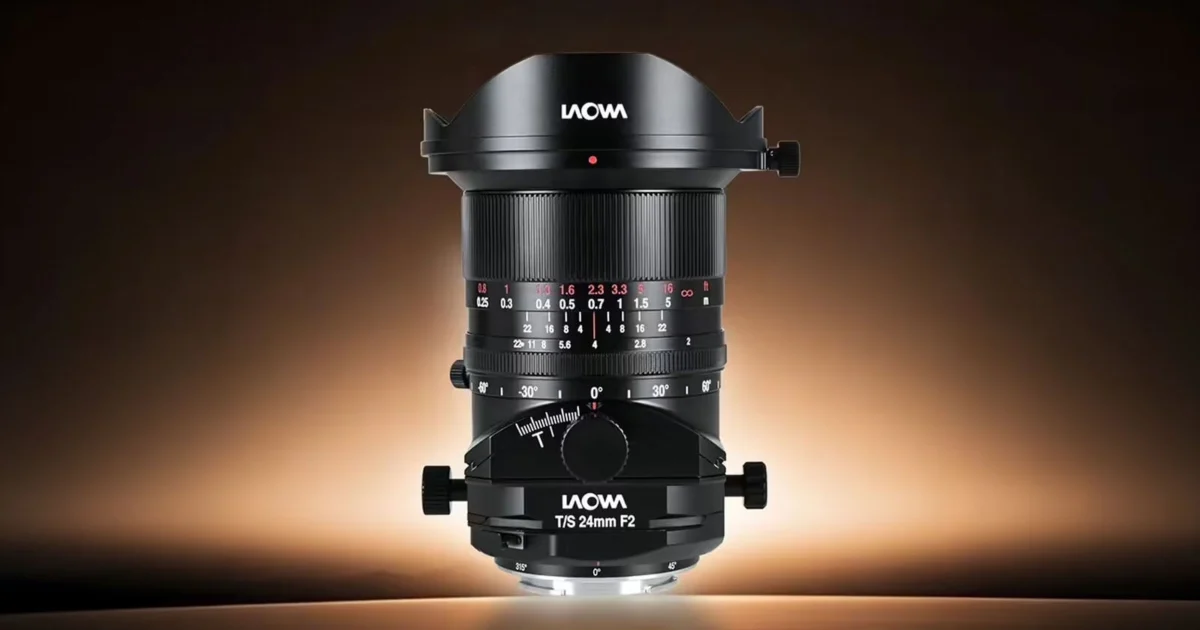
By PhotoTech News Editorial Board
Published: September 2026
Main Facts
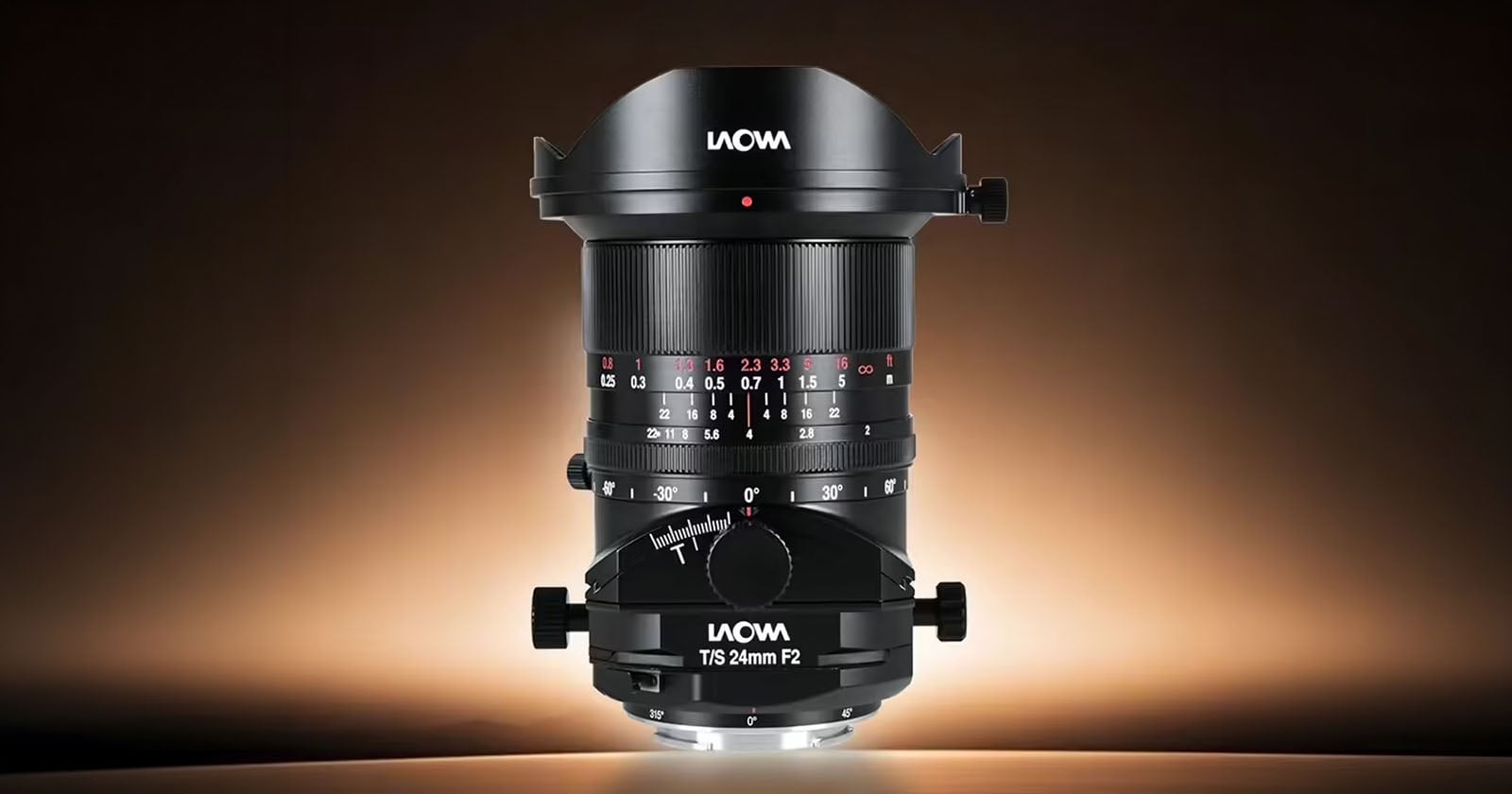
Venus Optics has once again challenged the status quo of optical engineering by introducing the Laowa T/S 24mm f/2 C-Dreamer, a high-performance, ultra-fast full-frame tilt-shift lens. Initially launched in the Chinese domestic market, the lens represents a significant leap forward in specialty optics, combining precise perspective-control mechanics with an unusually bright maximum aperture of f/2.
Historically, tilt-shift lenses have been constrained by slower maximum apertures—typically restricted to f/3.5 or f/4—making them primarily the domain of architecture, studio, and landscape photographers working in well-lit conditions. The introduction of an f/2 aperture by Venus Optics breaks new ground, effectively doubling the light-gathering capability of traditional 24mm tilt-shift primes. This makes the Laowa T/S 24mm f/2 a versatile tool capable of handling challenging low-light environments, architectural interiors, and even wide-angle astrophotography.
The lens is constructed with a sophisticated optical formula consisting of 13 elements organized into 10 groups. To combat optical aberrations—which are notoriously difficult to control in wide-angle and perspective-correcting designs—Venus Optics has integrated a generous assortment of specialized glass. The formulation includes five Extra-Low Dispersion (ED) elements, two aspherical elements, and four high-refractive-index elements. Combined with a 14-bladed aperture diaphragm, the lens is engineered to deliver exceptional sharpness across the frame while producing smooth, circular bokeh when utilized wide open.
Weighing in at 860 grams (30.3 ounces) and featuring a 77mm front filter thread, the Laowa 24mm f/2 T/S maintains a relatively portable footprint for a heavy-duty mechanical lens. It offers a shift range of $pm12textmm$ and a tilt range of $pm10textmm$. Furthermore, it incorporates a 360-degree rotating lens mount mechanism, allowing photographers to seamlessly toggle between landscape and portrait orientations without altering their tripod or head adjustments.
While an official global release date has not yet been confirmed by Venus Optics, the lens has already surfaced through international online export channels. Priced domestically in China at approximately RMB 7,650 (roughly $1,140 USD at current conversion rates), it undercuts legacy brand offerings while providing specifications that vastly exceed historical market standards.
Chronology
The development and rollout of the Laowa T/S 24mm f/2 C-Dreamer reflect Venus Optics’ calculated strategy to dominate the specialty optics market.
- Pre-2026: For decades, the tilt-shift market was dominated by legacy DSLR manufacturers like Canon and Nikon, whose offerings—such as the classic Canon TS-E 24mm f/3.5L II and the Nikon PC-E Nikkor 24mm f/3.5D ED—served as industry workhorses. However, these lenses were designed around DSLR flange focal distances and limited maximum apertures.
- The Laowa Shift (2020–2024): Recognizing a gap in the emerging mirrorless market, Venus Optics systematically introduced a series of wide-angle tilt-shift lenses, notably the Laowa 15mm f/4.5 Zero-D Shift and the Laowa 17mm f/4 Zero-D Tilt-Shift. These lenses gained a cult following among architectural photographers for their lack of distortion and multi-mount compatibility.
- Mid-2026 (Leak and Domestic Launch): Rumors circulated within Asian photographic communities regarding a faster, highly ambitious 24mm tilt-shift project from Venus Optics. By late September 2026, reports surfaced via enthusiast outlets like Canon Addict confirming that the Laowa T/S 24mm f/2 had officially broken cover in China.
- Late September 2026: Early retail availability materialized via cross-border platforms such as AliExpress. While international early-adopter pricing remains slightly inflated due to import logistics, the lens has quickly become one of the most talked-about pieces of optical hardware heading into the fourth quarter of 2026.
- Future Outlook (Late 2026 and Beyond): Industry watchers anticipate a formal worldwide announcement from Venus Optics, complete with localized pricing, regional distribution details, and comprehensive support for native mirrorless mounts.
Supporting Data
To fully understand the disruptive nature of the Laowa T/S 24mm f/2 C-Dreamer, it is helpful to examine its technical parameters and compare them against historical benchmarks set by traditional optical manufacturers.
Technical Specifications Matrix
| Feature | Specification |
|---|---|
| Focal Length | 24mm |
| Maximum Aperture | f/2 |
| Minimum Aperture | f/22 |
| Optical Construction | 13 elements in 10 groups (5 ED, 2 Aspherical, 4 High-Refractive-Index) |
| Aperture Blades | 14 blades |
| Tilt Range | $pm10^circ$ (or $pm10textmm$ equivalent mechanics) |
| Shift Range | $pm12textmm$ |
| Rotation Mechanism | Independent lens rotation (supports rapid portrait/landscape switching) |
| Filter Thread | 77mm front filter ring |
| Weight | 860g (30.3 oz) |
| Supported Mounts | Sony E, Nikon Z, Canon RF, Leica L, Fujifilm GFX, Hasselblad XCD |
| Domestic Launch Price | RMB 7,650 (~$1,140 USD) |
Comparative Analysis: The Evolution of 24mm Tilt-Shift Lenses
| Lens Model | Maximum Aperture | Format Coverage | Approximate Launch Price |
|---|---|---|---|
| Nikon PC-E Nikkor 24mm f/3.5D ED | f/3.5 | Full-Frame (F-Mount) | ~$2,200 (Historical) |
| Canon TS-E 24mm f/3.5L II | f/3.5 | Full-Frame (EF-Mount) | ~$1,899 (Historical) |
| Laowa 17mm f/4 Zero-D Tilt-Shift | f/4 | Full-Frame / Medium Format | ~$1,249 |
| Laowa T/S 24mm f/2 C-Dreamer | f/2 | Full-Frame / Medium Format | ~$1,140 (Domestic) |
As demonstrated by the data, Venus Optics is not only pushing aperture limits past traditional f/3.5 boundaries but is doing so at a price point nearly half that of traditional tier-one manufacturer equivalents. Furthermore, the inclusion of native support for large-sensor medium-format systems (such as Fujifilm GFX and Hasselblad XCD) dramatically expands the utility of the lens beyond standard full-frame boundaries. Crucially, early reports indicate that unlike some previous wide-angle tilt-shift lenses where medium-format usage suffered from restricted movement circles, the 24mm f/2 maintains its full mechanical range.
Official Responses and Industry Reception
While Venus Optics has yet to issue a broad, translated press release detailing the global go-to-market strategy for the Laowa T/S 24mm f/2, the reaction from the independent photography community and specialty reporting networks has been overwhelmingly positive.
Retailers in Asia have noted brisk initial sales, driven primarily by high-end architectural studios and commercial creators looking for an edge in low-light indoor environments. Reviewers on platforms tracking Asian optics markets have praised the physical build quality, noting that the mechanical dials for tilt, shift, and rotation offer satisfying resistance and precise locking mechanisms to prevent slippage during long exposures.
Independent optics analysts have highlighted the aggressive pricing strategy. At an equivalent of roughly $1,140 USD locally, the lens undercuts traditional DSLR-era tilt-shift lenses that have remained stubbornly high in price on the used market, despite their reliance on mechanical adapters when mounted to modern mirrorless bodies.
Canon Addict and other enthusiast sites have emphasized that the lens fills a long-standing void. For years, mirrorless shooters have clamored for native perspective-control lenses that do not require bulky adapters. By designing the Laowa 24mm f/2 from the ground up for modern mirrorless flanges—while retaining compatibility with medium-format bodies—Venus Optics has successfully positioned itself as an innovator willing to take risks where legacy brands have remained stagnant.
Implications
The commercial release of the Laowa T/S 24mm f/2 C-Dreamer carries profound implications for multiple sectors of the photographic industry.
1. Expanding Creative Horizons in Architecture and Interior Design
Traditional architectural photography relies heavily on tilt-shift lenses to eliminate converging verticals (using the shift function) and to manipulate the plane of focus (using the tilt function) to maximize depth of field without resorting to excessive diffraction. However, indoor spaces are notoriously dim. Photographers frequently have to rely on long exposures, multi-exposure blending, or heavy tripod setups combined with artificial lighting.
An f/2 aperture changes this calculus entirely. By letting in more than double the light of an f/3.5 lens, photographers can utilize faster shutter speeds to capture dynamic scenes, reduce ambient motion blur from indoor elements, and achieve cleaner files with lower ISO settings in challenging interiors.
2. A New Frontier for Wide-Angle Astrophotography
Perhaps the most surprising implication of this lens is its potential viability for astrophotography and nightscapes. Historically, tilt-shift lenses were considered poor choices for shooting the night sky due to their slow focal ratios (f/3.5 or slower), which forced astrophotographers to crank ISO levels or use star trackers.
An f/2 focal ratio on a 24mm perspective-control lens opens up entirely new possibilities. Astrophotographers can now combine precise tilt-shift alignment—such as tilting the focal plane to keep both a foreground object and the starry sky tack-sharp—with the light-gathering power required to freeze celestial rotation and capture faint nebulae. This hybrid capability simply did not exist in a single native mirrorless package prior to this release.
3. Pressure on Legacy Manufacturers
For years, dominant camera manufacturers like Canon, Nikon, and Sony have largely neglected the tilt-shift category, offering aging DSLR designs that require adapters for modern mirrorless mounts, or ignoring the segment altogether. Sony has no native tilt-shift autofocus or manual lenses in its extensive E-mount lineup; Nikon’s recent Z-mount catalog lacks dedicated perspective-control options; and Canon’s RF system has yet to receive a native RF-mount tilt-shift alternative.
By stepping into this vacuum, Venus Optics is capturing market share among professional niche creators. If the Laowa T/S 24mm f/2 proves successful globally, it may force legacy manufacturers to finally update their tilt-shift lineups to meet the demands of modern mirrorless workflows.
4. Accessibility and the Democratization of Specialty Optics
Tilt-shift photography has historically carried a steep financial barrier to entry, with professional-grade glass frequently costing well upwards of $2,000. By pricing the Laowa 24mm f/2 aggressively near the $1,100 mark, Venus Optics is lowering the financial hurdle for emerging photographers, students, and independent filmmakers who wish to experiment with architectural correction, miniature-faking effect (diorama effect), and advanced optical control.
Conclusion
As the photography world awaits the official global rollout and localized pricing of the Laowa T/S 24mm f/2 C-Dreamer, one thing is abundantly clear: Venus Optics has shifted the paradigm. By marrying an ultra-fast f/2 aperture with robust mechanical tilt, shift, and rotation capabilities across a staggering array of mirrorless and medium-format mounts, the company has delivered a truly unique product that promises to redefine what wide-angle specialty lenses can achieve.
 Asep Darmawan
  Ali Ikhwan
  Laily UPN