
 By Laily UPN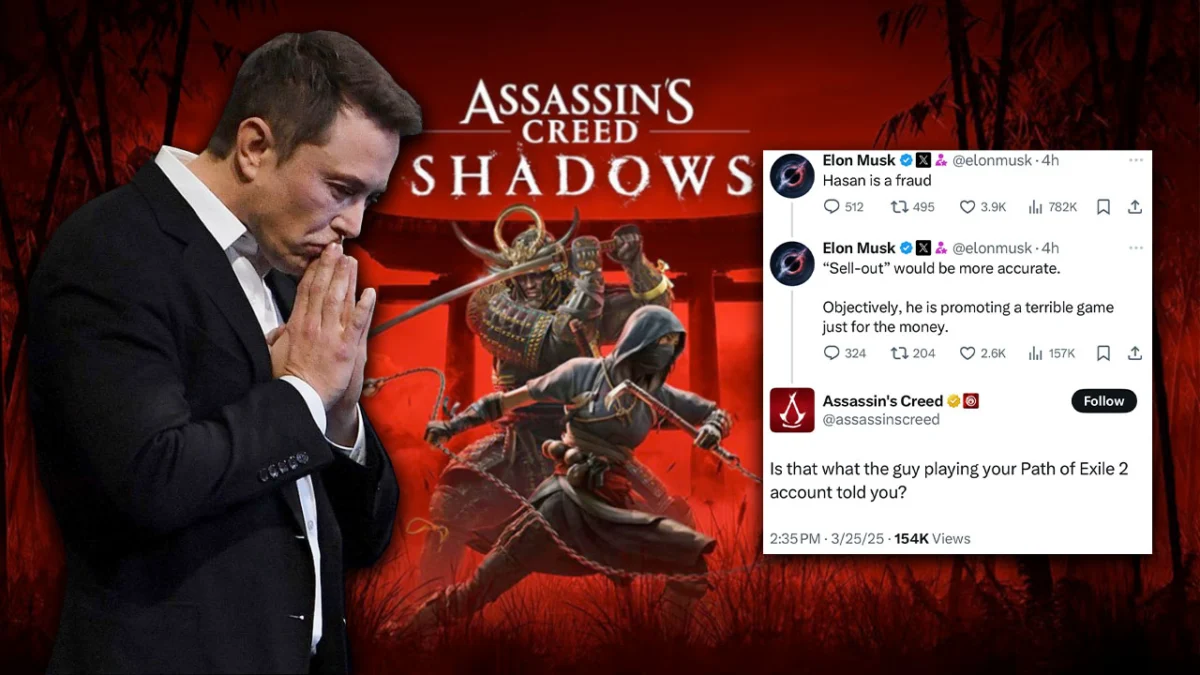
By Global Gaming & Culture Desk
In the fast-moving ecosystem of internet culture, few phenomena are as satisfying to digital onlookers as a high-profile figure experiencing public comeuppance on a platform they own. Elon Musk, the billionaire entrepreneur and owner of X (formerly Twitter), found himself on the receiving end of a viral digital beatdown courtesy of Ubisoft’s official Assassin’s Creed social media account.
What began as a typical partisan dispute over video game sponsorships quickly escalated into a masterclass in internet trolling. By weaponizing Musk’s own recent gaming scandals against him, the Assassin’s Creed account delivered what many internet users are calling the corporate "ratio" of the year. The incident has once again cast a harsh, mocking light on Musk’s heavily scrutinized personal gaming habits, proving that even the world’s wealthiest man is not immune to being thoroughly "cooked" on his own website.
Main Facts: The Catalyst of the Feud
The digital confrontation erupted following a critique by notorious video game commentator and cultural critic "Grummz." The controversy initially centered on Ubisoft’s marketing strategy for its upcoming, highly anticipated title, Assassin’s Creed: Shadows. Grummz publicly took issue with the studio’s decision to sponsor prominent, left-leaning Twitch streamer Hasan Piker to showcase the game to his massive audience.
As is his custom, Elon Musk weighed in on the discourse. Replying to the criticism, Musk levied sharp accusations against Piker, labeling the streamer a "fraud" and a "sell out." Musk asserted that Piker was promoting a "terrible game just for the money," injecting himself directly into the culture-war trenches that frequently surround major AAA game releases.
However, Musk’s critique of Piker’s integrity—specifically regarding his authenticity in gaming—opened the billionaire up to an immediate and devastating counter-attack. The official X account for @AssassinsCreed seized the opening with surgical precision. Referencing Musk’s widely publicized gaming controversies from earlier in the year, the social media manager fired back with a single, rhetorical question:
"Is that what the guy playing your Path of Exile 2 account told you?"
The response struck a raw nerve across the internet. Within hours, the tweet amassed over 400,000 likes, completely overshadowing Musk’s original post and triggering a cascade of memes, jokes, and retrospective analyses of Musk’s credibility as a gamer.
Chronology: A Timeline of Digital Conflict
To fully understand the weight of the Assassin’s Creed team’s jab, one must examine the sequence of events that transformed Musk’s gaming habits into a running internet joke.
Phase 1: The Path of Exile 2 "Fraud Gamer" Controversy (Early 2025)
Months before the clash with Ubisoft, Musk found himself embroiled in an embarrassing spectacle regarding Grinding Gear Games’ action-RPG Path of Exile 2. Eager to project an image of himself as an elite, hardcore gamer, Musk began livestreaming gameplay featuring an exceptionally high-ranking character.

However, Path of Exile 2 veterans immediately spotted glaring discrepancies. Musk was operating a top-tier character with the tactical awareness and mechanical skill of an absolute novice, awkwardly blundering across maps and failing basic mechanics.
Phase 2: The VPN Discovery and "Account Boosting" Admission
As public scrutiny mounted, eagle-eyed players dug into publicly available game telemetry and character data. They discovered that the account was consistently logging in from Asia—or utilizing a VPN to route traffic through Asian servers—during hours that did not align with Musk’s known schedule as the CEO of multiple multi-billion-dollar companies.
The conclusion was obvious to the community: Musk had allegedly hired a professional gamer or "booster" to grind out an overpowered character so he could parade it around on streams and pretend he achieved the status himself. Faced with undeniable proof, Musk eventually copped to the practice on X, writing defensively, "It’s impossible to beat the players in Asia if you don’t, as they do!"
Phase 3: The Hasan Piker Clash
Fast forward to the Assassin’s Creed: Shadows controversy. Following Musk’s labeling of Hasan Piker as a "fraud," Piker and Musk engaged in a proxy war mediated by Grummz’s screenshots. Piker openly challenged Musk to a high-skill duel in FromSoftware’s Elden Ring, while Musk retaliated by calling Piker "chickens—" for allegedly blocking him on X.
Phase 4: The Corporate Intervention
It was amidst this playground-style bickering that the @AssassinsCreed account dropped its bombshell reply. By invoking the Path of Exile 2 booster scandal, the Ubisoft social media team effectively short-circuited Musk’s moral high ground, reminding the public that Musk’s own gaming credentials were built on borrowed labor.
Supporting Data and Internet Reactions
The fallout from the Assassin’s Creed ratio was swift and culturally pervasive. Internet users across platforms like Reddit, X, and gaming forums dissected the interaction as a textbook example of corporate accounts successfully engaging in community-driven banter.
- The Numbers: The official reply crossed 400,000 likes overnight, a massive engagement metric that far outperformed Musk’s initial post criticizing Piker.
- Meme Integration: Users flooded the replies with classic internet reaction memes. Phrases such as "I was unfamiliar with your game"—a popular meme used when someone unexpected delivers an impressive performance—were repurposed by gamers praising the Ubisoft social media manager.
- Consumer Sentiment Shift: In an ironic twist of marketing fortune, some users publicly stated that the savage ratio actually inspired them to purchase Assassin’s Creed: Shadows. X user
@soundaholismwent viral by declaring they would buy the game at full price purely as a reward to the social media manager for roasting Musk. - The $44 Billion Irony: A recurring theme in the comment section was the poetic justice of Musk spending $44 billion to acquire Twitter, only to watch corporate entities use the platform to publicly dismantle his ego without fear of retribution.
Official Responses and Stakeholder Postures
The entities involved in this digital theater each represented distinct pillars of modern internet culture:
- Elon Musk: Operating from a posture of populist culture warrior, Musk frequently uses his platform to critique mainstream media, game developers, and progressive influencers. However, his attempts to position himself as an authentic voice within gaming continuously clash with his well-documented reliance on shortcuts, pay-to-win mechanics, and alleged account boosters.
- Ubisoft / Assassin’s Creed: Historically, major corporate accounts attempt to remain safely neutral to avoid alienating consumer bases. However, in the modern landscape—particularly on X—edgier, more reactive community management has proven highly effective at driving organic engagement. By leaning into the internet’s mockery of Musk, the Assassin’s Creed team successfully shifted the public narrative away from the manufactured controversy surrounding Piker’s sponsorship and onto Musk’s personal hypocrisy.
- Hasan Piker: As a frequent target of conservative and anti-woke commentators, Piker utilized the feud to highlight the absurdity of being lectured on financial integrity and authenticity by a billionaire who allegedly farms out his video game achievements to overseas contractors.
Implications: What This Means for Corporate Social Media and Gamer Culture
This incident highlights several shifting realities in the digital landscape:
- The Death of Corporate Neutrality: Traditional PR guidelines dictated that multi-billion-dollar publishers should never publicly mock high-profile platform owners or political figures. The success of the Assassin’s Creed post proves that internet audiences increasingly reward brands that drop corporate polish in favor of authentic, culturally fluent snark.
- The Fragility of Online Status: For public figures, attempting to fake authenticity in subcultures like gaming almost always backfires. The insular communities surrounding titles like Path of Exile 2 and Elden Ring possess deep technical literacy; they can spot a poser faster than a PR team can draft a damage-control statement.
- The Irony of Platform Ownership: Musk’s acquisition of Twitter was framed as a victory for absolute free speech and an end to corporate censorship. Yet, ironies abound when that very platform becomes a frictionless arena for brands and streamers to openly mock the site’s proprietor.
As the dust settles on the great Assassin’s Creed ratio, one lesson remains crystal clear: if you are going to call someone else a fraud in the gaming space, you had better make sure your own Path of Exile logs are squeaky clean. Otherwise, the internet—and corporate social media managers—will ensure you never hear the end of it.
 Sagoh
Sagoh  Jia Lissa
  Nana Muazin