
 By rifanmuazin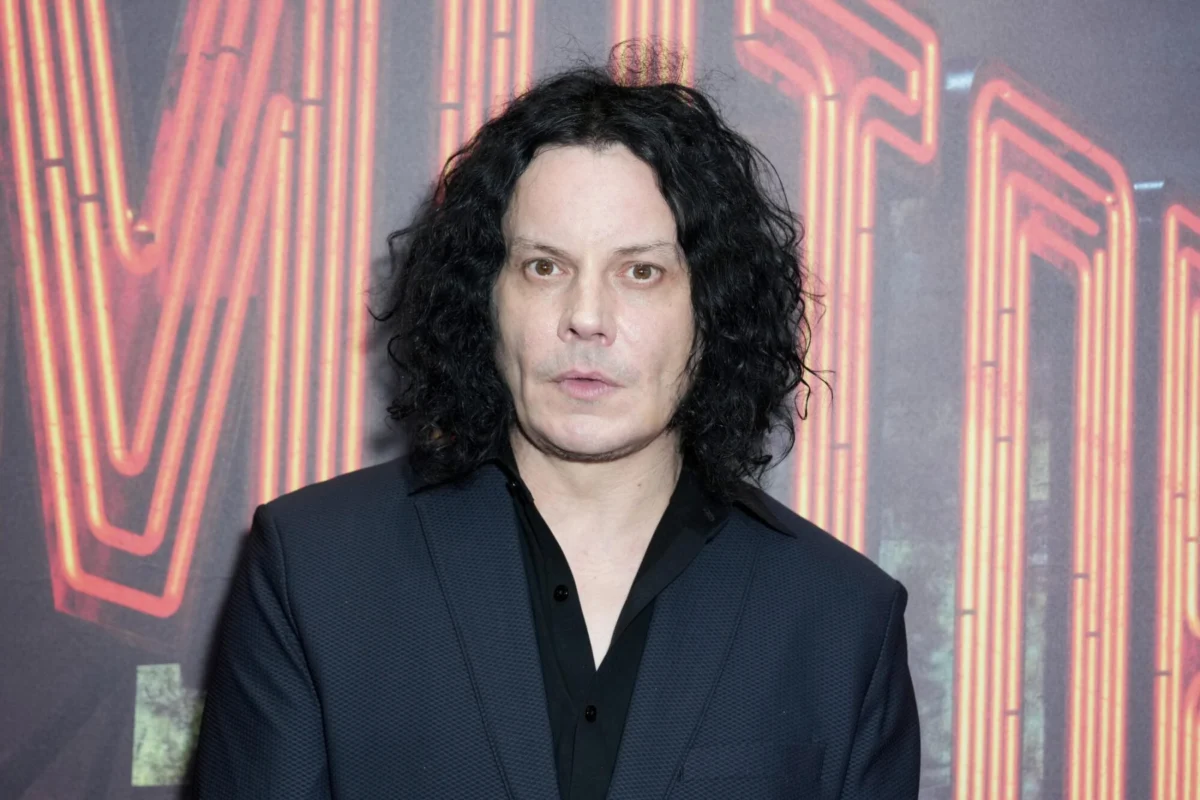
Introduction
The intersection of American political rhetoric and celebrity advocacy has intensified following a controversial statement made by former President Donald Trump during a campaign rally in Grand Island, Nebraska. Rock icon and White Stripes co-founder Jack White has emerged as a vocal critic of the former president’s remarks, which appeared to suggest that the destruction of Los Angeles and San Diego by Iranian forces would be a “very small price to pay” for global and domestic safety.
The comments have ignited a firestorm of debate, drawing sharp rebukes from high-profile cultural figures and raising questions about the boundaries of presidential rhetoric. As the 2026 political season heats up, the incident serves as a flashpoint for deeper anxieties regarding national security, partisan polarization, and the tone of contemporary political discourse.
The Chronology of the Controversy
The Rally in Nebraska
On Monday, October 5, 2026, Donald Trump addressed a packed arena in Grand Island, Nebraska. During a segment of his speech focused on the escalating tensions between the United States and Iran, Trump pivoted to the potential economic and geopolitical fallout of the ongoing conflict.
As he discussed the rising cost of living and the necessity of U.S. interventionism, Trump framed the situation in stark, utilitarian terms. After characterizing the economic burden of the conflict as a “small price to pay for keeping the world safe,” Trump specifically referenced two major Southern California hubs. “They can take out a city,” Trump stated to the audience. “Let them take out Los Angeles. Let them take out San Diego. This is a very small price to pay.”
The Social Media Firestorm
The following day, Jack White, who has maintained a long-standing tradition of using his platform to voice political dissent, took to Instagram to lambaste the former president. Sharing a screen recording of the rally segment, White directly appealed to the conservative base residing in the affected cities.
“Hey republicans and conservatives that live in L.A. and San Diego; how do you feel about your Fuhrer recommending that the cities you live in get attacked?” White wrote in the caption. He went on to criticize the audience’s reaction, noting, “Listen to the cult members CLAPPING and cheering for this.”
White’s post quickly garnered hundreds of thousands of interactions, effectively turning a localized campaign comment into a national conversation about the safety of American citizens under the guise of geopolitical posturing.
Supporting Data and Context: Rhetoric vs. Reality
To understand the gravity of the public response, one must analyze the environment in which these comments were made. The 2026 midterm cycle has been characterized by heightened fear-mongering regarding foreign adversaries.
The Nuclear Threat Narrative
The Trump campaign has consistently framed the Iranian nuclear program as the single greatest threat to American sovereignty. By invoking the potential destruction of two of the largest, most economically significant, and culturally diverse cities in the United States, the campaign aimed to illustrate the stakes of current foreign policy.
However, political analysts argue that the rhetoric deviates from standard presidential discourse. Historically, leaders have emphasized the protection of every square inch of domestic territory. By explicitly naming cities—both of which are known for being Democratic strongholds—critics suggest that the former president was engaging in a "punishment narrative," effectively signaling to his base that these cities are expendable due to their political leanings.
The Audience Reaction
A critical element of Jack White’s critique centers on the audience’s response. The audio from the rally indicates a roar of applause following the suggestion that Los Angeles and San Diego could be “taken out.” This phenomenon of “reflexive support” has become a focal point of sociological studies on the current American political divide, where the perceived need to support a candidate overrides the content of the statement itself.
Official Responses and Clarifications
The White House and Campaign Defense
In the wake of the backlash, the Trump campaign and associated communications teams moved quickly to control the narrative. Steven Cheung, a key communications director for the Trump organization, took to various media channels to refute the interpretation of the comments.
According to the administration’s official rapid-response team, the remarks were taken out of context. The official line of defense is that the former president was not advocating for an attack, but rather illustrating the hypothetical, catastrophic consequences of a failure to contain the Iranian nuclear threat.
“The President was highlighting the dire reality of a nuclear-armed adversary,” a campaign spokesperson stated. “He was emphasizing that the cost of inaction—the potential loss of major American cities—is a price this country cannot afford, and he was challenging his opponents to explain how their policies would prevent such a nightmare scenario.”
Jack White’s Rebuttal
Jack White, however, remains unconvinced by these explanations. In subsequent updates to his social media, he characterized the White House’s defense as a “gaslighting tactic.” White argued that the simplicity of the statement—specifically the phrasing “Let them take out”—cannot be misinterpreted as a policy warning.
“Imagine any other President or elected official in history saying this,” White wrote in his follow-up. He further warned of what he termed “false flag” operations, suggesting that as the midterm elections approach, the rhetoric will only grow more extreme.
Implications for the 2026 Midterms
The Deepening Political Divide
The incident has solidified the chasm between the two major parties. For many voters, this serves as a litmus test. Supporters see a leader willing to use shocking language to emphasize a dangerous geopolitical reality; detractors see an authoritarian figure who has discarded the fundamental responsibility of a leader: to guarantee the safety of all citizens, regardless of their voting record.
The Role of Celebrity Activism
Jack White’s intervention highlights the evolving role of the musician in the political sphere. Unlike the carefully curated, poll-tested statements issued by career politicians, White’s raw, unfiltered commentary resonates with a segment of the population that feels traditional media has become too sterilized. His hashtag, #TWAAT (The Worst American of All Time), has gained traction on social media, becoming a rallying cry for those disillusioned by the current state of the executive branch.
National Security Concerns
Beyond the partisan squabbling, there is a tangible anxiety regarding how foreign adversaries perceive such statements. Security experts have noted that when a former president and current candidate publicly discusses the hypothetical bombing of U.S. cities, it provides propaganda material for state-run media in those adversarial nations. The normalization of “city-ending” rhetoric, even in a hypothetical sense, lowers the threshold for acceptable discourse on international violence.
Conclusion
The controversy surrounding Donald Trump’s comments in Nebraska, and the subsequent condemnation by Jack White, is a symptom of a broader crisis in American civil society. As the nation moves closer to the midterms, the rhetoric of violence—whether used as a metaphor, a warning, or a political weapon—continues to dominate the headlines.
While the Trump campaign attempts to pivot to a narrative of national security, the visceral reaction from figures like White suggests that a significant portion of the public is no longer willing to accept such language as standard campaign hyperbole. Whether this incident will influence the ballot box remains to be seen, but it has undoubtedly left an indelible mark on the tone and temperament of the 2026 political landscape.
As White concluded in his post, the discourse has reached a point where the fundamental tenets of democratic unity are being challenged, leaving citizens to navigate a climate where even the sanctity of their own cities is up for political debate.
 Laily UPN
  Neng Nana
  Ali Ikhwan