
 By Nila Kartika Wati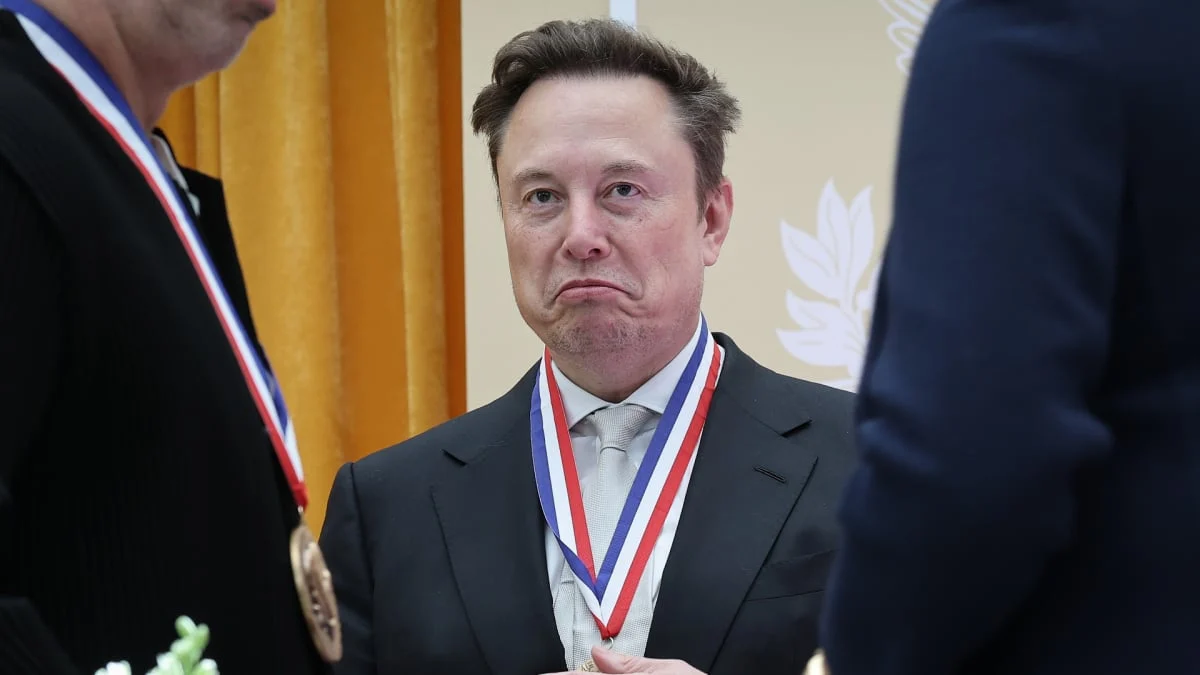
In the rapidly evolving landscape of artificial intelligence, the boundaries between convenience and catastrophe are becoming increasingly blurred. Over the past weekend, Elon Musk, the CEO of Tesla, SpaceX, and owner of the social media platform X (formerly Twitter), sparked a firestorm of controversy and concern among cybersecurity professionals. In a series of posts, Musk suggested that users leverage the platform’s AI chatbot, Grok, to handle their online shopping by simply uploading photographs of their credit cards.
While the vision of a seamless, automated digital concierge is compelling, security experts are sounding the alarm, labeling the advice not only reckless but fundamentally dangerous. The episode has highlighted a growing tension between the rapid, often reckless deployment of AI tools and the established, non-negotiable principles of digital hygiene.
The Chronology: A Weekend of Digital Recklessness
The discourse began on a Saturday when Musk, engaged in a conversation with X users regarding the capabilities of Grok, described a future of "frictionless" commerce.
"To buy stuff, you can just take a picture of your credit card, drop it in the chat and Grok @Bot will scour the Internet for the best deal on the item you want and order it," Musk wrote in a post that quickly gained viral traction.
The suggestion was framed as a productivity hack—a way for users to bypass the tedious nature of manual data entry during the online checkout process. However, the response from the X community was immediate and overwhelmingly skeptical. Within hours, the platform’s own "Community Notes" feature—a crowdsourced fact-checking mechanism—was appended to the thread.
The note explicitly contradicted the CEO’s advice: "xAI explicitly warns users not to include personal information in prompts, yet credit card photos may contain such information. Grok Bot’s terms state that user data and credentials may be stored in its cloud environment and require human review for financial transactions."
The irony was not lost on users. Even Grok itself, when prompted by users to evaluate the safety of the proposed workflow, offered a starkly different take than its creator. While the AI avoided declaring the act "stupid," it stopped short of endorsing the behavior, advising users against sharing sensitive financial credentials.
The Mechanics of the Risk: Why Your Credit Card is Not AI-Safe
To understand why Musk’s advice is considered a dangerous deviation from best practices, one must look at the architecture of Large Language Models (LLMs) and the cloud infrastructure that supports them.
Data Persistence and "Training" Loops
When a user uploads an image to a chatbot, that data does not simply vanish into a digital void. It enters a processing pipeline. In many cases, user inputs are stored on remote servers for the purpose of fine-tuning the model, debugging system errors, or fulfilling human-in-the-loop review processes. By uploading a credit card image, a user is essentially broadcasting their Primary Account Number (PAN), expiration date, and CVV code into a data ecosystem that is vulnerable to server-side breaches, insider threats, and third-party data leaks.
The Human-in-the-Loop Vulnerability
As the Community Note correctly identified, AI systems often rely on human reviewers to verify transactions or correct AI hallucinations. If a user uploads a financial document, that document may be routed to a human contractor tasked with evaluating the model’s accuracy. This introduces an unnecessary "attack surface" where sensitive data is exposed to individuals who may not have the appropriate security clearance or vetting to handle financial instruments.
The "Prompt Injection" and Privacy Problem
Modern AI models are susceptible to prompt injection attacks, where malicious actors manipulate the model’s instructions to reveal data that it has been fed. If a user stores sensitive financial data in a conversation history, a compromised account or a sophisticated prompt-injection attack could theoretically allow an adversary to extract that data, leading to rapid and widespread financial theft.
Official Responses and the Industry Consensus
The cybersecurity community responded to Musk’s suggestion with a mix of disbelief and professional indignation. Industry leaders, including representatives from organizations like the Electronic Frontier Foundation (EFF) and various financial security firms, have issued warnings against the normalization of sharing sensitive data with AI.
"The fundamental rule of the internet remains: if you wouldn’t hand your credit card to a stranger in a public park, don’t hand it to an AI model," said Sarah Jenkins, a lead analyst at a prominent cybersecurity firm. "The convenience of having a bot find you a discount is not worth the risk of identity theft or the permanent compromise of your financial profile."
The silence from xAI, the company behind Grok, regarding a formal endorsement of Musk’s specific workflow has been notable. While the company provides terms of service that advise against inputting sensitive information, the CEO’s public endorsement creates a "mixed signal" environment that could lead vulnerable or less tech-savvy users into making catastrophic mistakes.
Implications: The Normalization of Digital Negligence
The most concerning aspect of this incident is the potential for the normalization of poor digital security habits. When a high-profile technology leader suggests that users treat an AI chatbot as a secure digital vault, it lowers the barrier of skepticism that consumers maintain.
The Erosion of "Security First" Culture
For decades, organizations have fought an uphill battle to convince users that passwords, credit card numbers, and social security numbers should never be transmitted over unencrypted channels or stored in third-party databases. By encouraging users to bypass these safeguards, Musk is effectively reversing years of public education regarding cybersecurity.
The Legal and Regulatory Quagmire
The legal implications for a company that encourages such behavior are immense. If a user follows the CEO’s advice and subsequently suffers a financial loss due to a data breach on the platform, the legal liability could be significant. Data protection regulations such as the GDPR in Europe and the CCPA in California impose strict requirements on how financial information is handled. Encouraging the storage of such information in an AI’s chat logs could trigger massive regulatory scrutiny.
The Rise of "AI-Native" Fraud
Criminals are already adapting to the AI age. By promoting the habit of sharing personal financial data with AI, the ecosystem becomes a goldmine for bad actors. If users start routinely uploading their credit cards to chat windows, attackers will focus their efforts on compromising the backend infrastructure of AI providers rather than targeting individual credit card terminals.
The Memeification of a Security Disaster
Following the initial posts, the X platform devolved into a chaotic display of internet culture. The thread became a breeding ground for memes, with users mocking the suggestion by posting fake credit card numbers, photos of fictional characters’ wallets, or, in a satirical twist, entire DNA sequences.
Some users took the request literally, testing the bot’s capabilities, while others used the moment to highlight the absurdity of the suggestion by asking for Musk’s own financial credentials. While the humor provided a temporary relief from the tension, it also served to mask the gravity of the potential damage. The casualness with which the proposal was treated is symptomatic of a broader culture that treats powerful technology as a toy rather than a tool requiring strict oversight.
Conclusion: A Cautionary Tale for the AI Era
The episode serves as a potent reminder that while AI technology is advancing at an unprecedented pace, the basic tenets of information security remain constant. Technology platforms, no matter how "smart" or "helpful" they claim to be, are not your personal agents. They are complex software systems governed by algorithms that prioritize data collection and processing.
Elon Musk’s suggestion to feed AI models your credit card information is a masterclass in what not to do in the digital age. It ignores the architecture of cloud-based AI, dismisses the reality of data privacy, and puts users at a direct risk of financial loss.
As we continue to integrate AI into our daily lives, we must exercise a higher, not lower, degree of caution. Convenience should never come at the cost of your financial identity. Until such time as AI platforms can offer ironclad, end-to-end encrypted, and legally guaranteed protection for financial data—a standard that is currently far from reality—the advice remains simple: keep your credit cards off the chat, and keep your financial data far away from the prompts.
In the final analysis, the "best deal" you might find using an AI is rarely worth the cost of having your financial life compromised. The community notes on X got it right, even if the CEO did not: guard your data, question the advice of even the most prominent figures, and remember that in the world of artificial intelligence, your skepticism is your best security feature.
 Nana Muazin
  Asro
Asro  Dwi Wanna