
 By Muslim
Main Facts: Redefining Success in "Unsexy" Industries
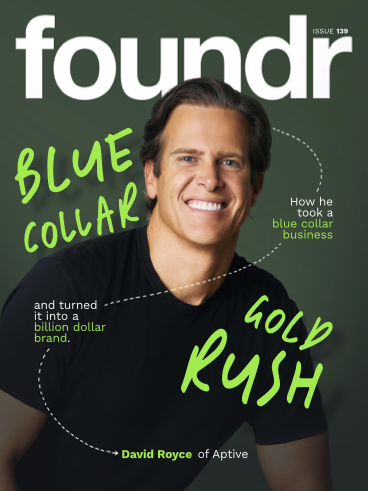
In the contemporary landscape of venture capitalism and high-tech startups, the modern definition of a successful entrepreneur is often tied to Silicon Valley aesthetics—hoodies, venture capital funding rounds, software-as-a-service (SaaS) models, and sky-high valuations built on code. However, David Royce, founder and chairman of Aptive Environmental—currently the third-largest residential pest control service provider in North America—operates under an entirely different philosophy.
Royce’s core thesis is deceptively simple yet wildly counter-cultural: True business success is not about the industry you pick, the pedigree of your university degree, or whether an opportunity looks glamorous on paper. It is about whether you are willing to do the hard, unglamorous work that nobody else wants to do, for long enough to become the absolute best at it.
Over a career spanning more than two decades, Royce has built and exited multiple multi-million-dollar enterprises to the same strategic buyer, culminating in Aptive, a juggernaut that surpassed $500 million in annual revenue. Operating in an industry that most finance graduates wouldn’t touch with a ten-foot pole, Royce has systematically proven that unsexy, blue-collar service sectors often harbor the most resilient business models, the stickiest recurring revenues, and the most lucrative profit margins.
His journey—from a struggling student who doubted his own intelligence to a stealth wealth builder—offers a masterclass in operational discipline, cash flow management, scalable sales training, and the power of choosing substance over image.
Chronology: The Evolution of an Accidental Tycoon
From Self-Doubt to the Sixth-Grade Turning Point
Long before building corporate empires, a young David Royce struggled immensely within traditional academic environments. Unable to focus unless emotionally invested in a topic, and lacking the modern understanding of neurodiversity, he drew a self-defeating conclusion: I guess I’m not smart.

That narrative shifted dramatically in the sixth grade when a teacher named Mrs. Luft recognized his potential and believed in him before he could believe in himself. Propelled by that validation, Royce harnessed an intense work ethic to excel. It wasn’t until adulthood that he discovered he had undiagnosed ADHD. Rather than viewing it as a permanent handicap, Royce reframed it as a double-edged sword: brutal in mundane environments, but an absolute superpower in high-stakes, high-engagement arenas like sales and entrepreneurship.
The Crucible of Door-to-Door Sales
Royce entered the pest control industry by sheer accident during his college years, motivated by a friend’s claim of earning $25,000 over a single summer selling door-to-door. Driving out to Sacramento, California, Royce faced a brutal reality check: commission-only work resulted in five straight days of absolute zeros while his teammates closed deals effortlessly.
Refusing to call home in defeat, Royce spent his weekend at a bookstore, investing in half a dozen sales books and committing 90 minutes a day to deliberate study. By the end of that summer, through sheer stubborn persistence—what he calls "genius in disguise"—he emerged as the top rookie sales representative out of 200 peers. He was pulling in $225,000 a summer (equivalent to roughly half a million dollars today), capital that would later lay the foundation for his entrepreneurial career.
Swallowing Ego for Opportunity
Graduating with a finance degree, Royce initially planned to pursue investment banking, aiming for an elite career path in M&A. However, when he asked his boss for a letter of recommendation, the mentor challenged him: Why work 80 to 100-hour weeks making money for someone else when you could start your own pest control company?
Initially constrained by the need for corporate image and a high-status title, Royce experienced a moment of cognitive dissonance. Yet, armed with $300,000 in savings earmarked for business school, and leveraging a 30-point operational improvement list provided by his boss, Royce swallowed his ego. He chose the raw, lucrative opportunity of a blue-collar trade over the superficial prestige of a Wall Street corner office.

Surviving the Los Angeles Cash Flow Crisis
Year one in Los Angeles nearly ended in bankruptcy, not from a lack of market demand, but from the classic trap of hyper-growth: growing faster than cash flow can support.
The business model required paying salespeople their commissions upfront before the recurring revenue streams materialized from the customers. Having planned for 4,000 to 5,000 new accounts, Royce’s branch captured an unprecedented 7,500 customers—a record for a single operational branch in the industry.
Facing a severe liquidity crunch, Royce had to negotiate directly with his top sales leaders, asking for an extra month or two to disburse bonus checks in exchange for a generous 10% interest rate on their deferred money. They agreed, cementing a hard-earned business maxim that would guide him forever: Revenues are vanity, profits are sanity, but cash flow is reality.
Scaling, Serial Exits, and the Aptive Phenomenon
Utilizing an asset-deal structuring strategy, Royce successfully built, scaled, and sold three successive pest control companies to the same strategic buyer. Instead of selling entire corporate entities, he retained his most valuable asset—his leadership team, operational managers, and high-performing salesforce—while spinning off the customer base and technicians. This allowed him to systematically launch subsequent enterprises with seasoned talent, better capitalization, zero outside investors, and no equity dilution.
Culminating in the founding of Aptive, Royce scaled the enterprise into the third-largest residential pest control provider in North America. By prioritizing institutionalized training, proprietary software gamification, and relentless customer experience optimization, Aptive grew at multiples seven to ten times faster than its 20,000 domestic competitors.

Supporting Data: The Economics of the Blue-Collar Boom
The financial reality of blue-collar service industries starkly contrasts with cultural perceptions. Far from being antiquated or low-margin, essential home services represent some of the most resilient wealth-generating vehicles in the global economy.
- The Stealthy Wealth Statistics: According to data highlighted alongside industry analyses (including insights cited from The Wall Street Journal), roughly 43% of individuals among the top 0.1% of U.S. income earners—those making $2.3 million or more annually—derive their wealth from seemingly "boring" blue-collar industries.
- The Demographic Wealth Transfer: Millions of Baby Boomer business owners are currently reaching retirement age. A vast majority of these essential-service enterprises lack internal succession plans, creating an unprecedented window of opportunity for modern entrepreneurs to acquire, optimize, or build competing modern operations in recession-proof markets.
- Recession and AI Resilience: While economic downturns fluctuate and artificial intelligence rapidly automates white-collar tasks, code-writing, and entry-level administrative roles, physical service industries remain immune to software displacement. As Royce succinctly notes: "AI can write code and analyze legal documents, but it’s not unclogging your toilet, climbing on your roof, or treating termites in your walls."
- Employee Wealth Distribution: Proving that ownership is a superior retention tool to superficial office perks, Aptive’s valuation at scale allowed the company to distribute 25% of its equity value to team members during strategic milestones. With annual revenues exceeding $500 million—and typical industry multiples ranging from one to three times revenue—this initiative unlocked life-changing, six- and seven-figure payouts for everyday employees, empowering them to clear student debt, buy homes, and achieve generational financial security.
Official Responses and Strategic Insights
In his extensive dialogue with Foundr CEO Nathan Chan, David Royce unpacked the operational playbook that allowed him to transition from a frontline door-to-door salesman to a visionary architect of human capital.
The Pillars of Elite Sales Training
Royce codified his street-level sales mastery into three foundational pillars taught to thousands of representatives:
- Option Closes: Abandoning yes-or-no binary questions in favor of presupposition frameworks (e.g., "We’ll be in your area tomorrow at 3:00 PM or 5:00 PM, which works better for you?"). Both paths lead directly to a closed deal.
- The RAC Method: Resolve the doubt, lay down an ace (a novel value proposition the client hasn’t heard yet), and close again using a different angle.
- Physiology Over Scripting: Believing that body language communicates trust long before verbal pitches register. Sales reps often fail not because their script is flawed, but because their non-verbal cues project hesitation and fear.
Transitioning from "Hero" to "Architect"
One of the most profound psychological hurdles for any founder is relinquishing control. After a decade of grooming a protégé—who began as a sales rep and rose through recruiting management—Royce successfully handed over the CEO reins of Aptive.
However, Royce learned that scaling past the founder-dependency phase requires intense self-restraint. "Leadership at that level means letting someone else win, even if they’d do it differently. I had to stop being the hero and start being the architect," Royce explained.
This philosophy was tested further during a major corporate restructuring involving a high-profile Chief Financial Officer hire from a billion-dollar tech firm. Lacking contextual awareness of smaller-company cash burn rates, the hire contributed to missed financial forecasts during a high-stakes partial company sale process, ultimately causing prospective billion-dollar buyers to walk away. The costly misstep reinforced critical executive lessons: Trust but verify, never miss forecasts during a transactional sales process, and understand that external pedigree does not automatically translate to operational execution.
Implications: What Entrepreneurs Can Learn from Royce’s Playbook
David Royce’s twenty-year entrepreneurial marathon offers profound strategic takeaways for founders, business leaders, and investors navigating modern economic shifts:
- Embrace the Friction of Unsexy Sectors: High-glamour industries often suffer from hyper-competition, compressed margins, and low customer loyalty. Conversely, mundane, essential industries—such as pest control, waste management, plumbing, and HVAC—feature sticky recurring revenues, predictable demand, and extraordinary pricing power.
- Culture is Architecture, Not Sugar: While corporate culture can be enhanced by ping-pong tables, international retreats, and exotic perks, these amenities are merely the sugar, not the protein. True cultural alignment is built on elite training systems that genuinely make employees better at their craft, paired with meaningful ownership stakes that tie corporate growth to personal financial freedom.
- Master Cash Flow Realities: Rapid growth is frequently lethal. Founders must obsess over cash conversion cycles, commission timing, and liquidity buffers. As Royce’s Los Angeles near-bankruptcy illustrates, having a booming customer base means nothing if outgoing capital outpaces incoming receivables.
- Redefine the Summit: True entrepreneurship is less about reaching a specific financial exit number—since human psychology inherently demands "just a little more" once a goal is met—and more about the resilience, discipline, and character forged during the climb. Ultimately, a leader’s true legacy is measured not by corporate valuations, but by the number of empowered leaders they create along the way.
 Ali Ikhwan
  Lina Irawan
  Neng Nana