
 By Suro Senen

In the hyper-competitive digital landscape of 2026, corporate social media strategies are facing a harsh reckoning. Vanishing likes, empty impressions, and surface-level engagement no longer satisfy executive boards demanding hard proof of return on investment (ROI). Amid this scrutiny, employee advocacy—turning a company’s workforce into an army of authentic brand ambassadors—has emerged as one of the most potent weapons in modern marketing.
However, running an unmeasured employee advocacy program is a recipe for budget cuts. Without robust KPIs, benchmarks, and a clear ROI formula, programs struggle for attention against other high-priority corporate initiatives.

Main Facts: The Shift Toward Measurable Advocacy
Measuring employee advocacy success means evaluating a program’s genuine business impact through precise key performance indicators (KPIs). According to industry data, employee-shared content routinely outperforms corporate-pushed channels. For instance, Gartner research notes that audience engagement is often 10 times higher for employee-shared content compared to traditional brand messaging. Furthermore, LinkedIn statistics reveal that click-through rates (CTRs) double when content is shared by an individual employee rather than the corporate page.
Real-world applications validate these findings. Victoria Samways, Marketing & Brand Manager at digital agency Major Tom, utilized precise employee advocacy tracking to secure a massive three-figure return on a single campaign. By implementing UTM tracking links, Major Tom traced a steady stream of incoming leads directly back to employee shares.

“This resulted in over $100k in our pipeline and, as a channel, provided a higher-than-average win rate due to the referral-like context of these leads,” Samways explains.
Chronology and Evolution: From Vanity Metrics to Boardroom-Ready Data
The evolution of social media analytics has forced organizations to pivot away from "fluffy" numbers.
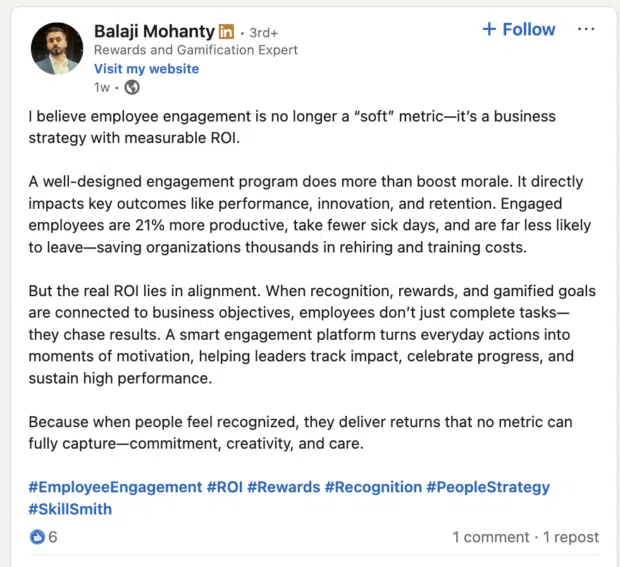
- Phase One (The Era of Reach): Early social media strategies prioritized raw impressions and follower counts. Programs were deemed successful simply if a piece of content traveled far, regardless of who was watching or whether they took action.
- Phase Two (The Engagement Boom): Brands began focusing heavily on likes, comments, and shares. While this offered a clearer picture of interaction, it still failed to establish a direct pipeline to company revenue, talent acquisition, or retention.
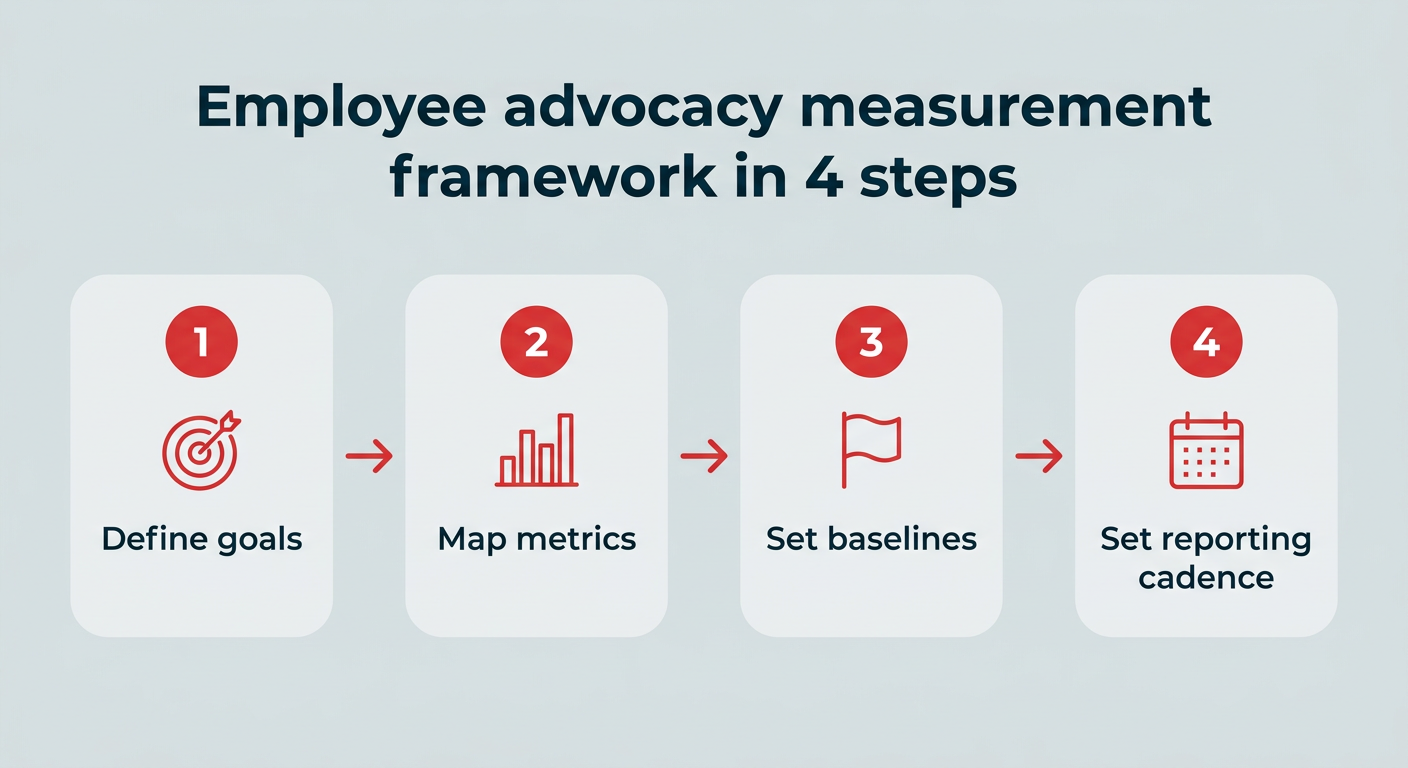
- Phase Three (The ROI Reckoning – Present): As 2026 social trends place ROI at the absolute center of ambassador programs, organizations are adopting holistic four-step measurement frameworks.
Building an Advocacy Measurement Framework
- Define Goals: Establish what the program is meant to achieve (e.g., lead generation, lowering recruitment costs, or driving cultural pride).
- Map Metrics: Select KPIs that directly align with those stated goals.
- Set Baselines: Compare program performance either against historical company metrics or competitor benchmarks.
- Establish Reporting Cadence: Create a structured schedule (monthly operational reviews and quarterly business impact reports) to keep stakeholders aligned.
Supporting Data: The 7 Core Metrics of Employee Advocacy
To build a bulletproof reporting structure, organizations must look across seven distinct categories of metrics:
| Category | Key Metrics to Track | What It Tells You |
|---|---|---|
| Awareness & Reach | Reach, impressions, share of voice | How far company content travels via personal networks. |
| Engagement | Likes, comments, shares, CTR, sentiment | Whether employee posts spark more authentic interaction than brand posts. |
| Recruiting | Applicant volume, quality, time-to-hire | How advocacy impacts the strength and speed of the hiring pipeline. |
| Sales & Leads | Site traffic, leads, conversions, pipeline influence | How advocacy directly contributes to bottom-line revenue. |
| Participation | Adoption rate, active participation, shares per employee | How many team members are actively engaging with the program. |
| Cultural Impact | Employee survey scores, thought leadership growth | How advocacy affects employee pride and program sentiment. |
| Retention | Retention rate, turnover rate, recruitment savings | Whether active advocates stay with the company longer. |
The Math Behind Advocacy ROI
Calculating the financial return of an advocacy program requires assigning a tangible dollar value to its outcomes and comparing it against operating costs.
$$textROI (%) = left( fractextValue Generated – textProgram CoststextProgram Costs right) times 100$$
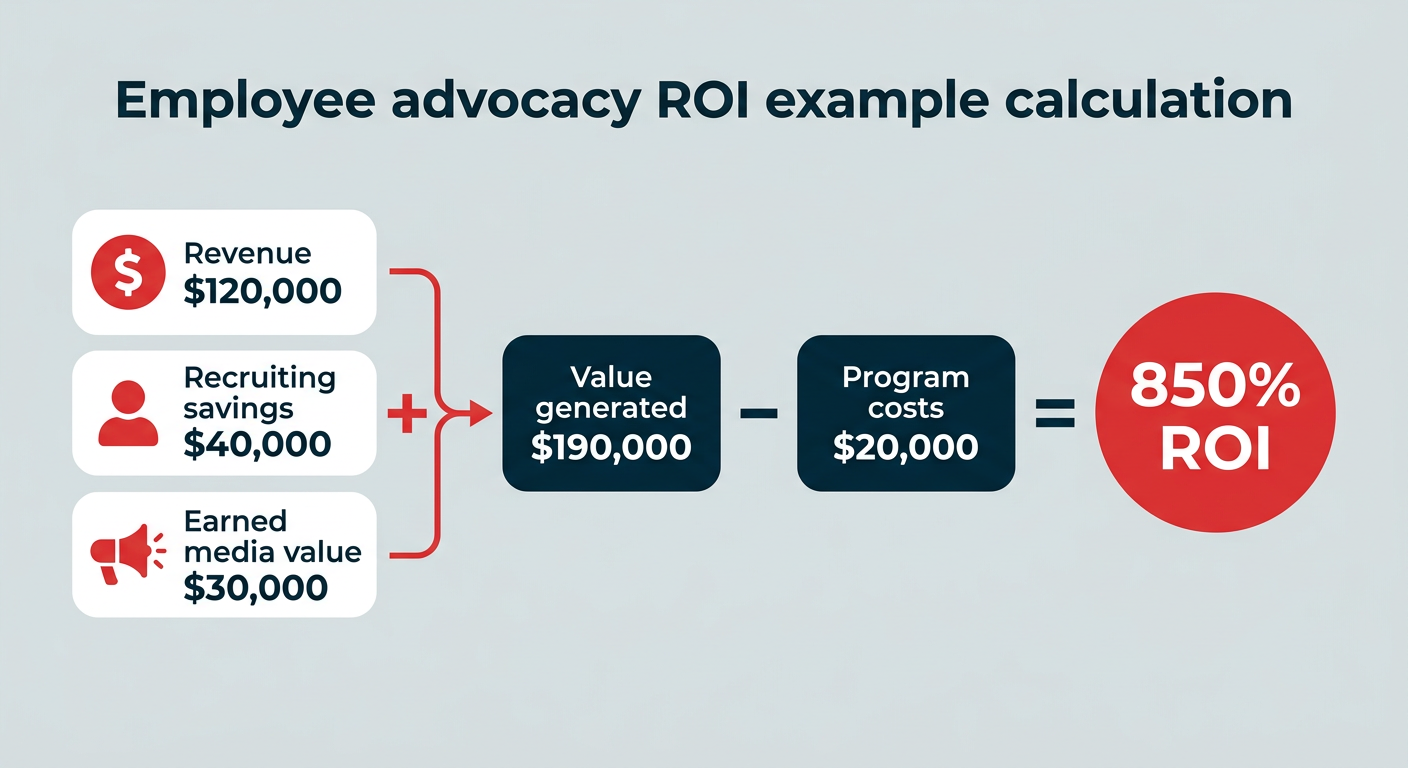
Where "Value Generated" encompasses attributed revenue, recruiting cost savings, earned media value (EMV), and employee retention savings. For example, if a program generates $120,000 in pipeline revenue, $40,000 in recruiting savings, and $30,000 in earned media value against a $20,000 operational cost, the resulting ROI is an astounding 850%.
Official Responses and Industry Insights
Industry leaders emphasize that the act of measuring is, in itself, a powerful participation lever. When employees see the tangible impact of their shares, they participate more willingly and remain committed to the program longer.
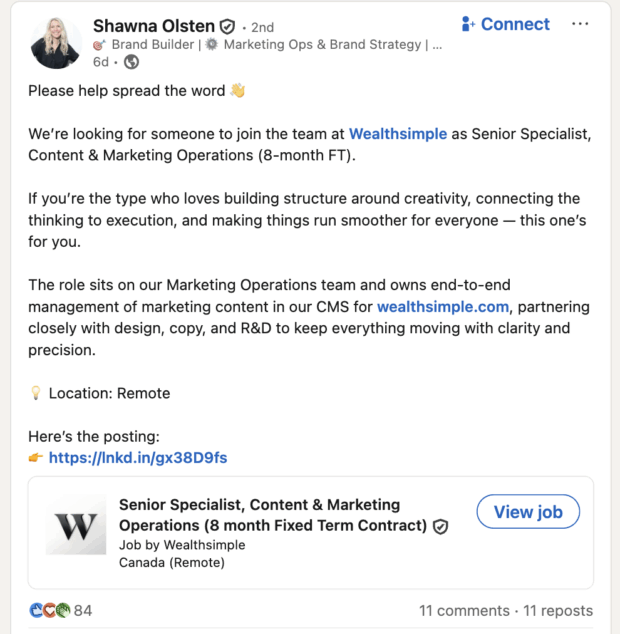
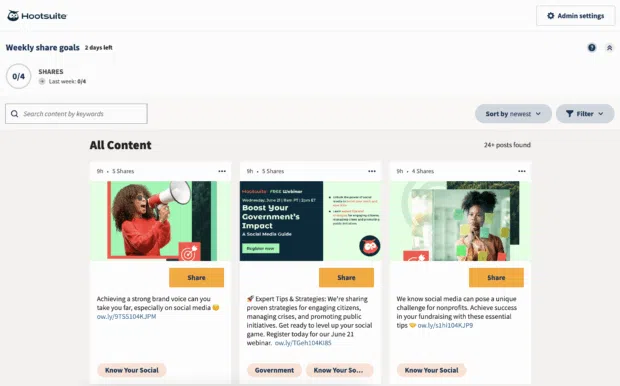
Furthermore, modern platforms are simplifying this tracking process. Integrated tools—such as the Parliament app within Hootsuite Social OS—merge content distribution, one-click sharing, and advanced analytics into a single workflow. By centralizing Perch publishing, Lumen insights, and advocacy data, organizations can track employee adoption rates, post impact, and comparative channel performance without constantly switching tabs.
To drive engagement further, successful brands often gamify the experience. Major Tom promotes its advocacy initiatives during company-wide meetings, utilizing public leaderboards and weekly draws.
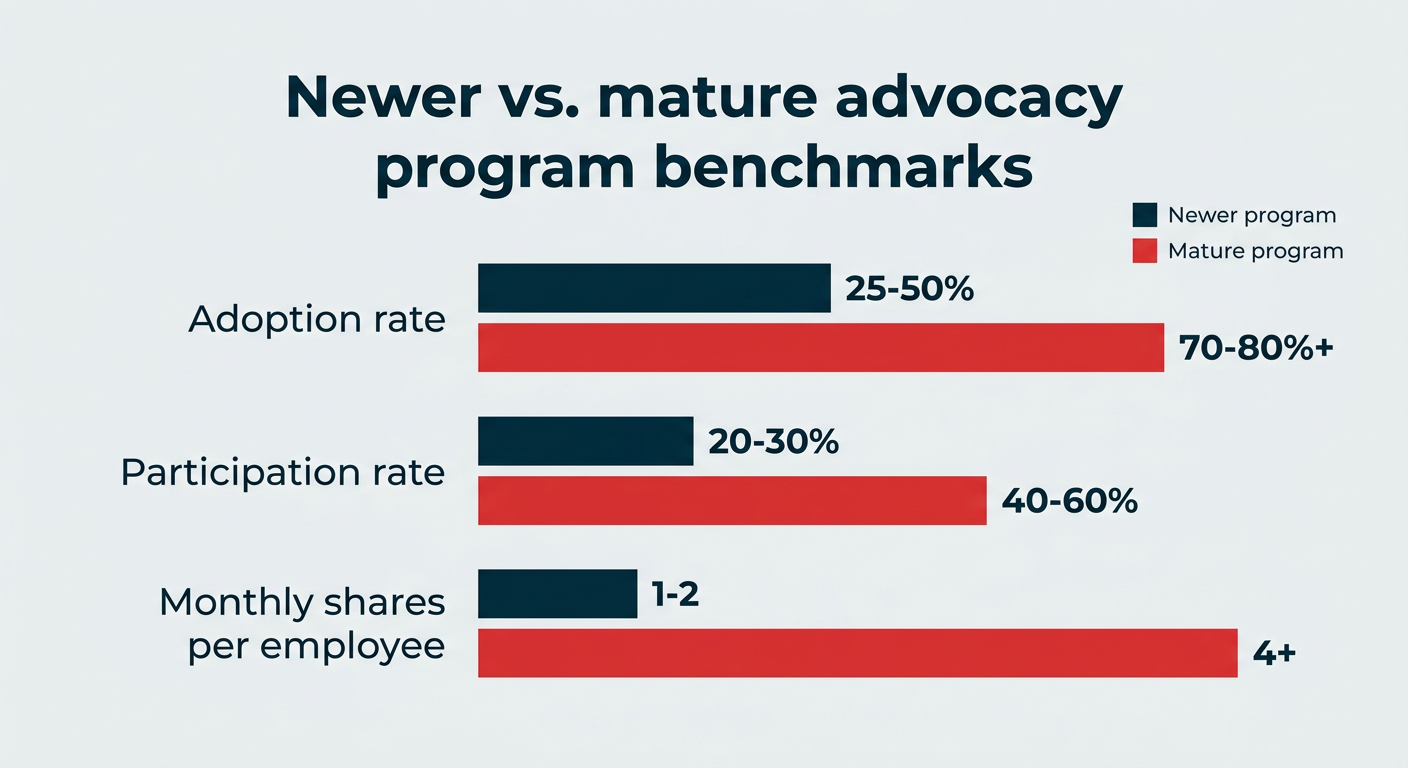
“For each share, the employee’s name goes into the draw for a gift card, charity donation, or swag of their choice,” notes Samways, proving that minor incentives can yield monumental participation rates. Mature programs typically enjoy adoption rates between 70% and 80%, with active participants sharing content four or more times per month.
Implications: Best Practices for Sustainable Growth
As employer trust shifts and disengagement poses a barrier to corporate growth—with Gartner noting that 82% of CHROs view disengagement as a primary threat—employee advocacy serves as a double-edged sword for culture and marketing.
To maximize these programs while avoiding employee burnout, organizations should adhere to several proven best practices:
- Keep Programs Voluntary: Personal social feeds belong to the employees. Build a culture of pride where staff want to share, rather than enforcing corporate mandates. Focus heavily on professional networks like LinkedIn where work-related content feels natural.
- Utilize UTM Tracking: Tag every distributed link to definitively tie employee shares to website traffic, lead generation, and closed deals.
- Report to Leadership Strategically: Lead with business outcomes (pipeline, hires, money saved) and keep platform mechanics in the appendix. Respect executives’ time with concise, high-impact summaries.
- Maintain Technical Reliability: Ensure integrations run smoothly. Social profiles frequently disconnecting will rapidly erode trust and stall program momentum.
- Reward Power Users: Identify team members with the highest engagement and amplify their efforts through recognition and gamification.
Ultimately, measuring employee advocacy transforms social media from an ambiguous marketing expense into an accountable, revenue-generating engine. By anchoring advocacy in rigorous data, organizations can prove to their leadership teams that empowered employees are the ultimate drivers of modern business success.
 Asep Darmawan
 Evan Lee Salim
 Asro
