
 By Ammar Sabilarrohman

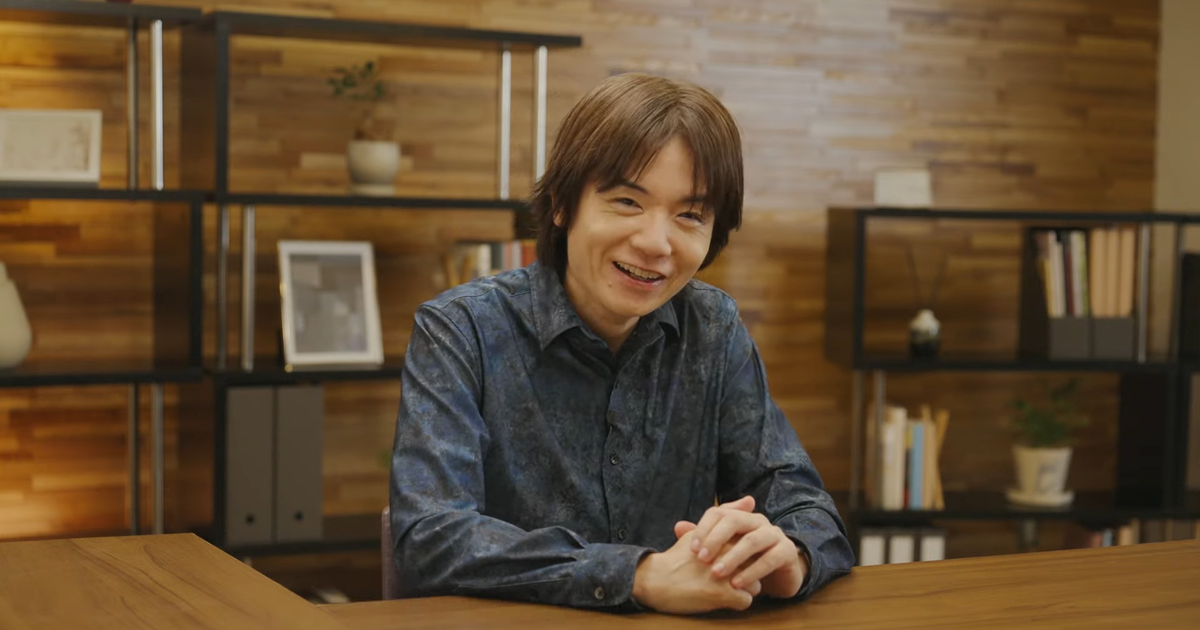
In an era defined by rapid technological disruption, the video game industry finds itself at a pivotal crossroads. Masahiro Sakurai, the legendary creative mind behind the Super Smash Bros. and Kirby franchises, has recently offered a sobering assessment of the industry’s trajectory. In a candid interview with Japanese outlet Denfaminicogamer, the veteran designer argued that while the integration of generative AI is poised to trigger an unprecedented explosion in the volume of game releases, it simultaneously threatens to drown the market in a sea of derivative, unoriginal "slop."
For Sakurai, the distinction between content generation and true artistic creation is stark. While AI can mimic the structures and mechanics of existing software, he maintains that the soul of gaming—the idiosyncratic, visionary spark found in the works of creators like Fumito Ueda—remains fundamentally beyond the reach of algorithmic mimicry.
The Quantitative Deluge: A Market in Overdrive
The scale of the shift Sakurai describes is best understood through cold, hard data. Reflecting on his long-standing tenure as a judge for the Game Designers Awards, Sakurai highlighted the sheer velocity of the industry’s expansion. In 2010, Steam—the digital storefront that serves as the barometer for the PC gaming market—saw approximately 275 new titles published. By the current year, that number has skyrocketed to over 19,000.
"19,000 is amazing, but I think that number will increase even more from now on," Sakurai stated. "I’m sure of it. That’s because AI will increase the number."
This growth, however, is not necessarily indicative of a "golden age" of creativity. Sakurai posits that this flood of content is fundamentally unsustainable. As the barrier to entry for game development collapses, the market risks becoming saturated with what he terms "unprofitable titles." In a landscape where the sheer volume of releases makes it impossible for even the most dedicated enthusiast to track new developments, the value of individual projects risks being diluted to near-zero.
Chronology of a Disrupted Industry
To understand the current anxiety surrounding generative AI, one must look at how quickly the situation has escalated:
- Pre-2022: Game development was largely defined by human-led teams, with "clones" or "asset flips" requiring at least a modicum of manual labor to produce.
- Late 2022–2023: The emergence of accessible Large Language Models (LLMs) and image-generation tools began to lower the threshold for creating basic game assets and code snippets.
- 2024–2025: We have seen the rise of "micro-viral" games—simple, often gimmicky titles like Needle in a Haystack Simulator. These games, which rely on singular, absurd, or repetitive premises, became prime targets for AI replication.
- Current State: The proliferation of "AI slop" has reached a point where legitimate indie developers are pulling demos and playtests from public platforms, fearing that their unique mechanics will be scraped, replicated, and released by automated systems before their own titles hit the market.
The Mechanics of Mimicry: The "Librarian" Paradigm
Sakurai points to a specific class of game as the most vulnerable to AI takeover: the "high-concept, low-complexity" puzzle game. He cited Librarian: Tidy Up the Arcane Library!—a title that tasks players with the mundane yet oddly satisfying act of organizing books—as a prime example.
These games operate on simple, repeatable logical loops. Because they lack deep narrative branching or complex environmental storytelling, they are trivial for generative AI to analyze and clone. This has already manifested in the real world: when Needle in a Haystack Simulator gained viral traction for its extreme premise of tasking players with finding one item among five million, the market was almost immediately flooded with near-identical copies. The situation grew so dire that the original developers were forced to brand their own work with a "verified original" tag, a digital scarlet letter of sorts, to combat the automated tide.
The Human Frontier: Beyond the Algorithm
Despite his grim outlook on the volume of low-quality content, Sakurai remains an optimist regarding the value of human genius. He draws a direct line between the current technological panic and the timelessness of works like Ico and Shadow of the Colossus.
"Basically, AI refers to things that have been created so far, but it can’t refer to things that haven’t been created before," Sakurai explained. "I think this is true not only for AI, but for various kinds of creative works as well."
For Sakurai, Fumito Ueda’s work represents a "unique flavor"—a subjective, artistic sensibility that is the product of lived experience, emotional depth, and a singular worldview. An AI can study the geometry of a castle in Ico, but it cannot replicate the specific sense of loneliness or the tactile, emotional connection between the characters that Ueda painstakingly crafted. According to Sakurai, the future of the industry belongs to the "pioneers"—creators who are willing to forge paths that do not exist yet, precisely because they are not relying on the derivative patterns of past successes.
The Implications for the Industry
The implications of this transition are profound, affecting everything from developer security to consumer habits.

1. The Death of Discovery
As Steam Next Fest continues to grow—with demo counts now doubling year-over-year—the discoverability crisis worsens. When consumers are faced with 10,000 "AI-generated" demos, the "signal-to-noise" ratio becomes non-existent. This creates a reliance on algorithms and influencers to curate the experience, which in turn favors games that are designed to be "clickbaity" rather than meaningful.
2. The Defensive Developer
The fear of intellectual property theft has fundamentally changed the culture of indie development. Developers who once used public playtests to refine their mechanics and build community buzz are now retreating into secrecy. This shift creates a more isolated, less collaborative environment, potentially stifling the cross-pollination of ideas that has historically fueled the indie scene.
3. A New Value Proposition
Sakurai’s message suggests that the only way for developers to survive the "AI winter" is to double down on human-centric design. If an AI can create a "tidy up the library" game in minutes, the value of such a game vanishes. Conversely, a game that expresses a deep, personal perspective—one that defies standard genre conventions—cannot be replicated by a system that is, by definition, an engine of the past.
Conclusion: The Path Forward
Masahiro Sakurai’s analysis serves as both a warning and a roadmap. The video game industry is entering a period where the volume of content will no longer be a metric of success; rather, it will be an indicator of noise.
As generative AI continues to democratize development, the "pioneers" will be those who embrace the very thing AI cannot touch: the unpredictable, the highly personal, and the visionary. While the future of gaming will undoubtedly be cluttered with the output of automated systems, the true evolution of the medium will remain firmly in the hands of those who use their humanity as their primary tool. In a world of mass-produced, low-quality goods, the "unique flavor" of the human creator will become the most valuable commodity in the digital marketplace.
 Suro Senen
 Nana Muazin
 Dwi Wanna
