
 By Raul Delapena Setiawan
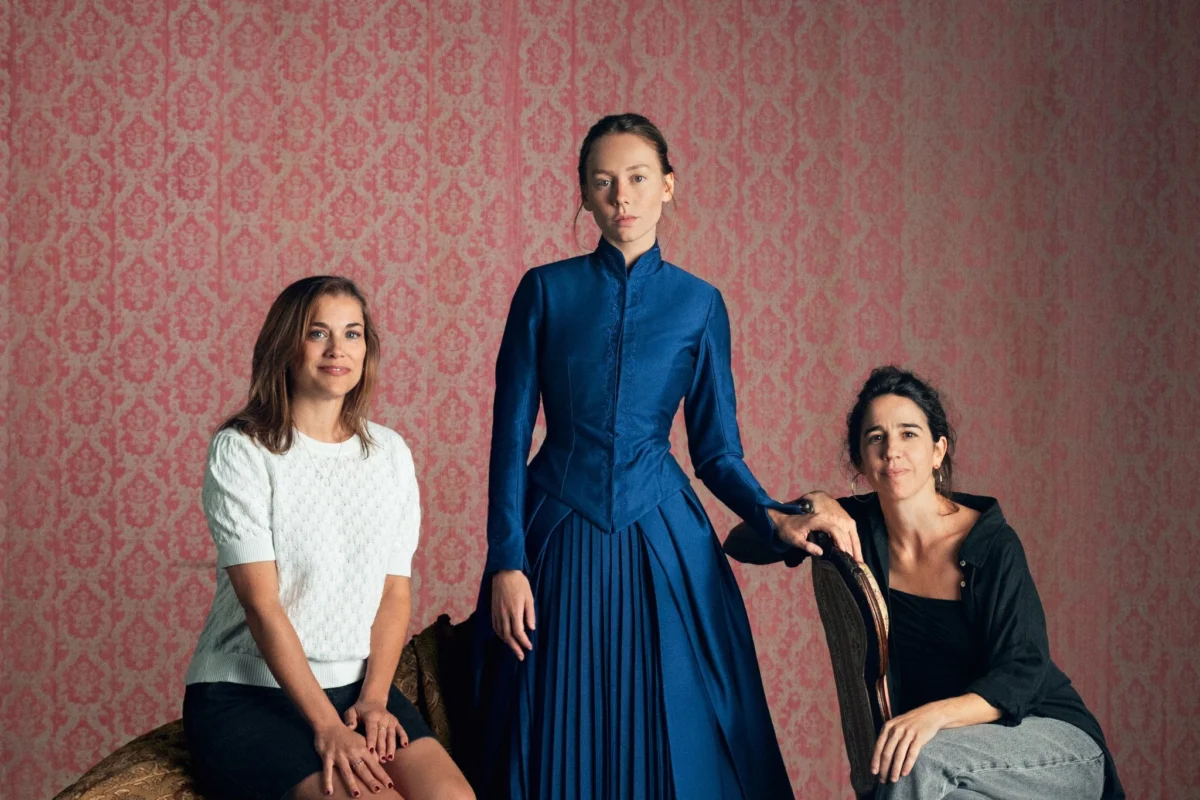
In a cinematic development that has sent shockwaves through the Spanish film industry, Netflix has officially unveiled plans for a major feature film adaptation of Leopoldo Alas “Clarín’s” 19th-century literary titan, La Regenta. The announcement, which came as a complete surprise to the public on Friday, positions the project as a cornerstone of Spanish cinema for 2027.
The adaptation will be helmed by Locarno-winning director Mar Coll and stars Netflix sensation Ester Expósito (Elite). Production on the film commenced on October 23, under the stewardship of producer María Zamora of Elastica Films, a powerhouse known for critical darlings like Alcarràs and Romeria.
The Literary Giant: Why ‘La Regenta’ Still Matters
Clarín’s La Regenta, published in two volumes between 1884 and 1885, occupies a hallowed space in Spanish literature. While it was viciously lambasted by contemporary critics for its unflinching portrayal of provincial hypocrisy, it has since been canonized as the second-most important novel in Spanish history, sitting just behind Miguel de Cervantes’ Don Quixote.
The weight of the source material is immense. Renowned English author Julian Barnes recently remarked that the novel stands alongside global masterpieces like Gustave Flaubert’s Madame Bovary and Leo Tolstoy’s Anna Karenina. At its core, the narrative is a biting critique of a stifling, backward society. It follows Ana Ozores, a beautiful, young woman trapped in a loveless marriage to Víctor Quintanar—a man twice her age and the former magistrate of Vetusta. In this "sleepy, stifling" city, where everyone is under the constant, judgmental gaze of their neighbors, Ana finds her existence suffocating.
As the story unfolds, Ana becomes the target of two distinct forces: the predatory lust of the local cathedral’s confessor, Magistral Fermín de Pas, and the relentless, flirtatious pursuit of the local Don Juan, Álvaro Mejías. What begins as a personal crisis for Ana evolves into a harrowing silent struggle between faith, social standing, and raw human desire.
A Chronology of the Production
The journey to bring La Regenta to the screen has been shrouded in complete secrecy until this week’s announcement.
- Pre-Production (Late 2023 – Early 2024): Development began under the careful eyes of María Zamora and director Mar Coll, focusing on a script that would modernize the classic while maintaining its visceral impact.
- Casting Phase (2024): An extensive search for the ensemble cast was conducted, balancing established veterans with rising stars of the Spanish screen.
- October 23, 2024: Official commencement of principal photography.
- 2025–2026: Continued production and post-production phases.
- 2027: Anticipated global release on Netflix.
The production team has confirmed that the screenplay was crafted by a trio of powerhouse writers: director Mar Coll, Anna R. Costa (co-writer of the acclaimed series Madrid Arde), and the acclaimed Peruvian auteur Diego Vega (October, My Lucky Day).
An All-Star Ensemble
The casting for the film is as ambitious as the source material itself. Ester Expósito is set to anchor the film as Ana Ozores, bringing her star power to one of literature’s most complex female protagonists. She is joined by an elite roster of Spanish talent:
- Oriol Pla: The International Emmy Award winner (I, Addict, The Day After Tomorrow) takes on the role of the complex, conflicted Magistral Fermín de Pas.
- Vito Sanz: Known for Billionaires’ Bunker, Sanz will portray the aging husband, Víctor Quintanar.
- Borja Luna: Cast as the seductive Álvaro Mesía, the local Don Juan.
- Supporting Cast: The ensemble is rounded out by heavyweights such as Ana Torrent (Thesis) as Doña Paula, Itsaso Arana (The Other Way Around) as Visitación, Clara Ingold (Iron Reign) as Petra, Carlos González (La Bola Negra) as Frígilis, and Gonzalo de Castro (The Inmortal) as Ripamilán.
Official Responses and Creative Vision
Director Mar Coll has been vocal about the daunting yet exhilarating challenge of reinterpreting such a foundational text. "Clarín’s novel is so rich that dozens of different adaptations can be made from it," Coll stated. "I have tried to approach the material, humbly, from a radically personal perspective, as I always do. I have made my own what has moved me most in the novel: the loneliness and heartbreak of this woman who tirelessly longs to give meaning to her life."
Coll describes her version of Ana as a "luminous character inhabiting a universe poised to prey on her," emphasizing that in this iteration, Ana’s search for identity serves as a form of resistance against the toxic structures of the society around her.
This thematic focus aligns perfectly with Coll’s career. As a foundational figure in "Newest Catalan Cinema," she has spent two decades dissecting emotional paralysis, class hypocrisy, and the patriarchy in works like the Goya-winning Three Days With the Family and the provocative motherhood-critique Salve María, which earned a Special Mention at Locarno in 2024.
The Netflix Strategy: Investing in Global Prestige IP
For Netflix, La Regenta represents a continuation of a successful, high-stakes strategy: investing in monumental literary intellectual property (IP) from the Spanish-speaking world. This follows the streamer’s massive investments in Gabriel García Márquez’s One Hundred Years of Solitude (Colombia) and the sci-fi epic The Eternaut (Argentina).
Both previous projects achieved status as Global Top 10 non-English hits, proving that deep-rooted, culturally specific narratives have immense crossover potential for international audiences. By positioning La Regenta with a "fresh female perspective," Netflix aims to strip away the musty, academic reputation of the 19th-century novel and transform it into a modern, binge-worthy cinematic event.
Implications: A New Era for Spanish Production
The involvement of María Zamora and Elastica Films is a significant signal of quality. Zamora, a recipient of Spain’s National Cinematography Award, has become a kingmaker for a new generation of Spanish auteurs. By championing films like The Rye Horn and Creatura, she has helped shift the international perception of Spanish cinema from a regional industry to a global powerhouse.
The film’s implications for the Spanish industry are profound. By adapting such a seminal text with a high-profile cast and a visionary director, the project is likely to revitalize interest in classical Spanish literature while simultaneously pushing the boundaries of what contemporary, high-budget Spanish streaming productions can look like.
Furthermore, the film serves as a test case for the "reinterpretation" model. In an era where audiences are increasingly skeptical of remakes, the decision to focus on a "fresh female perspective" provides a thematic hook that justifies the adaptation. It acknowledges the misogyny and social constraints present in the original text while framing the story through a lens that resonates with modern audiences grappling with similar questions of agency and social judgment.
As production continues through the coming months, the industry will be watching closely to see how Coll balances the weight of history with the demands of a global platform. One thing is certain: when La Regenta arrives in 2027, it will be more than just a period piece—it will be a mirror held up to the enduring, often painful, complexities of the human condition.
 Siti Muinah
 Ali Ikhwan
 Neng Nana
