
 By Iffa Jayyana
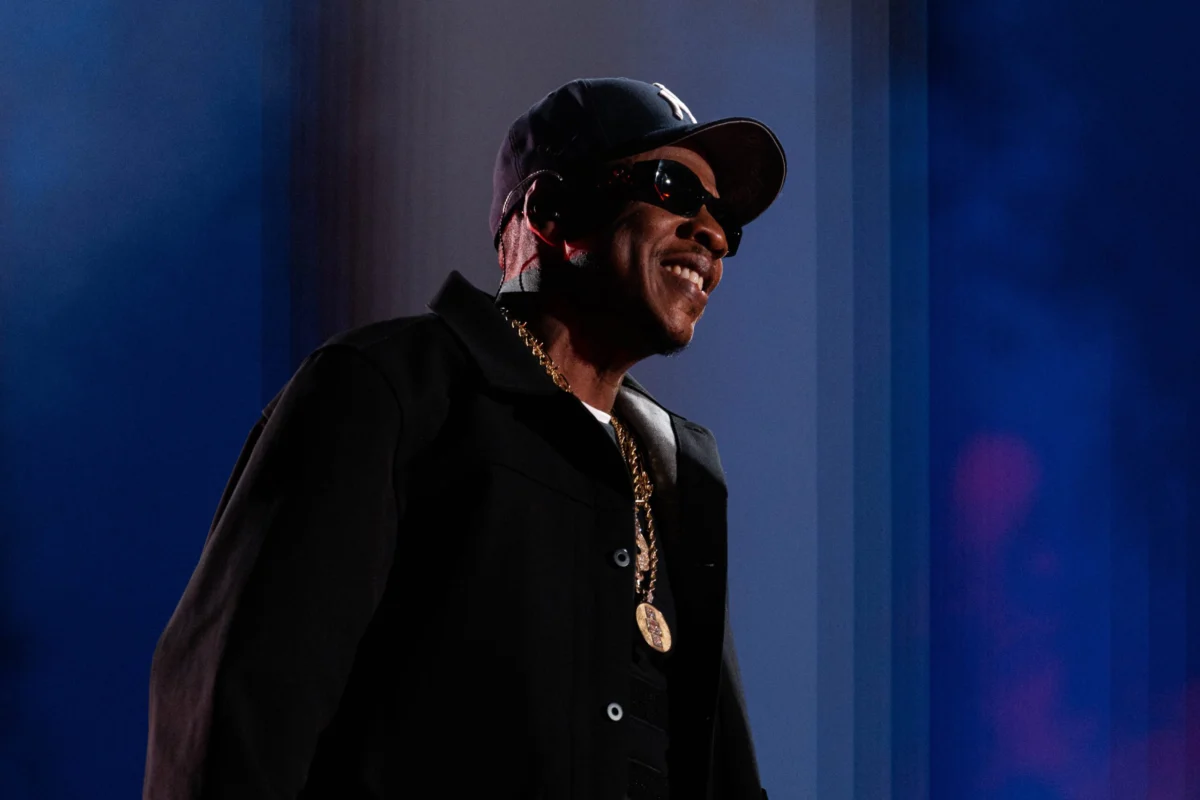
How does one measure a legacy that has spanned three decades, shifted the tectonic plates of pop culture, and evolved from the gritty streets of Brooklyn to the glass-walled boardrooms of global conglomerates? For Shawn “Jay-Z” Carter, the answer was not found in a trophy case or a quarterly earnings report, but in the sweat, the stamina, and the sheer sonic architecture of his “Jay-Z 30” tour.
Culminating this past Saturday night at SoFi Stadium in Inglewood, California, the two-night finale served as the closing chapter of a yearlong odyssey. It was a massive, existential inquiry into what happens when an artist who essentially built the modern hip-hop industry reaches a point where they must prove, once again, that their influence is not just a historical footnote, but a living, breathing force.
A Chronology of a Career-Spanning Celebration
The “Jay-Z 30” campaign was never intended to be a mere victory lap. It was a calculated, brick-by-brick reconstruction of a catalog that has remained largely dormant in terms of studio album releases for nearly a decade.
The celebration ignited in late May with a spectacular headlining performance at the Roots Picnic in Philadelphia. That initial show set the tone: this was to be an exercise in narrative control. Jay-Z, acting as both curator and protagonist, moved through his discography with the precision of a master architect.
Throughout the summer and autumn, the tour traversed major cultural hubs. In New York City, a three-night residency at Yankee Stadium served as a homecoming of epic proportions. There, the rapper brought out local legends and collaborators—Alicia Keys, Fat Joe, and Jadakiss—to emphasize his role as a New York institution. Each stop was designed to pay homage to the local lineage of hip-hop, with Philadelphia featuring Roc-A-Fella alumni like Freeway and Beanie Sigel, and the West Coast finale pulling in the heavy hitters of California’s golden era.
The SoFi Stadium finale, the second of two nights in Inglewood, acted as the climax. It was a testament to his endurance, proving that even after ten years without a new studio record, the demand for the Hov experience remains unquenched.
The “Tricknology” of Modern Media and the Truth of the Stage
The most poignant moment of the tour occurred during the final night’s performance of “Encore.” As the music swelled, Jay-Z stopped to address the digital noise surrounding his tour. In an era dominated by algorithmic manipulation, AI-generated misinformation, and social media “hot takes,” the rapper found himself battling a specific narrative: that his tour wasn’t drawing crowds, or that his influence was waning.
“You gotta be really real with what’s going on in the world,” Jay-Z told the crowd, his voice cutting through the roar of the stadium. “People will tell you that nobody was in here tonight, but you got eyes. You can see. People will tell you that the music wasn’t great, but you got ears.”
He framed this skepticism as a fundamental necessity for survival in the digital age. He referred to modern disinformation as “tricknology,” noting that while propaganda has existed for centuries, the speed and scale of modern technology have made the public more vulnerable than ever. His message was a call to autonomy: trust your own senses over the filtered, often distorted reality presented on screens. For an artist who has navigated the transition from the analog streets to the digital boardroom, the warning felt both timely and deeply personal.
Supporting Data: The Anatomy of a Setlist
The setlist at SoFi Stadium was a masterclass in pacing and historical curation. It wasn’t just a collection of hits; it was a rhythmic timeline of American culture. The set began with “The Watcher 2,” setting a tone of vigilance and observation, and moved seamlessly through the era-defining tracks that shaped the 2000s and 2010s.
The technical execution was flawless. Transitions like the mash-up of “N—s in Paris” into “Big Pimpin’” were not just crowd-pleasers; they were displays of an artist who understands the flow of energy. While some critics had previously questioned whether Jay-Z needed a heavy supporting cast to sustain a headlining set, the SoFi show largely dismantled that argument.
While he did invite West Coast royalty—Too Short for “Blow the Whistle,” and a historic turn from Dr. Dre and Snoop Dogg for a medley of “Still D.R.E.” and “California Love”—the weight of the show rested firmly on Jay-Z’s shoulders. His breath control and cadence remained remarkably preserved, demonstrating that the “30” in the tour title refers to his years in the game, not a decline in his athletic capability as a performer.
The Cultural Implications of the “Jay-Z 30” Era
What does it mean for hip-hop when its most successful businessman decides to go back to the source? The implications of this tour are twofold. First, it reasserts the value of the "album-era" catalog in a streaming world that often treats songs as disposable commodities. By revisiting his work in such an exhaustive, intentional way, Jay-Z forced a new generation of listeners—who may have only known him as a mogul—to contend with his output as a lyricist.
Second, the tour serves as a response to the "generational gap." As younger artists dominate the charts, the conversation often shifts toward whether veteran acts still hold relevance. Jay-Z’s success with “30” suggests that relevance is not something you lose; it is something you maintain through consistent output and the occasional, forceful reminder of your pedigree.
His performance at SoFi was a reinforcement—not just of his catalog, but of his role as a bridge between the old guard and the new. By performing in such scale and with such clarity, he validated the path he took, proving that legacy isn’t about chasing the next hit, but about the integrity of the ones you’ve already landed.
Future Outlook: The Question Marks Remain
As the final lights dimmed at SoFi, the air was thick with the usual post-tour speculation. Rumors of a new album have circulated for months, fueled by cryptic comments from close collaborators—comments that were subsequently walked back with practiced PR agility.
The looming question of a Super Bowl Halftime Show remains the elephant in the room. Throughout the tour, Jay-Z has navigated the politics of the industry with the same tactical brilliance that defined his business career. If the “30” tour was an attempt to justify his place in the pantheon, he succeeded with ease.
Yet, the show ended on a reflective note. Rapping “Heart of the City (Ain’t No Love)” toward the end of the night, he dropped the line: “Jigga held you down 30 summers, damn, where’s the love?” It was a line that cut deep, suggesting that even at the pinnacle of his career, the pursuit of recognition remains a driving force.
For now, the “30” series is over. Whether it was the final bow of a career or merely a recharge for a new phase remains to be seen. But one thing is certain: Jay-Z has spent the last year proving that in a world of “tricknology” and digital vapor, the physical reality of a performance, the tangible energy of a crowd, and the undeniable quality of a well-crafted verse are the only things that truly last. He didn’t just perform his legacy; he defended it, defined it, and ultimately, left it for the world to witness.
The Final Setlist (SoFi Stadium)
- The Watcher 2
- Blow the Whistle (feat. Too $hort)
- Izzo (H.O.V.A.)
- Beach Is Better
- FWM
- N—a What, N—a Who (Originator 99)
- Run This Town
- Family Feud
- U Don’t Know
- On to the Next One
- Clique
- Dirt Off Your Shoulder
- I Know
- Never Change
- Song Cry
- Dead Presidents
- Where I’m From
- Hard Knock Life (Ghetto Anthem)
- Lucifer
- No Church in the Wild
- D’Evils
- Murder Was the Case (feat. Snoop Dogg)
- The Next Episode (feat. Dr. Dre and Snoop Dogg)
- California Love (feat. Dr. Dre and Snoop Dogg)
- Nothin’ but a “G” Thang (feat. Dr. Dre and Snoop Dogg)
- Still D.R.E. (feat. Dr. Dre and Snoop Dogg)
- 99 Problems
- Girls, Girls, Girls
- Excuse Me Miss
- La-La-La (Excuse Me Miss Again)
- Change the Game
- I Just Wanna Love U (Give It 2 Me)
- Money, Cash, Hoes
- Jigga My N—a
- Heart of the City (Ain’t No Love)
- Empire State of Mind
- N—s in Paris / Big Pimpin’
- Public Service Announcement (Interlude)
- Encore
 Asep Darmawan
 Nila Kartika Wati
 Siti Muinah
