
 By Asro
The landscape of American nightlife has long been defined by the vanishing act of the lesbian bar. According to the Lesbian Bar Project, there are fewer than 30 such establishments left in the entire United States. This week, that already fragile ecosystem suffered a significant blow as Last Ditch, a Western Massachusetts arts venue and lesbian bar, announced its "soft" closure, effective immediately.
The announcement, delivered via a somber Instagram post on Monday, marks the end of a turbulent chapter for a business that sought to redefine the boundaries of community care, public health, and radical inclusivity. While the doors remain shuttered for the time being, the venue’s ownership has left a sliver of hope, issuing a desperate call for new leadership to step in and steward the space into a worker-owned cooperative. Without such a savior, however, the closure signifies the likely extinction of a rare sanctuary for queer women and gender-nonconforming individuals in the region.
The Viral Storm: A Chronology of Conflict
To understand the demise of Last Ditch, one must look back at the chaotic sequence of events that unfolded over the past month. The venue, which had carved out a niche as a strictly "COVID-conscious" space, became the epicenter of an unlikely national firestorm following a feature in the Boston Globe.
The Masking Mandate and the Internal Fracture
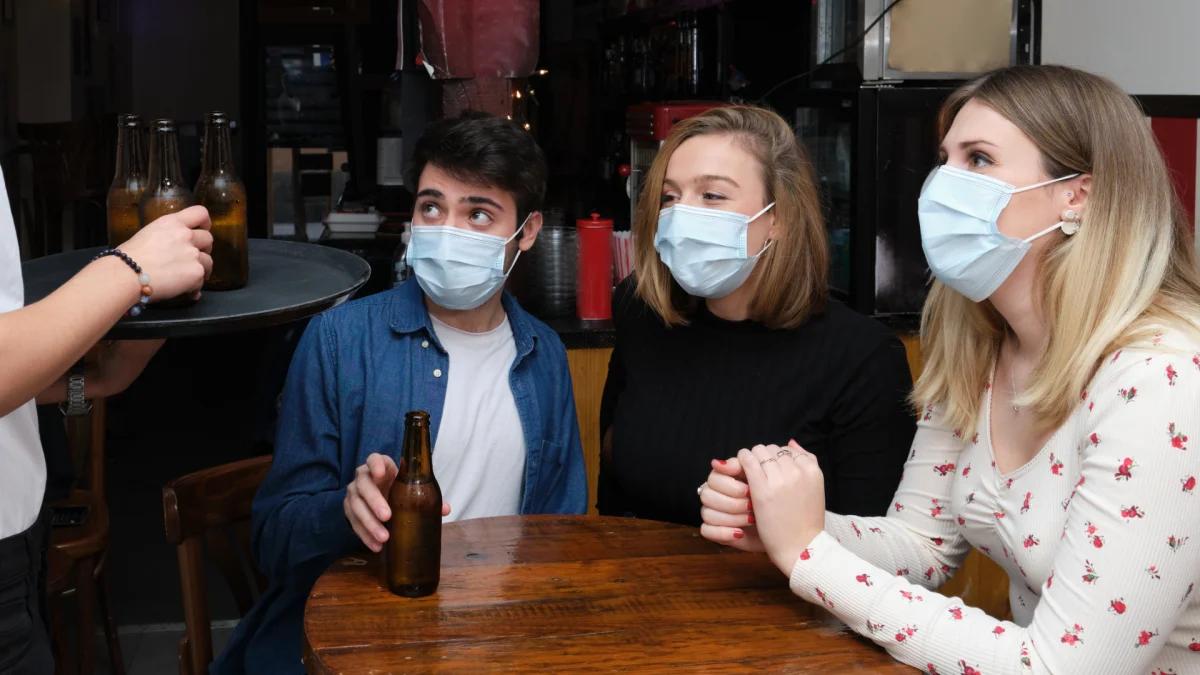
The seeds of the crisis were sown when leadership at Last Ditch attempted to navigate the complexities of evolving public health standards. The venue had gained a loyal following specifically because of its rigorous KN-95 masking policy—a rarity in a post-pandemic world that has largely abandoned such precautions.
When management moved to relax these requirements, the reaction was swift and vitriolic. What began as a local administrative shift quickly morphed into a public relations catastrophe. The venue’s decision was interpreted by a segment of its core constituency as an act of ableism, sparking a deluge of online criticism that escalated from policy debate to personal attacks and, in extreme instances, threats of violence.
The Boston Globe Effect
The situation reached a fever pitch after the Boston Globe published an in-depth report detailing the internal discord. While the reporting aimed to provide a factual account of the community’s frustration, the piece inadvertently catalyzed a broader cultural phenomenon. The internet, prone to hyper-fixation, seized upon the article’s more colorful anecdotes—most notably the revelation that one of the venue’s owners had been enrolled in clown school.
The juxtaposition of serious public health discourse with the eccentricities of the venue’s operations proved irresistible to social media users. The resulting "furore" overwhelmed the venue’s infrastructure. Public meetings meant to address grievances devolved into shouting matches, leadership roles within the collective evaporated under the pressure, and the venue’s core mission—fostering a safe space for lesbians—was drowned out by the noise of the digital outrage machine.
Supporting Data: The Fragility of Queer Spaces
The closure of Last Ditch is not merely an isolated incident of "cancel culture" or organizational failure; it is a symptom of a broader, systemic decline in physical spaces dedicated to the LGBTQ+ community.
The Vanishing Act
Historically, lesbian bars served as the primary hubs for political organizing, social connection, and safety for queer women. In the 1980s, there were roughly 200 such bars in the United States. Today, that number has dwindled to a fraction of its former glory. The reasons for this decline are multifaceted:
- Economic Displacement: Rising rents and the gentrification of urban centers have made it increasingly difficult for independent, community-focused venues to sustain operations.
- Digital Migration: The rise of dating apps and online community spaces has shifted the "third place" dynamic, making it harder for brick-and-mortar bars to justify their overhead costs.
- The "Care" Burden: Last Ditch represented a new wave of queer spaces that attempted to integrate radical health and safety policies into their business model. As the Boston Globe report illustrated, this creates a high-stakes environment where any deviation from the community’s expectations is met with immediate, existential repercussions.
Official Responses and the Call for Transformation
In its farewell announcement, the Last Ditch leadership team expressed a mixture of exhaustion and pride. The statement was not an apology for their existence, but a reflection on the toll that mission-driven business ownership takes on the individual.
"We have put our lives on hold to foster networks of care, resources, and a home base for organizing," the statement read. "It’s time we pass it on. We’ve been fighting since the beginning to fill out the team, and we still don’t have a board or leadership to manage a worker-owned Co-op transfer."
The tone of the message underscores a critical realization: Last Ditch was never meant to be a traditional, profit-driven enterprise. It was intended as a collective project. By calling for new owners, the current leadership is attempting to move away from the "founder-led" model that left them vulnerable to the burnout and external scrutiny that ultimately doomed their tenure.
The Broader Implications: Can "Radical Spaces" Survive?
The fall of Last Ditch poses a difficult question for the future of community-led organizations: Can a business survive if it is held to the standards of an activist movement?
The Paradox of Inclusion
The backlash against Last Ditch highlights a painful paradox. The venue sought to be the most inclusive space possible—prioritizing the health of the most vulnerable community members. Yet, this very commitment created an environment where the "perfect" became the enemy of the "good." By attempting to be everything to everyone—a bar, a community center, a health-conscious sanctuary, and a political collective—the venue collapsed under the weight of its own mandates.
Lessons for Future Organizers
For the remaining lesbian bars and queer spaces in the U.S., the Last Ditch saga serves as a cautionary tale.
- Organizational Resilience: The reliance on a small, overworked leadership team is a single point of failure. Future queer cooperatives must prioritize the development of robust, rotating boards to insulate the organization from the volatility of public opinion.
- Communication Protocols: The speed at which the Last Ditch conflict escalated suggests that transparent, de-escalated communication channels are vital. When policy shifts occur, they must be managed with a level of professional distance that prevents personal harassment.
- The Burden of Representation: Queer spaces often carry the heavy weight of being the "only one" in a region. This places an outsized burden on the owners to represent the entire community’s values, a pressure that few private businesses are equipped to handle.
Conclusion: A Community in Mourning
As of this writing, the doors of Last Ditch remain closed, save for previously scheduled private events. The silence in the space is a stark reminder of what the LGBTQ community loses when it loses its physical anchors. While the internet may have moved on to the next viral story, the queer residents of Western Massachusetts are left with a void in their social infrastructure.
Whether a new group of owners will emerge to resurrect the space as a worker-owned cooperative remains to be seen. If not, Last Ditch will become another name on the growing list of "lost" lesbian bars—a tragic footnote in the history of a community that continues to struggle to find a place to call its own. The venue’s attempt to foster "networks of care" in a hostile world was, perhaps, too ambitious for the current moment, but its failure is a testament to the fact that the need for such spaces remains as urgent as ever. The question now is not just whether Last Ditch can be saved, but whether the community is capable of supporting the next experiment in queer radicalism before it, too, is forced to close its doors.
 Neng Nana
 Reynand Wu
