
 By Ammar Sabilarrohman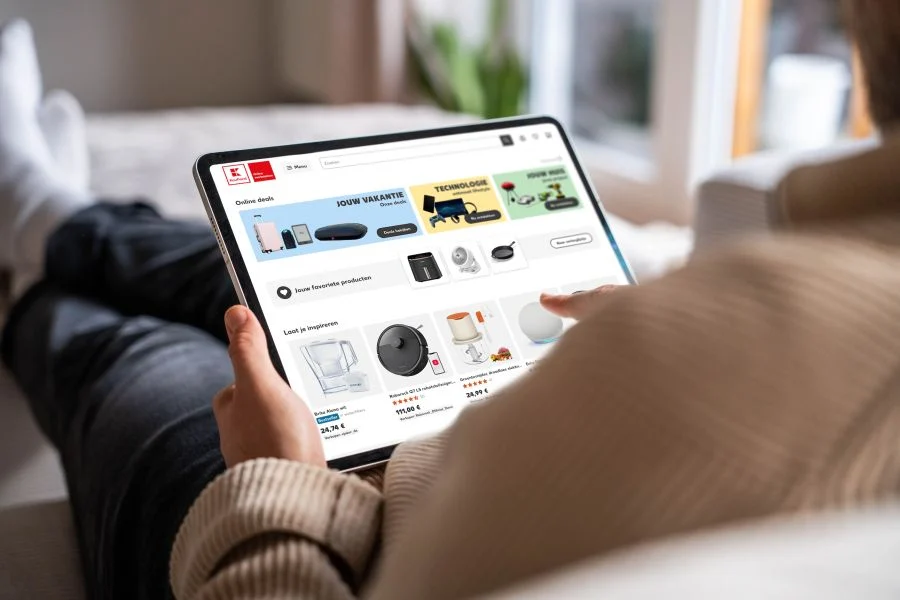
In a bold move that underscores its ambition to become the premier retail force on the continent, Kaufland, the retail giant under the Schwarz Group umbrella, has announced a significant expansion of its digital footprint. By the conclusion of this summer, the company’s marketplace platform will officially launch in Spain and the Netherlands, bringing its total operational reach to nine European countries. This strategic maneuver is not merely an addition of two markets; it is a calculated effort to cement Kaufland as the largest marketplace network of European origin, positioning it as a formidable competitor to global e-commerce giants.
The Strategic Blueprint: Main Facts and Market Entry
The transition from a traditional brick-and-mortar titan to a digital powerhouse has been the hallmark of Kaufland’s recent strategy. With over 1,600 physical hypermarkets across Europe, the brand—a sibling to the ubiquitous discount chain Lidl—leverages its massive supply chain and brand recognition to fuel its online ambitions.
The upcoming launch in Spain and the Netherlands marks a pivotal moment in the company’s history. Merchants currently operating on the Kaufland platform, as well as new entrants, are already being invited to register for the two new markets. The integration process is designed to be seamless: by registering for the new Spanish or Dutch portals, sellers gain immediate, unified access to all of Kaufland’s existing marketplaces. This "single-sign-on" approach is central to the company’s vision of facilitating frictionless cross-border e-commerce for European businesses.
A Timeline of Rapid Digital Transformation
Kaufland’s trajectory in the digital space has been nothing short of aggressive. While the company has long been a household name in physical retail, its modern marketplace model is a relatively recent innovation.
2021: The Genesis
The digital marketplace was launched in Germany in 2021. This initial phase was treated as a proof-of-concept, where the company tested its logistics infrastructure and vendor management systems against the high demands of the German e-commerce market.
2022–2023: Early Scaling
Following the success of its home market, Kaufland began a deliberate rollout across Central and Eastern Europe. Expansions into Slovakia, the Czech Republic, Poland, and Austria followed in rapid succession. During this period, the company refined its cross-border capabilities, ensuring that currency exchange, local legal compliance, and customer service protocols were standardized.
2024: Western European Penetration
Last year, the strategy shifted toward Western Europe with high-profile launches in France and Italy. These markets presented a different set of challenges, including more fragmented logistics landscapes and intense competition from domestic retailers. The success of these launches provided the operational confidence needed for the upcoming 2025 expansion.
Summer 2025: The New Frontier
With the announcement of the Spanish and Dutch launches, Kaufland is now preparing to capture the Iberian Peninsula and the Benelux region, two of the most digitally mature markets in Europe. By the end of this summer, the company will have successfully navigated the complexities of nine distinct national markets in under five years.
Data-Driven Growth: The Numbers Behind the Expansion
Kaufland’s growth is not merely anecdotal; the metrics supporting its rise are substantial. The company currently boasts a staggering 32 million monthly visitors in its home market of Germany alone. Its digital ecosystem is equally robust, hosting over 45 million products organized into 6,400 diverse categories, ranging from household electronics to consumer staples.
The growth in international markets has been exponential. According to internal reports, the marketplace model has seen extraordinary adoption rates. In Austria, revenues have surged by 439 percent compared to 2025 benchmarks. Similarly, the Polish market has seen a 322 percent revenue increase in the same period. These figures highlight a clear trend: consumers are increasingly turning to Kaufland not just for groceries, but as a holistic shopping destination.
The expansion to Spain and the Netherlands is expected to shift the company’s total potential reach from 139 million to 220 million consumers. This jump represents an expansion of the "addressable market" that few retailers in Europe can match. For the Schwarz Group, this reach is a key selling point for third-party sellers who are looking to scale their businesses without having to navigate the regulatory nightmares of setting up separate infrastructure in every new country.
Lowering Barriers: The Seller’s Ecosystem
Kaufland has invested heavily in proprietary technology to assist merchants in navigating the complexities of cross-border trade. Recognizing that the biggest hurdle to international sales is language and administrative complexity, the platform offers a suite of automated tools.
Translation and Localization
The marketplace automatically translates product information into the local language of the market. This extends to customer inquiries and legal documentation, ensuring that a German seller can effectively communicate with a Spanish or Dutch customer without the need for an in-house translation department.
Financial and Operational Support
Payment processing is a notoriously difficult aspect of European e-commerce due to varying currencies and local payment preferences. Kaufland provides first-line customer service in the local language, shielding the seller from the immediate burden of cross-border support. Additionally, the platform handles the complexities of local payment methods, ensuring that transactions are secure and compliant with regional financial regulations.
Implications for the European Retail Landscape
The entry of a retail behemoth like Kaufland into the Spanish and Dutch markets carries significant implications for the European retail landscape.
1. The Challenge to Incumbents
The move directly challenges local e-commerce players and global marketplaces that have dominated the region. By providing a platform that is deeply integrated with a physical retail presence, Kaufland offers an "omnichannel" credibility that pure-play e-commerce platforms often lack.
2. Streamlining Cross-Border Trade
For the average European SME (Small and Medium Enterprise), selling across borders has historically been hindered by fragmented tax laws and logistics costs. Kaufland’s marketplace, by acting as a centralized hub, lowers these barriers. It allows a local manufacturer in Poland to reach a customer in Spain with the same ease as a domestic sale. This democratization of access is expected to boost intra-European trade.
3. Consolidation of the Market
Kaufland’s rapid expansion is indicative of a broader trend: the consolidation of the European e-commerce market. As the sector matures, the "winner-takes-most" dynamic becomes more pronounced. Only retailers with the capital and existing infrastructure of a conglomerate like the Schwarz Group can effectively manage the overhead of a nine-country digital operation.
The Road Ahead: Future Outlook
As Kaufland looks beyond the summer of 2025, the focus will likely shift from market acquisition to market deepening. While nine countries represent a massive portion of the European economy, the company still has room for growth in Northern Europe and the United Kingdom.
The success of the Spain and Netherlands launches will serve as a bellwether for the company’s future. If Kaufland can maintain its growth percentages in these markets, it will solidify its position as the primary competitor to Amazon in Europe. The company is not merely selling goods; it is building a digital infrastructure that binds the European market together, turning a fragmented continent into a unified shopping arena.
For merchants, the message is clear: Kaufland is no longer just a hypermarket chain—it is an essential digital gateway. As the company continues to refine its logistics, expand its product range, and invest in its seller tools, the marketplace is poised to become a staple of European retail for the next decade. Whether the platform can sustain its aggressive growth pace remains to be seen, but with 220 million consumers within its reach, the foundation for long-term dominance has been firmly laid.
 rifanmuazin
  Siti Muinah
  Neng Nana