
 By Iffa Jayyana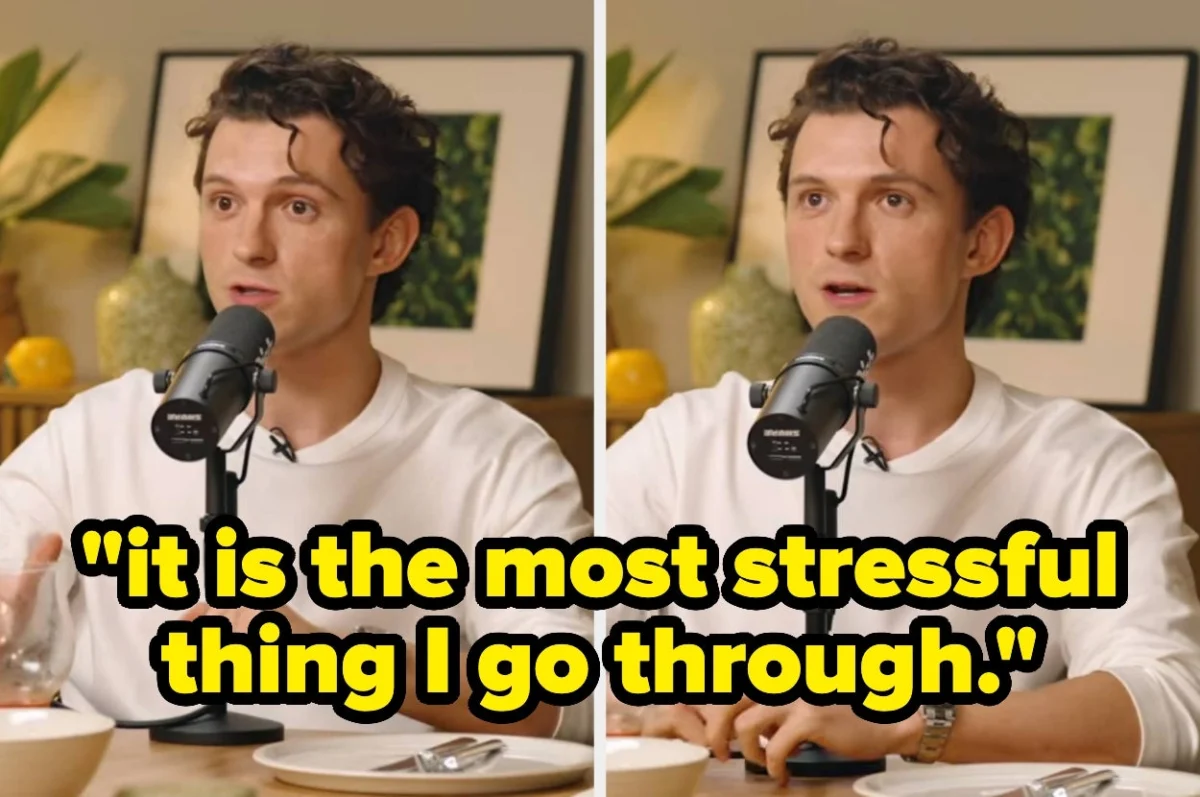
In an era where celebrity life is often curated to appear effortless and glamorous, actor Tom Holland has struck a chord with millions by admitting to a vulnerability that feels distinctly human: an adult-onset, debilitating fear of flying.
For the star of The Odyssey and the Spider-Man: Brand New Day franchise, the cockpit is no longer a place of transit—it is a theater of profound anxiety. During a recent appearance on the Dish podcast, Holland, who turned 30 last month, broke his silence on a struggle that has transformed his professional life into a series of white-knuckled ordeals. His admission has sparked a broader cultural conversation about the nature of phobias, the hidden toll of high-frequency travel, and the surprising frequency with which adults develop new anxieties in their third decade of life.
The Reality of In-Flight Panic: The Main Facts
The core of the issue, according to Holland, is the stark contrast between his past indifference toward air travel and his current state of hyper-vigilance. "As a kid, I would never think twice about getting on a plane," Holland shared with podcast hosts Nick Grimshaw and Angela Hartnett. "And now, it is the most stressful thing I go through."
The irony, of course, is that Holland’s career demands a relentless travel schedule. Balancing the high-stakes press tours for his latest cinematic projects, the actor finds himself in the air as often as "every second day." For a person suffering from aerophobia, this frequency provides no time for desensitization; instead, it serves as a relentless cycle of trauma.
"I’m an absolute wreck," Holland admitted. "Any bit of turbulence, I’m screaming."
This level of visceral reaction—the physical manifestation of fear through shouting or intense physiological distress—highlights a shift from simple nerves to a genuine phobic response. It is a reality that many professionals in high-travel industries experience but rarely discuss for fear of professional stigma. By speaking out, Holland has shifted the narrative from "celebrity pamperedness" to "human vulnerability."
A Chronological Shift: From Fearless to Phobic
To understand the weight of Holland’s admission, one must look at his professional trajectory. Having worked in the public eye since he was a young teenager, Holland spent his formative years navigating international airports and long-haul flights with the nonchalance of a seasoned traveler.
- The Early Years (Pre-30): Throughout his rise to fame, which included extensive global press junkets for the Marvel Cinematic Universe, Holland reported no issues with air travel. Flying was simply a mechanism to move between sets and promotional stages.
- The Turning Point: Holland notes that the fear is a relatively recent development. While he did not pinpoint a singular "trigger event" (such as a dangerous emergency landing), he suggests that the accumulation of travel has reached a saturation point.
- The Present Day: Now in his 30s, the actor describes a complete reversal of his relationship with aviation. The current intensity of his schedule—juggling The Odyssey and Spider-Man obligations—has transformed the cabin from a place of work into a confined space of psychological warfare.
The Futility of Logic: Failed Interventions
One of the most relatable aspects of Holland’s story is his attempt to solve the problem using logic. When faced with an irrational fear, the human brain often seeks intellectual reassurance.
During the Dish podcast, Nick Grimshaw suggested that learning the technical mechanics of flight—how a multi-ton aircraft generates lift and remains stable in the air—often helps nervous flyers. Holland revealed that he had, in fact, attempted this exact strategy.
In a move that highlights both his desperation and his status as a public figure, Holland recounted approaching a pilot in an airport lounge. He asked the pilot for five minutes of his time, hoping for an explanation that would soothe his nerves. When asked by the podcast hosts if the pilot’s explanation provided any comfort, Holland’s answer was succinct: "No."
This interaction serves as a poignant illustration of the difference between cognitive understanding and emotional regulation. For the aerophobic, the knowledge that "planes are the safest mode of transport" is often overridden by the amygdala, the brain’s "fight or flight" center, which reacts to turbulence not as a physical phenomenon, but as an existential threat.
Supporting Data: The Prevalence of Adult-Onset Phobias
Tom Holland is far from alone in this experience. Clinical psychologists frequently observe "late-onset" phobias, where individuals who were perfectly comfortable with a stimulus suddenly find it terrifying as they enter their 30s or 40s.
Why Do We Develop Fears Later in Life?
- Increased Responsibility: As people enter their 30s, they often become more aware of their mortality, especially if they are parents or have significant professional obligations. This shift in perspective can make the "lack of control" associated with flying feel significantly more daunting.
- The "Sober" Connection: One of the most intriguing theories raised by fans—and one that aligns with Holland’s own public journey—is the link between sobriety and anxiety. Holland made headlines in 2022 for his decision to get sober. Some mental health professionals note that when individuals stop using substances as a way to cope with the stresses of fame or travel, their baseline anxiety levels can shift, sometimes making previously ignored stressors (like flying) more acute.
- The Sensory Overload of Modern Travel: The modern flying experience has become more stressful, with increased security protocols, delays, and the "always-on" nature of social media, where footage of "scary flights" or weather-related incidents is constantly being shared.
A user in the Dish podcast comments section noted, "I developed my fear of flying after I got sober." This sentiment was echoed by others, suggesting that the clarity of sobriety often forces individuals to confront anxieties they had previously numbed or ignored.
Implications: The Public Response and Normalization
The public reaction to Holland’s admission has been overwhelmingly supportive, serving as a powerful counter-narrative to the "celebrity machine."
The Normalization of Mental Health Conversations
By admitting to his fear, Holland has done more than just share a personal anecdote; he has helped to destigmatize the act of being "afraid" in a professional setting. In industries where "the show must go on" is the guiding principle, acknowledging a barrier to performance is an act of courage.
The "Control" Aspect
Many of the discussions surrounding Holland’s comments have centered on the psychological need for control. Flying is the ultimate surrender; you are placed in a pressurized tube, thousands of feet in the air, with no agency over the vehicle’s direction or stability. For a high-achieving actor like Holland, whose life is often defined by his ability to master his craft and control his performance, the total lack of agency in the sky can be an intense psychological trigger.
Expert Perspectives on Managing Aerophobia
While Holland’s personal attempt to speak with a pilot failed, mental health experts suggest that for those dealing with similar issues, there are established methods to mitigate the impact of aerophobia:
- Graduated Exposure Therapy: This involves slowly exposing oneself to the fear, starting with being at an airport, moving to short-haul flights, and eventually longer ones, often paired with relaxation techniques.
- Cognitive Behavioral Therapy (CBT): This focuses on challenging the "catastrophic thinking" that occurs during turbulence (e.g., "The plane is going to fall" vs. "The plane is experiencing a pocket of uneven air").
- Mindfulness and Physiological Regulation: Techniques such as box breathing, grounding exercises, and sensory distraction (noise-canceling headphones, immersive podcasts) are commonly used to keep the nervous system in a regulated state.
Conclusion: A Shared Human Experience
Tom Holland’s admission is a reminder that behind the cinematic heroics and the global fame, celebrities are subject to the same biological and psychological realities as the rest of us. His fear of flying is not a sign of weakness; it is a testament to the fact that even those who appear to have the world at their feet can feel the ground—or in this case, the air—shift beneath them.
As he continues to navigate his career and his newfound challenge, Holland has sparked a dialogue that encourages others to speak openly about their own irrational fears. Whether it is triggered by life changes, the onset of maturity, or the cumulative stress of a high-pressure career, the experience of being human is often messy, unpredictable, and yes, sometimes very scary.
For now, the actor’s fans are cheering him on—not just for his next role, but for his willingness to be vulnerable, proving that sometimes, the most heroic thing one can do is simply admit, "I’m scared."
 Muslim
  Ammar Sabilarrohman
  rifanmuazin