
 By Laily UPN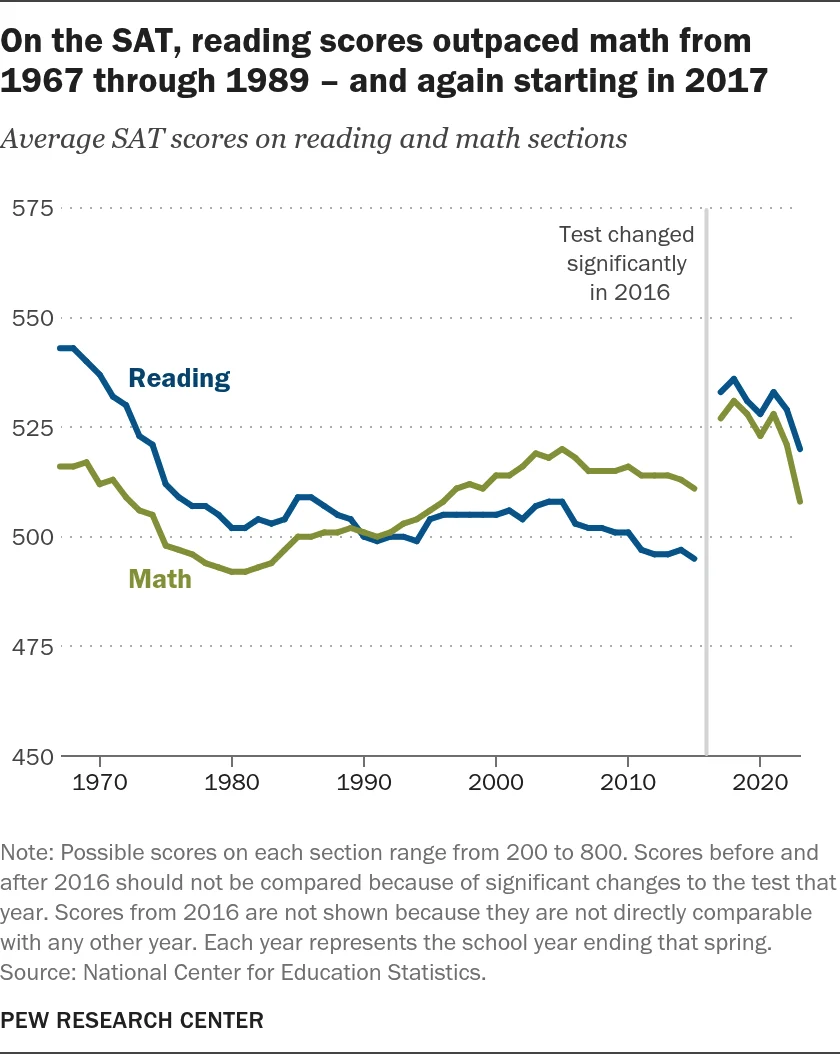
On June 23, 1926, the American educational landscape underwent a quiet, seismic shift. Approximately 8,000 high school students across the United States sat down to complete the first-ever Scholastic Aptitude Test (SAT). At the time, it was a novel experiment in meritocracy, an attempt to standardize how elite institutions measured the potential of prospective students. One hundred years later, that test has evolved from a boutique assessment into a massive industry, with over two million students participating annually. As the SAT marks its centennial, it stands not just as a gatekeeper to higher education, but as a mirror reflecting the changing priorities, technological advancements, and socio-economic complexities of the American classroom.
The Origins: From IQ Tests to Institutional Standards
The original SAT bore little resemblance to its modern descendant. Designed in an era heavily influenced by the burgeoning field of psychometrics, the early iterations were modeled after the U.S. Army’s intelligence tests. Its creators aimed to identify raw intellectual capability—a concept of "aptitude" that was believed to be innate rather than learned.
The experience of taking the test in 1926 was a grueling exercise in speed. Students were tasked with answering 315 questions in just 97 minutes. The strategy was deliberate: testers were told they were not expected to finish every question. The goal was to measure how students handled intense, high-pressure environments, a far cry from the more deliberate, albeit still timed, pace of today. Over the following two decades, developers gradually reduced the volume of questions and extended the time limits, pivoting away from the “speed-test” model toward one that prioritized reasoning and content mastery.
Chronology of Transformation
The history of the SAT is a timeline of iterative change, often driven by shifts in educational philosophy and technological capability.
- 1926: The first SAT is administered to 8,000 students.
- 1994: A pivotal year for the exam. The College Board introduced math questions requiring student-produced responses, moving away from pure multiple-choice. Crucially, the board eliminated antonym questions, signaling a retreat from the heavy emphasis on rote vocabulary memorization. This was also the year calculators were first permitted.
- 2016: A massive overhaul sought to align the test more closely with high school curricula. The infamous "wrong-answer penalty" was removed, and the test was "recentered" to account for the changing demographics of the test-taking population.
- 2024: The SAT completed its transition to a fully digital, adaptive format. Utilizing laptops and tablets, the test now adjusts difficulty based on a student’s performance on initial segments, offering a personalized experience that previous paper-and-pencil generations could never have imagined.
Supporting Data: The Story Behind the Scores
Data from the National Center for Education Statistics (NCES) provides a longitudinal view of how student performance has fluctuated over the last sixty years. For researchers, comparing scores across decades is a complex task due to the "recentering" of tests in 1994 and the significant structural changes in 2016. However, the data reveals clear trends.

Between 1967 and 1989, reading scores consistently outperformed math scores. That trend reversed in 1990, with math scores gaining the upper hand—a lead they held for over two decades. By 2015, the average math score was 511, while the average reading score had dipped to 495. Following the 2016 revisions, the pattern shifted once more, with reading and writing scores slightly exceeding math.
The ACT, the SAT’s primary rival, tells a different story. Since its inception in 1959, the ACT has positioned itself as a test of "mastery" rather than "aptitude." Unlike the SAT, the ACT has consistently seen higher reading scores than math scores in every year for which data is available. However, there has been a general, downward trend in composite scores for the ACT since 2017, reflecting broader challenges in secondary education performance across the nation.
Official Perspectives and Institutional Responses
The College Board and ACT, Inc. often frame these changes as necessary modernizations. The shift to digital, adaptive testing is frequently touted as a way to reduce anxiety and increase accessibility. By tailoring questions to student ability, the test developers argue that they can get a more accurate picture of a student’s potential, minimizing the "ceiling effect" that can occur in static, one-size-fits-all assessments.
However, the educational establishment remains divided. Many institutions of higher learning, particularly those at the elite level, have toggled back and forth between "test-optional" policies and mandatory submission requirements. Following the massive shift toward test-optional admissions during the COVID-19 pandemic—driven by the necessity of shuttered testing centers—some universities have begun to reinstate testing requirements. These institutions argue that standardized scores provide a common yardstick that helps distinguish candidates from vastly different high school grading environments, where "grade inflation" has become an increasingly documented concern.
Implications for the Future
The debate over the role of the SAT is inextricably linked to the broader national conversation about equity and social mobility. Critics have long argued that standardized tests favor students from affluent backgrounds who have access to expensive test preparation courses and multiple retakes. Proponents, however, contend that without these tests, admissions committees might rely too heavily on subjective criteria like extracurriculars and essays, which can also be "bought" through private coaching.

Public opinion remains remarkably consistent in favor of standardized testing. Surveys conducted by the Pew Research Center suggest that a strong majority of American adults—often upwards of 70%—believe that colleges should consider these scores in their admissions process. For the public, the SAT acts as a stabilizing force, a rare quantitative measure in an increasingly qualitative and subjective world.
As the SAT enters its second century, it is clear that the test will continue to evolve. The future likely holds even deeper integration with artificial intelligence, further moves toward competency-based assessment, and a continuous, rigorous debate over what "aptitude" actually means in the 21st century. Whether the test remains the gold standard or eventually gives way to new, more holistic assessment models, its history serves as a definitive case study in the American quest to quantify potential.
Conclusion
From the 315-question marathon of 1926 to the adaptive, tablet-based experience of 2026, the SAT has mirrored the rapid evolution of the United States itself. It has moved from an instrument designed to classify elite intellects to a pervasive social benchmark. While its format and the data it produces continue to spark heated debate, its longevity confirms that the desire for a common, objective measure of academic readiness remains a fundamental pillar of the American educational experience. As we look toward the next century, the challenge for developers and educators alike will be to ensure that this century-old tool continues to serve as a bridge to opportunity rather than a barrier to access.
 Nana Muazin
  Suro Senen
  Nana Wu