
 By Raul Delapena Setiawan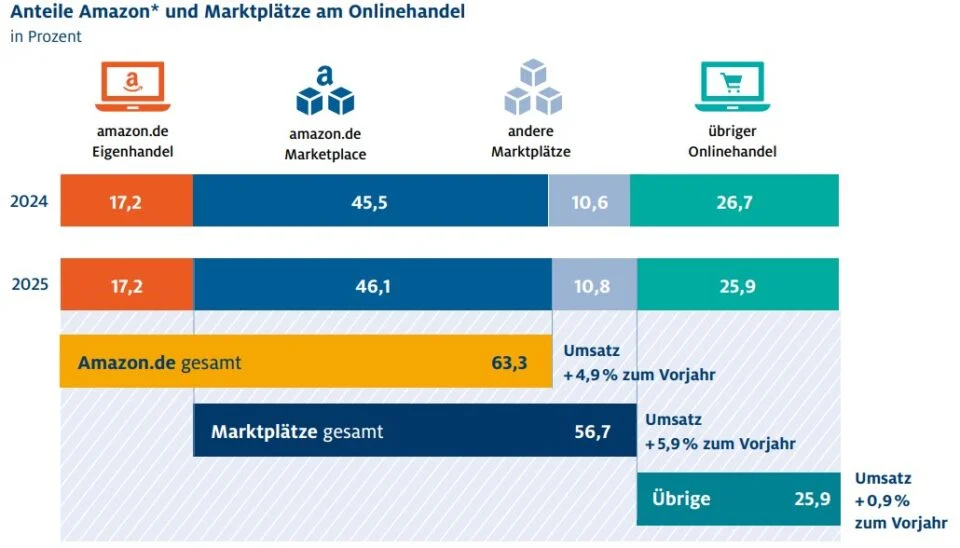
The German retail sector is undergoing a profound structural transformation, one that is increasingly defined by the growing chasm between physical brick-and-mortar storefronts and the digital marketplace. According to the latest data from the German Retail Federation (HDE), e-commerce has firmly cemented its position as the primary "growth engine" of the national economy. However, this shift is accompanied by significant anxieties regarding market concentration, the erosion of local retail value, and the disruptive influence of international ultra-low-cost platforms.
Main Facts: A Tale of Two Retail Sectors
The latest forecast from the HDE paints a clear picture of an economy in transition. Nominal e-commerce revenue in Germany is projected to surge by 4.3 percent this year, reaching a milestone of 96.3 billion euros. In stark contrast, traditional physical retail—the historical backbone of German commerce—is expected to grow by a mere 1.6 percent.
This widening gap signals more than just a change in consumer preference; it reflects a fundamental reconfiguration of where money flows within the German market. While consumers are spending more than ever, the mechanism of that spending is shifting toward platforms that favor scale, algorithmic efficiency, and global supply chain logistics over local inventory and community-based retail.
Chronology: The Evolution of German E-commerce
To understand the current volatility, one must look at the trajectory of the German retail market over the past decade:
- The Early Digital Adoption (2010–2015): German consumers were historically cautious about online payments, preferring "on account" methods. During this period, local e-commerce players and established retailers experimented with omnichannel strategies.
- The Marketplace Boom (2016–2020): The rise of centralized marketplaces changed the game. Amazon, in particular, consolidated its dominance, moving from a bookstore to a "everything store." By 2020, marketplaces accounted for a significant majority of all online transactions.
- The Pandemic Acceleration (2020–2022): COVID-19 acted as a catalyst, forcing a digital leap that would have otherwise taken years. This period solidified the reliance on online platforms, even as physical stores shuttered due to lockdowns.
- The Era of Global Disruptors (2023–Present): The current phase is marked by the aggressive entry of international platforms like Shein and Temu. These companies have leveraged social media marketing and hyper-efficient logistics to bypass traditional retail models, fundamentally changing the competitive landscape for both local shops and established e-commerce giants.
Supporting Data: The Concentration of Power
The data provided by the HDE’s Online Monitor 2026 reveals a trend toward extreme market concentration. It is no longer just "e-commerce versus retail"; it is "a few global behemoths versus the rest of the market."
The Amazon Hegemony
Amazon continues to exert an outsized influence on the German market. As the company’s largest European operational hub, Germany remains a critical battleground. Last year, Amazon reported a 12.3 percent growth in German sales—a figure that dwarfs the overall retail growth rate. This record-breaking performance is not merely an increase in market share; it represents a consolidation of the digital infrastructure upon which many other retailers are forced to rely.
The Rise of Chinese Platforms
Perhaps the most concerning trend for the HDE is the penetration of Chinese ultra-fast-fashion and lifestyle platforms. Shein and Temu are currently generating approximately 4.7 billion euros in annual revenue within Germany. Research commissioned by the federation suggests that these platforms are effectively draining billions from the local economy, as the capital flows primarily toward overseas parent companies rather than circulating through local tax bases and employment channels.
Consumer Behavior Shifts
The penetration of these foreign platforms is deep and growing. Current statistics indicate that 65 percent of German consumers have made at least one purchase from a foreign online store. Among this demographic, nearly half (49 percent) have engaged with a Chinese retailer. This implies that over 30 percent of the German population now has regular or semi-regular shopping habits on these global, non-EU platforms.
Official Responses: The Call for Fair Competition
The German Retail Federation has taken a decidedly combative stance against what it perceives as an uneven playing field. Stephan Tromp, Deputy Managing Director of the HDE, has been vocal about the systemic threats posed by international platforms.

The Regulatory Challenge
Tromp emphasizes that while the marketplace sector is inherently dynamic, the current state of competition is not fair. "Unfortunately, this is still not the case for companies such as Shein and Temu," he stated in a recent briefing. The HDE’s position is that these platforms often exploit loopholes in customs regulations, sustainability requirements, and labor standards—advantages that local German retailers, who are subject to strict EU and German regulations, cannot replicate.
Policy Recommendations
The HDE is calling for more than just rhetoric from policymakers. They are demanding:
- Consistent Enforcement: Regulations that are not only on the books but are effectively applied to all market participants, regardless of where their headquarters are located.
- Meaningful Penalties: Financial and operational consequences for violations that serve as a genuine deterrent rather than a "cost of doing business."
- Transparency and Detection: Investment in customs and digital monitoring infrastructure to ensure that violations—whether in product safety, tax compliance, or environmental standards—are consistently detected.
Implications: The Future of the "German Retailer"
The implications of this shift are profound and multifaceted, touching on economic, social, and political spheres.
The Erosion of the Local High Street
As revenue continues to shift toward global platforms, the "Mittlestand" (small and medium-sized enterprises) of the German retail sector face an existential threat. Many smaller online retailers, unable to compete with the logistical efficiency and pricing power of platforms like Amazon, Shein, or Temu, have reported consistent revenue declines. This leads to a homogenizing effect, where unique, localized retail offerings are replaced by standardized global catalogs.
Economic Leakage
When a German consumer buys a shirt from a local boutique, the profit remains within the German economic cycle, supporting local jobs, property taxes, and infrastructure. When that same consumer buys a similar item from an offshore platform, the "leakage" of capital is significant. The HDE’s warning about the "billions drained from the local economy" is a warning about the long-term sustainability of German retail jobs.
The Digital Sovereignty Question
There is also a broader question regarding digital sovereignty. As the German market becomes increasingly reliant on foreign-owned digital infrastructure to facilitate basic consumer needs, the vulnerability of the domestic economy increases. If the entire retail ecosystem is funneled through two or three non-European platforms, the ability of German regulators to influence market behavior, protect consumer rights, and ensure fair wages is severely compromised.
Conclusion
The German retail landscape is at a critical juncture. While the 4.3 percent growth in e-commerce demonstrates that consumers have embraced the convenience of the digital age, the internal composition of that growth is problematic. The dominance of a few international players, coupled with the rapid rise of platforms that operate outside the traditional regulatory framework, presents a challenge that the German Retail Federation believes requires urgent, decisive political intervention.
As the lines between domestic and international retail continue to blur, Germany must grapple with how to preserve the vitality of its local businesses while remaining a participant in a globalized digital economy. The coming years will likely be defined by whether policymakers can create a framework that forces global giants to play by the same rules as local shops, or whether the current trend of market concentration will lead to the permanent marginalization of independent German retail. The "growth engine" is running at full speed, but the direction in which it is heading remains a subject of intense national debate.
 rifanmuazin
  Siti Muinah
  Neng Nana