
 By Asro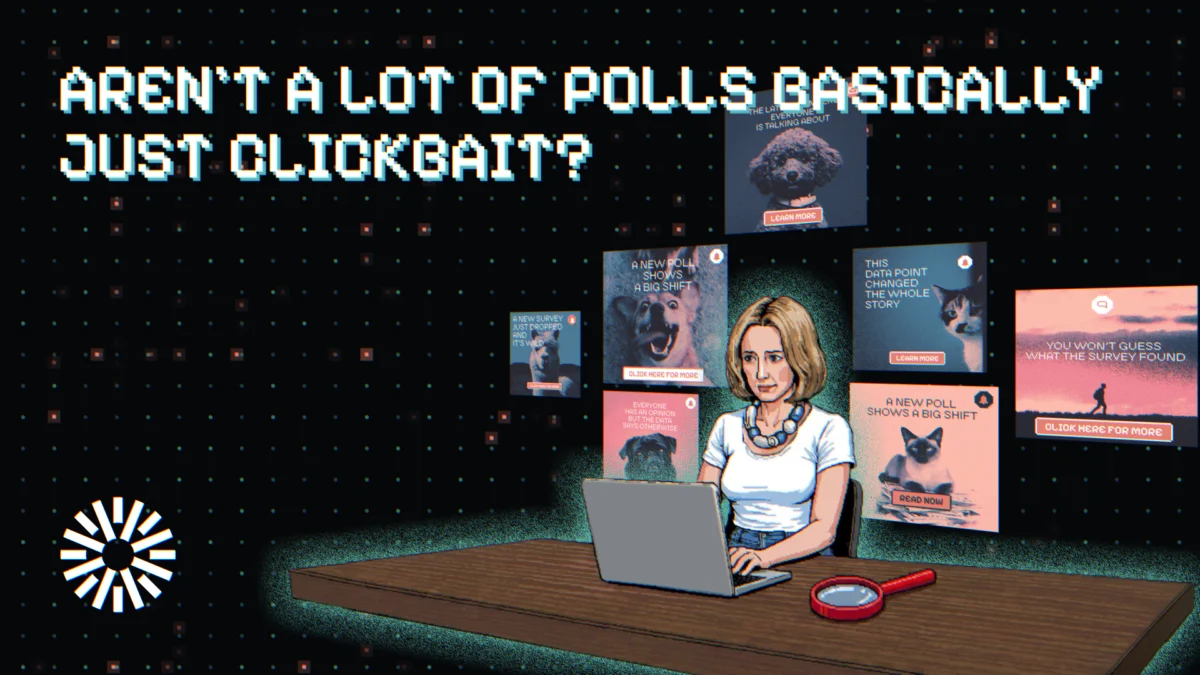
In the age of social media, the barrier to entry for public opinion research has effectively vanished. With a few clicks, anyone with an internet connection can launch a survey, gather data, and brand themselves as a "pollster." However, this democratization of data collection has come at a steep price: an unprecedented deluge of low-quality, misleading, and statistically unsound polls that threaten to distort public discourse and undermine the credibility of legitimate social science.
As digital platforms become the primary battleground for political and social narratives, understanding the distinction between a robust scientific instrument and a flawed online questionnaire is no longer just a task for academics—it is a prerequisite for informed citizenship.
Main Facts: The Anatomy of a Poll
The fundamental goal of a poll is to capture an accurate snapshot of a large population’s attitudes by surveying a representative sample of that population. When executed correctly, polling is a sophisticated marriage of mathematics and sociology. When executed poorly, it is little more than a collection of anecdotal noise masquerading as empirical data.
The Representative Sample
The hallmark of a legitimate poll is the quality of its sample. A "good" poll employs probability sampling, ensuring that every member of the target population has a known, non-zero chance of being selected. In contrast, "sketchy" polls often rely on convenience sampling—such as online opt-in surveys, Twitter polls, or website pop-ups. These methods create a "self-selection bias," where the only people who respond are those with strong opinions or high interest, rendering the data unrepresentative of the broader public.
The Methodology of Transparency
Professional polling organizations are defined by their transparency. They disclose their margin of error, the size of their sample, the weighting techniques used to adjust for demographic imbalances, and the specific wording of their questions. If a pollster refuses to provide a clear "methodology statement," it should be treated as an immediate red flag.
Chronology: The Evolution of Polling and Its Digital Disruption
To understand the current crisis in public opinion research, we must look at how the industry has shifted over the last century.
- 1936: The Literary Digest Fiasco: The grandfather of polling failures, the Literary Digest predicted a landslide victory for Alf Landon over Franklin D. Roosevelt based on millions of straw poll responses. They failed to account for the fact that their sample was drawn from telephone and car registration lists—audiences that, during the Great Depression, were wealthier and more likely to be Republican. It was the first major lesson in why sample size is never a substitute for sample quality.
- 1948–1980: The Rise of Scientific Polling: This era saw the standardization of random-digit dialing (RDD) and demographic weighting. Pollsters like Gallup and Roper set the gold standard, refining their ability to accurately predict outcomes by interviewing small, scientifically selected groups of people.
- 2000–2010: The Decline of the Landline: As households began abandoning traditional phone lines in favor of mobile devices, the cost and difficulty of reaching a representative sample skyrocketed. The industry entered a period of transition, struggling to incorporate cell-only users into their models.
- 2016–Present: The "Wild West" of Online Surveys: The proliferation of smartphone technology and social media platforms enabled the rise of "do-it-yourself" polling. The democratization of survey tools like SurveyMonkey or Google Forms allowed political campaigns, activists, and influencers to generate "data" that could be weaponized to support specific narratives, regardless of the underlying math.
Supporting Data: The Dangers of Bad Methodology
The difference between a high-quality poll and a "junk" poll is not merely academic; it is statistical. When researchers analyze data from non-probability samples, they often encounter the "echo chamber effect."
The Margin of Error Fallacy
One of the most frequent errors in amateur polling is the citation of a "margin of error" for a non-probability sample. In scientific polling, the margin of error represents the range within which the true population value lies, based on the laws of probability. If you do not have a random sample, you cannot mathematically calculate a margin of error. When an online survey claims a "plus or minus 3% margin of error" without a random sample, they are committing a fundamental statistical fraud.
The Weighting Dilemma
Weighting is the process of adjusting survey results to ensure they match the demographic makeup of the target population (e.g., age, race, education). While necessary, excessive weighting—or "post-stratification"—is often used by low-quality pollsters to "fix" a biased sample. If a pollster has to weight their data by a factor of 10 or 20 to make it reflect the population, the integrity of the original data is effectively destroyed.
Official Responses and Industry Standards
Major professional organizations, such as the American Association for Public Opinion Research (AAPOR), have spent the last decade issuing guidance to combat the erosion of trust in the industry.
"Transparency is the bedrock of public confidence," says a spokesperson for the AAPOR. "We encourage all media outlets and consumers to look for the ‘Transparency Initiative’ seal. If a pollster is not willing to disclose exactly how they reached their respondents, the methodology they used, and the raw weighting variables, they are not practicing legitimate research."
Furthermore, academic institutions and reputable news organizations have adopted stricter "polling standards." For example, many high-tier news outlets now refuse to cite or report on any poll that does not adhere to the AAPOR’s code of professional ethics and practice, which mandates full disclosure of the survey’s sponsor, the interview dates, the mode of data collection, and the specific questions asked.
Implications: Why Accuracy Matters
The proliferation of low-quality polls has severe consequences for democracy and public policy.
The Distortion of Public Discourse
When flawed polls suggest that a fringe view is actually the majority opinion, it creates a phenomenon known as "false consensus." Politicians may shift their policy positions based on non-existent mandates, and voters may feel alienated or discouraged, believing they are part of a shrinking minority when they are not.
The Erosion of Institutional Trust
Every time a major "poll" turns out to be wildly inaccurate, it chips away at the public’s belief in empirical data. In a world where voters are increasingly skeptical of expertise, high-profile polling failures provide ammunition for those who wish to discredit objective truth. This creates a "post-truth" environment where "my data" is as valid as "your data," regardless of how the information was gathered.
A Call for Data Literacy
Ultimately, the burden of verification has shifted to the consumer. In the digital age, being an informed citizen requires a baseline level of data literacy. Before sharing a poll on social media or letting it shape your political viewpoint, ask these three questions:
- Who paid for this? Knowing the sponsor can reveal potential biases.
- How were the people chosen? If the respondents were simply "anyone who saw the link," the poll is likely a reflection of an online community, not the broader public.
- Are the questions leading? Wording matters. Questions like "Don’t you agree that…" are designed to produce a specific outcome, not to measure honest opinion.
For those interested in diving deeper into the nuances of survey design, the Methods 101 video series serves as an essential resource for understanding the rigorous standards that separate the science of polling from the noise of the internet.
As we look toward the future, the challenge will be to distinguish between the noise and the signal. While the internet has given us the tools to communicate faster than ever before, it has also given us the tools to deceive more efficiently. By demanding transparency, prioritizing probability-based methodologies, and fostering a culture of data skepticism, we can protect the integrity of public opinion research and ensure that the voices of the many are not drowned out by the biased samples of the few.
 Muslim
  Nana Muazin
  Siti Muinah