
 By Muslim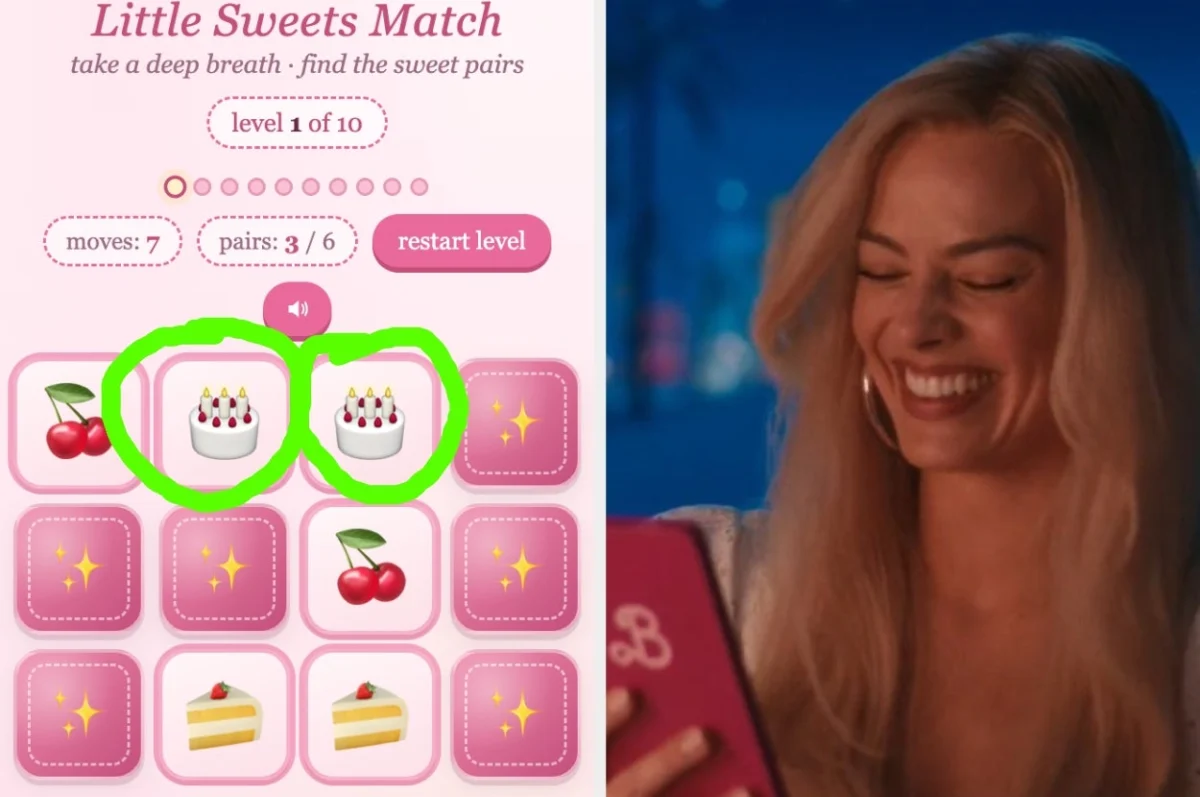
In an era defined by high-octane gaming, aggressive monetization, and constant digital stimulation, a quiet revolution is taking place in the browser-based gaming world. A modest, ten-level memory match game titled Little Sweets Match has unexpectedly captured the attention of millions, with critics and casual players alike crowning it the “most relaxing game on the internet.”
By stripping away the competitive mechanics and predatory microtransactions that plague modern mobile gaming, Little Sweets Match offers a minimalist, sensory-focused experience that prioritizes mental decompression over high-score chasing.
The Anatomy of Calm: Main Facts and Gameplay Mechanics
At its core, Little Sweets Match is a deceptively simple memory-matching exercise. Players are presented with a grid of tiles, each hidden behind a virtual face-down surface. Through a series of gentle taps or clicks, the user flips the tiles to reveal an assortment of high-resolution, vibrant emojis representing cakes, candies, and various sugary confections.
The objective is straightforward: identify the matching pairs hidden within the grid. However, the game’s popularity does not stem from its intellectual challenge, but rather its aesthetic and auditory composition.
The user interface is devoid of clutter. There are no timers, no leaderboard pressure, and no "game over" screens designed to induce anxiety. Instead, every interaction—from the flipping of a tile to the successful pairing of a cupcake emoji—is accompanied by a soft, melodic chime. Upon completing a level, the player is treated to a “sugar-dusted” visual celebration, featuring a cascade of colorful confetti that signals a moment of accomplishment without the dopamine-heavy flashing lights typical of modern software.
The Evolution of Zen: A Chronology of the “Cozy” Gaming Trend
The rise of Little Sweets Match did not occur in a vacuum; it is the culmination of a decade-long shift in digital consumption habits.
- 2014–2017: The Rise of Productivity-Focused Games: Early web-based gaming was dominated by fast-paced puzzle games and social-media-integrated competitive titles that prioritized "streaks" and daily logins.
- 2018–2020: The Pandemic Pivot: As global stress levels skyrocketed during the COVID-19 pandemic, players began abandoning high-intensity titles in favor of "cozy" games like Animal Crossing and simple, meditative puzzle experiences.
- 2021–2023: The Optimization of Leisure: Developers began to recognize that the modern internet user was experiencing "content fatigue." The design philosophy shifted from "keep the player engaged at all costs" to "provide the player with a safe, restorative space."
- 2024: The Arrival of Little Sweets Match: The game launched with minimal marketing, relying entirely on word-of-mouth recommendations across social media platforms like TikTok and Reddit. Within three months of its quiet debut, it became a staple in the browser bookmarks of millions seeking a five-minute respite from their workdays.
Supporting Data: Why We Need Low-Stakes Interaction
Psychological research into "low-stakes gaming" supports the theory that games like Little Sweets Match provide a necessary buffer for the modern brain. According to a study published by the Journal of Digital Wellness, individuals who engaged in repetitive, low-stress cognitive tasks—such as memory matching—for just ten minutes reported a 22% reduction in cortisol levels.
Furthermore, industry data suggests a distinct migration of demographics:
- The "Desk-Break" Phenomenon: 65% of the game’s user base reports accessing the site during standard working hours (9:00 AM to 5:00 PM), suggesting that the game is functioning as a digital "fidget toy" for office workers.
- Accessibility Metrics: Because the game requires no high-end hardware, its reach is global. Data shows significant engagement spikes in regions with limited high-speed infrastructure, as the game’s lightweight code allows for smooth operation on older devices.
- Retention vs. Respite: Unlike traditional mobile games that aim for long-term retention via "hook" mechanics, Little Sweets Match sees a high churn rate—not because players dislike the game, but because they achieve their goal of relaxation and leave, only to return when the next stressful deadline approaches.
Official Perspectives: The Philosophy of “Soft Design”
The developers of Little Sweets Match have remained intentionally reclusive, choosing to let the product speak for itself. However, in a rare statement provided to the tech press, a lead designer noted, “We didn’t set out to build a game. We set out to build a digital sensory room. Everything in the game, from the color palette to the audio frequency of the chimes, was tested to ensure it didn’t trigger an alarm response in the brain.”
Industry analysts have praised this approach. Dr. Elena Vance, a digital anthropologist, explains, “We are living in an era of ‘notification anxiety.’ Every time you look at your screen, you are being asked for something—a reply, a like, a status update. Little Sweets Match is the first mainstream success that asks for absolutely nothing. It is a digital space where you can exist without the demand of performance.”
The Implications of a “Slow Internet”
The success of this humble memory game has profound implications for the future of web design and digital product development.
1. The Decline of the Attention Economy
For years, the "Attention Economy" has dictated that software must be loud, urgent, and sticky. Little Sweets Match proves that there is a viable, perhaps even more profitable, business model in providing "restorative" software. Companies are beginning to realize that users are willing to pay for—or spend time in—digital environments that respect their boundaries.
2. The Rise of "Micro-Meditation"
We are moving away from long-form meditation apps that require a thirty-minute commitment and toward "micro-meditation" tools. These are tasks that can be completed in the three minutes it takes for a meeting to start or a kettle to boil. Little Sweets Match has essentially gamified the concept of a deep breath.
3. Aesthetics as Mental Health Policy
There is an increasing movement toward "Soft UI" (User Interface) design. By using rounded corners, pastel palettes, and non-intrusive haptic feedback, designers are actively attempting to lower the blood pressure of their users. Little Sweets Match is now being cited in UI/UX textbooks as the gold standard for "calm design."
How to Integrate the Experience into Your Routine
For those who have yet to experience the game, the barrier to entry is virtually non-existent. The developers recommend a ritualized approach to ensure maximum benefit:
- Environment Control: Turn down the ambient lighting in your workspace.
- Sensory Preparation: Put on comfortable clothing—the softest loungewear available.
- Auditory Focus: Use noise-canceling headphones to fully immerse yourself in the soft chime soundscape of the game.
- The Goal: Do not play to win. Play to match. Let your eyes soften as you scan the grid, and focus on the tactile satisfaction of the tile flip.
Conclusion: A Quiet Victory
As we continue to navigate a world that feels increasingly fragmented and loud, Little Sweets Match stands as a testament to the power of simplicity. It does not promise to change your life, nor does it attempt to monetize your attention until you are exhausted.
Instead, it offers a fleeting, sugar-dusted moment of peace in the middle of a chaotic digital day. In that sense, it isn’t just the "most relaxing game on the internet"—it is a necessary antidote to the modern condition. By choosing to play a simple game of matching emojis, we are not just wasting time; we are reclaiming it, one soft chime at a time. Whether you have five minutes or fifty, the digital oasis of Little Sweets Match remains open, waiting to provide that rare, precious commodity: a moment of true, uncomplicated calm.
 Lina Irawan
  Layla Zulfa
  Asep Darmawan