
 By rifanmuazin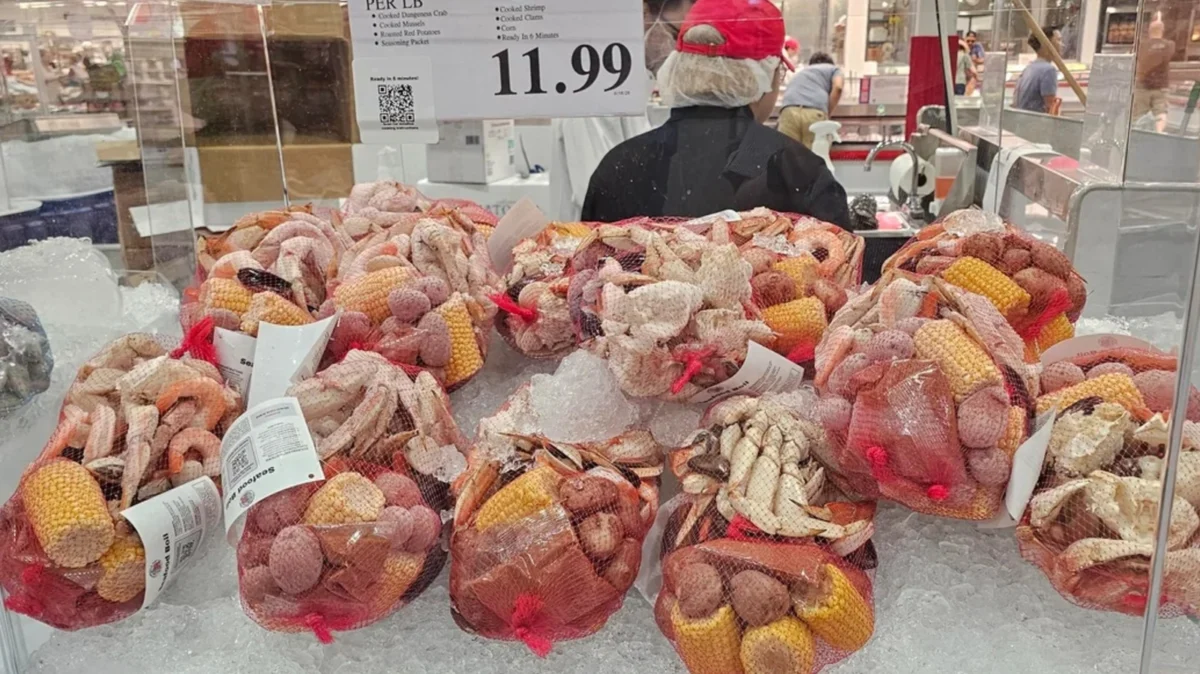
In the sprawling, fluorescent-lit aisles of Costco, shoppers are accustomed to finding bulk goods, oversized rotisserie chickens, and industrial-sized tubs of mayonnaise. However, a new offering has recently sent ripples of excitement—and skepticism—through the warehouse giant’s devoted fan base: the pre-packaged seafood boil kit. Promising a restaurant-quality coastal feast in under ten minutes, this ambitious product aims to solve the perennial problem of home-cooked luxury. But as social media debates heat up, the question remains: Is this a culinary revolution or a convenience-tax trap?
The Anatomy of the Kit: What’s Inside?
The allure of the kit is undeniable. For a price point of $11.99 per pound, Costco provides a roughly 5-pound bundle of pre-cooked, seasoned bounty. The contents are a classic tribute to the traditional low-country boil: Dungeness crab, mussels, shrimp, and clams, accompanied by red potatoes and corn on the cob.
The primary selling point—and the source of the product’s controversy—is its “heat-and-eat” nature. Because the components are pre-cooked, the labor-intensive process of scrubbing potatoes, shucking corn, and timing the precise boiling points of varying shellfish is entirely eliminated. A mere six minutes of heating is all that stands between the consumer and a dinner plate typically reserved for summer festivals or specialized seafood restaurants.
A Chronology of the Social Media Firestorm
The rise of the Costco seafood boil kit did not happen in a vacuum. Its emergence onto the retail scene was marked by a rapid progression through digital platforms, shifting from a curious find to a polarizing debate.
The Initial Discovery
In late 2024 and early 2025, eagle-eyed shoppers began spotting the kits in select Costco locations, most notably in coastal regions like San Francisco, California, and suburban areas like Cherry Hill, New Jersey. Initial TikTok videos showed the kits being pulled from seafood-on-ice displays, with creators praising the visual appeal of the mesh-wrapped bundles.
The Viral Critique
As more users purchased the kits, the tone shifted from excitement to analytical scrutiny. Reddit threads, specifically within the r/Costco community, became a battleground for value-conscious shoppers. Critics began posting photos of their purchases, pointing out that the ratio of high-value protein (the crab and shrimp) to low-cost filler (potatoes and corn) was heavily skewed toward the latter.
The Counter-Narrative
Despite the criticism, a vocal contingent of supporters pushed back, emphasizing the "convenience factor." These users argued that the labor saved—the hours spent cleaning shellfish and the effort required to source fresh ingredients—justified the premium price tag. For busy families or those hosting small, spontaneous gatherings, the kit offered a low-stress path to a gourmet experience.
Supporting Data: Examining the "Filler" Factor
To understand the friction surrounding the price point, one must look at the math behind the meal. A typical kit, weighing in at roughly 5 pounds, serves as the primary data point for consumer frustration.
One Instagram user’s breakdown provided a clear picture of the inventory:
- Protein: Two Dungeness crabs, plus approximately 0.25 pounds of shrimp, mussels, and clams.
- Produce: Four halved ears of corn and a dozen red potatoes.
When broken down, the math suggests that the consumer is paying roughly $60 for the total package. For many, the inclusion of a dozen potatoes and corn—items that cost pennies on the dollar—feels like an attempt by the retailer to artificially inflate the weight of the bundle. Conversely, defenders of the kit argue that even at $60, a restaurant-grade seafood boil for two people would easily eclipse $100 before tax and tip, making the Costco kit a "relative" bargain.
The Geography of Availability: Why Is It So Hard to Find?
One of the most frequent complaints from Costco members is the inconsistency of availability. The kits are not a universal store item; they are largely restricted to locations that maintain full-service seafood-on-ice stations.
This infrastructure requirement means that inland warehouses, which typically stock only frozen or vacuum-sealed seafood, are unlikely to carry the fresh-style kits. This creates a "geography of convenience" where those in major metropolitan hubs or near coastal supply chains have access to the product, while those in smaller markets are left to watch the viral trends from afar. Costco officials have remained relatively quiet regarding a nationwide rollout, likely due to the logistical complexities of maintaining the cold-chain integrity required for pre-cooked, chilled shellfish.
Convenience vs. Cost: The Economic Implications
The debate over the seafood boil kit touches on a broader economic trend in modern retail: the premiumization of convenience. As the average consumer faces time-scarcity, retailers are increasingly willing to perform the "dirty work" of cooking—cleaning, chopping, and seasoning—in exchange for a higher margin.
The Hidden Cost of DIY
When critics argue that one could make the boil for half the price at home, they are technically correct. A trip to the local market for potatoes, corn, and frozen shellfish would certainly yield a lower receipt total. However, the "DIY" method involves significant hidden costs:
- Time Investment: Shucking corn and cleaning sand from clams is a time-intensive process that can add an hour or more to prep time.
- Waste: Home cooks often end up buying more of an ingredient than they need, leading to food waste.
- Culinary Expertise: Achieving the perfect texture for each shellfish type requires a level of culinary rhythm that not every home cook possesses.
The Value Proposition
For the consumer, the kit is essentially an insurance policy against a failed dinner party. By purchasing a pre-assembled kit, the buyer is offloading the risk of overcooking the shrimp or undercooking the potatoes onto the processor. For many, this peace of mind is worth the extra $15 to $20.
Recommendations for the Savvy Shopper
If you are considering picking up a kit, the consensus among regular buyers is to approach it as a "base" rather than a finished product. Because the kit is wrapped in transparent mesh, shoppers are encouraged to perform a visual inspection before committing.
If the bundle looks too heavy on potatoes, look for another. If you do bring one home, consider these "pro-tips" to elevate the meal:
- Enhance the Protein: Add extra shrimp, smoked sausage (andouille is the standard), or even lobster tails to balance out the potato-to-shellfish ratio.
- The "Secret" Ingredient: Add hard-boiled eggs, which absorb the boil’s spices and add a creamy texture that pairs perfectly with the spicy broth.
- The Sides: Never rely on the kit alone. A proper boil requires crusty French bread to soak up the juices, plenty of lemon wedges to cut the richness, and a large side of melted butter.
Conclusion: Is the Costco Seafood Boil Here to Stay?
The Costco seafood boil kit is a fascinating case study in modern retail strategy. It represents a pivot toward "experience-based" grocery shopping, where the store sells not just the raw materials, but the outcome of the meal. While the price-per-pound criticism is valid from a strictly commodity-based perspective, the product succeeds in the arena of utility.
Whether the kit remains a permanent fixture or fades away like many seasonal specialty items depends largely on sustained demand and the ability of Costco to maintain quality control across its diverse network of warehouses. For now, it serves as a testament to the fact that, in the modern era, time is the ultimate luxury—and many Costco members are more than willing to pay for it, one mesh-wrapped bundle at a time.
If you find one in your local warehouse, consider it a rare find. Just remember to bring the butter, the bread, and a healthy appetite for debate.
 Raul Delapena Setiawan
  Basiran
  Nana
Nana 