
 By Laily UPN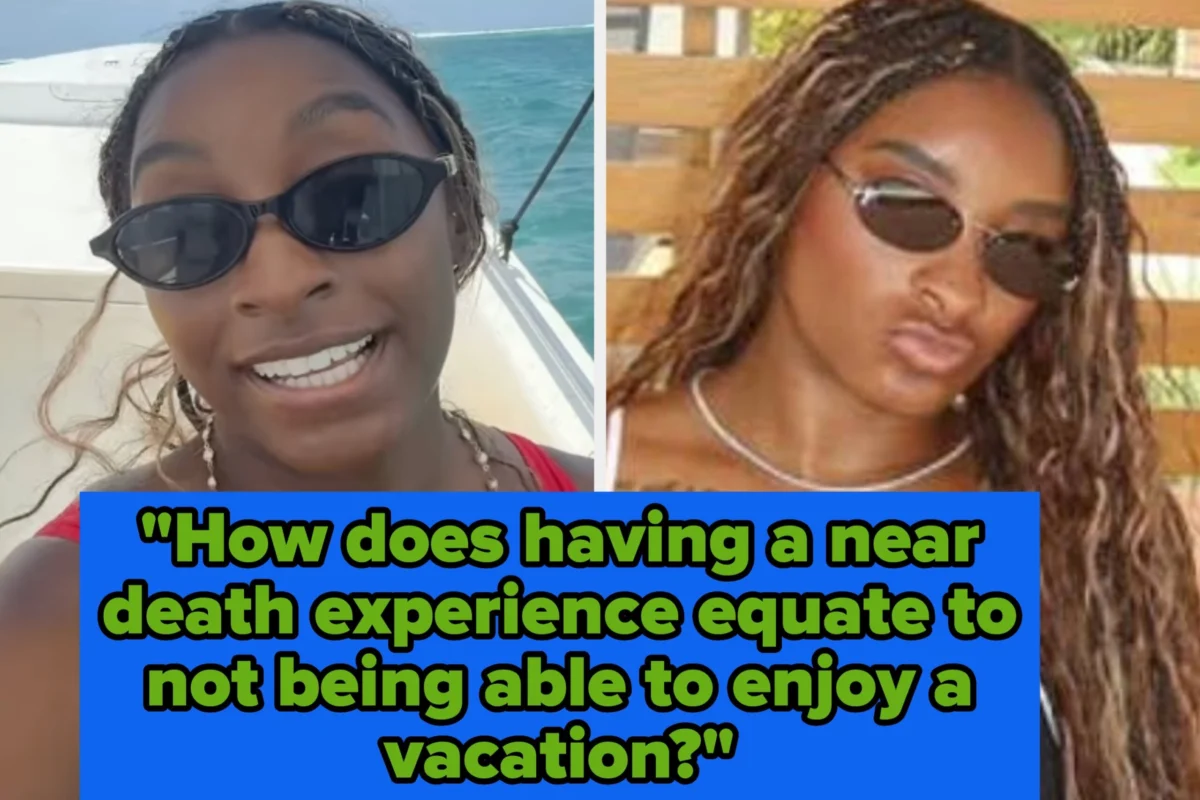
In an era where the boundary between public figures and their audience has been eroded by social media, the expectation of "authenticity" often morphs into a demand for total transparency. Recently, Olympic icon Simone Biles found herself at the center of a vitriolic online firestorm—not for a lack of transparency, but for the audacity to seek joy and recovery following a life-altering medical emergency. The incident highlights a troubling trend in digital culture: the weaponization of personal trauma against the very people experiencing it.
The Chronology of a Private Crisis
The sequence of events began earlier this month when Biles, the most decorated gymnast in history, took to her Instagram story to share a brief, sobering update with her millions of followers. Without delving into specific medical details, Biles revealed that she had recently navigated a harrowing health crisis.
"I’m not one to normally share things like this," she wrote, "but almost dying wasn’t on my bingo card earlier this week." The gravity of the statement was palpable. She went on to explain that she had spent the week confined to her bed, under the care of a close-knit circle of family and friends who provided support, flowers, and check-ins.
For a public figure known for her superhuman physical capabilities, the admission of vulnerability was significant. However, Biles maintained a boundary, choosing not to disclose the specific nature of the emergency—a choice that should be the prerogative of any individual, yet one that seems to invite speculation and skepticism in the eyes of the internet.
The "Vacation" Controversy
Approximately two weeks after her initial announcement, Biles surfaced on social media once more, this time from the sun-drenched shores of Belize. The Olympic champion posted a series of images alongside her husband, NFL player Jonathan Owens. The photos depicted a woman in the early stages of recovery: relaxing, sipping cocktails, and embracing the serenity of a tropical paradise.
The caption, "relaxing in paradise," was intended as a personal update. Instead, it became a lightning rod for criticism. Within minutes, the comment section of her post was flooded with users questioning the legitimacy of her previous health update.
"Lmfao, weren’t you just on death’s door?" one user commented. Another chimed in, "You look good for someone who almost died. lol." The sentiment shared by these critics was rooted in a cynical, performative understanding of trauma: the belief that if one claims to have been ill, they must remain visibly incapacitated until the public deems them "recovered."
The Psychology of Online Harassment
To understand the vitriol directed at Biles, one must look at the psychological phenomenon of parasocial relationships. Followers often feel a sense of "ownership" over the narratives of celebrities. When a public figure acts in a way that contradicts a follower’s preconceived notion of how a "sick person" should behave, it creates cognitive dissonance.
The critics were essentially policing Biles’s grief and recovery. By vacationing, Biles was accused of "faking" or "exaggerating" her medical emergency. This logic—that a near-death experience should result in somber, visible mourning rather than a pursuit of healing—is a common trap in social media discourse. It ignores the reality that for many, a brush with mortality serves as a catalyst for prioritizing mental health and reconnecting with loved ones in peaceful environments.
Biles’s Measured Response: A Call for Grace
Biles, who has historically handled intense media scrutiny with remarkable poise, did not ignore the commentary. In a move that displayed both maturity and firm boundary-setting, she addressed the negativity directly.
When one user commented, "Almost died but look at these traveling selfies…," Biles provided a response that served as a masterclass in emotional intelligence.
"Ugh, these comments make me sad," she wrote. "A little over two weeks ago, I experienced a serious medical emergency that could have ended very differently, and this trip has been part of allowing myself to heal and appreciate being here. I hope you understand that life-changing experiences can shift your perspective. And that you’re able to extend a little more grace to others moving forward. Have a nice day!"
Her response was not an apology, nor was it a justification of her medical history. It was an assertion of her humanity. By framing the vacation as a "part of allowing myself to heal," she reframed the narrative from one of suspicion to one of wellness.
The Supportive Counter-Narrative
While the critics were loud, they were not alone. A significant portion of the internet rose to Biles’s defense, highlighting the absurdity of the criticism. Supporters pointed out the hypocrisy of demanding that a survivor of a medical crisis stay hidden away.
"What’s funny about almost dying then taking time for yourself and your husband?" one supporter asked. "Maybe find some compassion, or something else to do besides throw shade."
Another user articulated the shift in perspective that follows trauma: "How does having a near-death experience equate to not being able to enjoy a vacation? If I almost died, I’d for sure be living my best life with those I love. I hope if you experience anything like this, life gives you a little grace to learn something."
These comments represent a shift toward a more empathetic digital culture—one that prioritizes the mental well-being of the individual over the entertainment value of their personal struggles.
Broader Implications: The Burden of the Public Eye
The incident involving Biles is part of a larger conversation regarding the right to privacy in the digital age. When public figures share snippets of their lives, they are often subjected to a "truth-seeking" interrogation by followers who feel entitled to evidence.
For an athlete of Biles’s caliber, the pressure is compounded by the expectations of her profession. She is a woman who has spent her life being scrutinized for her physical performance. Now, she is being scrutinized for her physical recovery. The implication is clear: even in her most private moments of medical uncertainty, she is not allowed to simply be a human being. She must be an athlete, a role model, or a victim—but never just a person on vacation.
Looking Forward: Redefining Recovery
As of this writing, Biles continues to enjoy her time in Belize. Recent updates show her dancing to Bad Bunny and engaging in leisure activities, signaling that she is, indeed, prioritizing her joy. Her refusal to let the negativity impact her recovery is a testament to her resilience.
The lessons from this episode are twofold. First, it serves as a reminder to the public that social media updates are merely windows, not the entire house. A photo of a woman in a bikini does not negate a medical crisis that occurred weeks prior; it is simply one frame in the complex film of a person’s life.
Second, it highlights the desperate need for "digital grace." We are increasingly prone to judging the internal lives of others based on external data points. When a person—regardless of their celebrity status—is open about a health scare, the default response should be empathy, not investigation.
Simone Biles’s experience underscores the reality that for those in the public eye, the greatest challenge is not the physical recovery from a medical emergency, but the exhausting psychological labor of maintaining one’s humanity in the face of an unforgiving, hyper-observant, and often cynical digital public. As Biles herself suggested, the world would be a much kinder place if we chose to extend a little more grace, recognizing that behind every carefully curated post is a person just trying to navigate the complexities of life—and survival.
 Lina Irawan
  Layla Zulfa
  Asep Darmawan