
 By Sagoh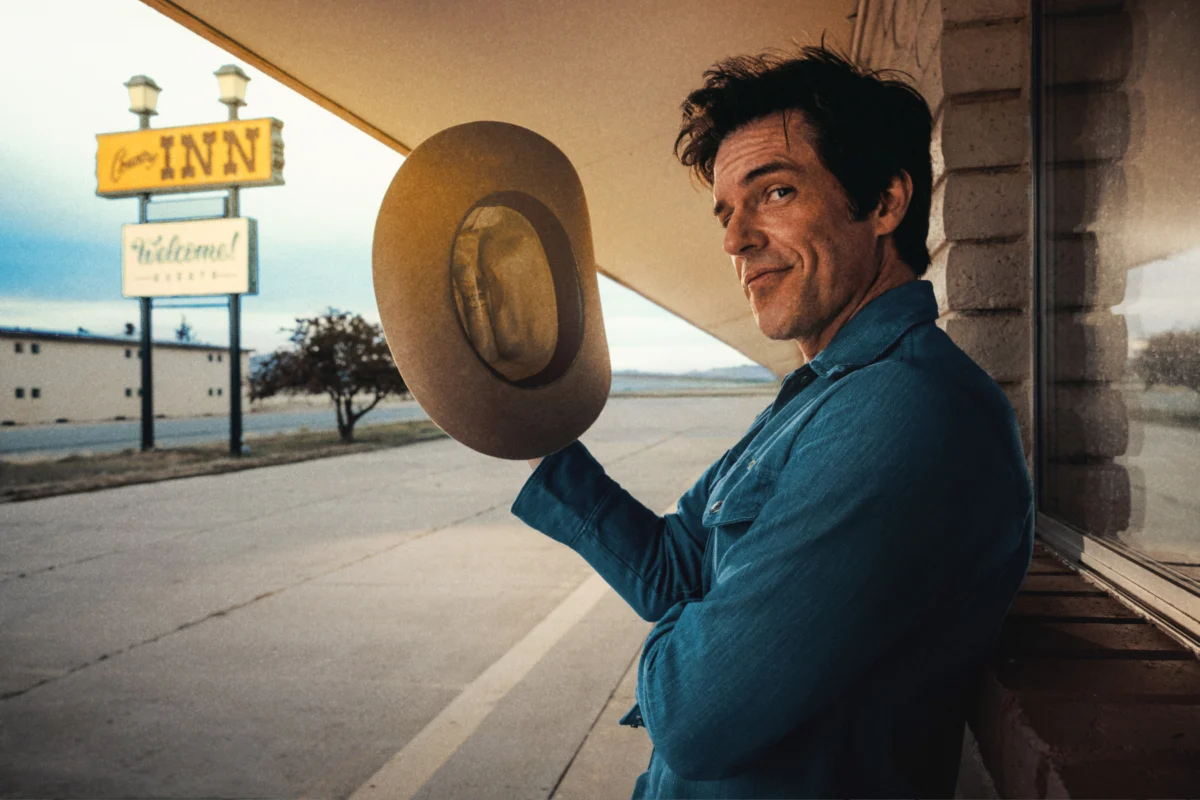
For over two decades, Brandon Flowers has been the unmistakable voice behind some of the most enduring anthems in modern rock. As the frontman of The Killers, he helped define the sound of the 2000s, delivering arena-filling hooks that merged new wave energy with heartland storytelling. However, on August 21, Flowers will embark on a new chapter, stepping away from the synths and stadium-sized distortion to release his third solo studio album, Thrasher.
The 10-track project, arriving via Island Records, marks a significant departure—and a homecoming—for the Las Vegas-based icon. It is his first solo full-length release since 2015’s The Desired Effect, signaling a decade-long period of reflection that has culminated in a deep dive into the sounds of his childhood.
The Main Facts: A New Sonic Direction
Thrasher is not a rock record in the traditional sense. While Flowers insists he is not abandoning the genre that made him a global household name, he is clearly prioritizing a more stripped-back, acoustic-driven aesthetic rooted in the "Country-Western" traditions of his upbringing.
The album, which will be preceded by the lead single "Plans" on Friday, is described as a thematic exploration of life in small-town America. According to official press materials, the record touches on the pillars of the human experience: the complexities of family relationships, the lingering sting of loss, the fragility of memory, and the slow, deliberate pace of rural living.
Produced by longtime collaborators Shawn Everett and Jonathan Rado, the album was recorded at the historic RCA Studio A in Nashville. The choice of venue is telling; it is a space synonymous with the golden era of country music. To achieve this specific sonic texture, Flowers recruited a roster of legendary session players, including guitarist David Rawlings, pedal steel virtuoso Bruce Bouton, and harmonica legend Charlie McCoy.
A Chronological Journey to ‘Thrasher’
To understand the significance of Thrasher, one must look back at the trajectory of Flowers’ career and his personal history.
Early Beginnings (The Nephi Years)
Long before the neon lights of Las Vegas beckoned him, Flowers spent his childhood in Nephi, Utah. It was here, in the quiet expanse of the Beehive State, that he first encountered the music that would eventually shape his latest project. During his youth, his father introduced him to the great American storytellers—artists like Johnny Cash and Waylon Jennings. These figures, who prioritized narrative clarity and emotional sincerity, planted the seeds for the songwriter Flowers would become.
The Killers Era and Solo Detours
In 2001, Flowers formed The Killers, and the band exploded onto the scene with Hot Fuss (2004). Throughout the band’s meteoric rise, Flowers’ songwriting always maintained a cinematic, lyrical quality. However, his solo work has consistently served as a pressure valve, allowing him to explore sounds that didn’t necessarily fit the high-octane energy of his band.
- 2010: Flowers released his debut solo album, Flamingo, which leaned into a blend of synth-pop and heartland rock.
- 2015: He followed up with The Desired Effect, a pop-leaning record that earned critical acclaim for its polished production and infectious melodies.
- 2015–2025: Following a decade of intense touring and recording with The Killers, including the release of Imploding the Mirage and Pressure Machine, Flowers began to quietly collect the fragments of the songs that would eventually form Thrasher.
Supporting Data: The Craft Behind the Record
The production of Thrasher is a masterclass in collaboration. By bringing in Shawn Everett and Jonathan Rado, Flowers has leaned into a team that understands the tension between his rock sensibilities and his new, more rustic ambitions.
The Nashville Influence
The decision to record at RCA Studio A is more than a geographic choice—it is a sonic commitment. The studio has hosted everyone from Dolly Parton to Waylon Jennings. By placing himself in this environment, Flowers is actively inviting the ghosts of country music history to influence his performance.
The instrumentation choices further highlight this intent:
- David Rawlings: Known for his intricate, folk-inspired guitar work, Rawlings brings an organic, woody tone to the record.
- Bruce Bouton: His pedal steel playing acts as the emotional anchor for many of the tracks, providing that classic, sweeping atmosphere associated with the genre.
- Charlie McCoy: A multi-instrumentalist whose work on the harmonica provides a bridge to the blues and country traditions of the mid-20th century.
Official Responses: Addressing the Genre Shift
In the weeks leading up to the announcement, there was speculation among fans regarding whether Flowers was permanently pivoting away from rock music. In an official trailer released alongside the announcement, Flowers addressed these concerns directly, framing the album as an expansion of his artistry rather than a replacement.
"As I’ve gotten older, I’ve found my way back to my father’s music—‘Country-Western’ (as he called it)—and discovered that the stories I carry really feel most at home in the skin of this beautiful American tradition," Flowers stated.
He was even more emphatic about his relationship with his past work. "This is not me running away from rock and roll," he explained in the trailer, which features footage of him driving through the Utah landscape. "I don’t want to replace my old songs. I simply found room for more."
This sentiment suggests that Thrasher is a project of accumulation. It is the work of an artist who, after years of conquering the world, has reached a point where he feels secure enough to explore the quiet corners of his own identity.
Implications: What ‘Thrasher’ Means for the Industry
The release of Thrasher arrives at a pivotal moment in the music industry. We are currently witnessing a massive cultural crossover, where rock icons and pop stars are increasingly looking toward Americana, folk, and traditional country for inspiration.
Bridging the Divide
Flowers’ move is significant because he represents a bridge between two worlds. His crossover appeal means that a massive, diverse audience will be exposed to the textures of traditional country instrumentation. By maintaining his core fanbase while embracing a new sound, he is effectively validating the "Americana" genre to a demographic that might otherwise ignore it.
The Maturation of the Rock Star
For many of his contemporaries, the third decade of a career is often defined by legacy acts and "greatest hits" tours. Flowers is choosing a different path—one of creative restlessness. By returning to his childhood influences in Nephi, he is signaling that he is interested in the longevity of his craft rather than just the maintenance of his brand.
A New Standard for Authenticity
In an era of hyper-produced, algorithmic music, Thrasher promises to be a stark contrast. By focusing on "family relationships, loss, and memory," Flowers is leaning into the kind of raw, personal songwriting that often gets lost in the pursuit of radio hits. If the album succeeds, it will likely serve as a blueprint for other established artists who are looking to pivot toward more personal, organic musical landscapes without alienating their existing audience.
As August 21 approaches, the industry is watching closely. Whether Thrasher becomes a definitive country-rock classic or remains a niche, intimate side project, it is already clear that Brandon Flowers has achieved the most important goal for any veteran artist: he has found something new to say, and he has found the perfect sound in which to say it.
 Ali Ikhwan
  Suro Senen
  Reynand Wu