
 By Siti Muinah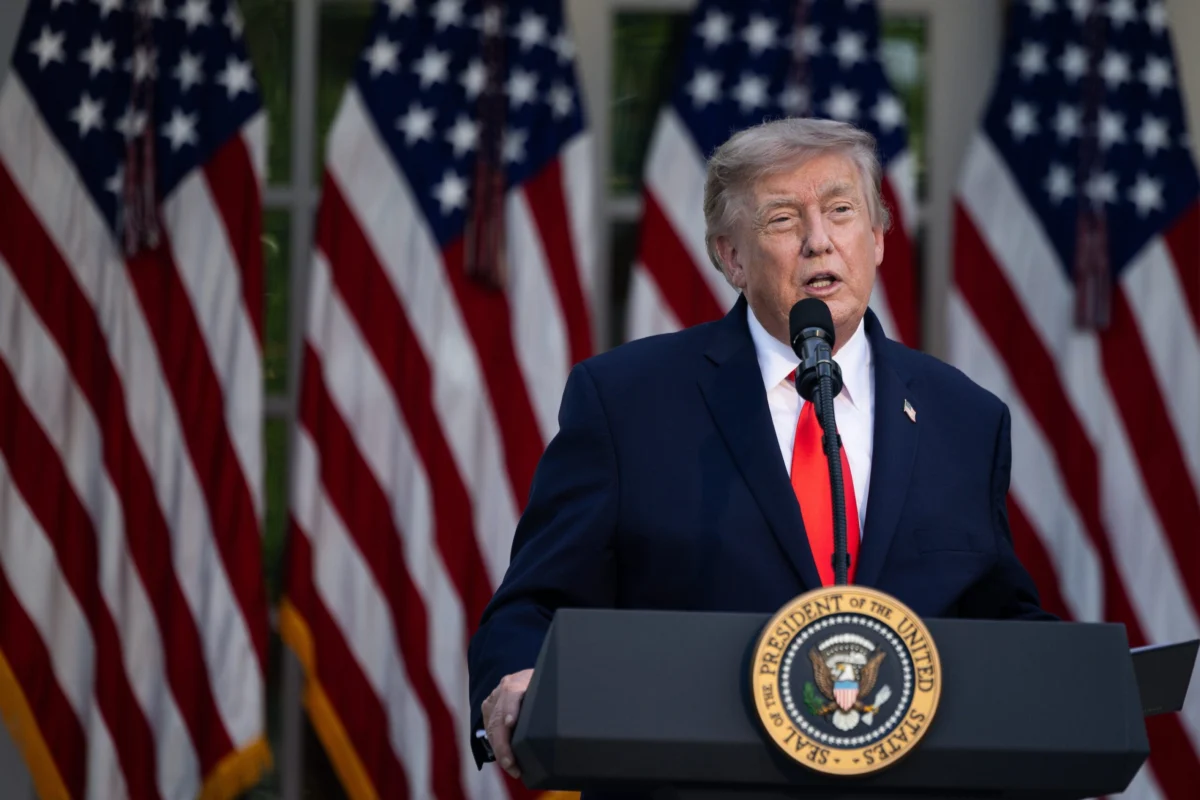
The delicate geopolitical equilibrium in the Persian Gulf was abruptly disrupted on Thursday when a Singapore-flagged container ship, the Ever Lovely, came under fire in the Strait of Hormuz. The incident, which involved an unidentified projectile striking the vessel’s bridge, serves as a violent coda to the fledgling 14-point memorandum of understanding (MoU) signed between the United States and Iran just last week—a pact intended to normalize traffic through one of the world’s most critical maritime chokepoints.
As the international community reels from the strike, the event has reignited fears of a broader conflict and cast a long shadow over the future of global supply chains, which rely heavily on the unhindered flow of goods through this narrow, high-stakes waterway.
The Chronology of the Incident
The attack occurred under the cover of a routine transit, marking a stark departure from the relative calm that had characterized the waterway since the recent ceasefire agreement.
- Early Thursday: The Ever Lovely, operated by Evergreen, was navigating the Strait of Hormuz. Despite the ongoing regional tensions, the vessel was adhering to the recommended maritime corridor established by the United Kingdom Maritime Trade Operations (UKMTO).
- The Strike: At approximately 7.5 nautical miles (8.6 miles) southeast of Dahit, Oman, the vessel was struck on its starboard side. The impact caused significant damage to the ship’s bridge.
- Immediate Aftermath: Initial reports from the UKMTO confirmed that there were no casualties among the 21 crew members on board. Remarkably, the vessel remained seaworthy, allowing it to continue its voyage toward Singapore, where it is expected to dock on July 5. As of Friday morning, the ship was reported to be approximately 110 nautical miles off the eastern coast of Oman.
- Coordinated Escalation: In the wake of the attack, U.S. officials pointed toward the Islamic Revolutionary Guard Corps (IRGC) as the orchestrators. President Donald Trump later alleged that the Islamic Republic had launched at least four one-way attack drones at vessels in the vicinity of the Strait, characterizing the actions as a "foolish violation" of the ceasefire.
A Web of Conflicting Maritime Authorities
The attack highlights a dangerous divergence in how maritime traffic is managed in the region. Since the conflict began, a power struggle has emerged between international regulatory bodies and Iranian domestic authorities.
The Role of the IMO and the Evacuation Pause
The International Maritime Organization (IMO) has been spearheading a monumental task: the evacuation of over 11,000 sailors who have been stranded in the region due to the war. Following the attack on the Ever Lovely, the IMO made the difficult decision to temporarily pause these operations.
IMO Secretary-General Arsenio Dominguez characterized the pause as a necessary safety precaution. "We want to reconfirm that the necessary safety guarantees continue to be in place for the ships on our evacuation list and all those in the region," Dominguez stated. The uncertainty surrounding the safety of these routes has led the UKMTO to cease notifications regarding the inclusion of vessels in the IMO movement process, further complicating the logistical landscape.
The Iranian "Parallel" System
The friction stems from the IRGC’s refusal to recognize international transit paths as the sole authority. The Persian Gulf Strait Authority—an Iranian entity established to manage and monetize the waterway—has issued repeated warnings. Tehran has explicitly stated that vessels failing to coordinate with their authorities or utilizing routes not approved by the Islamic Republic will not be entitled to "safe passage guarantees" or, more critically, insurance coverage.
Iranian Deputy Foreign Minister Kazem Gharibabadi reiterated this stance on social media, asserting that "safe passage through the Strait of Hormuz cannot be guaranteed under ambiguous arrangements, parallel routes, or decision-making that does not take Iran’s role as a coastal state into account."
Supporting Data: The Logistics of a Volatile Waterway
Despite the looming threats, the necessity of global trade has forced shipowners to continue operations, albeit with heightened caution. Data from the ship-tracking firm MarineTraffic provides a snapshot of the current environment:
- Verified Transits: On the day of the attack, 54 vessels successfully navigated the strait.
- Strategic Routing: Of those 54 transits, 24 ships opted for the Omani coastline—a route generally perceived as safer—while 10 ships adhered to the IMO-designated path. The remaining transits were distributed across various other corridors.
- Fleet Movements: Evergreen appears to be moving quickly to mitigate risk. While the Ever Lovely was struck, two other Evergreen vessels—the Ever Unicorn and the Ever Lotus—successfully completed their transits without incident. Sources indicate that the company has since moved all its assets out of the Persian Gulf.
Official Responses and Diplomatic Fallout
The international reaction to the attack has been one of condemnation and concern. The Maritime and Port Authority of Singapore (MPA) was swift in its response, calling the incident "unprovoked, unjustifiable, and a breach of international law."
The United States government remains under immense pressure to reconcile the attack with its recent diplomatic efforts. The 14-point framework, intended to bring an end to the U.S.-Iran conflict, is now widely seen as being on "life support." Critics of the deal argue that it failed to secure the necessary enforcement mechanisms to prevent the IRGC from engaging in asymmetric warfare against commercial shipping.
Iran, for its part, has neither confirmed nor denied its involvement in the strike, maintaining a posture of calculated ambiguity that has become a hallmark of its regional security policy.
Implications: The End of "Business as Usual"
The most significant consequence of this attack is the realization that the Strait of Hormuz may never return to its pre-war status quo. Analysts point to three major shifts in the post-attack reality:
1. The Monetization of Passage
Reports emerging from the Wall Street Journal and Bloomberg suggest that Iran is pushing for a formal, permanent toll system. Tehran estimates that fees for security, safety, and environmental services could generate upwards of $40 billion annually. While Iran claims it would share these revenues with neighboring Gulf states, the prospect of a state-controlled toll gate in an international strait is viewed by many as a dangerous precedent that could invite further exploitation.
2. The Omani Pivot
Oman, historically a neutral arbiter in the region, has reportedly signaled to European officials that the "free-flowing" nature of the strait is likely a relic of the past. While Omani officials maintain they will adhere to international law, they have acknowledged the potential for legitimate fees to cover the costs of environmental maintenance and navigational safety, signaling a tacit acceptance of a more heavily regulated, potentially privatized, future for the waterway.
3. Escalation Risks for Global Shipping
For global shipping lines, the cost of transit is no longer just about fuel and time. It is now about the cost of insurance and the physical safety of crews. If the IMO cannot guarantee safe passage, and if the IRGC continues to target vessels that do not comply with its mandates, shipping companies may be forced to divert traffic around the Cape of Good Hope, a move that would add weeks to transit times and billions of dollars in costs to the global economy.
Conclusion
The attack on the Ever Lovely is more than a localized maritime incident; it is a signal that the regional order is shifting beneath the feet of global commerce. As diplomatic channels struggle to salvage the remains of the U.S.-Iran MoU, the shipping industry remains caught in the crossfire. For now, the Strait of Hormuz remains open, but the price of entry—both in financial terms and in the currency of international stability—has arguably never been higher. The coming weeks will be critical in determining whether the ceasefire can be reinforced or if the region is sliding back into a period of prolonged, unpredictable maritime hostility.
 Nana Muazin
  Nana
Nana  Ali Ikhwan