
 By Siti Muinah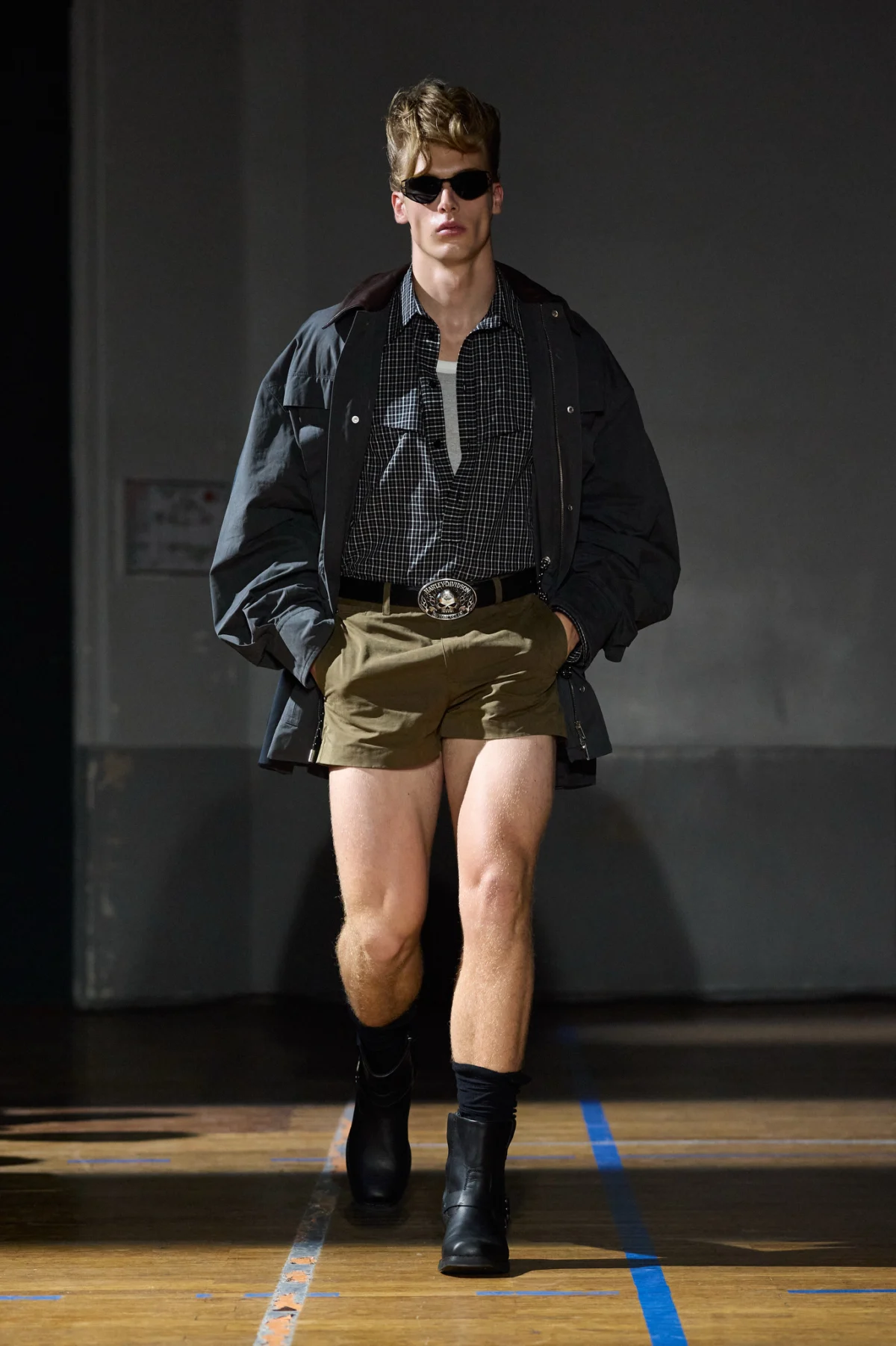
Introduction: The Cool Escape in a Heat-Struck Paris
As France grappled with an unseasonably early and sweltering heatwave, the atmosphere inside the venue for Louis-Gabriel Nouchi’s latest spring collection presentation felt like a deliberate, sensory contradiction. While the sweltering Paris streets demanded lightness and brevity, the interior was bathed in an ominous, pulsating red light—a visual cue that signaled an immediate departure from reality.
For Nouchi, the genesis of this collection was rooted in a profound, almost desperate longing for the crisp, pine-scented air of the mountains. What began as a personal fantasy of alpine escapism evolved into a sophisticated exploration of David Lynch’s cult television masterpiece, Twin Peaks. By bridging the gap between high-fashion tailoring and the unsettling, surrealist aesthetic of the Pacific Northwest’s most famous fictional town, Nouchi offered a collection that was as much a psychological character study as it was a display of garment construction.
Chronology: From Alpine Dreams to Lynchian Nightmares
The conceptual development of the spring collection occurred in distinct phases, beginning with the designer’s internal search for tranquility.
The Phase of Escapism
Months before the runway debut, Louis-Gabriel Nouchi found himself mentally retreating to the mountains. Seeking an antidote to the relentless pace of urban design, he initially envisioned a collection centered on the tactile comfort of mountaineering gear and the cool stillness of high-altitude landscapes. However, as the creative process deepened, the narrative began to shift.
The Lynchian Pivot
The focus transitioned from the physical geography of the mountains to the atmospheric tension of Twin Peaks. Nouchi began obsessing over the show’s recurring visual motifs: the suffocating mystery of the Red Room, the foggy Douglas fir forests, and, most importantly, the “unsettling elegance” of FBI Agent Dale Cooper. This shift marked a departure from the designer’s previous work, moving toward a more narrative-driven approach to silhouette.
The Friday Showdown
By the time the show launched on Friday, the environmental context had transformed the runway experience. The heatwave outside created a visceral contrast to the cool, dark, and mysterious aesthetic curated inside. As guests entered the venue, the red lighting acted as a psychological filter, mirroring the tension of the series and setting the stage for a collection that was both nostalgic and distinctly modern.
Supporting Data: Deconstructing the Silhouette
Nouchi’s design philosophy has always been rooted in a fusion of traditional tailoring and contemporary sensuality. For this outing, he expanded his repertoire, leaning into the specific archetypes of the Twin Peaks universe.
The Detective’s Tailoring
The backbone of the collection remained the brand’s signature tailoring. Drawing inspiration from Dale Cooper’s classic suits, Nouchi presented sharp, structured silhouettes that felt authoritative yet melancholic. The tailoring was precise, emphasizing the shoulder and the waist—a nod to the 1990s aesthetic of the series while maintaining a contemporary, gender-fluid sensibility.
Denim and Nostalgia
A standout element of the collection was the extensive use of denim. Nouchi integrated prints inspired by a vintage checked shirt he had acquired in his youth, effectively bridging the gap between personal memory and cinematic homage. The denim was treated with a rugged, worn-in quality that juxtaposed against the more delicate fabrics elsewhere in the collection.
Lingerie and Intimacy
The collection explored the "small drawers" of both men’s and women’s wardrobes. Key pieces included:
- Boxer Shorts: Puffed slightly for a voluminous, vintage-inspired silhouette.
- Pointelle Jersey Tanks: Providing a tactile, breathable contrast to the heavier tailored items.
- Socks with Frills: A whimsical, feminine detail that bordered on the subversive when paired with classic men’s footwear.
The Expansion of Womenswear
Nouchi used this season to solidify his commitment to the womenswear market. The collection featured dresses with integrated support structures, designed to provide a streamlined, architectural silhouette. Perhaps most innovative was the long skirt, which deconstructed the traditional tailored trouser by slashing the inseam, allowing for fluid movement while maintaining the sharp aesthetic of formal wear.
Official Responses and Creative Intent
Backstage, Nouchi provided context for the collection’s darker undertones, acknowledging that the inspiration was not merely aesthetic but atmospheric.
"I wanted to capture that feeling of being in a place that is beautiful but slightly wrong," Nouchi explained. By leaning into the discomfort of the Red Room, he was able to challenge the audience to look beyond the surface level of the garments. The designer noted that his goal was to ensure the clothes felt like extensions of the characters themselves—the rebellious teenager, the small-town waitress, and the stoic detective—rather than mere costumes.
He emphasized that the sensuality of the collection was intentionally restrained. Rather than relying on bare skin, Nouchi utilized complex layering to build intrigue. "Sensuality doesn’t always have to be about revealing," he remarked. "Sometimes, it is about the mystery of what is hidden."
Implications: A Shift Toward the "Quiet Crowdpleaser"
The critical reception of the show suggests a pivotal moment for the brand. While Nouchi’s previous collections have often been characterized as "fever dreams"—chaotic, high-energy, and provocative—this season marked a transition toward something more disciplined and accessible.
The Evolution of the Nouchi Brand
By moving toward a "quiet crowdpleaser" aesthetic, Nouchi has demonstrated a maturation in his design language. The collection proves that he can maintain his edgy, narrative-driven roots while producing highly wearable, commercial pieces. This balance is critical for a brand looking to expand its footprint in the luxury market.
Fashion as Psychological Narrative
The implications for the industry at large are significant. Nouchi’s work highlights a growing trend in high fashion: the use of film and television as a primary source for structural and thematic inspiration. By treating the runway as a site for storytelling rather than just a commercial showcase, Nouchi has elevated his brand from a mere clothing label to a cultural touchpoint.
Market Impact
The move to expand his womenswear capsule is particularly timely. With a growing consumer base that values the intersection of comfort and high-concept design, Nouchi’s focus on structured, streamlined dresses and deconstructed trousers is likely to resonate with a demographic that seeks pieces that are as functional as they are conceptual.
Conclusion: The Cool Aftermath
As the heatwave outside eventually broke, the lasting impression of Nouchi’s spring collection remained the cool, crisp, and slightly unsettling image of the mountain-inspired runway. By successfully translating the psychological weight of Twin Peaks into a tangible, wearable wardrobe, Nouchi has cemented his position as one of the most thoughtful designers currently working in Paris.
This collection was more than a tribute to a cult classic; it was a masterful exercise in restraint. In a fashion climate that often prioritizes the loud and the fleeting, Nouchi’s ability to create a "quiet crowdpleaser" that still maintains an air of mystery is a testament to his evolving craft. The spring collection does not just dress the body; it suggests a character, a mood, and a narrative—leaving the audience to wonder what, exactly, is waiting behind the red curtains of the next season.
 Nana Muazin
  Nana
Nana  Ali Ikhwan