
 By Azzam Bilal Chamdy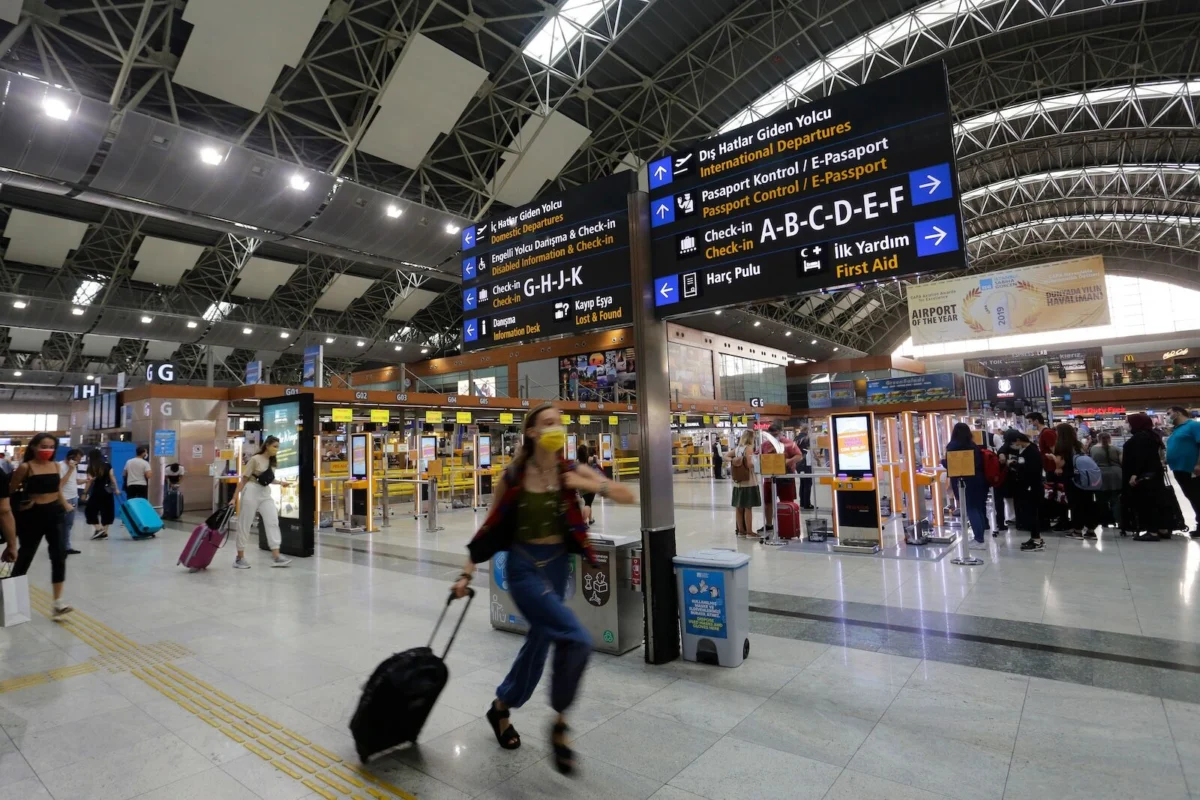
For the modern traveler, the dreaded sight of an empty baggage carousel at the end of a long journey is a universal source of anxiety. We often blame the faceless baggage handlers, the labyrinthine architecture of mega-airports, or the logistical failures of understaffed ground crews. However, according to the latest industry data, the culprit behind your missing suitcase is far less malicious and far more mathematical: the duration of your connection.
As revealed in the SITA 2026 Baggage IT Insights report—a comprehensive analysis of data from 500 airlines and 2,800 airports worldwide—the "tight connection" has emerged as the single most significant factor in luggage mishandling. In 2025, the pressure of moving cargo against the clock became the primary cause of travel disruption for millions of passengers.
Main Facts: The Mathematics of Misplaced Bags
The data is sobering. In 2025, tight transfers accounted for a staggering 39 percent of all lost and mishandled bags globally. To put that into perspective, the next most common issue—ticketing errors, such as incorrect routing codes or misprinted tags—accounted for only 18 percent of incidents. A further 16 percent were attributed to bags that simply failed to be loaded onto the aircraft.
When you sprint through a terminal to make a 20-minute connection, your physical agility is often rewarded with a seat on the plane. Your luggage, however, does not possess the same ability to navigate security cordons or sprint through corridors. While passengers might believe that connecting through a smaller, less congested airport increases the chances of their bag making the cut, the reality is more complex. Because passengers and bags travel through entirely different logistical systems, the size of the airport is often secondary to the efficiency of the automated baggage handling system (BHS) and the time available for a human agent to physically transfer the unit from one aircraft hold to another.
Chronology: The Lifecycle of a Connection Failure
To understand why a 90-minute layover can devolve into a lost-bag scenario, one must look at the clockwork process that occurs behind the scenes.
- The Arrival: As the first aircraft touches down, the ground crew begins the "turnaround" process. The clock starts immediately. The baggage containers must be offloaded, transported across the tarmac, and fed into the airport’s sorting facility.
- The Sorting Phase: Once in the facility, the bag must be scanned, sorted, and routed to the new gate. This is where the "tight window" becomes a bottleneck. If the arrival is delayed by weather or air traffic control, this sorting window shrinks from an hour to minutes.
- The Departure Threshold: This is the critical juncture. Airlines prioritize the departure of the aircraft to avoid cascading delays across their network. While flight crews are often incentivized—or legally pressured—to wait for late-arriving passengers, there is no such protocol for baggage. If a bag is not scanned into the new flight’s manifest before the loading door closes, it is effectively left behind.
- The Re-routing: The bag is placed into a "delayed" queue. This creates a secondary logistical burden: the bag must then be stored, identified, and prioritized for the next available flight, which may not be until the following day.
Supporting Data: The International Divide
The risk profile for luggage significantly shifts when a traveler crosses international borders. The SITA 2026 report highlights a stark contrast between domestic and international operations.
In the United States, the mishandling rate sits at approximately 1.65 bags per 1,000 passengers. However, when the route involves an international connection, that number surges to 9.12 bags per 1,000 passengers. This represents an increase of over 500 percent.
The reasons for this disparity are multi-faceted:
- Increased Handling: International bags often undergo additional security screening and customs transfers.
- Interline Complexity: Many international journeys involve multiple airlines. If you are flying on a "codeshare" agreement, the handoff of your bag from Airline A to Airline B introduces a higher margin for error in data transmission.
- Volume: International flights often carry larger volumes of cargo, putting greater strain on the sorting facilities at major transit hubs like London Heathrow, Dubai, or Singapore Changi.
Official Responses and Industry Improvements
Despite the frustration caused by lost luggage, the industry is actually performing better than it has in years. In 2025, even as global air travel hit a record-breaking 5 billion passengers, the total mishandling rate fell by 23 percent compared to previous cycles.
SITA, the organization behind the report, credits this improvement to the "digitalization of the ramp." Airlines have increasingly adopted automated sorting and real-time tracking programs. These systems act as a proactive safety net; if a bag fails to make a connection, the system often triggers an automated alert, rerouting the item before the passenger has even reached their final destination.
Furthermore, the Department of Transportation (DOT) in the United States has noted that 2025 marked the third consecutive year of improved baggage handling performance. Industry experts point to the "AirTag Effect"—the rise of consumer-grade Bluetooth trackers—as a major driver of accountability. When passengers know exactly where their bag is, they are more empowered to alert airline staff, who can then use that location data to expedite the recovery process.
Implications: How to Protect Your Belongings
While the industry is trending toward better performance, the power to prevent a lost bag still lies primarily with the passenger.
The Strategy of Longer Layovers
The most effective way to avoid baggage issues is to avoid the "Minimum Connection Time" (MCT) trap. Airports calculate MCT based on perfect conditions—no terminal changes, no weather delays, and no maintenance issues. In the real world, these conditions are rarely met. If you are checking a bag, experts recommend choosing an itinerary with a layover that exceeds the MCT by at least 60 to 90 minutes.
The "Single Ticket" Rule
There is a massive legal difference between a single-itinerary booking and "self-transferring" (booking two separate tickets to save money). If you book two separate tickets, the first airline is only responsible for getting your bag to the end of their specific segment. If you miss your connection because the first flight was delayed, the second airline is under no obligation to assist you or transport your bag on a later flight for free. Always prioritize a single booking, even if it carries a premium price tag; it is an investment in the legal responsibility the airline holds toward your property.
The Reality of "Lost" vs. "Delayed"
It is important to maintain perspective: the term "lost" is frequently misused by travelers. Data shows that only 4 percent of mishandled bags are truly "lost" in the sense that they never return to their owners. Approximately 75 percent are merely delayed, often arriving within 24 hours. The remaining 21 percent typically involve damage or theft.
Conclusion: A Digital Future
As we look toward the latter half of the decade, the integration of RFID (Radio Frequency Identification) tags on baggage labels is set to become the global standard. This technology allows for granular tracking throughout the entire journey, moving away from the error-prone manual scanning of the past.
Until that technology is universal, the traveler’s best defense remains the same as it has been for decades: pack light enough to carry on, avoid the temptation of the tight connection, and if you must check a bag, ensure your itinerary allows for the unpredictable nature of global transit. Your suitcase may not be able to run to the next gate, but with the right planning, you can ensure it doesn’t have to.
 Layla Zulfa
  Lina Irawan
  Nana
Nana 