
 By Ammar Sabilarrohman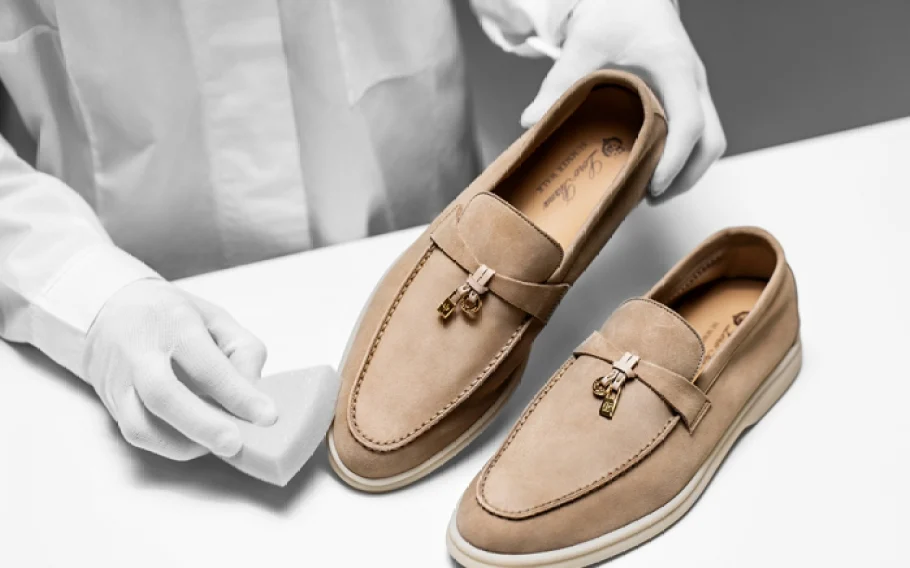
In a significant triumph for the protection of intellectual property within the high-fashion sector, Italian luxury house Loro Piana has secured a decisive legal victory against the Paris-based company Parijan SAS. The Court of Turin has issued a preliminary injunction effectively halting the marketing and sale of footwear models that the court deemed to be "servile imitations" of Loro Piana’s globally recognized White Sole collection.
This ruling marks another milestone in the brand’s multi-year, aggressive campaign to safeguard its signature aesthetic—an aesthetic that has become synonymous with the "quiet luxury" movement, characterized by understated elegance, premium materials, and a distinctive, deconstructed silhouette.
The Core of the Dispute: Anatomy of an Icon
At the heart of the legal battle are the "Summer Walk" and "Open Walk" models. Introduced in 2003 and 2005, respectively, these shoes were initially designed as specialized sailing footwear. Their rapid transition from the deck of a boat to the boardrooms of Wall Street and the tech campuses of Silicon Valley was predicated on their unique synthesis of supreme comfort, technical performance, and minimalist design.
The shoes are defined by a specific light-colored rubber sole paired with high-quality suede or leather uppers. This visual signature has become so potent that it has transcended traditional branding; for many, the silhouette itself is the brand. This recognition was further cemented by pop culture, most notably through the character Kendall Roy in the critically acclaimed HBO series Succession, where the shoes became a shorthand for a specific brand of billionaire austerity.
The Court of Turin, led by Judge Ludovico Sburlati, found that Parijan SAS had engaged in the unauthorized production and marketing of models—including those marketed as "Monaco Old Money" and various "Premium Suede Loafers"—that borrowed too heavily from Loro Piana’s design language. The court concluded that these products were designed to deceive the average consumer, leading them to perceive the dupes as a lower-priced alternative to the original, thereby exploiting the brand’s reputation.
A Chronology of Legal Vigilance
Loro Piana’s commitment to protecting its design integrity is not a recent phenomenon. Since 2022, the company has taken a proactive, zero-tolerance approach toward firms attempting to capitalize on its iconic status.

- 2022: Loro Piana officially announced a series of legal actions aimed at preserving the "iconic nature" of the White Sole line, marking a shift from passive brand monitoring to active litigation.
- Early 2023: A court in Turin ruled in favor of Loro Piana in a case against an independent shoemaker, confirming that the company’s specific rubber sole design was entitled to protection.
- Late 2023: The brand secured a significant victory against the Mnswr Group in the Court of Bari, further establishing a legal precedent that protected the "overall visual impression" of their footwear.
- Current Ruling (2024): The injunction against Parijan SAS represents the most recent escalation. Beyond simply ceasing sales, the court imposed a penalty of 1,000 euros for every day of delay in compliance and a fine of 500 euros for each infringing item placed on the market. Additionally, Parijan SAS has been ordered to reimburse Loro Piana for legal fees incurred during the proceedings.
The Judicial Reasoning: Visual Impression vs. Technical Nuance
One of the most compelling aspects of Judge Sburlati’s ruling was the dismissal of the defendant’s technical defenses. Parijan SAS argued that their products possessed qualitative and stylistic differences from the genuine Loro Piana shoes. However, the court deemed these arguments "unpersuasive."
The ruling emphasized that when assessing infringement in the modern marketplace—specifically in the digital sphere where online imagery is the primary touchpoint for the consumer—the "overall assessment" of the product’s visual impression holds more weight than minor technical specifications. The judge noted that the high degree of similarity is designed to capitalize on the "undue exploitation" of Loro Piana’s commercial reputation.
Furthermore, the court noted that the defendant had leveraged the digital influence of creators and social media personalities (such as the Gstaad Guy) who are heavily associated with the Loro Piana aesthetic. By aligning their marketing with the same influencers that promote Loro Piana, Parijan SAS created a deceptive brand association that confused potential buyers.
Official Responses and Strategic Implications
In an official statement following the ruling, Loro Piana articulated the broader importance of the decision: "The court’s decision is extremely significant for the fashion and luxury sectors, confirming that a creation’s signature shape can be protected. In this light, a product can become recognizable not only by its brand but also by the overall visual impression created by specific stylistic features."
The brand further noted that the ruling serves as a vindication of its "artisanal expertise." For Loro Piana, the "quiet luxury" aesthetic is not merely a design choice; it is a manifestation of decades of material sourcing and manufacturing refinement. The legal victory confirms that this intangible value—the authenticity and consistency of the brand—is a tangible asset that the law is prepared to defend.
The Broader Landscape of Intellectual Property in Fashion
The legal battle faced by Loro Piana is indicative of a wider crisis in the global fashion industry. The rise of "dupe culture"—driven by social media trends and the ease of e-commerce—has made the enforcement of intellectual property rights increasingly difficult.

Major fashion houses, ranging from Burberry and Lacoste to footwear giants like Adidas and Skechers, are currently entangled in similar proceedings. The industry is currently witnessing a paradigm shift: brands are no longer just protecting their logos and trademarks; they are aggressively defending the "trade dress" and the "signature silhouette" of their products.
Perhaps the most famous precedent for this strategy is the long-standing battle waged by Christian Louboutin to protect his iconic red-lacquered soles. By successfully registering the red sole as a trademark in both the United States and the European Union, Louboutin established that a single design element, if sufficiently distinctive, could become an ownable asset. Loro Piana’s current legal trajectory suggests they are seeking a similar level of protection for their White Sole design.
Future Outlook: A Changing Corporate Climate
This legal victory occurs at a time of transition for the company. Founded in 1924 and now a cornerstone of the LVMH Moët Hennessy Louis Vuitton portfolio, Loro Piana is looking toward a new chapter under the leadership of Frédéric Arnault, who was appointed CEO last year. Arnault, formerly the CEO of LVMH Watches, brings a background in managing high-value, heritage-driven brands. His stewardship is expected to continue the brand’s focus on premium positioning and, by extension, the rigorous defense of the intellectual property that defines it.
As Loro Piana moves forward, the message to the market is clear: the "quiet luxury" space is not a vacuum where design can be harvested without consequence. By setting a strong legal precedent in the Italian courts, Loro Piana has provided a roadmap for other luxury houses to follow, signaling that in an era of mass-market replication, the value of the original is more protected than ever.
The ruling serves as a stark warning to firms that rely on "servile imitations" to drive sales: the cost of infringing upon a luxury brand’s identity now extends far beyond the price of a counterfeit shoe—it includes the weight of legal precedent and the financial reality of judicial sanctions.
 Nana Muazin
  Nana
Nana  Ali Ikhwan