
 By Nana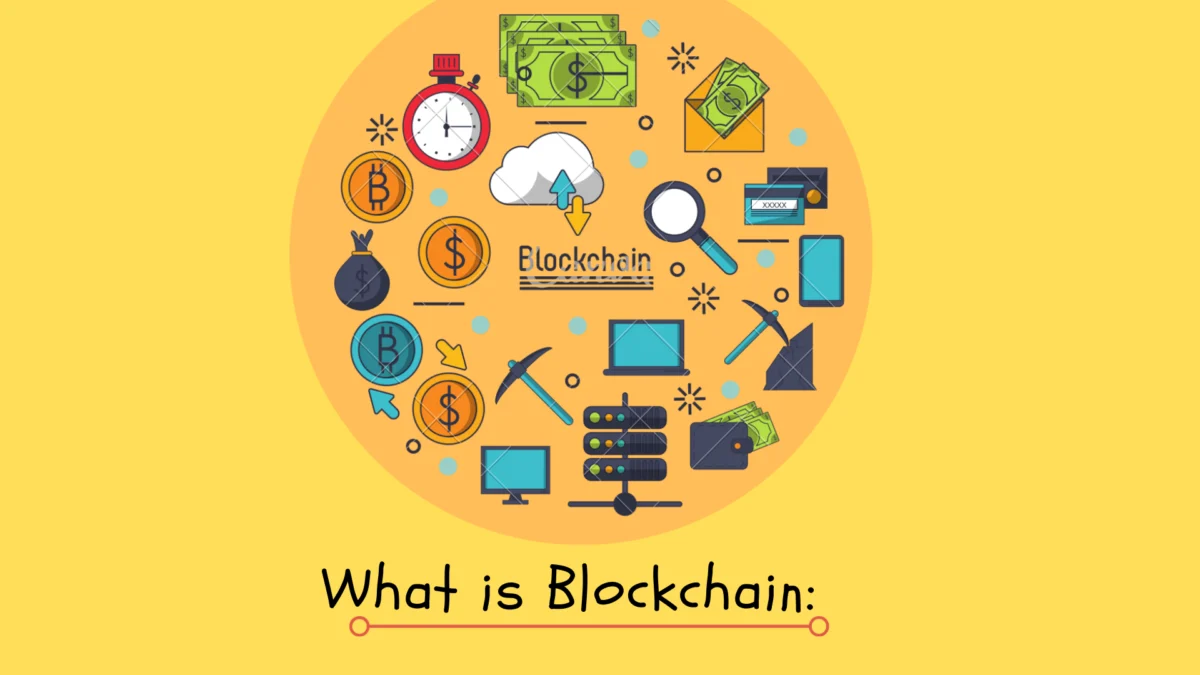
In an era defined by rapid digitization, the methods we use to conduct financial transactions and manage data are undergoing a seismic shift. For decades, the global economy has relied on centralized intermediaries—banks, government institutions, and clearinghouses—to validate our identity and authorize the movement of capital. However, the emergence of blockchain technology promises a future where trust is no longer vested in institutions, but in mathematics and transparent, decentralized code.
Often misunderstood as merely the "engine" behind volatile cryptocurrencies like Bitcoin, blockchain is, in reality, a foundational technology with the potential to rewrite the operating system of the modern world.
What is Blockchain? The Fundamentals of Distributed Ledgers
At its core, a blockchain is a distributed, digital ledger that records information across a network of computers, known as nodes. Unlike a traditional database, which is typically controlled by a single entity, a blockchain is shared, synchronized, and immutable.
Think of a traditional database as a single, centralized vault that can only be opened by the owner. If that vault is breached, the data is compromised. Conversely, a blockchain is like a public record book where every participant in the network has a copy. When a new transaction occurs, it is verified by the network, bundled into a "block," and cryptographically linked to the preceding block. This creates an unbreakable, chronological chain. Because the data is stored in multiple locations simultaneously, the system is decentralized; no single entity has the power to alter or delete the records, ensuring a level of transparency and security previously unattainable in digital environments.
A Chronology of Innovation: From Theoretical Roots to Global Adoption
The narrative of blockchain is often conflated with the rise of Bitcoin, but its conceptual origins predate the first cryptocurrency by nearly two decades.
- 1991: The Timestamping Genesis: Researchers Stuart Haber and W. Scott Stornetta introduced a cryptographically secured chain of blocks to ensure that document timestamps could not be tampered with. This laid the fundamental groundwork for what would become modern blockchain technology.
- 1998: The Bit Gold Concept: Software developer Nick Szabo proposed "Bit Gold," a decentralized digital currency protocol. While never fully implemented, it introduced the concepts of decentralized proof-of-work, which remain vital to blockchain security today.
- 2008-2009: The Satoshi Nakamoto Breakthrough: An anonymous entity (or group) using the pseudonym Satoshi Nakamoto published the Bitcoin whitepaper, detailing the first functional implementation of a blockchain to support a peer-to-peer electronic cash system.
- 2015-Present: The Era of Smart Contracts and Enterprise Integration: With the launch of Ethereum, blockchain moved beyond simple currency transfers to "smart contracts"—self-executing agreements that trigger automatically when specific conditions are met. Today, industry giants including IBM, Walmart, and Pfizer are integrating DLT (Distributed Ledger Technology) into their global supply chains.
Supporting Data: Why Decentralization Matters
The primary value proposition of blockchain lies in its security architecture. Traditional systems suffer from the "single point of failure" vulnerability. When a centralized server is hacked, millions of user records are exposed. Blockchain mitigates this risk through its decentralized nature.
Consider the "Byzantine Fault Tolerance" model: in a blockchain network, even if a portion of the nodes are compromised or malicious, the consensus mechanism ensures that the honest nodes prevail. Data is validated through complex algorithms rather than subjective human approval. This provides a level of integrity that is essential for industries handling high-stakes information, such as legal contracts, land titles, and medical records.
Official Industry Applications and Real-World Implications
While cryptocurrencies have dominated the headlines, the practical, non-financial applications of blockchain are arguably more transformative for the global economy.
1. Revolutionizing Global Supply Chains
Major corporations are leveraging blockchain to ensure the provenance and safety of goods. IBM’s Food Trust, for instance, allows retailers like Walmart to trace the journey of food items from farm to shelf in seconds. During an E. coli or Salmonella outbreak, this technology allows for the pinpoint identification of contaminated batches, potentially saving thousands of lives and preventing the mass disposal of safe food.
2. Streamlining Healthcare
Medical records are currently fragmented across various clinics and hospitals, making it difficult for patients to maintain a comprehensive health history. Blockchain offers a solution where patients hold the "private key" to their medical data, granting access to doctors only when necessary, while ensuring the records remain immutable and tamper-proof.
3. Legal and Governmental Infrastructure
Blockchain can facilitate the digitization of state identifications and land registries. In regions where property records are susceptible to corruption or loss due to civil instability, a blockchain-based registry provides an incorruptible proof of ownership that cannot be altered by political shifts or administrative negligence.
Debunking the Myths: Frequently Asked Questions
As blockchain moves into the mainstream, common misconceptions persist. Here, we address the most critical queries.
Is blockchain the same as cryptocurrency?
No. Cryptocurrency is a digital asset, whereas blockchain is the underlying infrastructure that allows that asset to exist securely without a central bank. It is the difference between the internet (the infrastructure) and a website (the application).
Can a blockchain be hacked?
While theoretically possible, it is computationally prohibitive. To hack a mature blockchain, an attacker would need to control more than 50% of the network’s computing power (a "51% attack"), which is practically impossible for established networks like Bitcoin or Ethereum.
Who owns the blockchain?
Nobody. Because it is a distributed network, the power is shared among all participants. It is a democratized system governed by its own protocol rules rather than an executive board.
How does it differ from a standard database?
A standard database is managed by an administrator who can change or delete entries. A blockchain is append-only; once data is recorded, it is permanent. It eliminates the need for a "middleman" to verify the truth, as the network verifies itself.
The Path Ahead: Future Implications (2025–2030)
As we look toward the latter half of the decade, the integration of blockchain is expected to accelerate. We are moving from the "experimental phase" into the "utility phase."
The next five to ten years will likely see the implementation of blockchain in decentralized finance (DeFi), where traditional banking services—lending, borrowing, and insurance—are handled by code rather than corporations. Furthermore, as regulatory frameworks begin to stabilize, governments will likely adopt blockchain for secure voting systems and digital identity management.
The shift will not be without its hurdles. Energy consumption, scalability, and the need for user-friendly interfaces remain significant barriers. However, the trajectory is clear: blockchain represents a fundamental shift in how we conceive of "trust" in the digital age. It is moving us away from the necessity of intermediaries toward a future of peer-to-peer verification.
For business leaders, entrepreneurs, and policymakers, the message is clear: blockchain is no longer a fringe technological curiosity. It is the backbone of the next iteration of the internet. Those who learn to leverage its capabilities today will be the architects of the decentralized economy of tomorrow.
For ongoing updates on the evolution of blockchain technology and its impact on the global market, keep an eye on our dedicated research section. Have questions or insights? Join the discussion in the comments section below.
 Ammar Sabilarrohman
  Ali Ikhwan
  Pevita Pearce