
 By Lina Irawan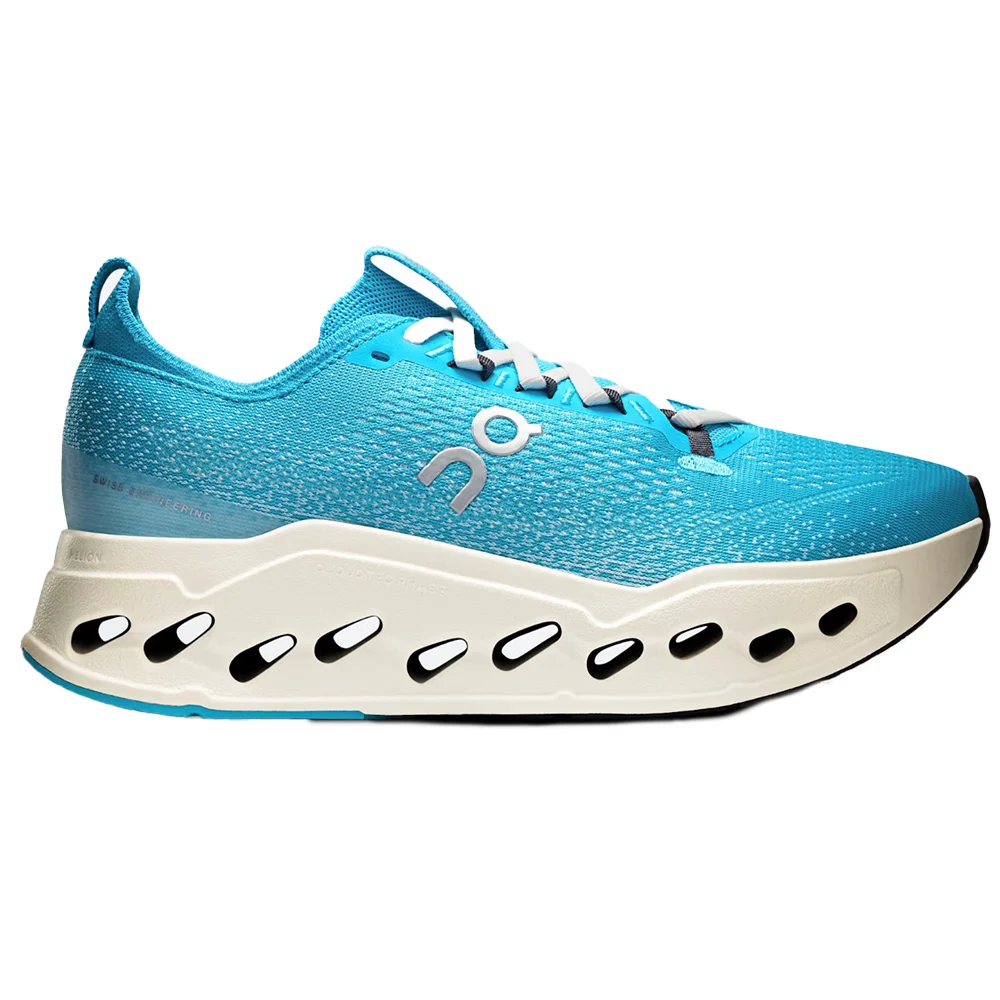
In an era of shifting retail dynamics and fluctuating consumer confidence, the footwear sector remains a high-stakes arena. A comprehensive May survey from financial services giant UBS has revealed a distinct hierarchy in European consumer preferences, identifying On, Crocs, and Birkenstock as the undisputed leaders in market momentum. As these brands continue to solidify their presence, industry analysts are closely watching how they maintain growth while competitors like Hoka, Vans, and Ugg navigate more turbulent waters.
Main Facts: The European Footwear Hierarchy
The UBS report, which leverages proprietary transaction data—derived from credit and debit card activity alongside bank account metrics—provides a high-fidelity look at the European consumer’s wallet. The data highlights a clear divergence between brands that are currently enjoying a surge in popularity and those currently falling out of favor.
For the month of May, the most recent period for which data is available, the "winners" were clear:
- On: Led the pack with a 12 percent year-over-year sales increase.
- Crocs: Followed with an 8 percent increase.
- Birkenstock: Held steady with a 1 percent gain.
Conversely, the data signals a cooling period for other household names, including Hoka, Vans, and Ugg, all of which saw year-over-year declines in the European market. When looking at long-term metrics, the trend remains consistent; the trio of On, Crocs, and Birkenstock dominated total spend data over a two-year horizon, with Hoka also maintaining a high rank despite its recent monthly dip.
Chronology of Market Trends
The current state of the footwear market is the result of a multi-year evolution in consumer behavior. Following the global pandemic, the demand for "comfort-first" footwear skyrocketed. Birkenstock, long known for its ergonomic cork-soled sandals, transitioned from a niche comfort brand into a global fashion powerhouse. Similarly, Crocs leveraged its distinct aesthetic and massive social media appeal to pivot from a functional clogs manufacturer to a versatile fashion staple.
On Running, meanwhile, has taken a different path, blending high-performance athletic technology with a sleek, minimalist design language that appeals to both marathon runners and urban commuters.
The recent May findings represent the culmination of these strategies. While the market saw rapid expansion in 2022 and 2023, 2024 has become a year of "selective growth." The data suggests that shoppers are becoming more discerning, opting for brands that offer either extreme niche functionality (On) or established, "must-have" casual status (Birkenstock and Crocs).
Supporting Data: Economic Context and Consumer Confidence
While UBS does not provide a direct, comparable transaction report for the U.S. market, the firm’s research underscores that broader consumer sentiment remains resilient despite the shadows of inflation and geopolitical instability. This resilience is mirrored in the latest report from The Conference Board regarding the U.S. Consumer Confidence Index.
In June, the overall index rose to 91.2, up from a downwardly revised 90.6 in May. This incremental growth is telling. While the "Present Situation Index"—which measures current business and labor market conditions—dipped by 3.0 points to 116.4, the "Expectations Index" rose by 3.0 points to 74.4. This indicates that consumers are increasingly optimistic about the short-term economic outlook, even if they feel the current pressures of the labor market and inflationary costs.
Dana M. Peterson, chief economist at The Conference Board, noted that the slight uptick in confidence is largely attributable to falling oil prices, which have provided a temporary reprieve from inflationary anxiety. "Consumers were more positive about business conditions versus last month," Peterson remarked, though she cautioned that the perception of a softening labor market remains a point of concern for future spending power.
Official Responses and Analyst Perspectives
The investment community is taking note of these trends. UBS currently maintains a "Buy" rating on several major footwear firms, including On Running, Birkenstock, Deckers Outdoor Corp. (the parent company of Hoka and Ugg), and Wolverine World Wide.
UBS analyst Jay Sole has been particularly bullish on On, noting that the brand’s strategic focus on innovation, athlete partnerships, and direct-to-consumer (DTC) channels has effectively insulated it from broader retail slumps. "On’s continued focus on innovation, performance, athletes, sports, and direct-to-consumer selling, while maintaining a premium brand position, will lead to industry-leading sales growth and earnings beats," Sole stated in a recent research note.
The brand’s management team has also taken proactive steps to protect its long-term brand equity. According to Sole, On is currently prioritizing "clean inventory levels" and full-price sell-through among its wholesale partners. This is a strategic move ahead of a massive innovation cycle slated for October. By ensuring that retailers are not overstocked with old models, the company is clearing the shelves for the introduction of new technologies.
Implications for the Future of Footwear
The implications of the UBS data are twofold: brand desirability is increasingly tied to technological innovation, and retail discipline is becoming as important as product design.
The Innovation Cycle
The market is watching On’s upcoming product launches with anticipation. The brand’s "Surreal" superfoam, which is set to debut in the Cloudsurfer 3, is being positioned as a differentiator. Early feedback on these technologies has been overwhelmingly positive, and the "exceptional demand" for models like the Cloudrunner Max suggests that the brand has not yet reached its saturation point.
The Resilience of Premium Brands
Birkenstock’s continued growth, even at a modest 1 percent, reinforces the idea that once a brand achieves "staple" status, it becomes recession-resistant. Unlike fashion-forward trends that cycle out, Birkenstock has effectively branded itself as an essential. Similarly, Crocs has managed to retain its relevance through clever collaborations and constant updates to its core product, proving that accessibility and affordability are strong buffers against economic downturns.
The Challenge for Legacy Players
For brands like Hoka, Vans, and Ugg, the current data serves as a wake-up call. The challenge for these companies in the coming quarters will be to re-establish their narrative in a market where consumers are gravitating toward the "winners" identified by the UBS transaction data. Maintaining "full-price sell-through" will be critical; discounting, while a short-term fix for inventory, can damage a brand’s long-term perceived value.
Conclusion
As we look toward the remainder of the year, the footwear market appears to be bifurcating. On one side are the high-growth, high-innovation brands that are successfully capturing the "mindshare" of the modern consumer. On the other are the established giants who must now pivot to ensure they do not lose momentum.
The data provided by UBS confirms that while the macroeconomic environment is complicated by inflation and labor market fluctuations, the appetite for premium, well-marketed, and innovative footwear remains high. For companies like On, the strategy is clear: maintain a premium position, keep the supply chain clean, and let the innovation speak for itself. For the rest of the industry, the race to adapt to this new, more selective consumer behavior is well underway.
With strong order books and positive signals from both European spending data and U.S. confidence indices, the outlook for the remainder of the year suggests that the brands willing to invest in their future—rather than just resting on their past—will be the ones that define the next chapter of the footwear industry.
 Neng Nana
  Ali Ikhwan
  Lina Hope