
 By Siti Muinah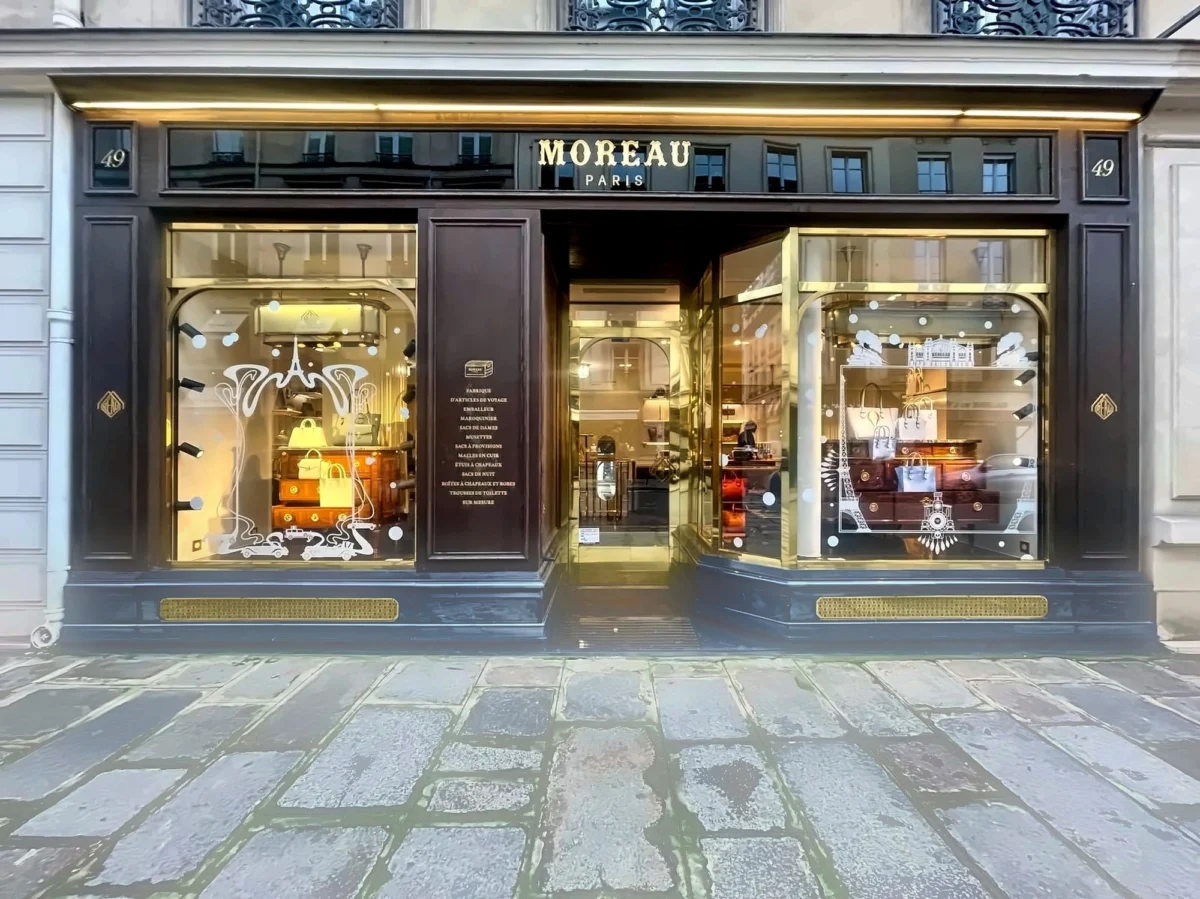
In the rarified world of French luxury, where names like Louis Vuitton and Goyard have become synonymous with global status, another storied house is preparing for a new chapter. Moreau Paris, the 19th-century trunkmaker renowned for its intricate, wicker-inspired monogram, is currently the subject of an intense, court-supervised sale process in the French capital. As investors from across the globe clamor to secure a piece of this historic legacy, the sale represents a rare opportunity to acquire a “turnkey” luxury house with deep roots and a proven international footprint.
The State of Play: A High-Stakes Auction
According to Richard Morgan, the investment advisor representing Asteren, the liquidator, the sale of Moreau Paris has attracted an overwhelming level of interest. The process, which commenced in June, has drawn more than 30 serious candidates, ranging from established luxury conglomerates and manufacturing powerhouses to private equity firms and high-net-worth individuals with specialized experience in consumer brands.
“We are receiving calls every day,” Morgan stated exclusively. “The interest has been truly global, spanning Europe, Asia, and North America. It is a testament to the enduring appeal of the Moreau name and the strength of its identity.”
The Paris Commercial Court, which is overseeing the proceeding, has set a deadline for binding offers of July 9. The court will ultimately select the winning bidder based on a holistic evaluation that includes the offer price, the bidder’s demonstrated financial capacity, and, crucially, the long-term strategic development plan for the brand.
A Legacy Reclaimed: The Chronology of Moreau Paris
To understand the current valuation of the brand, one must look back to its inception. The Moreau story began in 1764 with Louis Moreau, a master cabinetmaker who established his workshop on the prestigious Rue Saint-Honoré. However, it was in 1882 that the house truly found its signature identity, introducing the wicker-inspired monogram that would define its aesthetic for generations.
Like many luxury houses of the 19th century, Moreau thrived during a “fizzy” era of travel and exploration. Yet, as the world moved into the 20th century, the house faded into dormancy. It remained a quiet footnote in fashion history until 2010, when entrepreneur Veronika Rovnoff and her brother, Fedor Georges Savchenko, orchestrated a revival, breathing new life into the archives and reintroducing the house to a modern, discerning clientele.
In 2016, the brand reached a new milestone when it was acquired by the Onward Luxury Group. This period was marked by aggressive international expansion, most notably the opening of a flagship boutique on the iconic Rue du Faubourg Saint-Honoré and a successful push into the Japanese market.

By 2020, the ownership shifted once more, moving into the hands of a consortium of retail entrepreneurs, anchored by a majority investor in Japan. It was during this tenure that the brand faced the challenges that led to the current court-supervised sale. What began as a complex negotiation regarding a commercial lease spiraled into a wider, more challenging environment, prompting the stakeholders to pursue a court-controlled asset sale to ensure the brand’s survival and future growth.
The Financial Landscape and Market Footprint
Despite the structural hurdles of the past few years, Moreau Paris remains a robust commercial entity. According to data provided by Richard Morgan, the brand has consistently generated annual sales north of 10 million euros. This revenue is fueled by a loyal, global customer base that shows a strong affinity for the brand’s sophisticated leather goods, including its signature Sophie top-handle bag and its range of monogram canvas and leather totes, all of which are manufactured with artisanal precision in Italy.
The brand’s geographic distribution is particularly impressive. Roughly 80 percent of its revenue is generated outside of Europe, a trend that underscores its international appeal. Japan remains a powerhouse for the label; between 2022 and 2025, sales in that region grew by 30 percent across three directly operated boutiques. This core strength is complemented by a strategic network of franchise boutiques in key luxury hubs, including Mexico City, Manila, and Houston, the latter of which opened its doors as recently as last December.
Why the Court-Supervised Sale Matters
The current procedure is not a sign of failure, but rather a strategic mechanism designed to facilitate a clean transfer of power. As Morgan explains, the court-supervised framework is, in many ways, an attractive prospect for potential buyers.
“The court-controlled procedure offers prospective buyers a clear path to acquiring the intellectual property and all related assets debt-free,” says Morgan. “It simplifies the holding structure and removes the baggage of the past, effectively placing all assets—including trademarks, distribution networks, digital assets, and existing inventories—directly under a new owner. It clears the board for the next chapter of growth.”
For an investor, this provides a rare, streamlined entry point into the world of French luxury. The sale includes everything from the brand’s intellectual property rights and the Japanese subsidiary to the physical inventory and the existing commercial pipeline.
The Strategic Implications for the Luxury Sector
The impending sale of Moreau Paris highlights several broader trends within the luxury sector. First, it underscores the intense demand for “heritage” brands. In an era where consumers are increasingly fatigued by mass-market branding, the authentic, 18th-century pedigree of a house like Moreau acts as a powerful differentiator.

Second, it reflects the ongoing shift in global luxury consumption. The fact that 80 percent of Moreau’s revenue stems from outside Europe—with significant momentum in Asia—mirrors the broader pivot of luxury houses toward the East. Any serious bidder for the brand will likely view its established Japanese infrastructure not just as an asset, but as a blueprint for further expansion in other emerging luxury markets.
Finally, the sale is a case study in the resilience of the “boutique” luxury model. While conglomerates dominate the headlines, smaller, distinct brands like Moreau maintain a dedicated following among consumers who value craftsmanship, exclusivity, and a unique aesthetic identity—the “wicker-inspired” monogram being the ultimate calling card.
What Lies Ahead
As the July 9 deadline approaches, the industry watches with keen interest. The Paris boutique, which has been the jewel in the brand’s crown, remains temporarily closed, awaiting the outcome of the court’s decision. The winner will inherit a house that is, in every sense, a “sleeping beauty” that has already been awakened.
The new owner will be tasked with balancing the house’s 18th-century roots with the demands of the 21st-century digital landscape. Whether the successful bidder is a luxury group looking to add a niche heritage brand to its portfolio, or a private equity firm seeking to scale a high-potential asset, the path forward is clear: the foundation is laid, the brand equity is intact, and the global appetite for Moreau’s distinctive leather craftsmanship is stronger than ever.
As Morgan succinctly put it, “This is an established Paris luxury house with genuine heritage, an international presence, and a distinctive monogram identity. It is a rare opportunity to acquire a piece of history and build a future upon it.”
In the coming weeks, the Paris Commercial Court will write the next paragraph in the history of Moreau Paris. For the successful bidder, the goal will be to ensure that the storied trunkmaker remains a fixture of the luxury landscape for another 250 years, bridging the gap between the cabinetmaking of the 1760s and the global fashion demands of the 2020s and beyond.
 Neng Nana
  Ali Ikhwan
  Lina Hope