
 By Reynand Wu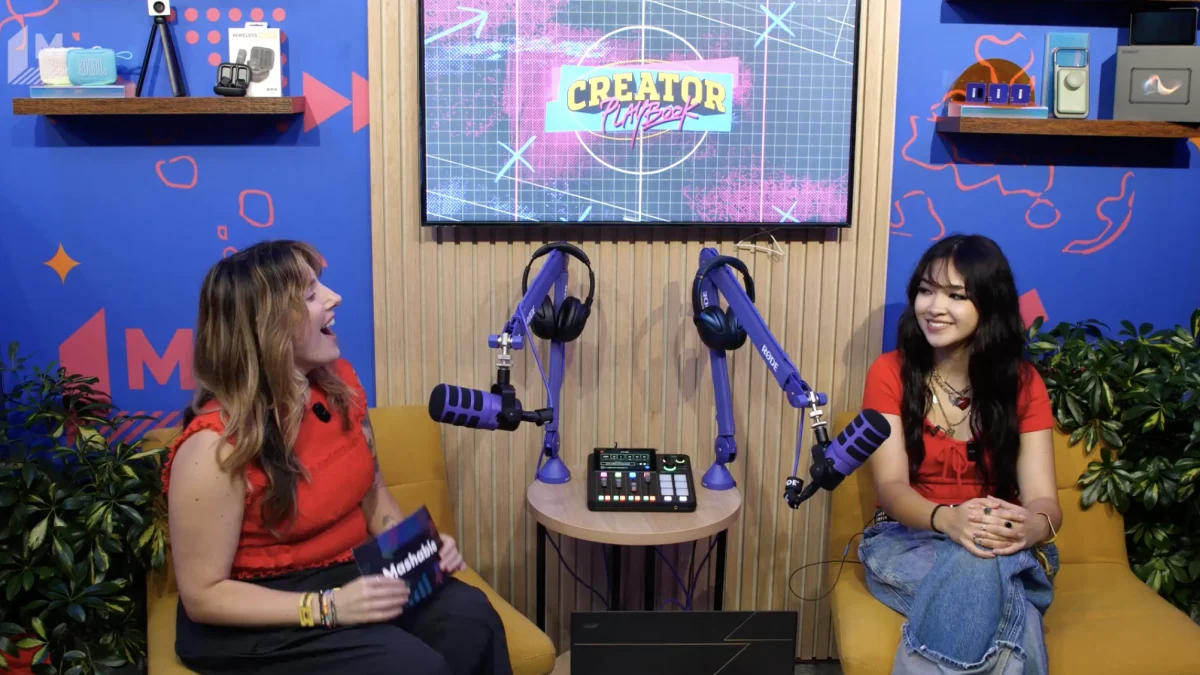
ANAHEIM, CA — At VidCon 2026, the premier global gathering for digital creators, influencers, and media executives, the conversation around the future of cinema took a decisive turn. For decades, the path to directing film and television was gatekept by a rigid network of film schools, agency representation, and studio executives. Today, however, a new generation of filmmakers is bypassing these traditional channels entirely, using social media as both a training ground and a distribution network.
Among the prominent voices leading this shift is Natalie Tran, a multihyphenate actor, creator, and director. In an in-depth interview at VidCon 2026 with Crystal Bell, Mashable’s Digital Culture Editor, Tran shared how her transition from traditional theater to short-form TikTok sketch comedy became the ultimate catalyst for her filmmaking career.
Rather than viewing content creation as a detour from her cinematic ambitions, Tran argues that the high-frequency, self-reliant nature of producing digital sketches has equipped her with a robust directorial toolkit—one that culminated in her writing and directing her debut narrative short film, Passion Project.
Main Facts: The Intersection of Digital Creation and Independent Cinema
The dialogue between Natalie Tran and Crystal Bell highlights a broader structural evolution within the entertainment industry. The key takeaways from their conversation outline a new blueprint for modern filmmakers:
- Short-Form as a Practical Film School: Tran emphasizes that writing, acting, editing, and producing short-form videos on platforms like TikTok teaches the core fundamentals of filmmaking—such as pacing, narrative economy, and visual storytelling—under highly compressed timelines and tight budgetary constraints.
- The Power of the Self-Start: Rather than waiting for Hollywood studios to greenlight projects or talent agencies to book auditions, creators are leveraging viral momentum to fund, produce, and distribute their own independent films.
- The Debut of Passion Project: Tran successfully translated her digital audience and technical expertise into Passion Project, a narrative short film that she wrote and directed, proving that micro-content skills are highly transferable to traditional cinematic formats.
- Prioritizing Passion Over Algorithms: While metrics, analytics, and platform algorithms dominate industry discussions, Tran asserts that authentic, passion-driven storytelling remains the only sustainable foundation for a long-term creative career online and off-camera.
Chronology: From Child Actor to Digital Director
Tran’s journey reflects the changing landscape of the entertainment industry over the past two decades. Her career can be understood through a series of distinct developmental phases:
1. The Traditional Foundations (Early Childhood to Early Adulthood)
Tran’s creative journey began in the traditional performing arts. Starting her acting career at just five years old, she spent her formative years navigating the classical pathways of the industry: theater productions, commercial auditions, and indie film sets. While this classical training instilled a deep respect for the craft of acting and character development, it also exposed her to the systemic frustrations of the industry: the endless cycle of waiting for callbacks, relying on gatekeepers, and having little to no agency over the stories she was allowed to tell.

2. The TikTok Pivot and the Power of Play
Seeking a creative outlet that did not require industry permission, Tran turned to TikTok. What began as an experimental space for short-form comedy sketches quickly evolved into a rigorous daily practice. On TikTok, Tran became her own writer, director, cinematographer, editor, and lead actor. This period allowed her to experiment with comedic timing, visual transitions, and audience engagement in real-time.
3. The Viral Catalyst and Professional Realignment
The turning point came when one of Tran’s comedy sketches went viral. The sudden influx of millions of views and a rapidly growing follower base did more than just boost her digital profile; it provided proof of concept. The viral success demonstrated that her comedic sensibilities and storytelling instincts resonated with a massive, highly engaged audience. Instead of using this momentum solely to secure traditional acting auditions, Tran chose to leverage her newfound platform to transition into directing.
4. Directing Passion Project (Present Day, 2026)
With a proven audience and a refined technical skillset developed through hundreds of TikTok uploads, Tran took the leap into narrative filmmaking. She wrote, directed, and produced Passion Project, a short film that serves as a culmination of her years in theater, film, and digital spaces. The project stands as a tangible marker of her transition from a content creator to a recognized independent director.
+-------------------------------------------------------------+
|               NATALIE TRAN'S CREATIVE TIMELINE              |
+-------------------------------------------------------------+
|                                                             |
|  [Age 5]                                                    |
|     |---> Started acting in traditional theater & commercials|
|                                                             |
|  [Adulthood]                                                |
|     |---> Faced industry gatekeepers & audition bottlenecks  |
|                                                             |
|  [The Pivot]                                                |
|     |---> Launched TikTok channel; self-produced sketches   |
|                                                             |
|  [The Catalyst]                                             |
|     |---> Viral sketch success; built independent audience   |
|                                                             |
|  [2026]                                                     |
|     |---> Directed "Passion Project"; spoke at VidCon 2026   |
+-------------------------------------------------------------+
Supporting Data: The Rise of the Creator-Director
Tran’s transition is part of a macroeconomic shift within the entertainment sector. The creator economy, once viewed by Hollywood executives as a distinct and lesser ecosystem, is now recognized as a primary incubator for top-tier filmmaking talent.
Several industry metrics and historical precedents support this trend:
- The Path to Feature Films: Creators like Danny and Michael Philippou (known online as RackaRacka) transitioned from producing chaotic YouTube stunts to directing the A24 horror hit Talk to Me (2023), which grossed over $92 million worldwide on a $4.5 million budget. Similarly, creators like Quinta Brunson (Abbott Elementary) and Bo Burnham (Eighth Grade) built their foundational audiences and comedic voices entirely online before transitioning to mainstream critical acclaim.
- The Economics of Independent Production: According to creator economy market reports, the democratization of high-quality, consumer-grade filmmaking equipment (such as mirrorless cameras, mobile anamorphic lenses, and accessible editing software like DaVinci Resolve) has reduced the cost of producing a high-value short film by up to 70% compared to the early 2010s.
- Audience Retention Metrics: Industry analysis indicates that indie films backed by directors with established digital audiences experience significantly higher organic engagement and lower marketing acquisition costs. Creators can bypass traditional, expensive PR campaigns by marketing directly to their existing social media followings.
Inside the Creator’s Philosophy: Insights from the VidCon 2026 Panel
During her sit-down with Crystal Bell, Tran went beyond the logistics of filmmaking to discuss the psychological and philosophical realities of being a modern multihyphenate.

The Mechanics of "Micro-Filmmaking"
Tran explained that the limitations of short-form platforms act as a pressure cooker for directorial skills.
"When you only have 60 seconds to tell a complete story with a beginning, middle, and end, you learn to cut the fluff," Tran noted. "Every frame has to serve a purpose. Every line of dialogue has to push the narrative forward, and every cut has to land with precision. That is directing in its purest, most disciplined form."
She explained that editing her own videos taught her how to direct actors more effectively on the set of Passion Project. By understanding exactly how a scene would be cut together in the post-production phase, she knew precisely what coverage she needed on set, saving time and resources.
Navigating the Algorithmic Trap
One of the most pressing challenges for modern creators is the pressure to satisfy platform algorithms. Tran warned against letting metrics dictate artistic choices, urging creators to prioritize their creative instincts.
"If you paint only what the algorithm wants you to paint, you eventually lose your unique brushstroke," Tran said.
She emphasized that while tracking engagement metrics is necessary for the business side of content creation, the development of a lasting artistic voice requires stepping away from the analytics dashboard to focus on projects that feel personally meaningful.

The Balance of Public and Private Persona
As a comedy creator, Tran often plays heightened, eccentric versions of herself on camera. She discussed the importance of maintaining a clear boundary between her on-screen characters and her off-camera identity. This emotional boundary, she explained, is crucial for mental longevity in an industry that often demands constant accessibility and vulnerability from its creators.
Implications: The Democratization of Cinema and Hollywood’s Wake-Up Call
The trajectory of creators like Natalie Tran has profound implications for the wider entertainment landscape.
1. The Decentralization of Greenlighting Power
Historically, the power to decide which stories were told rested in the hands of a small cohort of studio executives, financiers, and distributors. Today, the "proof of concept" is generated directly by the audience. A creator who can consistently capture and hold the attention of millions of viewers on TikTok or YouTube has already de-risked their project in the eyes of potential investors. The audience, in effect, becomes the greenlighter.
2. The Obsolescence of Traditional Gatekeepers
As distribution platforms become more decentralized and self-funding models (such as crowdfunding, brand integrations, and creator funds) continue to mature, the necessity of having a traditional agent or manager to launch a career has diminished. While representation remains valuable for negotiating high-level deals, it is no longer a prerequisite for creating and distributing professional-grade cinematic work.
3. Hollywood’s Talent Acquisition Shift
Traditional studios are increasingly looking to digital platforms to recruit talent. Rather than searching through graduate film school showcases, development executives are scouring TikTok, YouTube, and independent streaming platforms for directors who already possess a distinct visual style, a highly disciplined work ethic, and a built-in marketing engine.
Natalie Tran’s journey from a five-year-old theater actor to a digital creator and independent film director serves as a case study for the modern creative era. By embracing the tools of the creator economy, Tran did not abandon her cinematic aspirations—she built her own studio, cultivated her own audience, and greenlit her own future.
 Raul Delapena Setiawan
  Ali Ikhwan
  Evan Lee Salim