
 By Dwi Wanna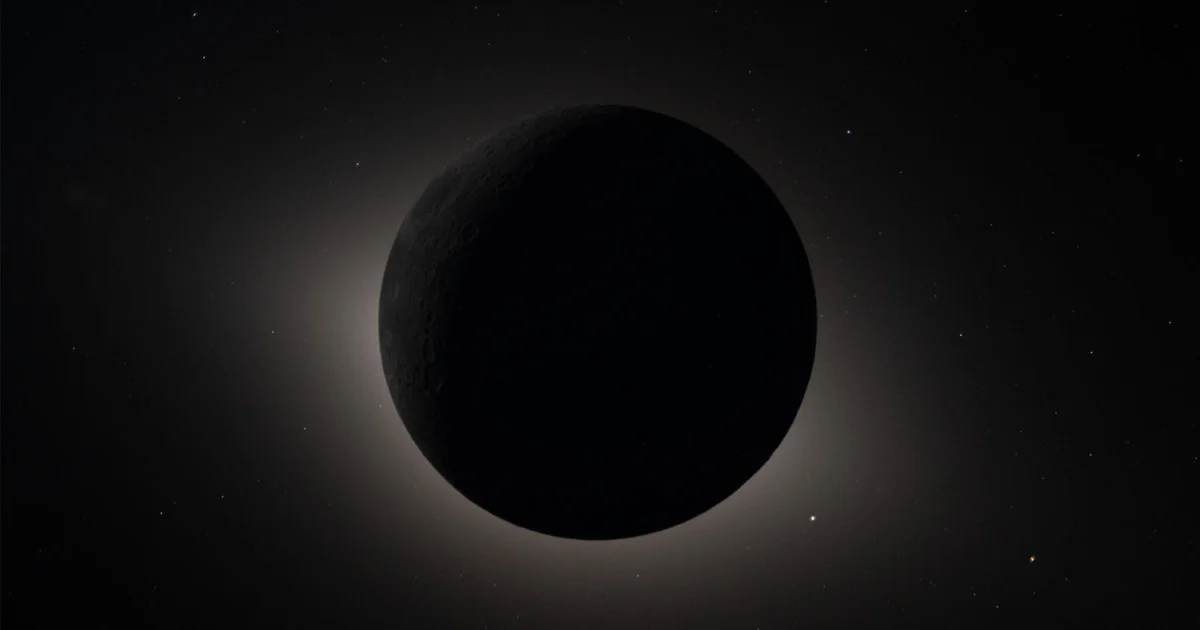
When the Artemis II crew—Commander Reid Wiseman, Pilot Victor Glover, and Mission Specialists Christina Koch and Jeremy Hansen—ventured into the deep silence of space for their historic lunar flyby in April 2026, they carried with them more than just the hopes of humanity. Tucked among their essential gear was a Nikon Z9, a piece of consumer-grade technology that would soon become an instrument of high-level astrophysical discovery.
A new paper published in The Astrophysical Journal Letters reveals that the images captured by the crew during a fortuitous solar eclipse are not merely breathtaking mementos of space travel. Instead, they represent a significant breakthrough in our understanding of the Sun’s "F-corona," proving that off-the-shelf camera equipment, when wielded by trained astronauts, can serve as a vital tool for deep-space science.
The Celestial Alignment: A Rare Opportunity
On April 6, 2026, the Artemis II mission provided its crew with a front-row seat to a phenomenon rarely observed from such a vantage point. As the Moon passed between the spacecraft and the Sun, the crew experienced a total solar eclipse that lasted for nearly an hour—a stark contrast to the fleeting minutes of totality experienced by observers on Earth.
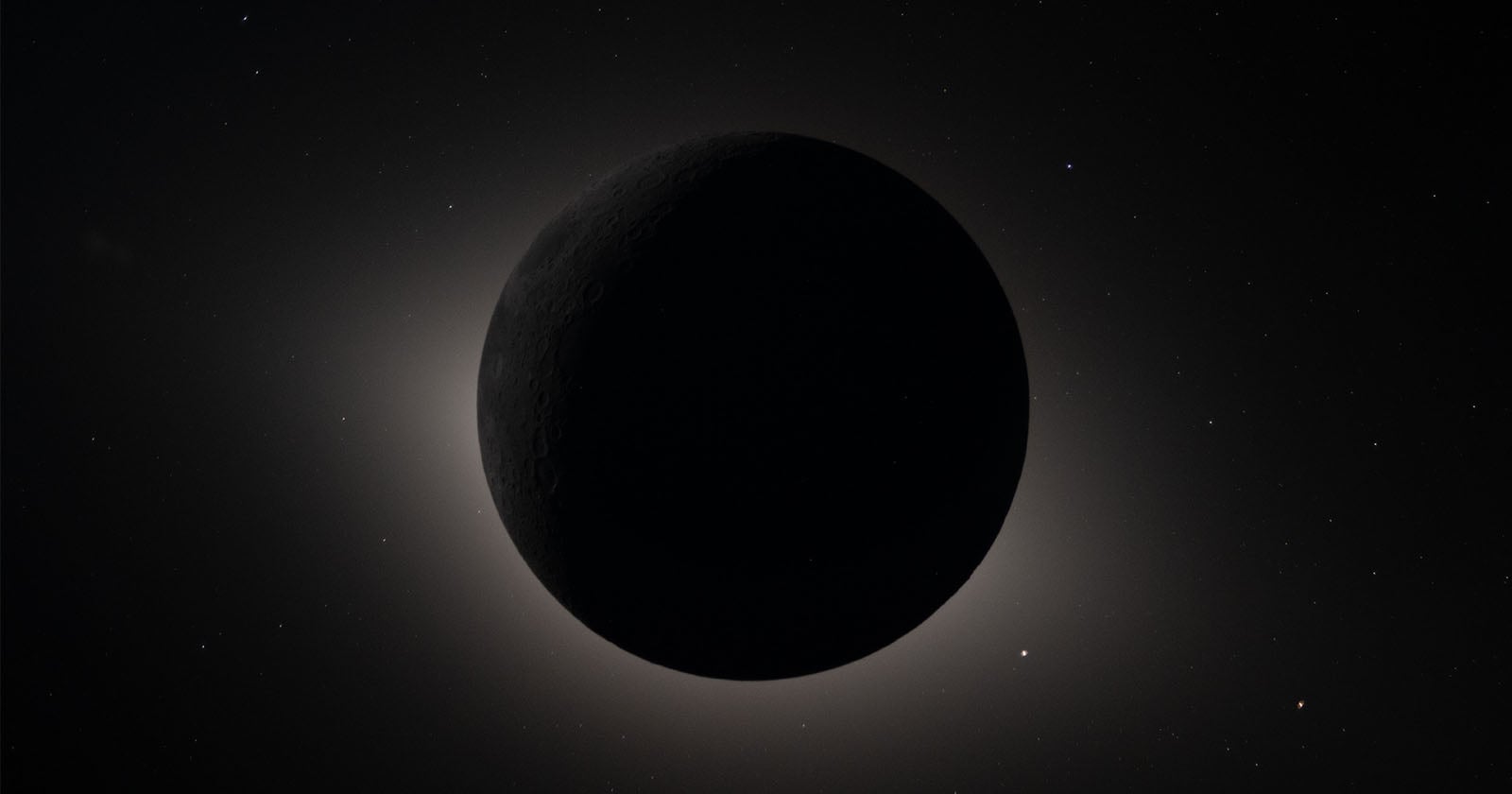
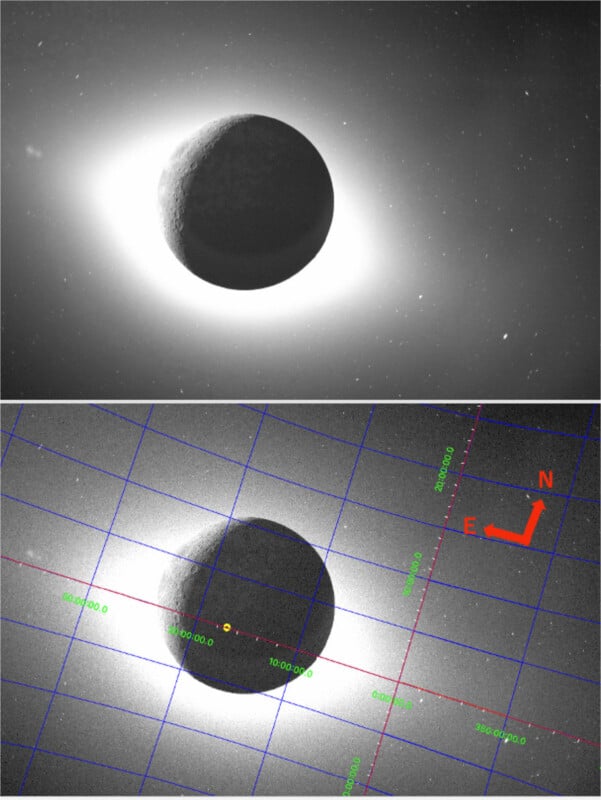
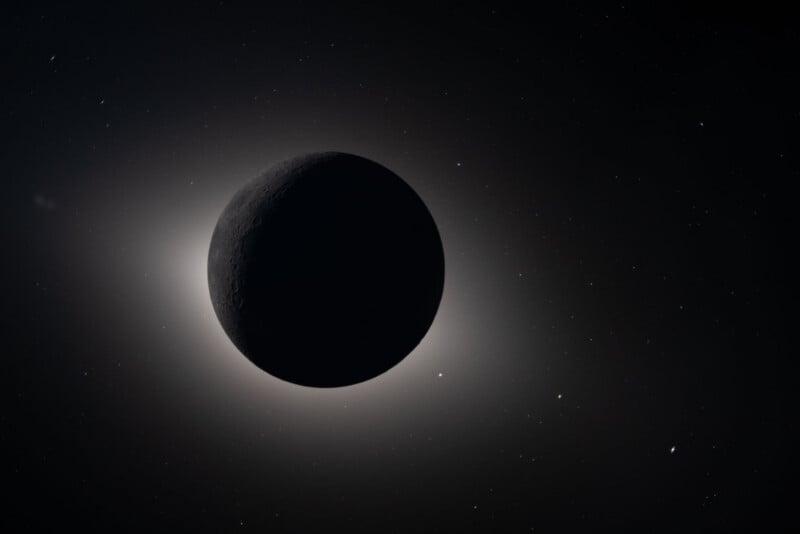
Because the astronauts were positioned approximately 4,067 miles from the lunar surface, the Moon appeared significantly larger than the Sun. This geometry allowed the Moon to fully occult the solar disk for an extended period, creating an ideal environment to study the Sun’s faint outer atmosphere. In the resulting photographs, the Sun is entirely hidden behind the lunar silhouette, leaving only a glowing, ethereal halo: the solar corona.
Decoding the F-Corona: The Science of Dust
The primary focus of the research led by Kohji Tsumura and Ko Arimatsu of Tokyo City University is the "F-corona," or the inner zodiacal light. The "F" stands for "Fraunhofer," named after the absorption lines found in the spectrum of the scattered light.
The F-corona is essentially a byproduct of interplanetary dust particles reflecting sunlight. Because this dust is distributed throughout the solar system, it creates a diffuse, glowing veil that is notoriously difficult to measure from Earth’s surface due to the interference of our atmosphere and the overwhelming brightness of the sky.
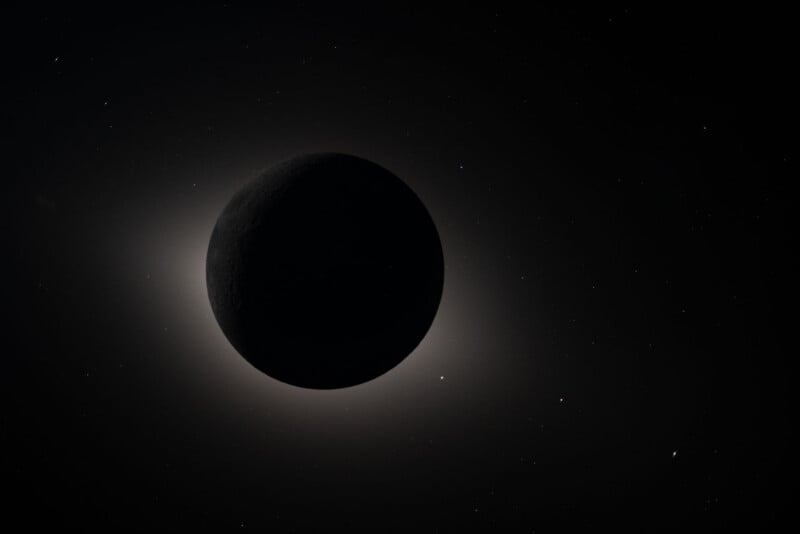
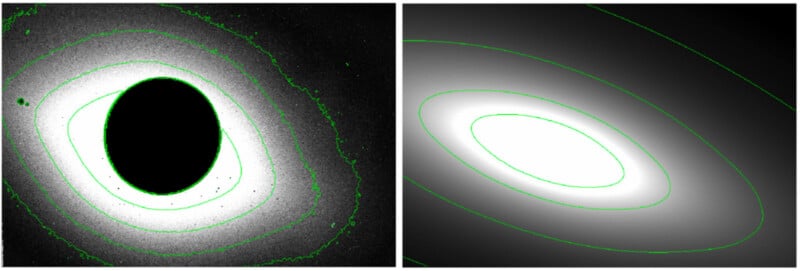
"We investigated the structure of the optical F-corona using a publicly released wide-field image of a total solar eclipse that was obtained during the Artemis II crewed lunar flyby," Tsumura and Arimatsu write. "In this image, the solar disk is fully occulted by the Moon, providing a rare view of diffuse circumsolar emission over a wide angular extent."
By analyzing these images, the researchers were able to map the intensity and morphology of this dust-scattered light. They discovered a more extended F-corona than previously predicted by existing models, such as the ZodiSURF framework. Furthermore, they observed a stronger concentration of emission toward the ecliptic plane, providing new empirical data that refines our understanding of the distribution of matter in the inner solar system.
The Art of "Stellar Calibration"
One of the most remarkable aspects of this study is the methodology used to overcome the limitations of the hardware. While the Nikon Z9 is a flagship mirrorless camera, it was not originally designed or calibrated for the rigorous photometric requirements of astrophysical research.
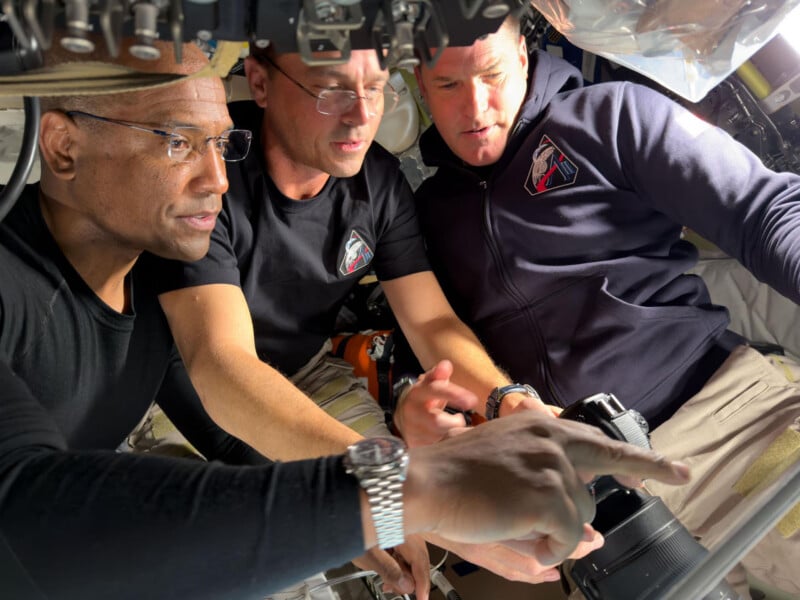
To bridge this gap, Tsumura and Arimatsu employed a technique they dubbed "stellar calibration." By utilizing the known luminance values of the background stars captured in the same frames as the solar eclipse, the researchers were able to perform a precise gamma correction and photometric calibration. This ingenuity turned a commercial camera into a scientific-grade photometer, allowing for measurements that were previously thought to be impossible without dedicated, space-based telescopes.
A Chronology of Discovery
The success of this endeavor can be traced through a clear sequence of events:
- Pre-Mission Preparation: NASA and its partners rigorously tested the Nikon Z9 for the harsh radiation and vacuum environment of space. The selection of the Z9 was based on its high resolution, expansive dynamic range, and proven low-light performance.
- The Observation (April 6, 2026): During the lunar flyby, the Artemis II crew captured high-resolution imagery as the Moon eclipsed the Sun. The crew used specialized eclipse-viewing glasses to protect their eyes, marking the first time such equipment was utilized at the Moon.
- Data Release: Following the mission, NASA released the images to the public, providing the raw material for independent researchers.
- Academic Analysis (2026–2027): Tsumura and Arimatsu performed their analysis, focusing on the F-corona’s structure, culminating in the peer-reviewed publication in The Astrophysical Journal Letters.
Why This Matters: The Future of Space Imaging
The research serves as a definitive "proof of concept" for the use of crewed missions in space-based scientific observation. The European Space Agency (ESA) has already spent years developing complex, expensive satellite systems—such as those designed to create artificial solar eclipses—to study the corona. While these dedicated missions remain essential, the Artemis II study suggests that "opportunistic" observations by astronauts can provide highly complementary data.
By utilizing the existing crew and consumer-grade hardware already on board, space agencies can gather massive amounts of data without the overhead of launching specialized science-only satellites for every localized phenomenon. This democratization of space science could open the door for future lunar missions to act as permanent observational platforms for solar and planetary physics.
Industry Impact: A Feather in Nikon’s Cap
The success of the Nikon Z9 in this mission has resonated deeply within the photography industry. For Nikon, this isn’t just about sales; it is a validation of decades of collaboration with NASA, dating back to the Apollo program.
Hiroyuki Ikegami, Senior Executive Vice President and General Manager of Imaging Business at Nikon, expressed the company’s pride in the outcome. "Seeing the images from the Artemis II mission return to Earth is a profound honor for all of us at Nikon," Ikegami told PetaPixel. "This latest research… acts as a powerful reminder of what imaging can make possible when science, exploration, unrelenting effort, and human curiosity come together."
Ikegami emphasized that the Z9’s performance in the "demanding environment" of space validates the company’s commitment to clarity and reliability. He noted that the ongoing collaboration prepares the way for even more ambitious scientific possibilities as humanity returns to the lunar surface to stay.
Conclusion: The Horizon of Human-Led Science
The Artemis II mission was, in many ways, a mission of transition—marking the return of humans to the vicinity of the Moon and setting the stage for permanent lunar habitation. Yet, the work of Tsumura and Arimatsu reminds us that at the heart of this "grand sense of adventure" lies the rigorous pursuit of knowledge.
The image of the Moon silhouetted against the Sun, ringed by the ghostly glow of interplanetary dust, is more than just a beautiful photograph. It is a data point that challenges our models, a proof of concept for future exploration, and a testament to the fact that when we send humans into the void, we do not just bring cameras to record the journey—we bring them to measure the universe.
As we look toward the future of the Artemis program, it is clear that the role of the astronaut is evolving. They are no longer just pilots or explorers; they are the front-line scientists of the solar system, armed with tools that, in the right hands, can pull secrets from the very light of the stars.
Scientific Reference:
Large-scale Morphology of the Optical F-corona from a Total Solar Eclipse Observation during the Artemis II Lunar Flyby, by Kohji Tsumura and Ko Arimatsu. Published in The Astrophysical Journal Letters, Volume 1004, Number 1. DOI: 10.3847/2041-8213/ae71c8.
 Raul Delapena Setiawan
  rifanmuazin
  Ammar Sabilarrohman