
 By Layla Zulfa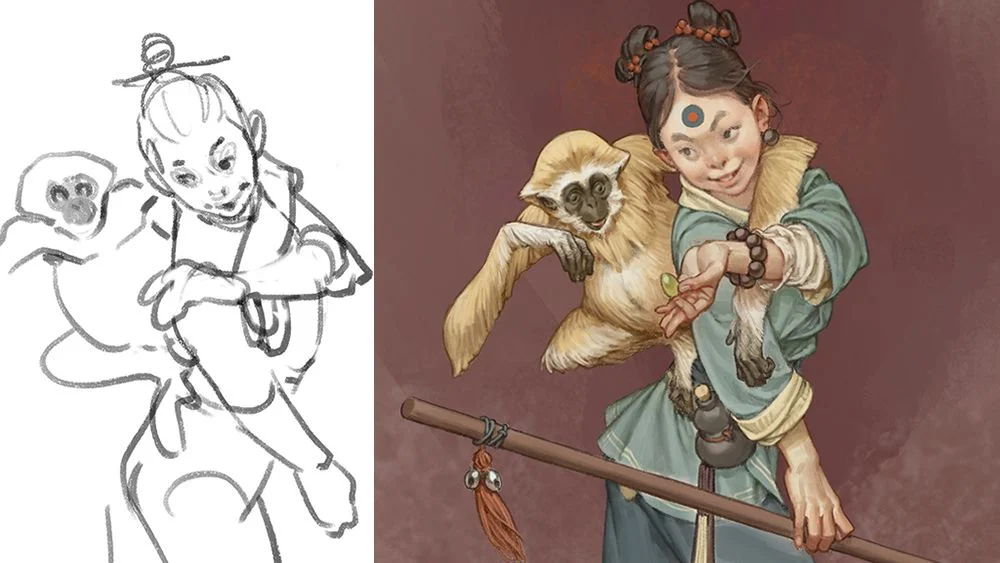
Character design is far more than the simple act of drawing a person or creature; it is the art of storytelling through visual shorthand. As character designers, our primary objective is to forge an immediate, visceral connection with the viewer. We aren’t just creating images; we are inviting audiences to step into a new world, compelling them to buy into the fantasy we’ve constructed.
To achieve this, every line, pose, and color choice must serve a narrative purpose. In this comprehensive guide, we will dissect the professional workflow of character creation, focusing on how to translate abstract personality traits into a cohesive, readable, and dynamic visual language.
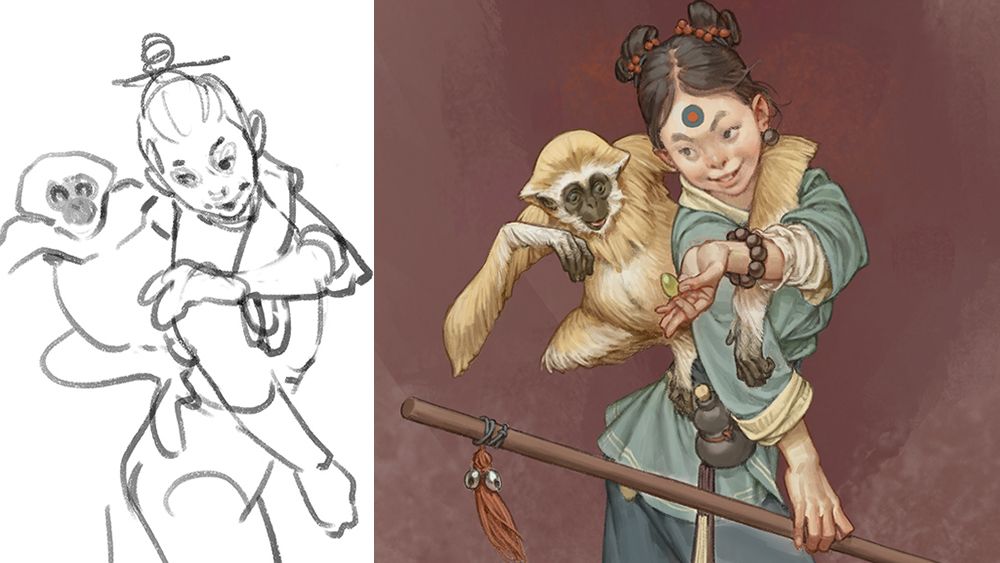
The Philosophy of the "First Read"
In the fast-paced world of digital media and gaming, the "first read" is the holy grail of character design. Just as a book cover must grab a browser’s attention in a fraction of a second, a character’s silhouette must instantly communicate their role, personality, and place in the story.
The silhouette is the most fundamental aspect of this process. It acts as the anchor for the viewer’s perception, dictating the assumptions they make before they even notice the details. If a silhouette is muddied or confusing, the narrative impact is lost. A well-crafted pose and gesture are, in most cases, the primary features that define that silhouette. As designers, our goal is to leverage these tools to empower our imagery, ensuring our characters are not only aesthetically pleasing but narratively potent enough to pull the viewer into our world.
Chronology of a Character Design Workflow
The journey from a blank canvas to a fully realized character is iterative and requires constant refinement. Below is the step-by-step methodology used to develop a circus-themed character and her primate companion.
Phase 1: Conceptualization and Gesture
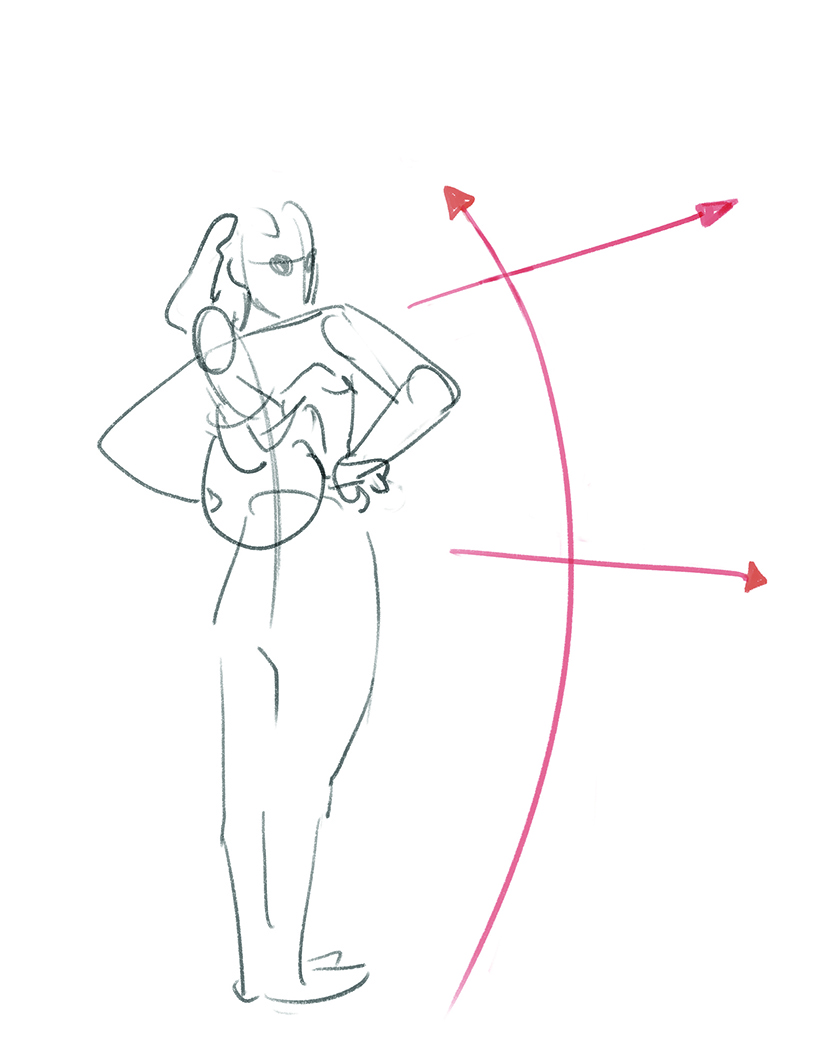
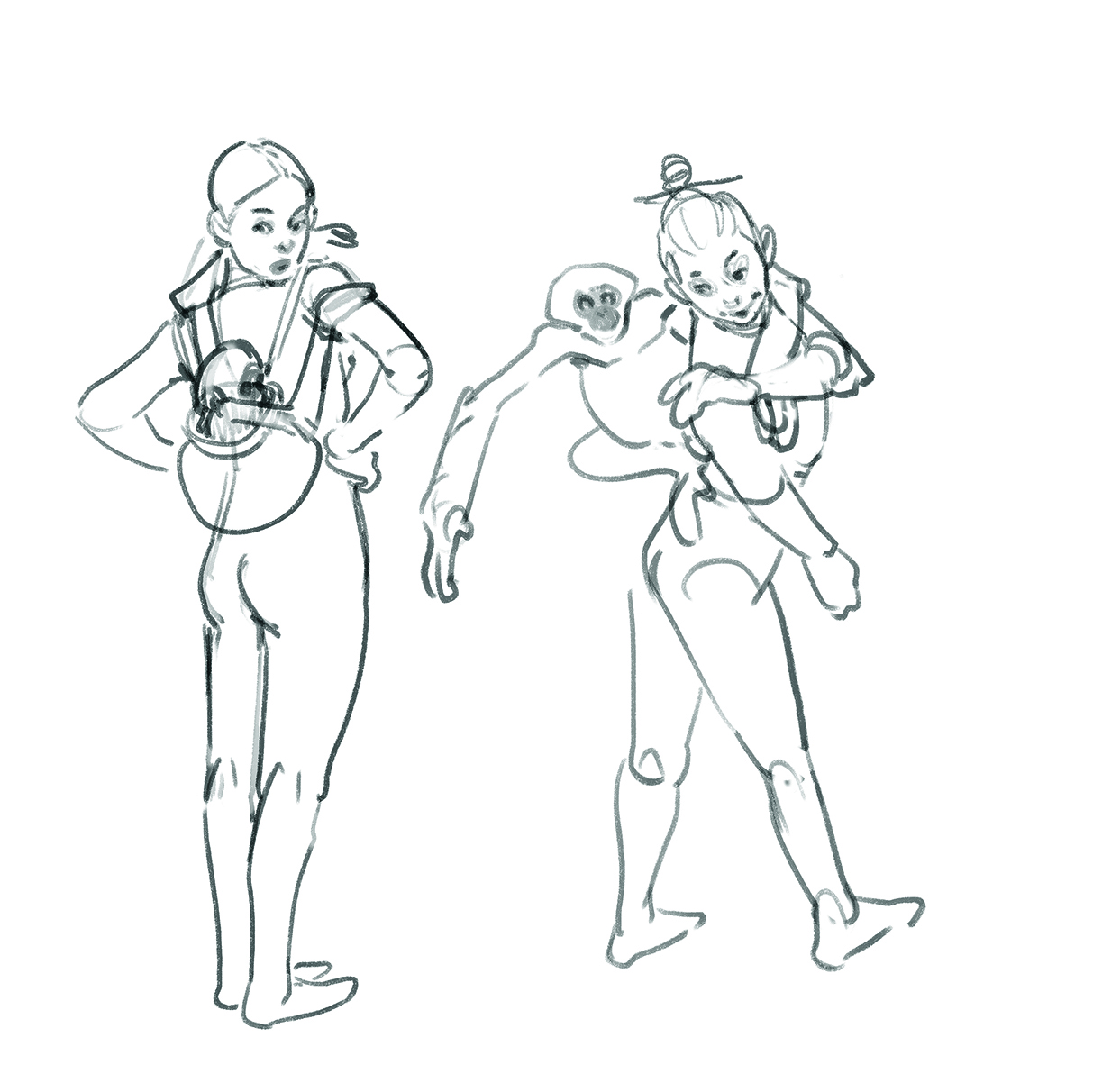
The process begins with a clear narrative goal. In this instance, the focal point is the bond between a young girl and her pet monkey. They must feel dynamic and playful. To capture this, I start with "scribbles"—loose, energetic lines that establish the primary action. I focus heavily on the spine’s curvature and the opposing axes of the shoulders and hips, which are the fundamental building blocks of a believable gesture.
Phase 2: Iteration and Dynamism
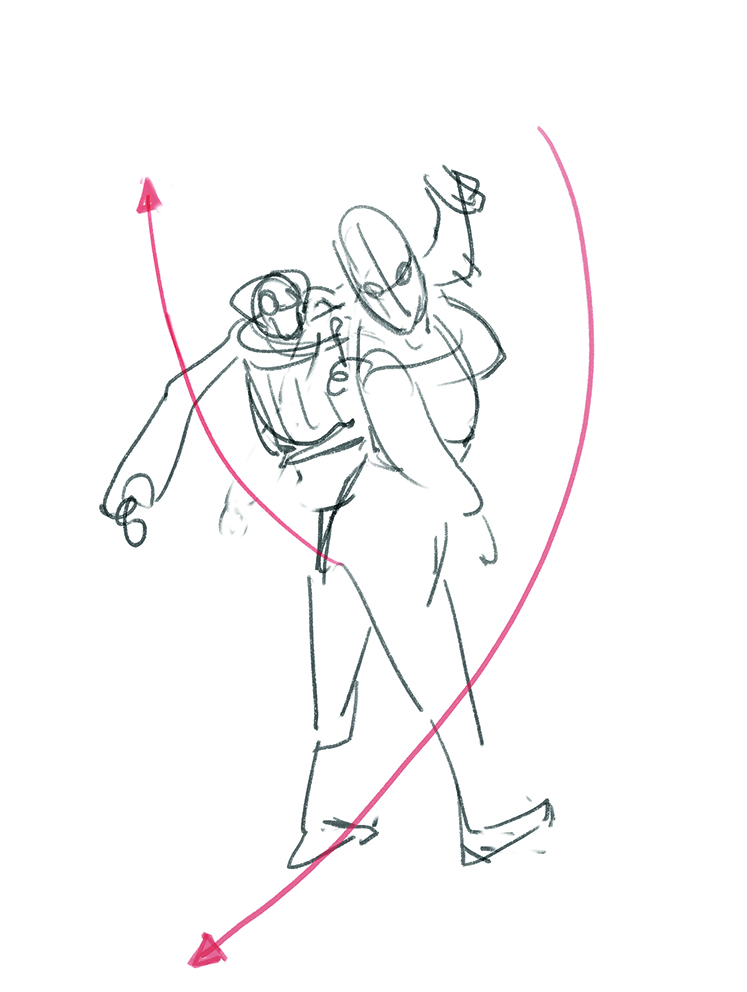
In the second iteration, I experiment with a twisting pose for the girl. By having her turn to face her pet, the pose becomes more active and inherently tells a story. Narratively, this fits the archetype of a traveling circus performer: someone perpetually in motion, hopping across a stage, and constantly interacting with her surroundings. This phase is about pushing the boundaries of the silhouette to emphasize energy.
Phase 3: Volumetric Fleshing
Once the gesture is locked, I begin to define volumes. The key here is managing the interaction between the two figures. I pay close attention to overlaps to avoid "tangents"—those unfortunate instances where lines touch in a way that flattens the drawing or makes it difficult for the eye to track the forms.
Phase 4: Costume and Prop Integration
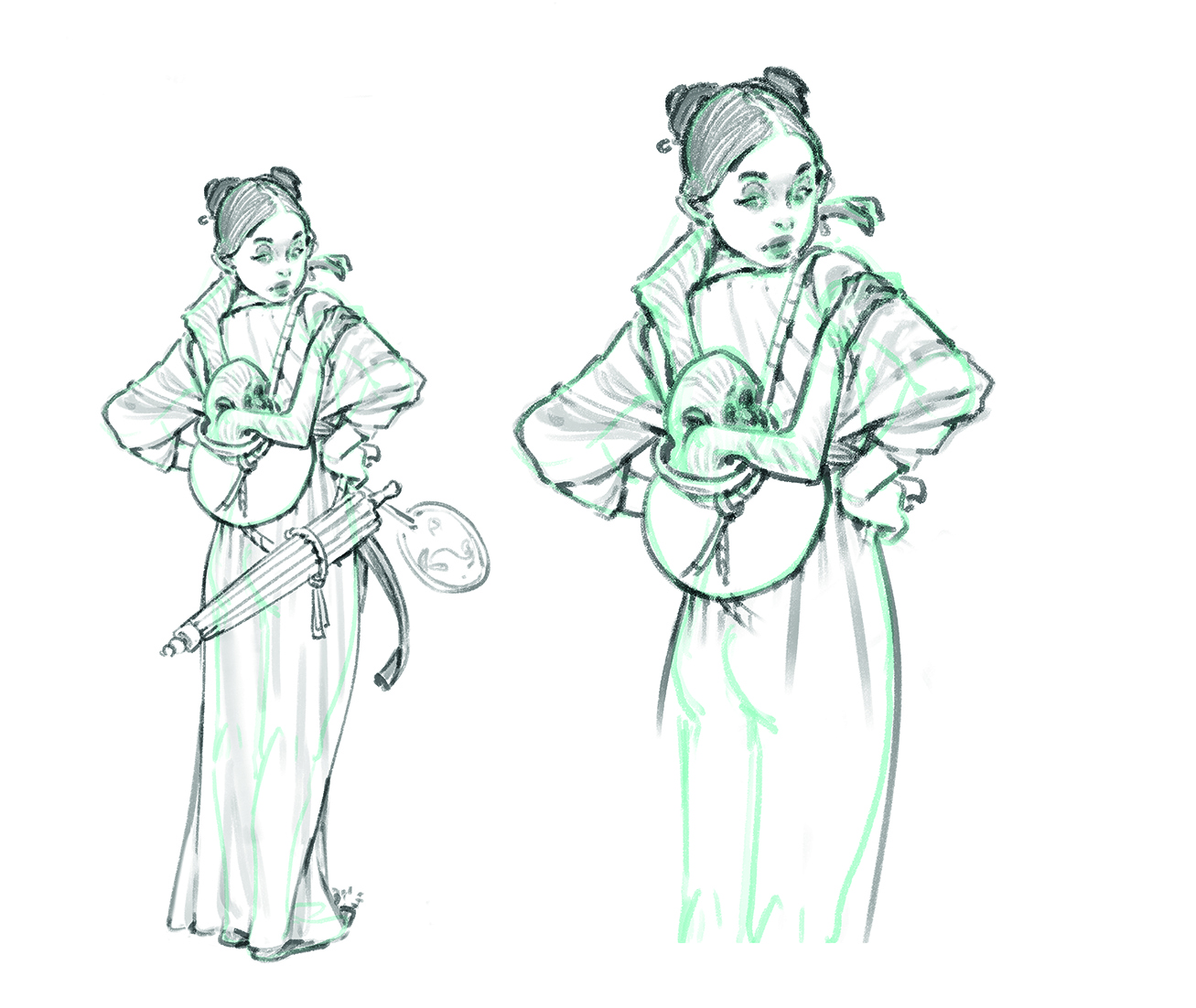
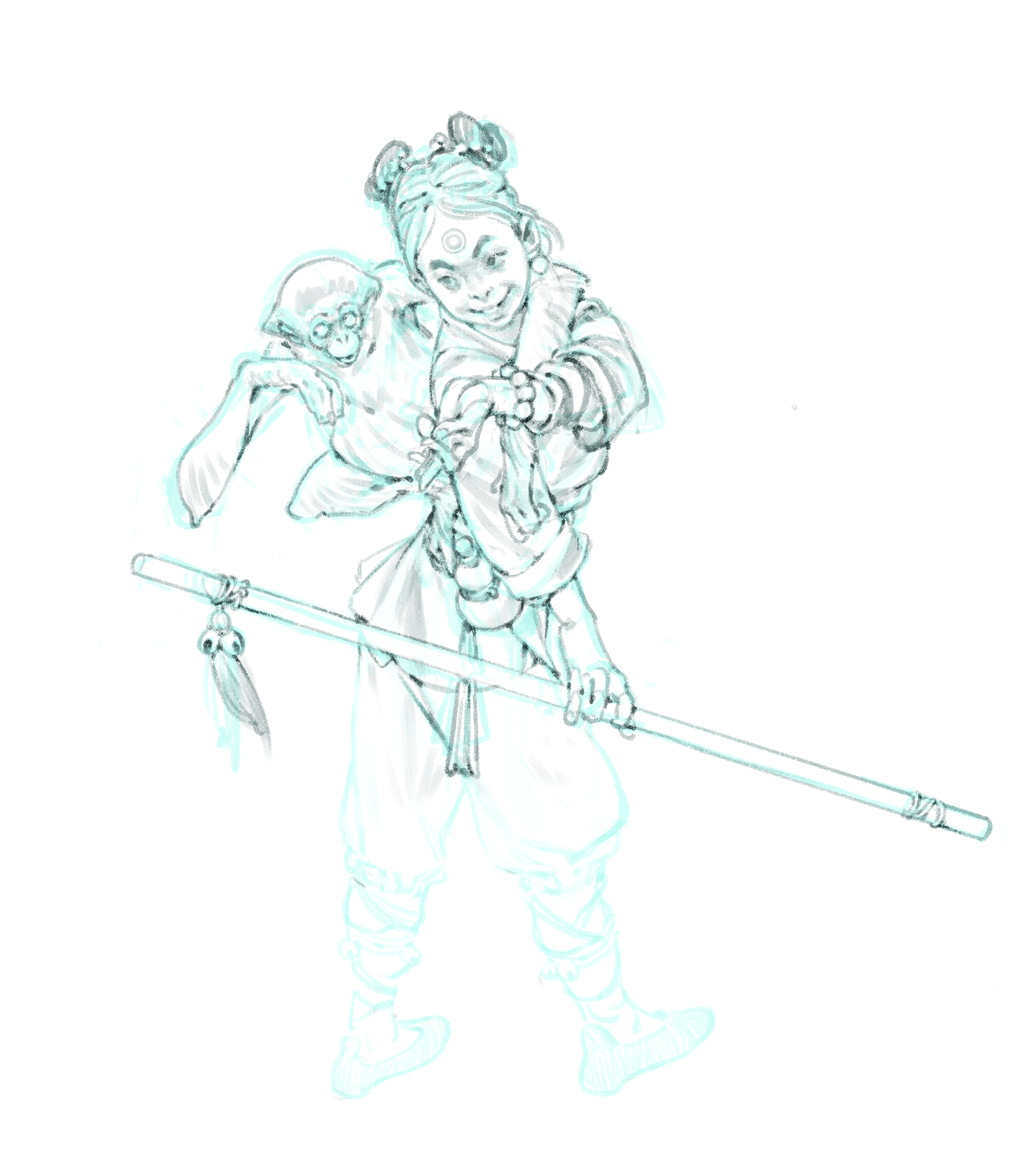
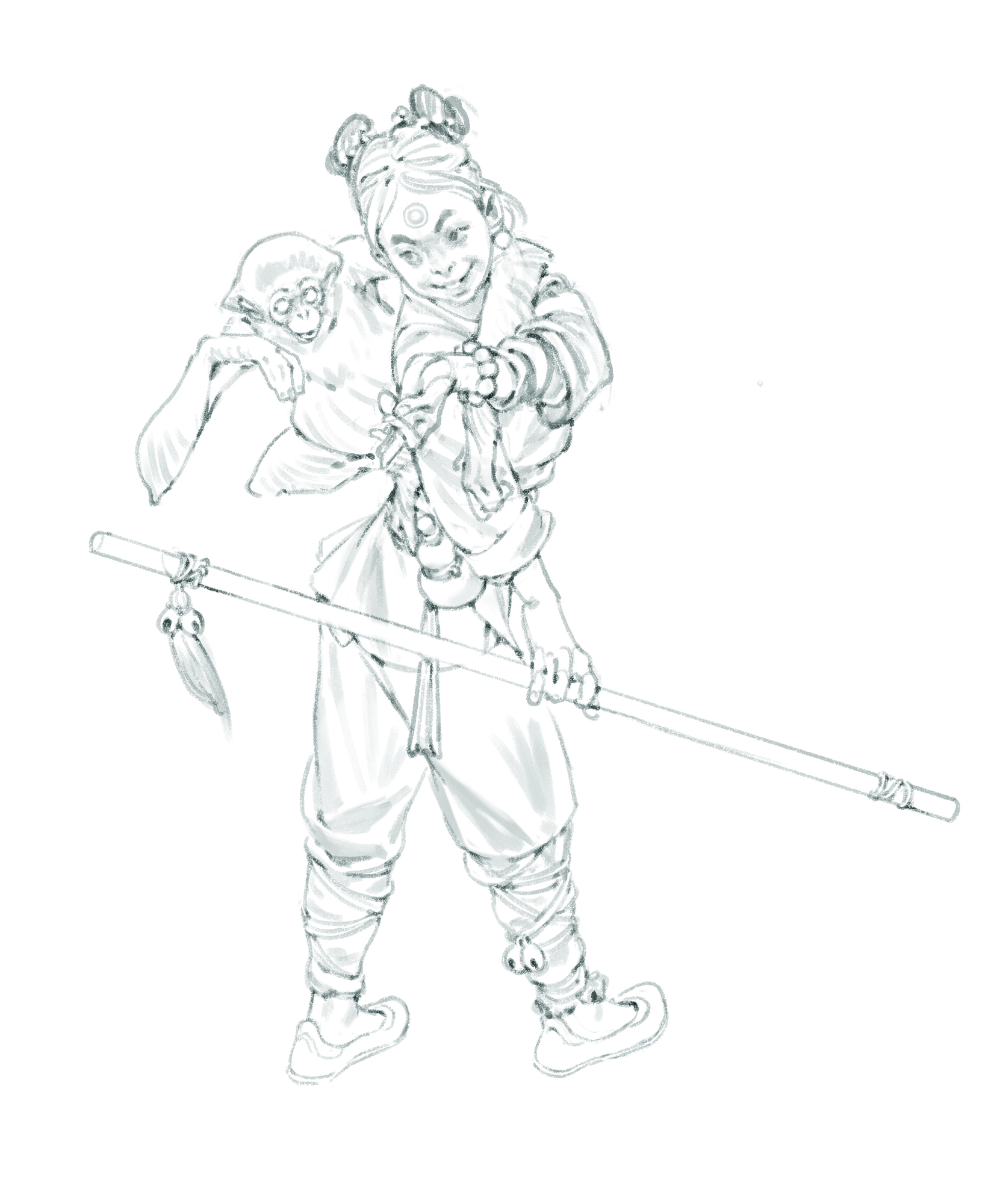
Using the refined thumbnail as a guide, I move to a cleaner sketch. To keep the workflow efficient, I set the initial thumbnail to a low-opacity cyan layer. This prevents "visual noise" and allows me to work on top without being distracted by the rougher construction lines. I focus here on adding costumes and props, ensuring that these elements serve the character’s history.
Phase 5: Client Feedback and Refinement
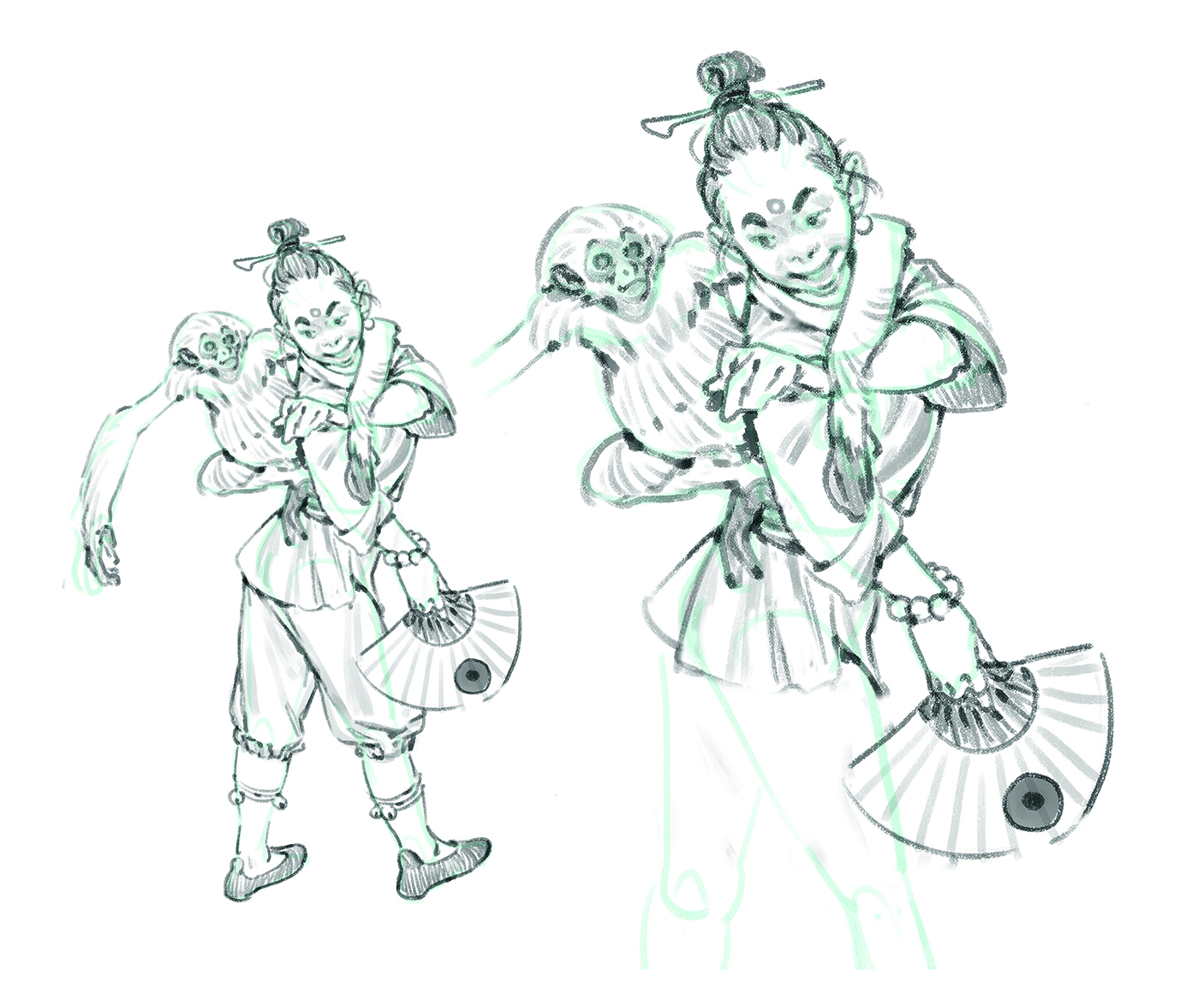
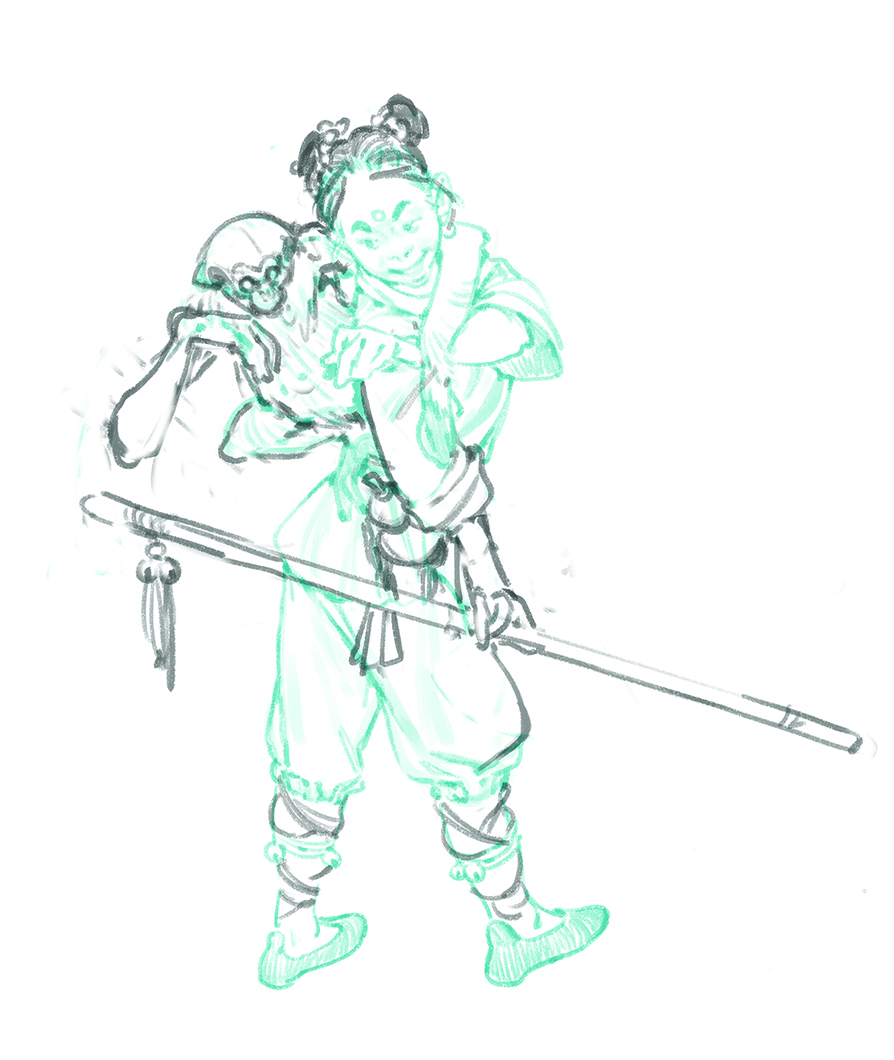
The second pose was selected by the client, as it proved more dynamic than the first. However, the client requested a weapon that could serve both a combat role and a circus-performance function. This was a crucial turning point, as adding the staff helped break up the silhouette even further, creating a more sophisticated and readable shape.
Phase 6: Finalizing the Design
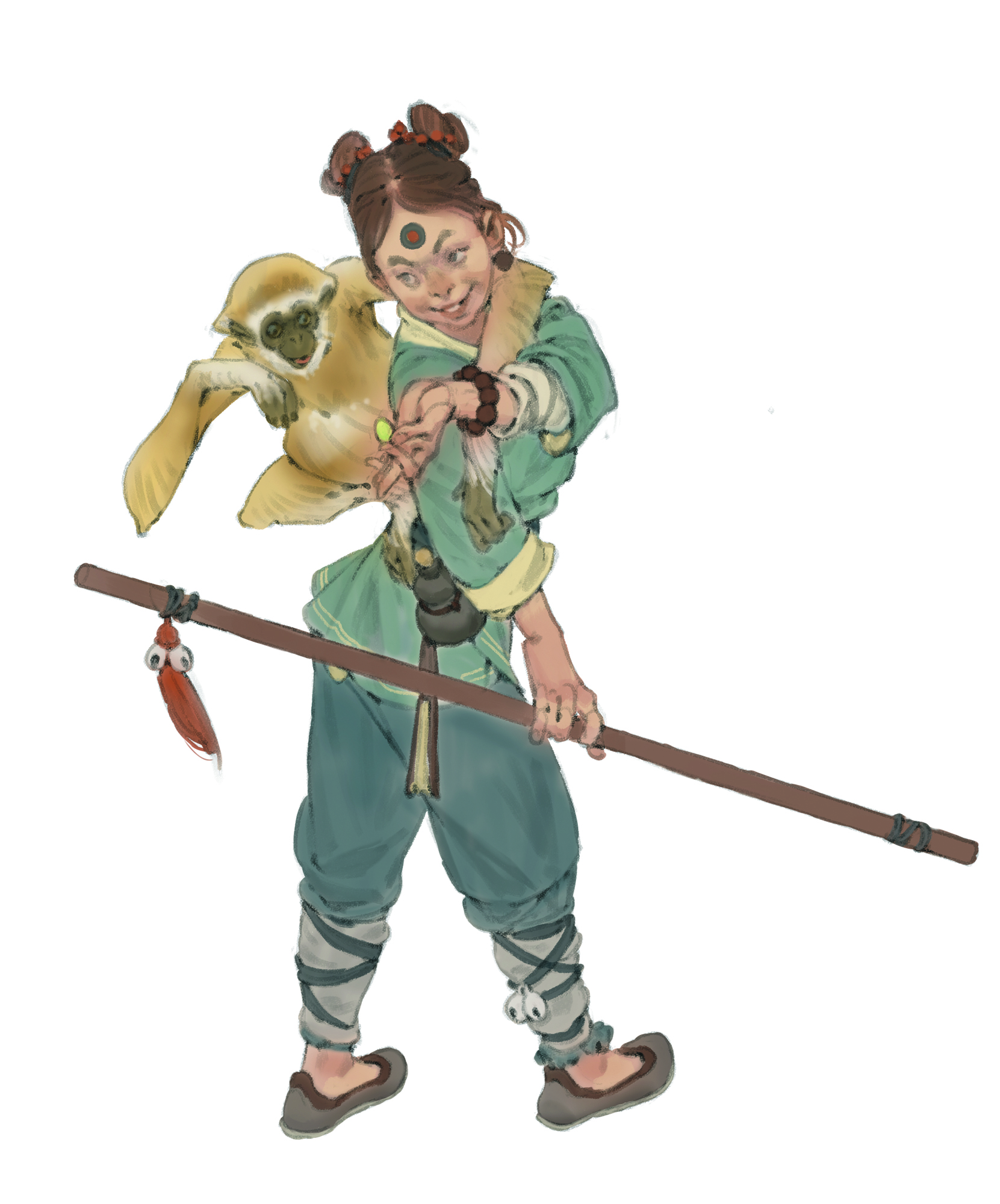
With the client’s requirements integrated, I proceed to the final drawing. I refine the interaction—for example, shifting the monkey’s focus toward a grape he is reaching for—which adds another layer of "acting" to the scene. I keep the lines understated, which makes the subsequent coloring phase significantly more manageable.
Supporting Data: The Technical Execution
The transition from a final line drawing to a finished render requires a disciplined approach to light and shadow.
Applying Flat Colors
For this character, a "watercolour-like" aesthetic was chosen. I focus on soft tones and avoid filling shapes with perfectly uniform, flat colors. By adding slight variations in hue to each base color, I create a sense of life and organic depth that is often lost in purely digital, hard-edged shading.
Lighting and Occlusion
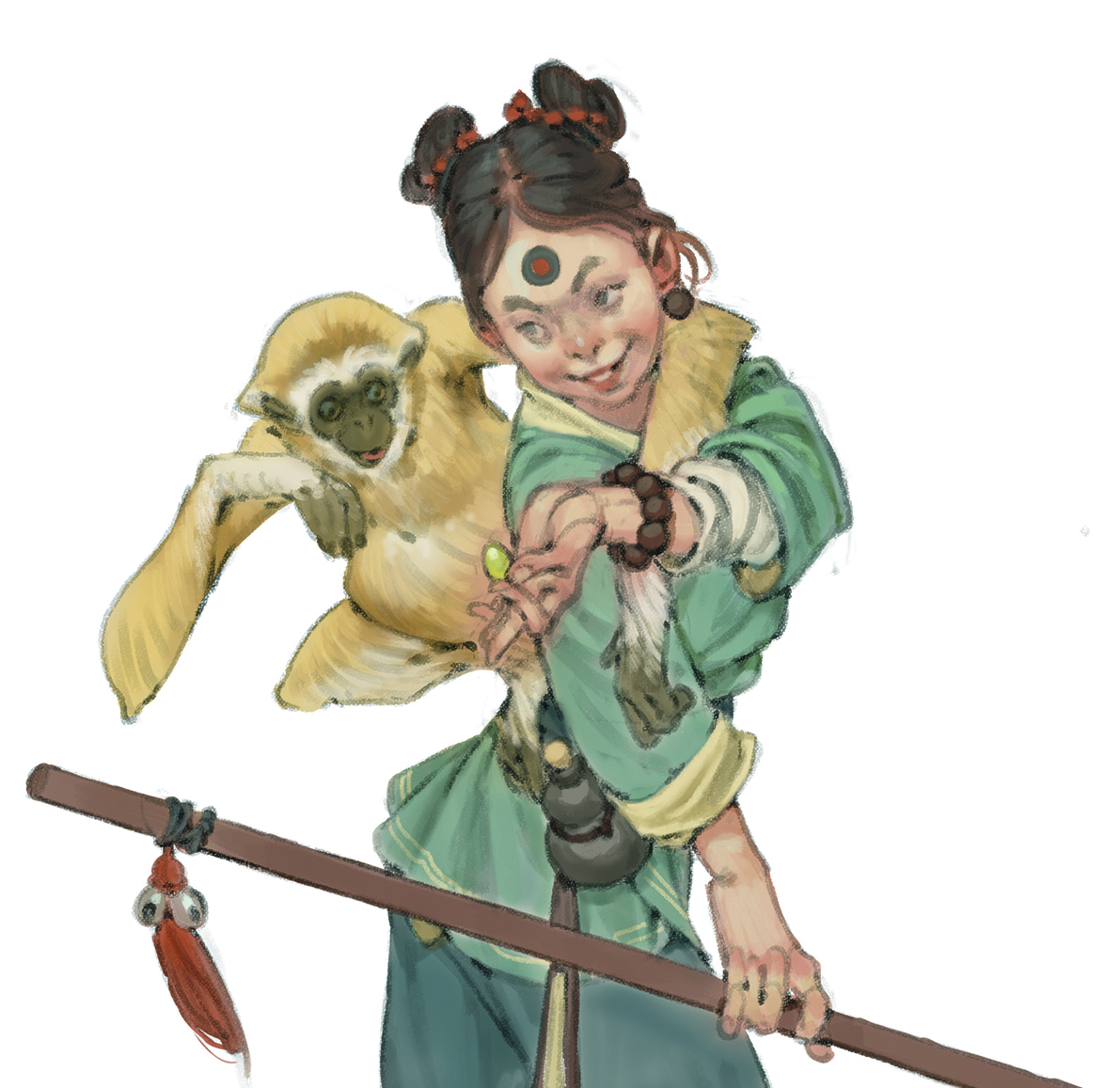
Lighting is the tool used to guide the viewer’s eye. I intensify the light around the faces of the characters, creating a natural focal point. I introduce subtle temperature shifts—cooler shadows and warmer highlights—to add dimension. This is also where "occlusion shadows" (the darker, contact shadows where two objects meet) are added to ground the characters in the scene.
Final Polish and Structural Integrity
In the final stages, I move from working underneath the line art to painting directly on top. I harden certain edges to create a sense of solidity while leaving others soft to maintain a sense of movement. The final adjustments involve tweaking hand sizes and staff placement to ensure the character reads as a tridimensional entity, even when viewed at a distance.
Professional Perspectives on Narrative Design
Industry professionals often emphasize that the "best" design is one that disappears into the story. When a character is designed correctly, the viewer does not think about the anatomy, the clothing choices, or the lighting; they think about the character’s life.
The Role of Iteration:
One of the most important lessons in this process is the willingness to abandon a previous, "perfect" version of a sketch. As seen in the final stages of the project, even when the image felt "complete," identifying small inconsistencies allowed for a significantly stronger final product. Professional character design is a game of constant, incremental improvement.
Implications for Modern Character Artists
As the gaming and animation industries evolve, the demand for "narrative-first" character design has never been higher. Players and viewers are increasingly sophisticated; they can spot a character that has been designed solely for cool factor without any underlying narrative logic.
Technological Advancements:
Modern tools, such as high-performance drawing tablets and specialized laptops, have drastically reduced the time it takes to iterate. However, these tools are merely extensions of the designer’s eye. Whether you are using a top-tier Cintiq or a portable drawing laptop, the core principles remain unchanged:
- Silhouette first: Does the shape tell the story?
- Action/Reaction: Is there a clear interaction between elements?
- Visual Hierarchy: Is the viewer’s eye being led to the most important part of the character?
By adhering to these principles, artists can ensure their work resonates with audiences. The goal is not just to produce a piece of art, but to build a character that feels like they have a past, a present, and a future within the world they inhabit.
Conclusion
Creating a character is an exercise in empathy. To design a compelling circus performer, you must understand the exhaustion of travel, the thrill of the stage, and the quiet, intimate bond between a performer and their companion. Through the systematic application of gesture, silhouette, and thoughtful rendering, a designer can turn a blank page into a living, breathing entity.
For those looking to advance their own skills, the path is clear: embrace the iterative process, listen to feedback, and never stop questioning how each element of your design serves the story you are trying to tell.
This guide was developed for professional artists looking to refine their character design pipelines. For more in-depth tutorials and industry insights, subscribe to ImagineFX, the premier resource for digital art and design.
 Raul Delapena Setiawan
  Ammar Sabilarrohman
  Muslim